Whistory
The variation in whistles often astounds the neophyte to whistle collecting, but our SPOTLIGHT today highlights this even more so. Why? Because these are mixed designs/creations from existing whistles.
How large is the collection?
Let’s look together at the works of American whistle designer James Guttridge. First off, we show his entire collection offered for sale. ( As of this revision please contact Jim Guttridge for adjustments to the original article collection and pricing ) He has set the price at $4000.00 US and you may contact him direct at [email protected] if interested.
What are our goals sales or variations?
Our interest here is to look at the design variations in whistles. Zoom in for closer and individual examination if you please.
Whistle Classification
| Type | siren dog round conical hunting variety |
| Maker | Guttridge |
| Category | civil hunting |
| Material | brass |
| Features | unique combinations |
Whistle Archaeology
There are nor actual records to research. All records for the original whistle parts would be in various SPOTLIGHTS, such as sirens, conicals, tubular etc.
Whistology
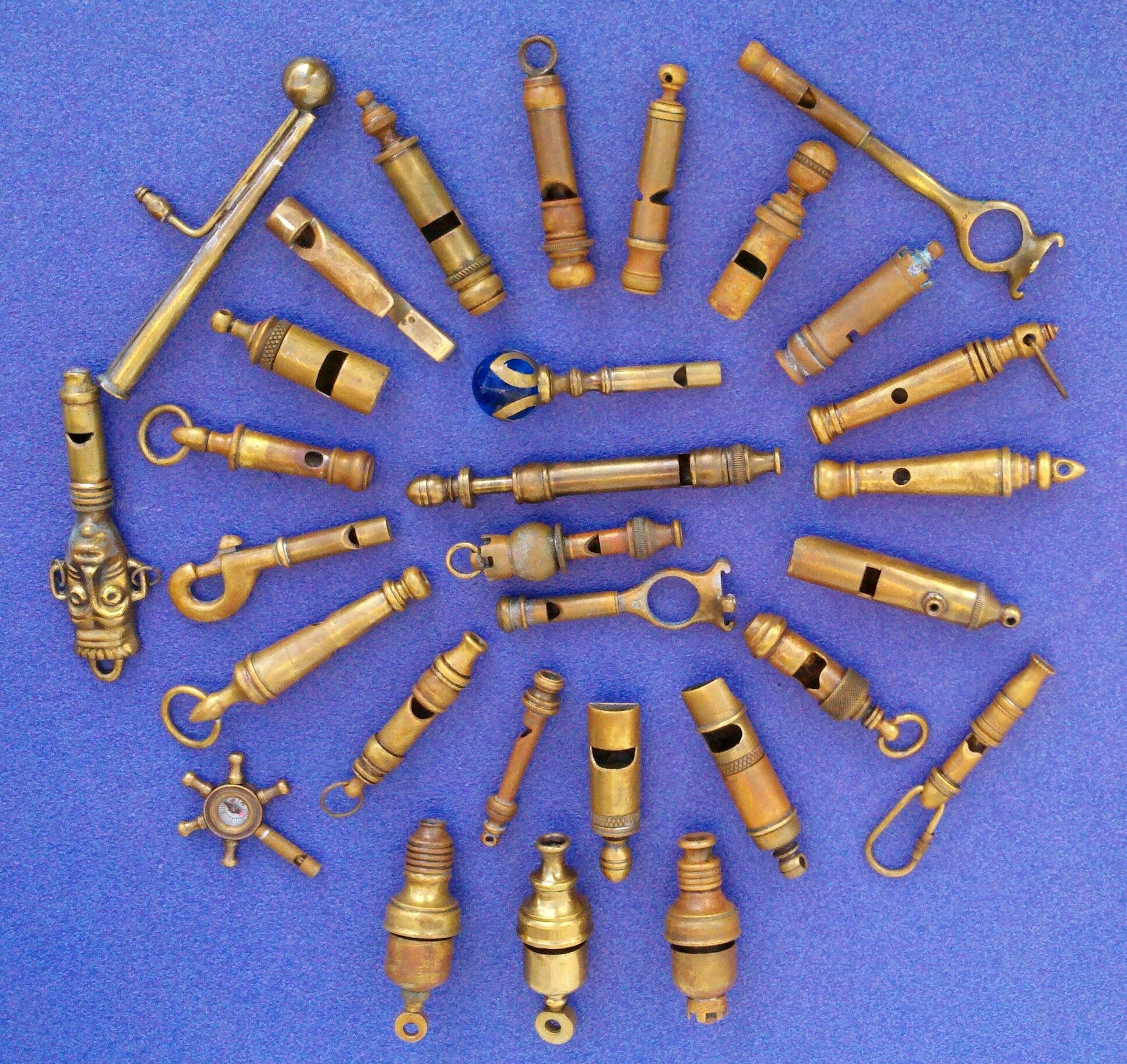
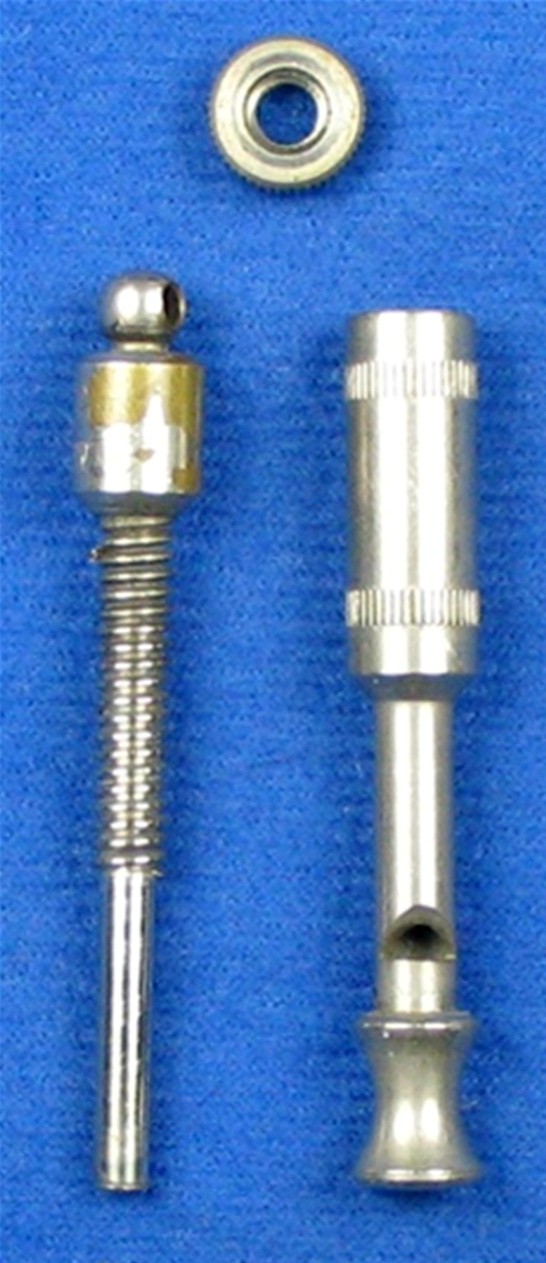
30 whistles of remarkable variety and inventiveness. We find extractors, beauforts, dogs, bell whistles and our favorites — round whistles. But where did he get his ideas? What influence can be seen? Let’s try to see as we look a little closer at the influences from historic whistle makers…
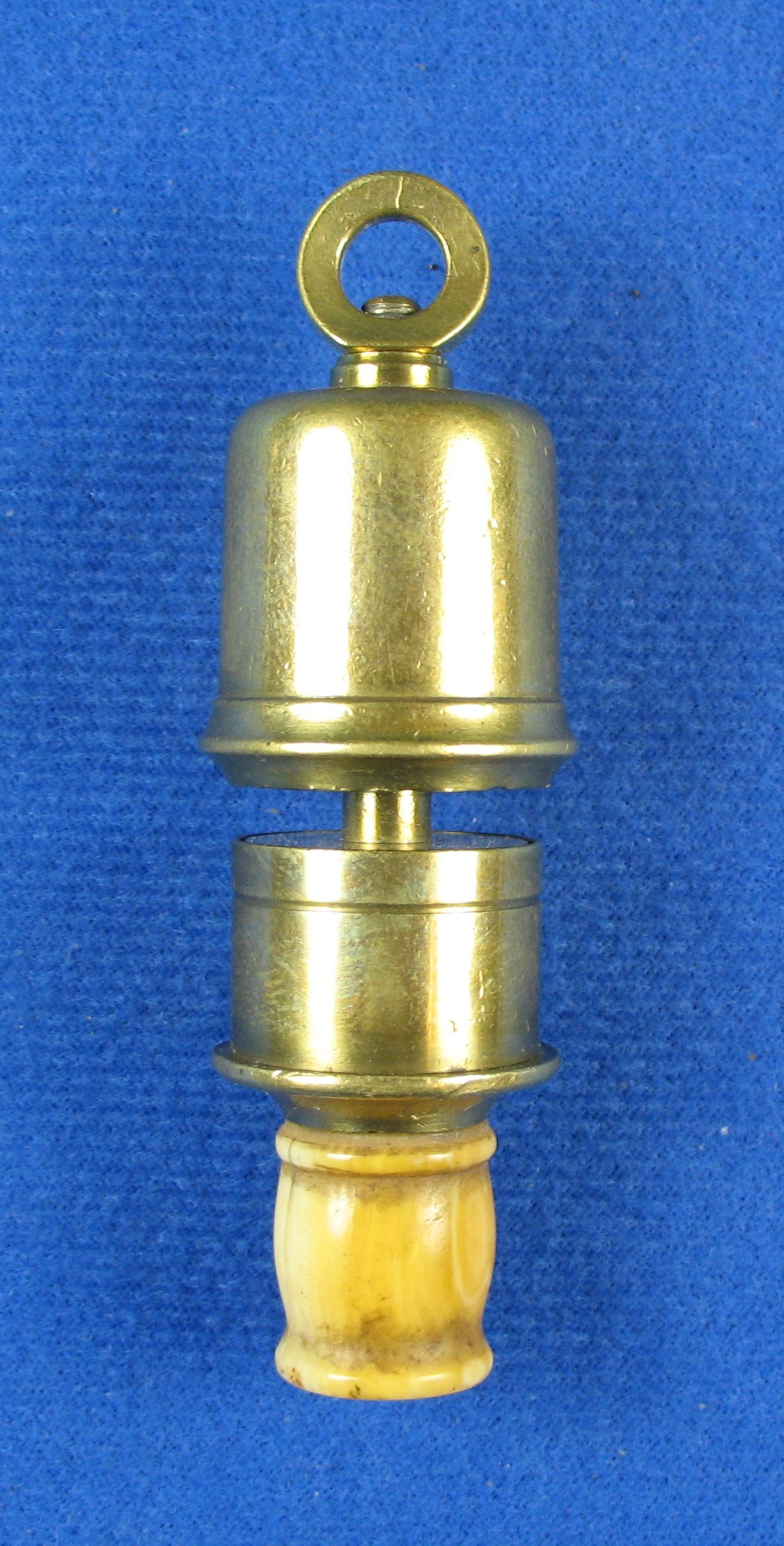
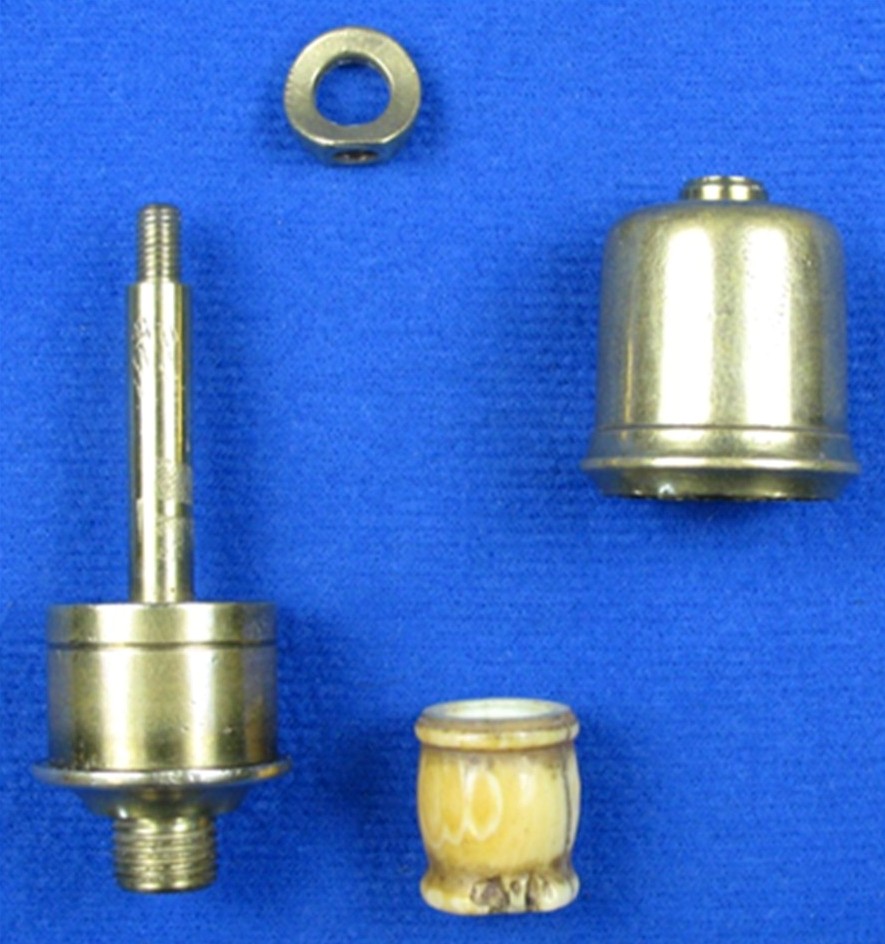
First up, we see the 3 top whistles and clearly seen is the influence of Stevens and Sons bell whistles, originally designed by Richard Porteous. Developed mid-1800s, is the bell-shaped whistle that unscrews into several components and reminiscent of railway steam whistles they are quite high pitched for their looks and size – a very high-quality whistle. James strives to follow that tradition several times, and you can compare them to an original from The Whistle Gallery reference collection.
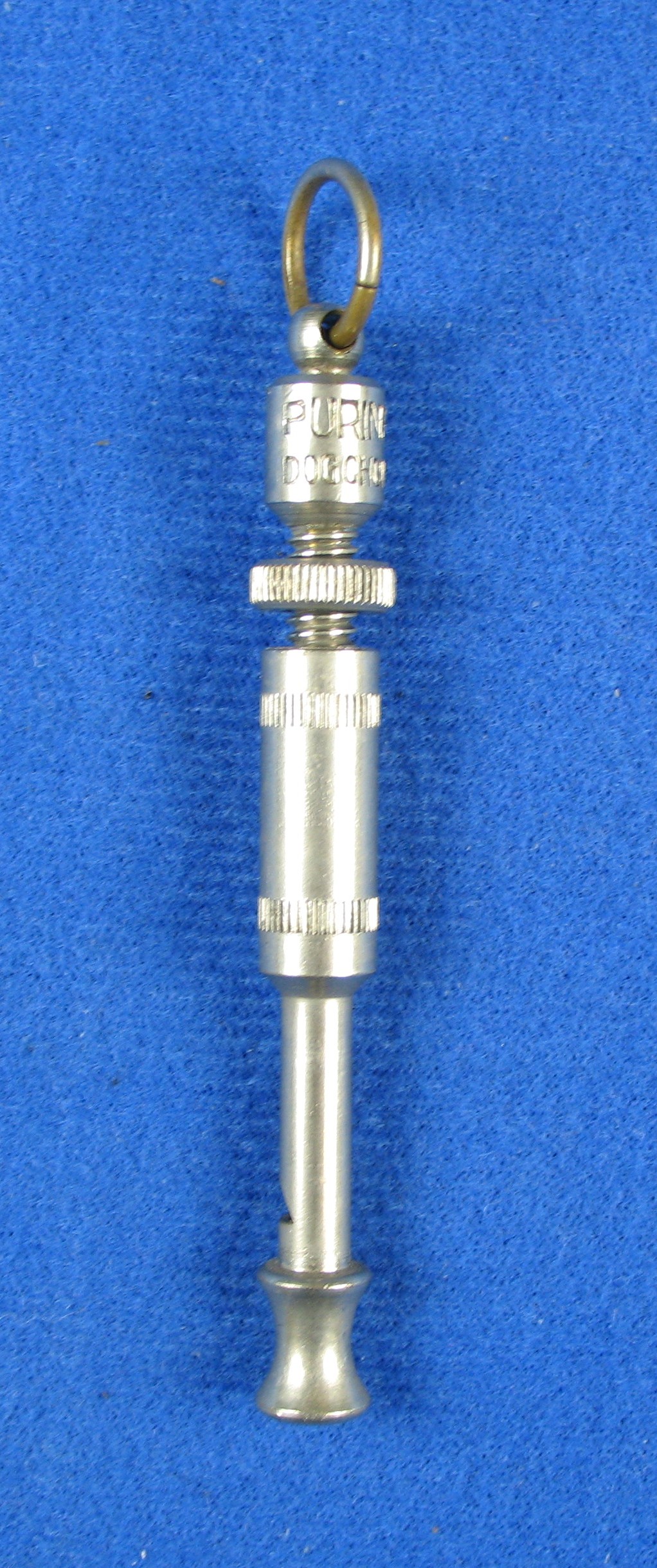
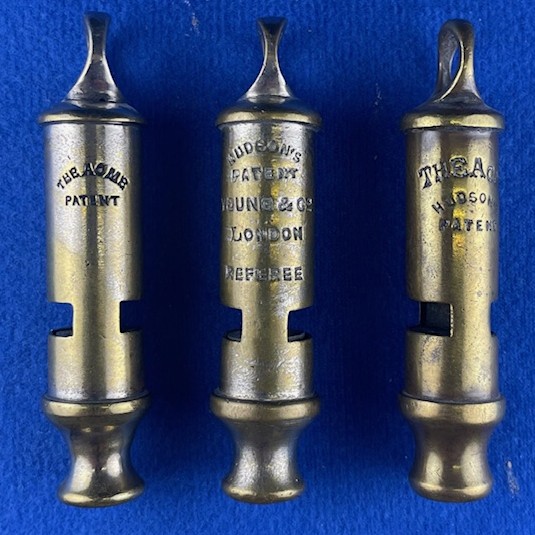
Next up is a couple of dog whistles seen just below the 3 bells and to the far left. The earliest known work in the ‘silent’ range of hearing is credited to Sir Francis Galton whose work was in the late 1800s.
The first whistle models for release by Hudson came decades later circa 1930s. Perhaps others preceded them. An example from our reference collection shows the components used to create a very high pitch, somewhat out of the human range.
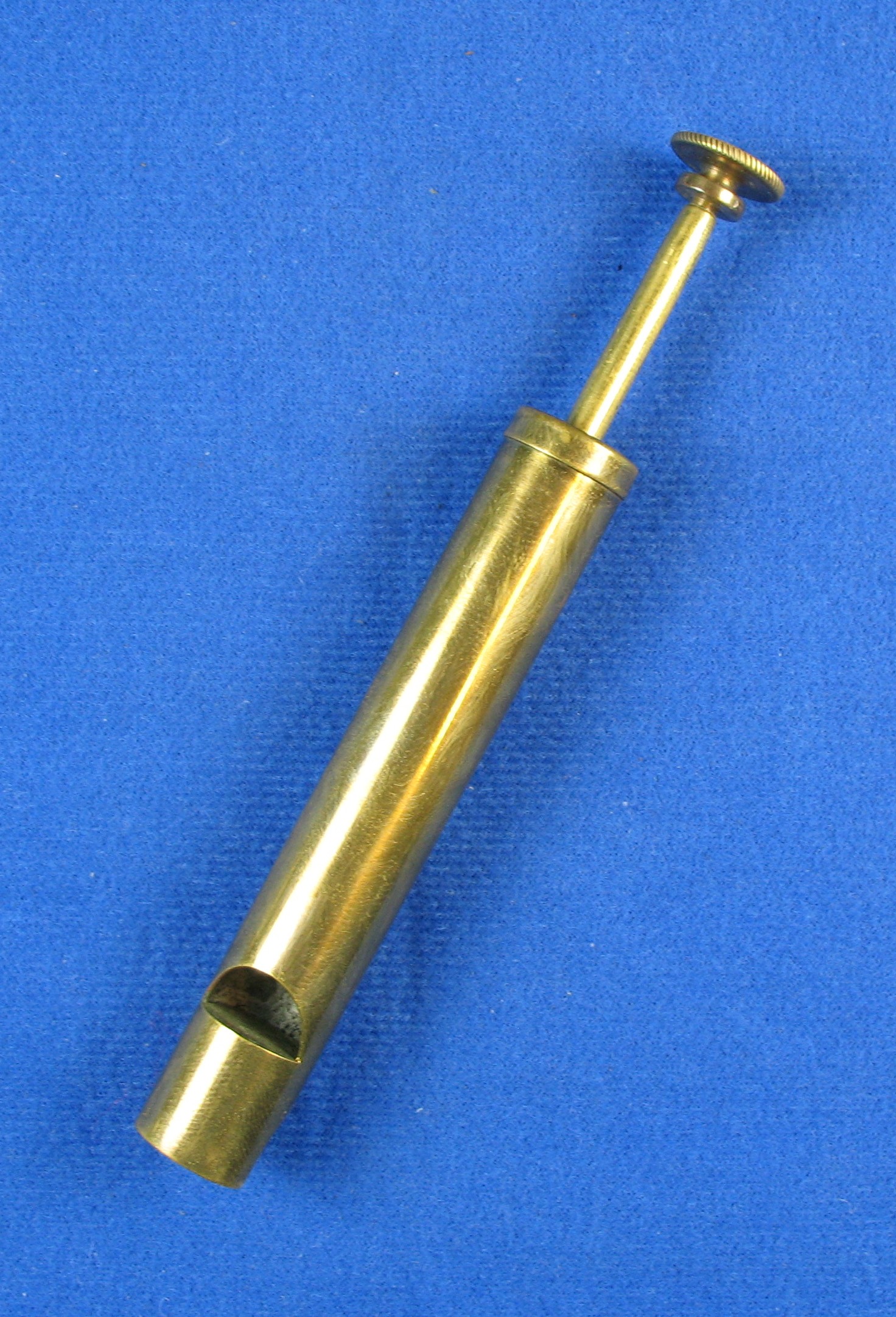
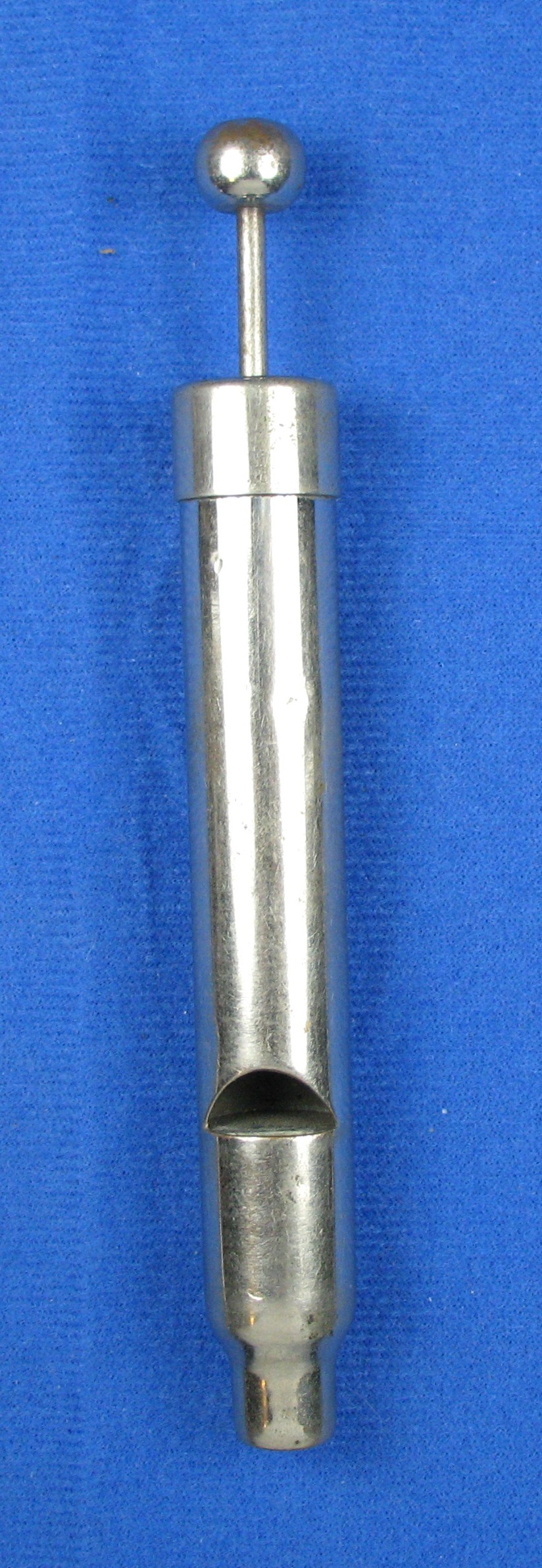
Dead center is a wonderfully artistic version of a slider, possibly the best piece in the group. Typically, plain and functional, the slider whistle has been around since the early 1800s as a sound effects instrument.
Pictured from The Gallery reference collection is an early one by Martin Signal, circa 1890. Also pictured is another model, from an unknown American maker.
Most manufacturers never really strayed much before or after that, when it came to the mouthpiece or body of the whistle, but James Guttridge did.
Back to the pictured collection, a couple whistles located on the left and one on the far-right highlight some of the best aspects of the conical whistle.
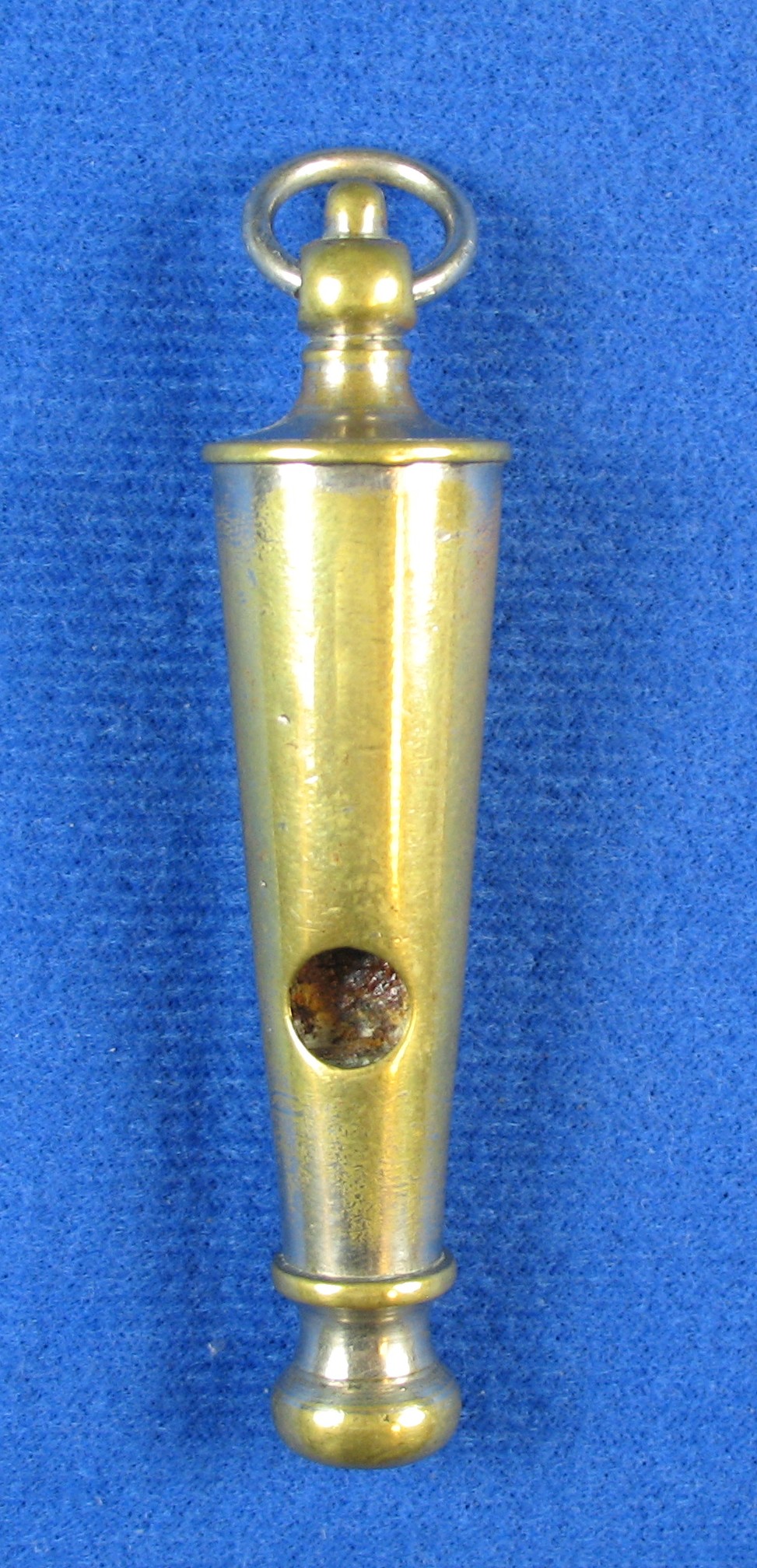
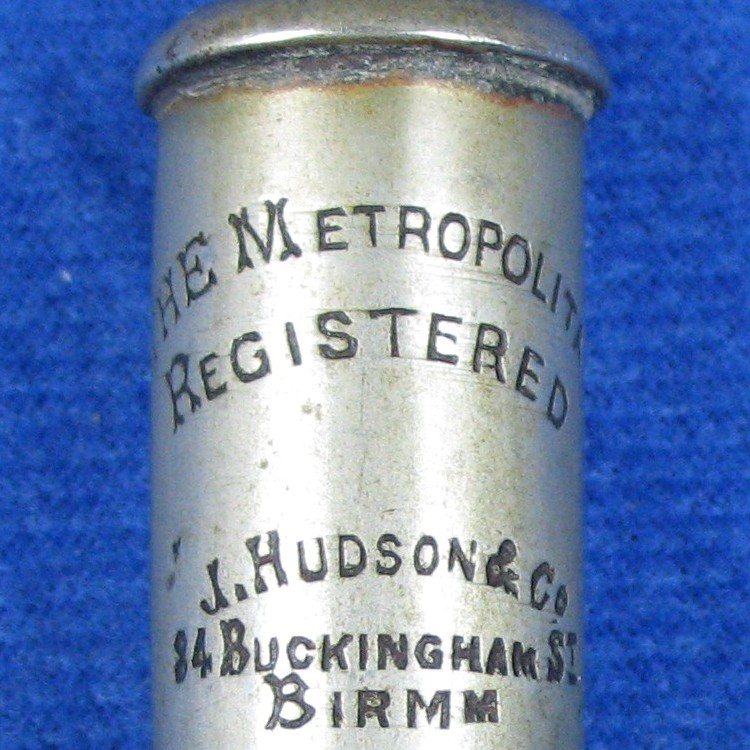
Typically, beauforts are conical shaped with a simple round knop — they can be very plain. Additionally, ones that had more variation or were even plain recycled with the release of the Metropolitan of the 1880s. Many were taken in on trade and we do not see them often enough.
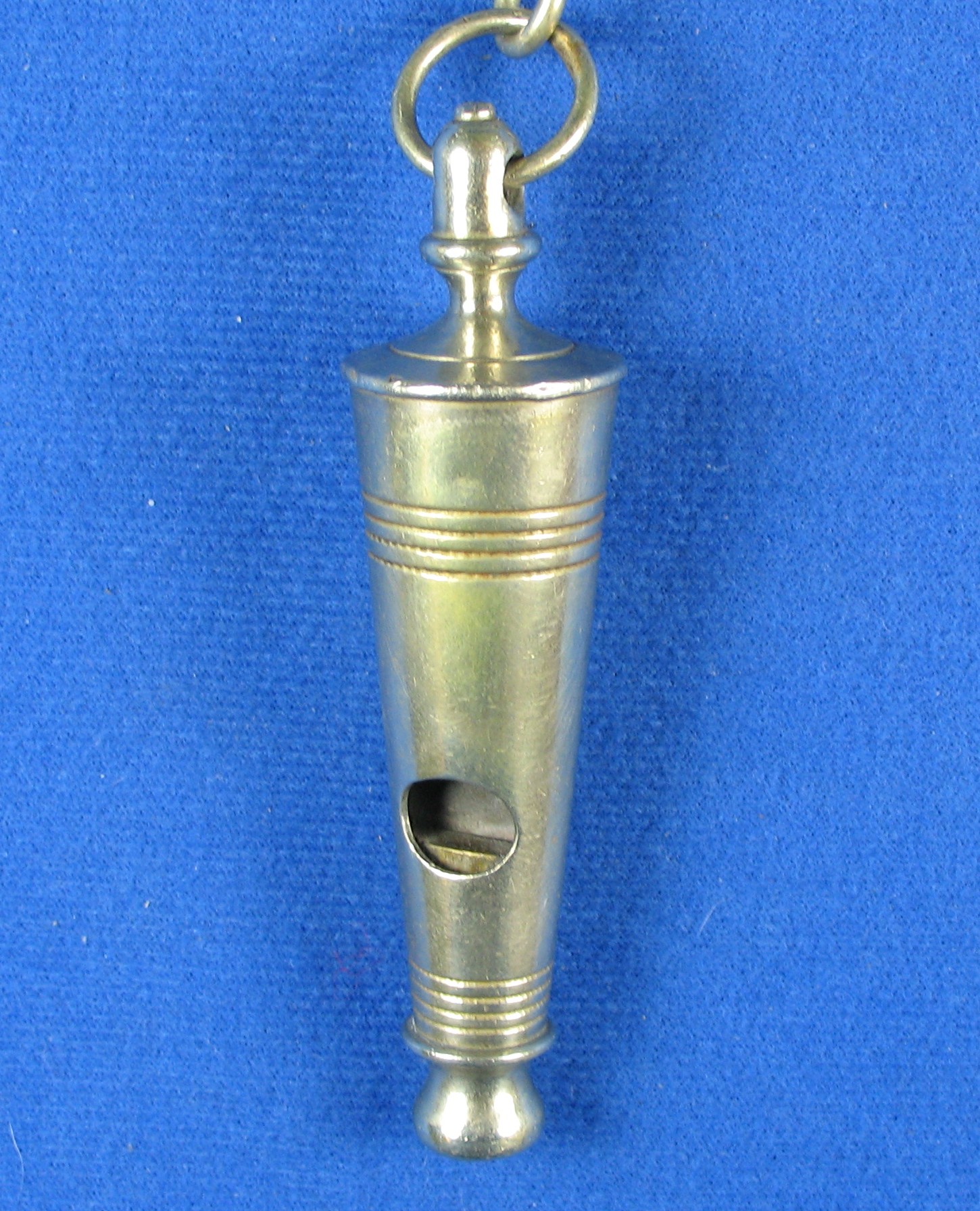
Yes, there are stamped variations and here and there are some rolled mouthpieces. However, John Barrall circa 1880s and Joseph Hudson circa 1880s, designed somewhat ornate models with cast mouthpieces and elaborate tops that have survived till today. A couple examples from The Whistle Gallery reference collection are shown to reveal the possible influence upon Jimmy’s work.
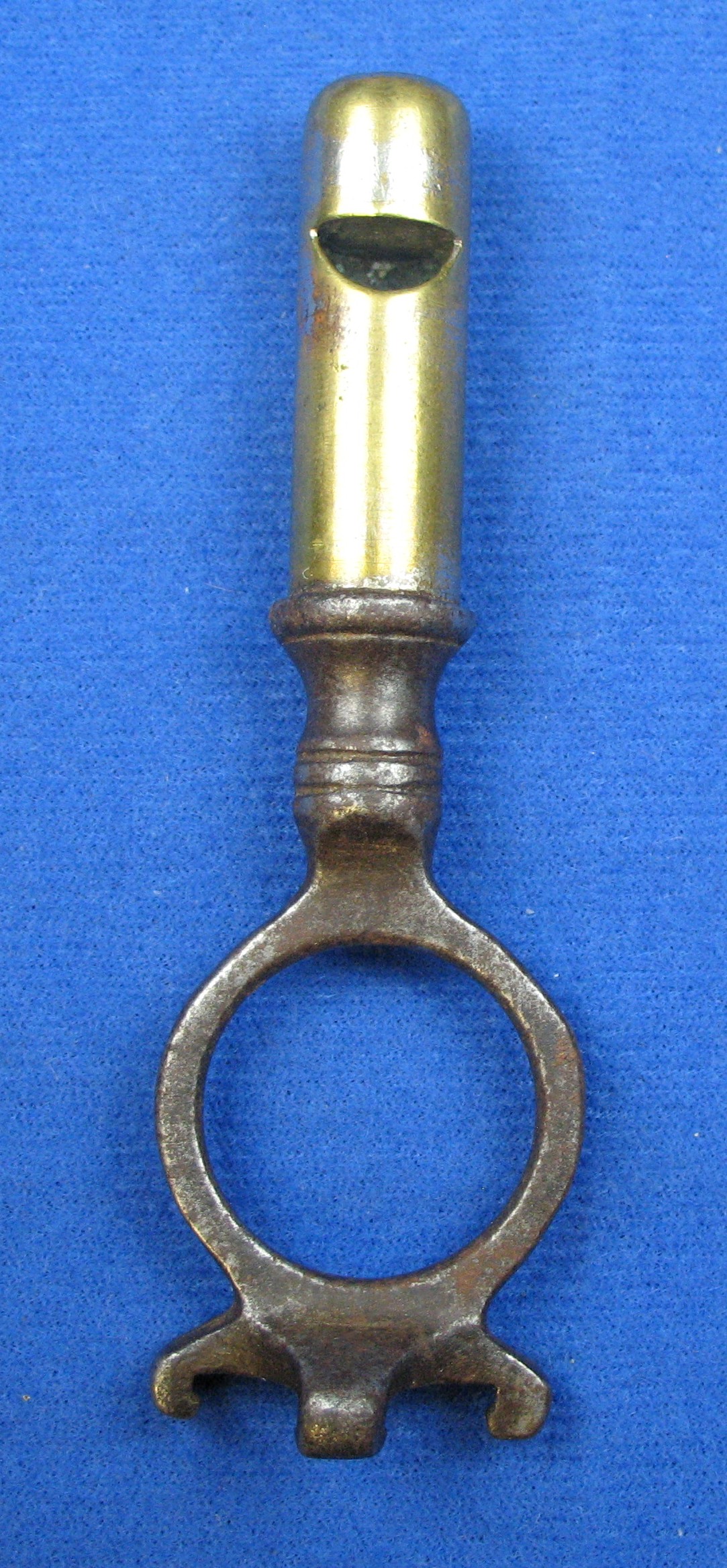
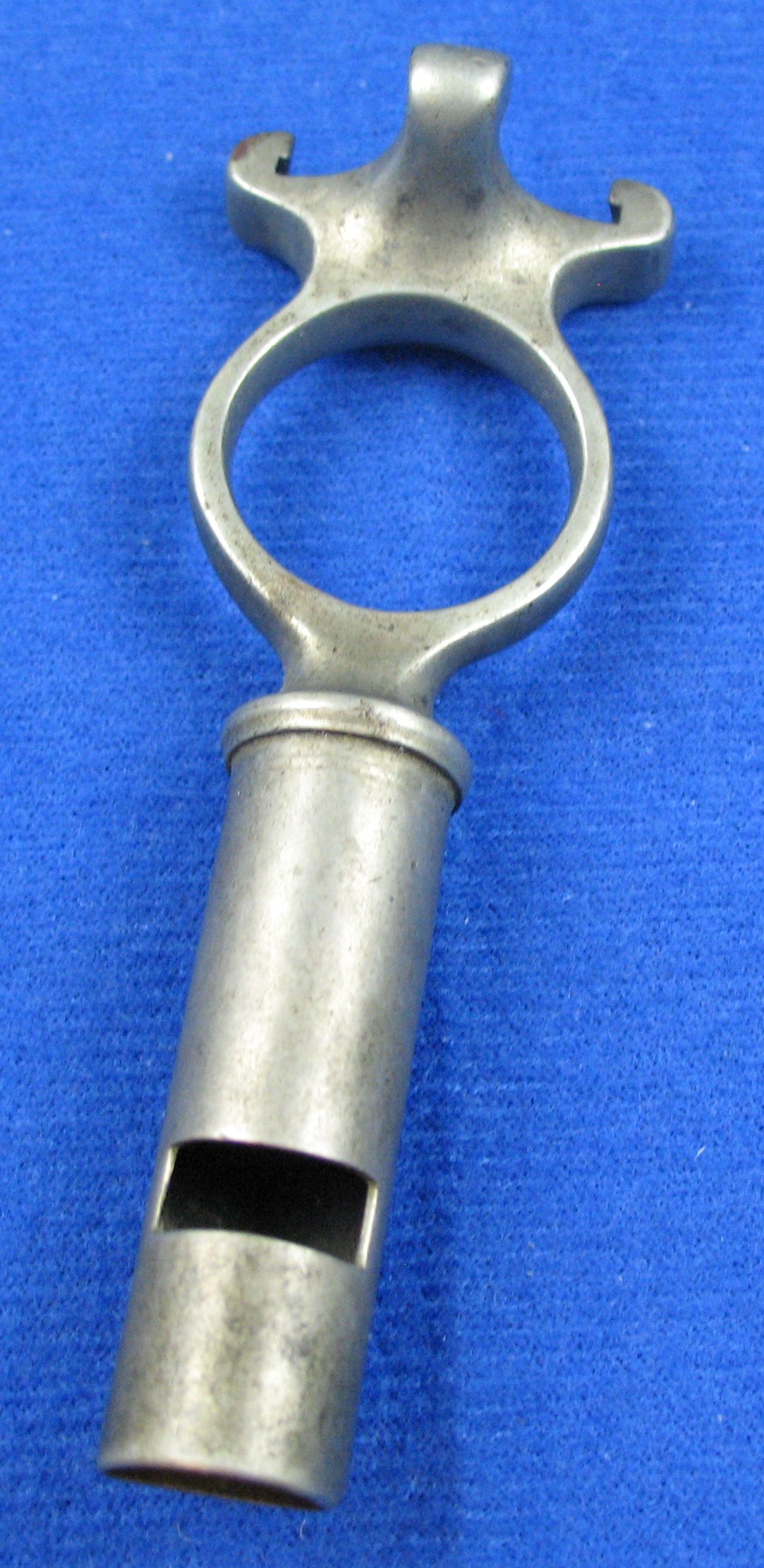
Center and a couple above the slider is an extractor and bottom left another one. Both straight models. These were used in hunting to pull or extract a shell from a shotgun after shooting.
They often had gauge numbers such as 12 stamped on the base. Of course, a dog whistle would be needed and so we see many combinations.
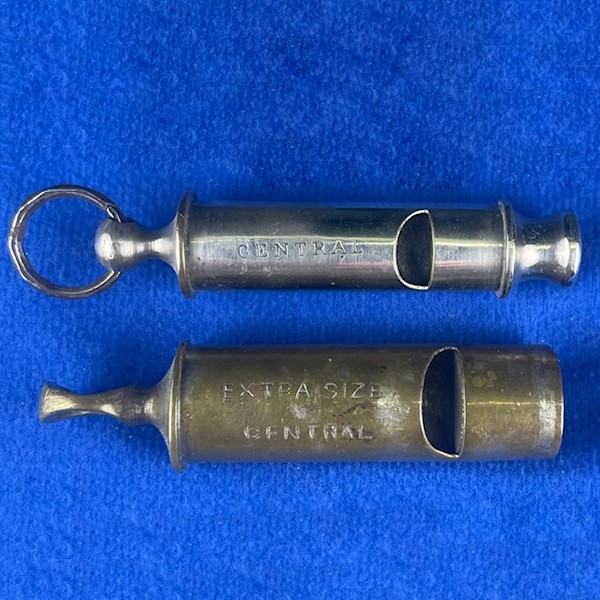
Compare them to a USA maker and a UK made one. Then look back at the creations by J. G.
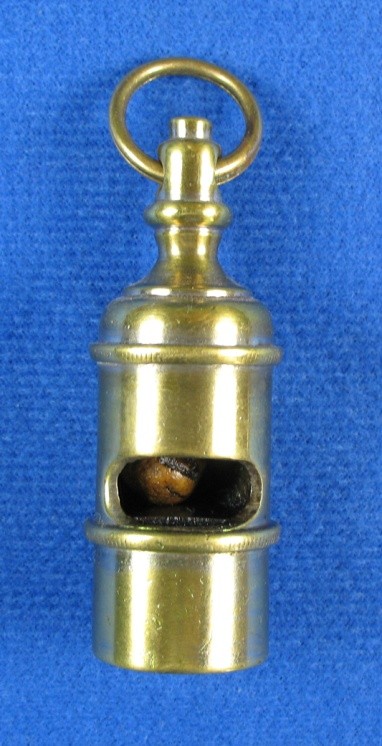
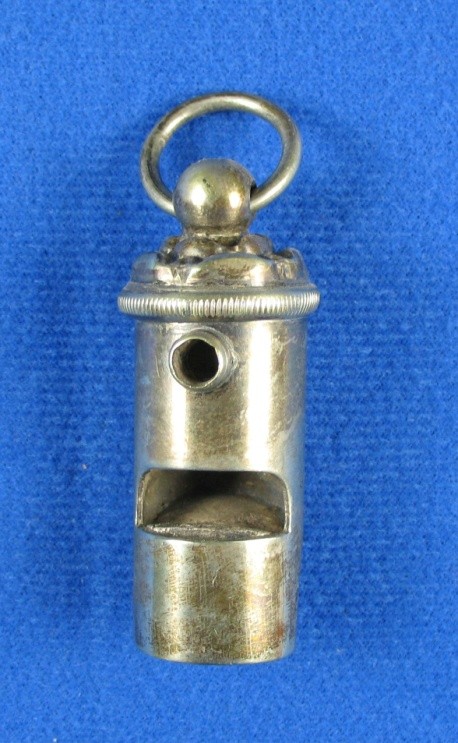
Lastly, we peruse all the remarkable variations of round whistle designs. Having just one window, they always face, forward, don’t they? James uses every variation plus extra. The mouthpieces and the tops are off the grid in anyone’s opinion! Love the one just above the slider.
Rounds date back to the early 1800s and can command remarkable prices, as can the bells, beauforts, and extractors. Here are a few rounds to compare the influence of previous whistle makers. Of course, his personal and artistic accomplishments can be seen really coming out here.
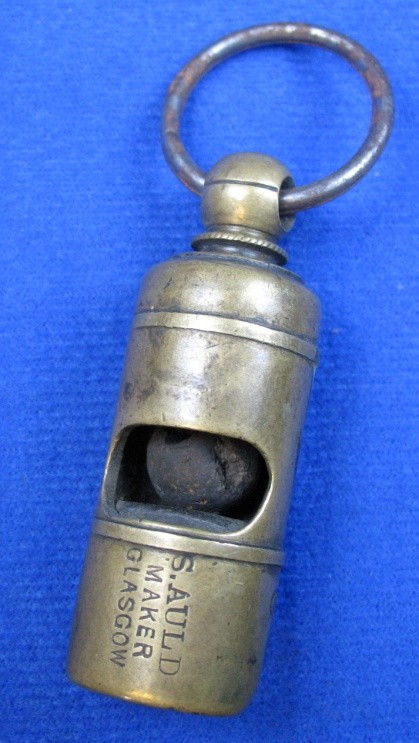
What can’t be overlooked is these also show that they are many times made with his own signature design, quite unique. The Gallery contains a variety of Samuel Auld’s round whistles and we picture one circa 1880s, as it very typical — very heavy and a good comparison. Also shown is an example by Alfred DeCourcy circa 1900s and one by Joseph Hudson circa 1900s with the ornate Tudor rose top. They seem a little plain next to Jim’s, don’t they?
Conclusions
We hope you have enjoyed this SPOTLIGHT highlighting a talented American whistle maker (and avid collector) — James Guttridge. As stated in the beginning of the article, he has decided to sell the entire collection. It has taken years to design and so many hours of work that it would be hard if not difficult to sell off if I had made them. Yet true art is best shared and passed on.
We have used this collection as a vehicle to show and inform you more about whistles, our main goal. It was nice to highlight American whistles too. Not that one country is above another, for great whistles come from around the world. We should all be trying to spread out an increasingly panoramic view of what is available out there in ‘whistledom’ — or in this case what can be made.
Please do not hesitate to write if there is an area of collecting you would like us to write a study article about. If you know more about a subject and can contribute any pictures or information, we will edit SPOTLIGHT and always give credit. Please do not hold back, as we join to build a website worldwide data base of whistles that is free to utilize. Just think, no books are needed to be bought.
TWG
Posted August 10, 2012
Revised February 16, 2021
Revised December 27, 2021
Revised December 9, 2025
Revised April 27, 2026
Bibliography:
- TWG Reference Collection
- TWG Archives
- Guttridge Collection


 Users This Month : 1295
 Total views : 177407