Whistory
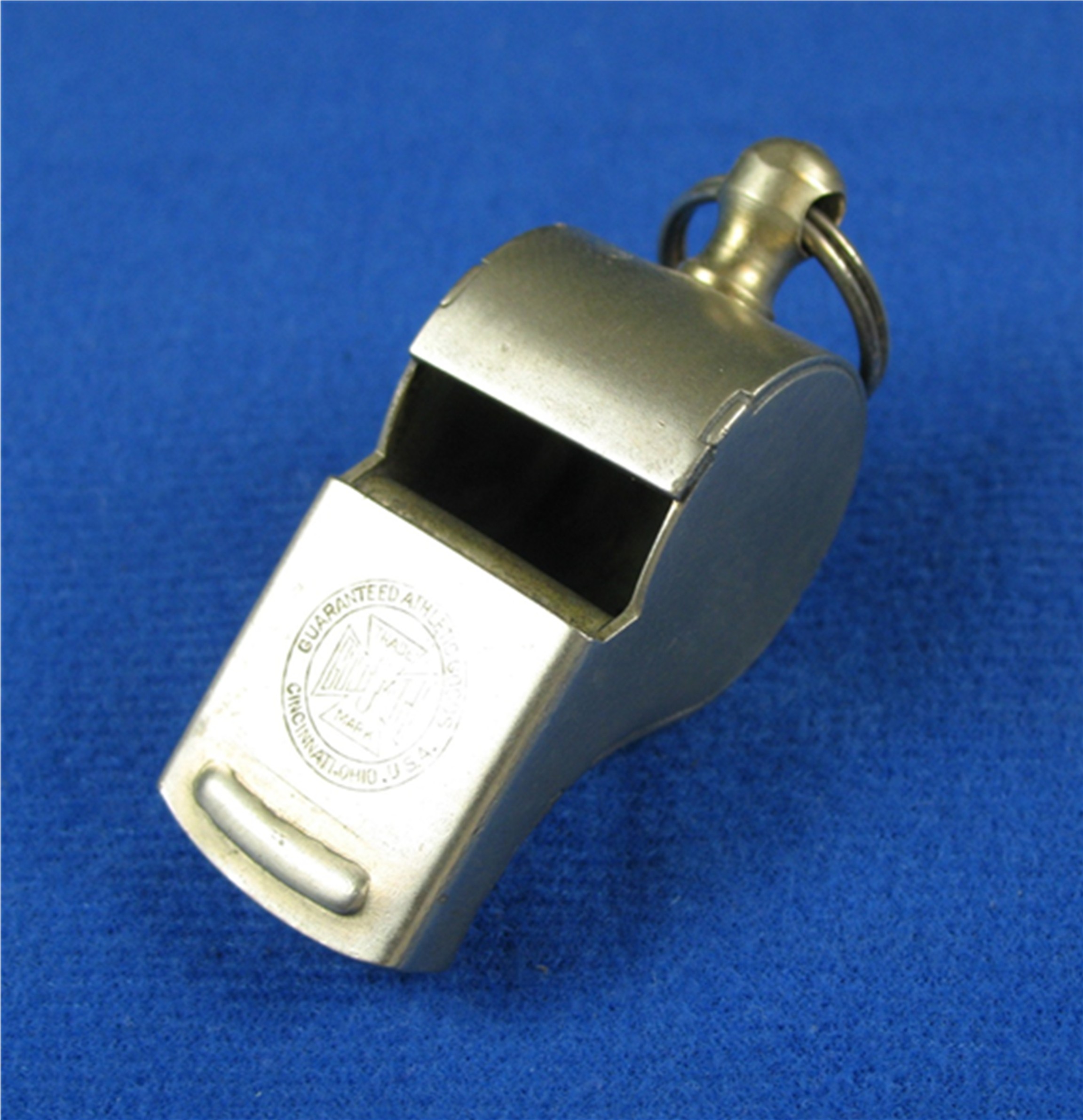
Among studied American whistles, is a uniquely designed escargot. Unique, in that it is the only one that carefully employed interlocking teeth to connect the barrel to the side plates. In the earliest models (1916 to 1922) there were 7 per side, within a few years they dropped to 3 and finally 1 per side plate, and a special feature of the earliest was interlocking teeth directed into the tongue.
How was the tongue interlocked on this escargot whistle?
The earliest models used 2 perpendicular side interlocking teeth directed into the interior tongue plate, which was added to keep the cork ball from jamming, accompanied with 5 more rim teeth. Apparently, the cost of labor must have caused the manufacturer to cut back on production techniques, as only one escargot by this maker has been found without interlocking teeth at all.
This escargot enters our SPOTLIGHT, having been made by an unknown manufacturer. It is never stamped with made in the USA, so may or may not have been an import. There are other manufacturers that utilized this interlocking tooth concept, but they did not develop it as much, nor did they use this concept as extensively.
After its initial release circa 1916, the manufacturing improved from a rough start of nickel-plated brass, changing to nickel silver. The mid-sized model was manufactured with plated brass only, and the larger escargot was bulky and heavy at first, then a lighter construction was offered yet very sturdy due to the rimmed interlocking teeth.
Whistle Classification
| Type | escargot |
| Maker | unknown |
| Category | sporting |
| Material | plated brass nickel silver |
| Features |
Whistle Archeology
Spanning the years c.1916 to 1922, the earliest examples were nickel plated, large heavy models. At first the workmanship was rough, with 7 interlocking teeth, and the knops often were loose.
The second period from 1923 to 1926 reveals a much higher quality in nickel silver, and at the same time, a midsized escargot was offered of nickel-plated brass only. By approximately 1926, the interlocking teeth were reduced to one each side. No maker has been verified. All stamps were confined to sporting goods companies, with one exception of Signal Police.
We have designated three groups and dates as follows:
| Group A | 1914 – 1922 Large size 7 teeth per side 1914 the beginning of the Wilson name |
| Group B | 1923 – 1926 Large size 3 teeth per side (a Winchester 1806 is first seen in a 1923 Winchester catalog) |
| Group C | 1923 – 1928 Mid size 3 teeth per side (a similar style Winchester 1805 is listed in the same catalog) |
| Group D | 1926 – 1928 Large size 1 tooth per side (Arbitrary dates) |
A Closer Look at Each Escargot Group
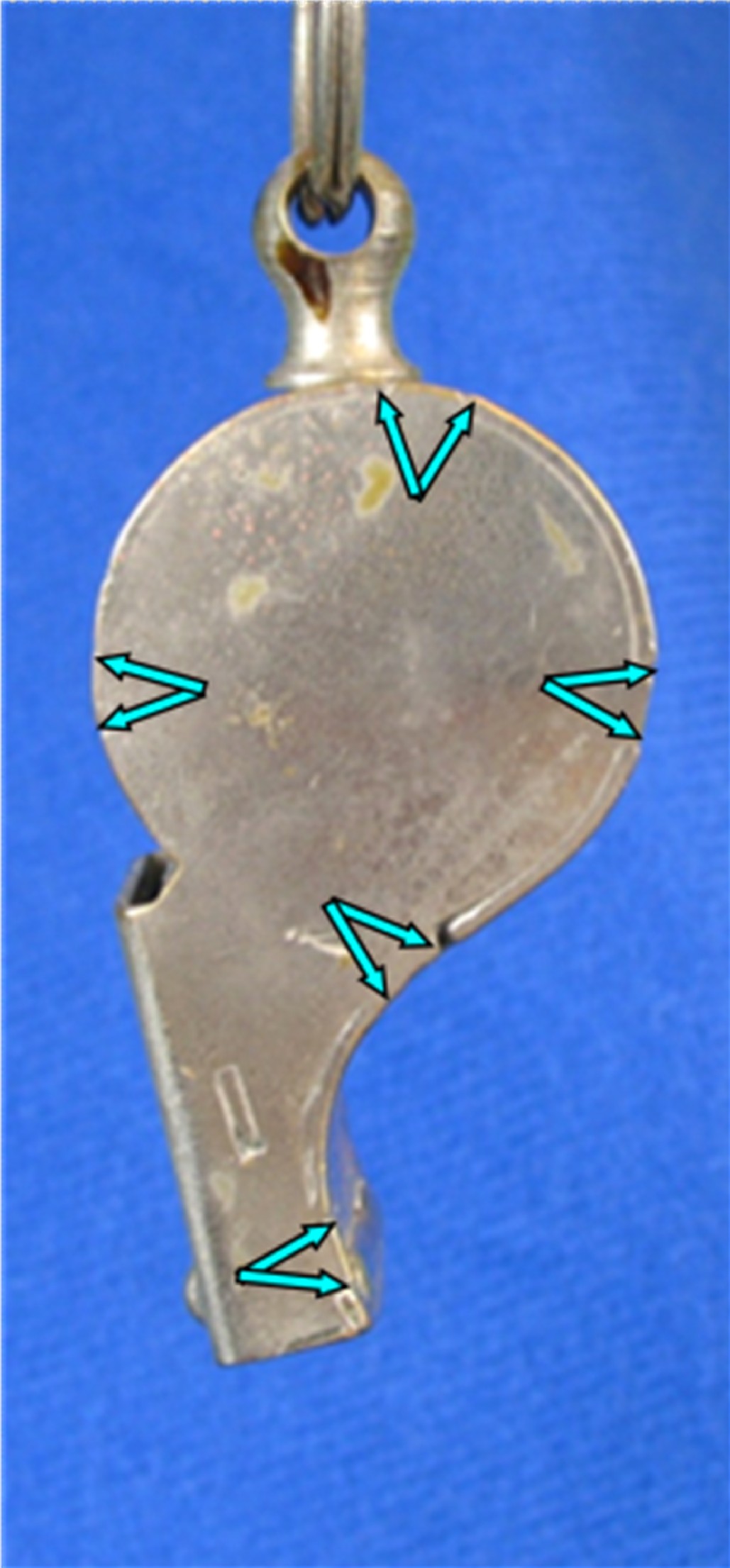
Group A dates from 1916 – 1922 and is always nickel-plated brass, with a rather rough construction. It always has 2 teeth protruding sideways (pictured with arrows) and interlocking with the sides besides the 5 rim teeth. 7 teeth total per side.
Group B from 1923 – 1926 and is always nickel silver and lighter weight, very well constructed. It was a marked upgrade from the previous Group A. Early ones were large, full-size escargots or what has become known as the larger Glasgow escargot.
Group C A mid-sized Glasgow model with a different type and identifiable knop altogether, would appear at the same time. Nothing new to the overall body manufacturing except for thinner construction. The primary interlocking teeth occurring only at the edges where the sides connect to the barrel. Mid-sized whistles were always nickel-plated brass.
Group D is reserved for the larger Glasgow size that seems to be the last manufactured date as the teeth have been reduced to one on each side and the fold inside the tongue has been eliminated.
Take a Closer Look at the Escargot Whistle Knops
Knops in the early whistles circa 1916-1922 (group A) were round (left), whereas the ones dating after that had slightly flattened sides to the knop top (group B). Occasionally a whistle from Group B would find a round knop installed, but granted it is not much of a variation but seems to be unique to this maker. Even more unique is the mid-size model with the shorter pillar top knop shown (Group C) – Colsoff 30 years later employed a similar one.
Whistology
First note the progression of knops over the 12-year period.
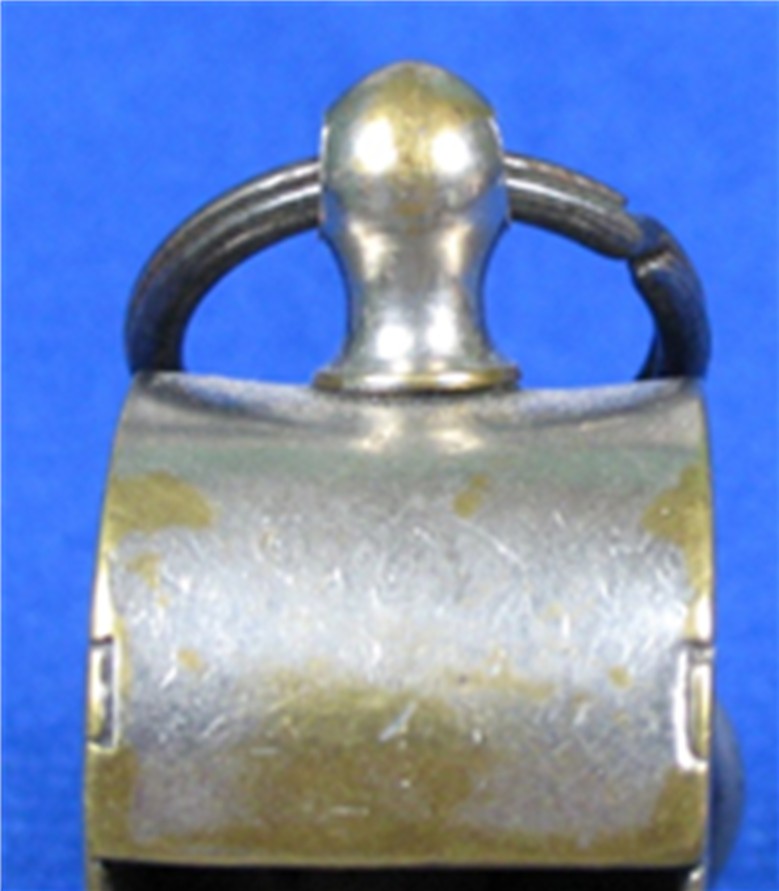
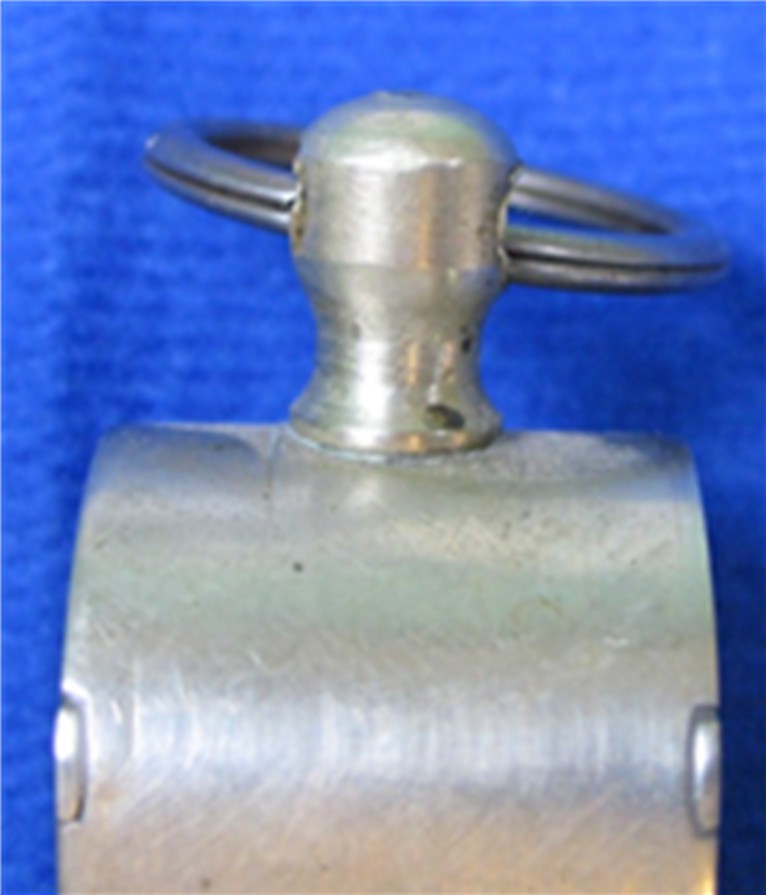
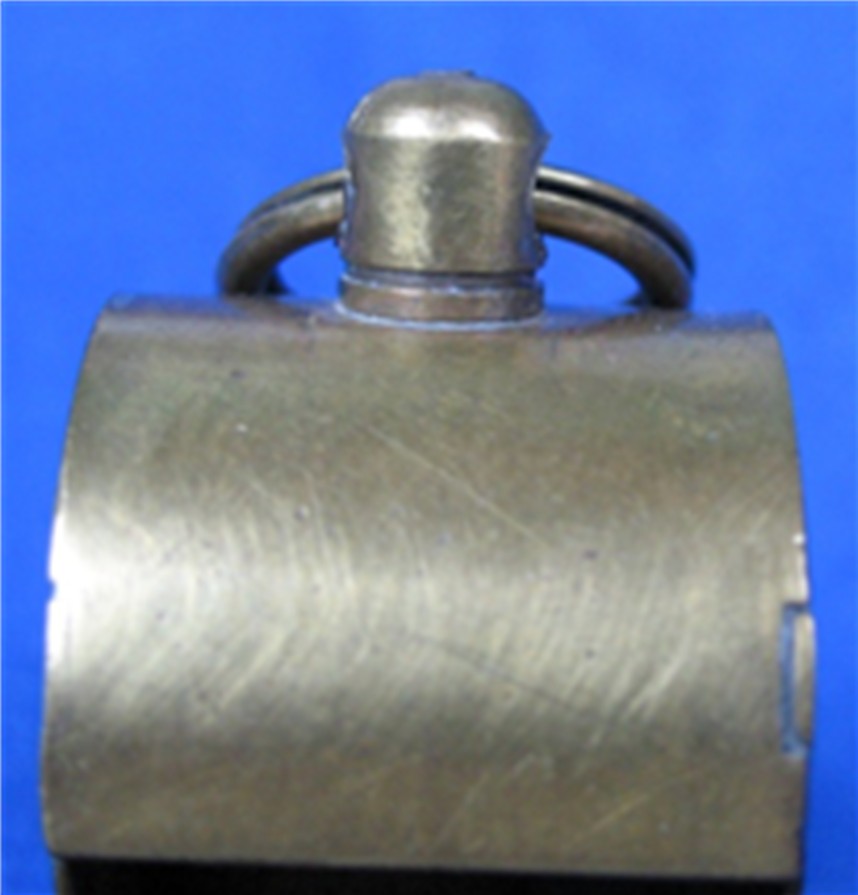
The dates have been established from a 1923 Winchester catalog here at The Whistle Gallery library we are using as a benchmark, but cannot be given rigid dates without further verification.
The 1923 catalog shows a round knop in the picture P1806A. However, it is the first occurrence of Winchester 1806 in a catalog. No Winchester stamp has been seen on a 7 tooth earlier whistle. Model 1805 is a mere listing P1805A. This catalog coincides with the Winchester-Simmons merger.
We should also discuss the distinction of this very well-made model in the ‘U’ shape of the tongue — inserted inside the mouthpiece. This occurs only in Group B and Group C models, not in Group A. The earlier versions were made in a much ‘rougher’ design which was thicker and poorly soldered.
A Feature Not Seen in Other Escargot Whistles
Pictured here is the feature not seen to date in other escargots, is the tongue inserted into the mouthpiece (not unique in itself) wrapping upwards on the sides of the mouthpiece interior. This was also used to wrap down over the inside of the round barrel to keep the cork or wooden ball from jamming into the exit hole of the air when blown. Much like the diaphragm in tubular whistles, it is a useful tool in determining manufacturers.
Looking inside the MP end, one sees that the sides fold up on each side (as seen in this Winchester 1806 large model here) where extra support is created by being in contact with three sides of the four walled mouthpiece. This innovation was used in both large (Group B) and midsized models (Group C).
It dates from 1923 onward. It is not found in Group A whistles dating from 1916-1922.
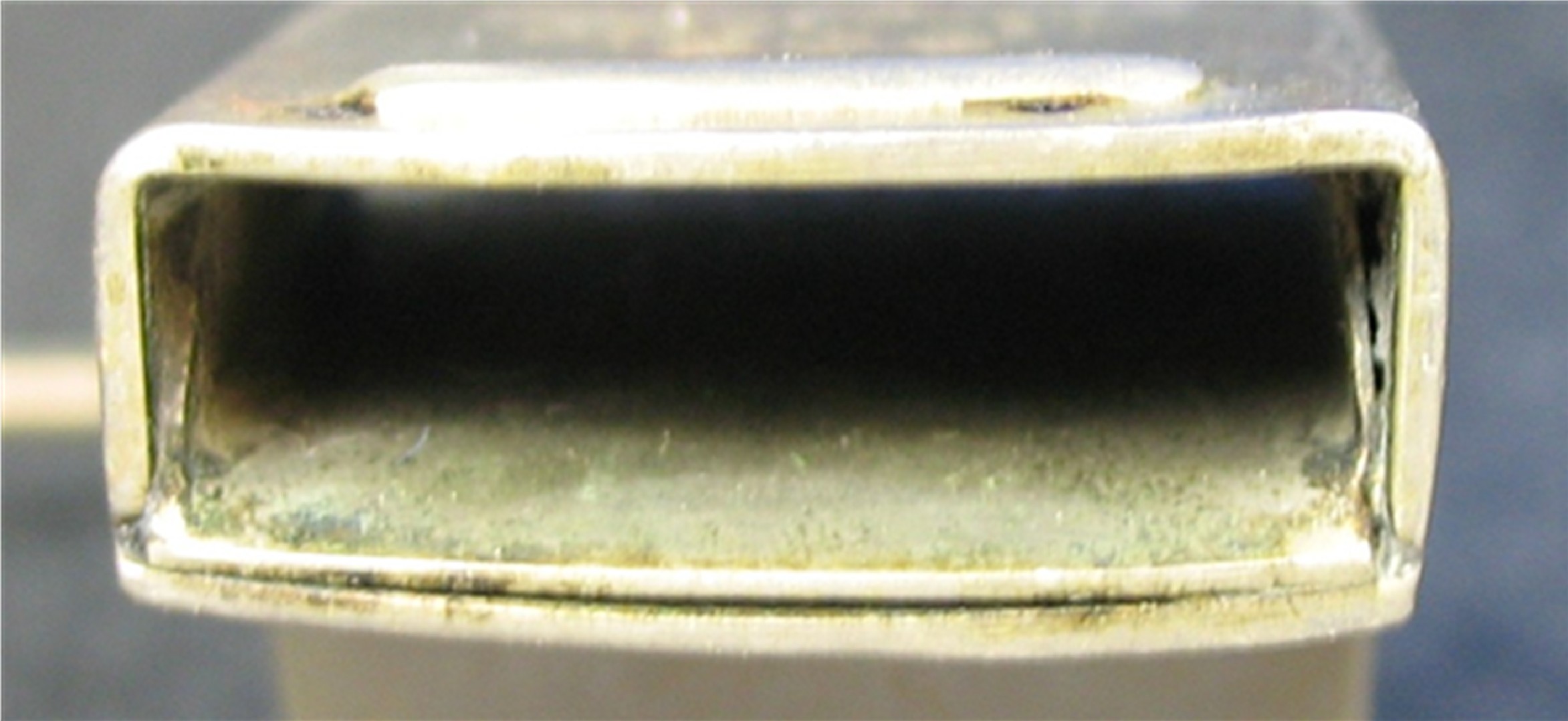
Note the sides that fold up and the 45-degree cuts slanting toward the back.
Now let us examine Group A regarding the interlocking sections or teeth and the locking teeth on the sides which made this early designed whistle a very rigid construction.
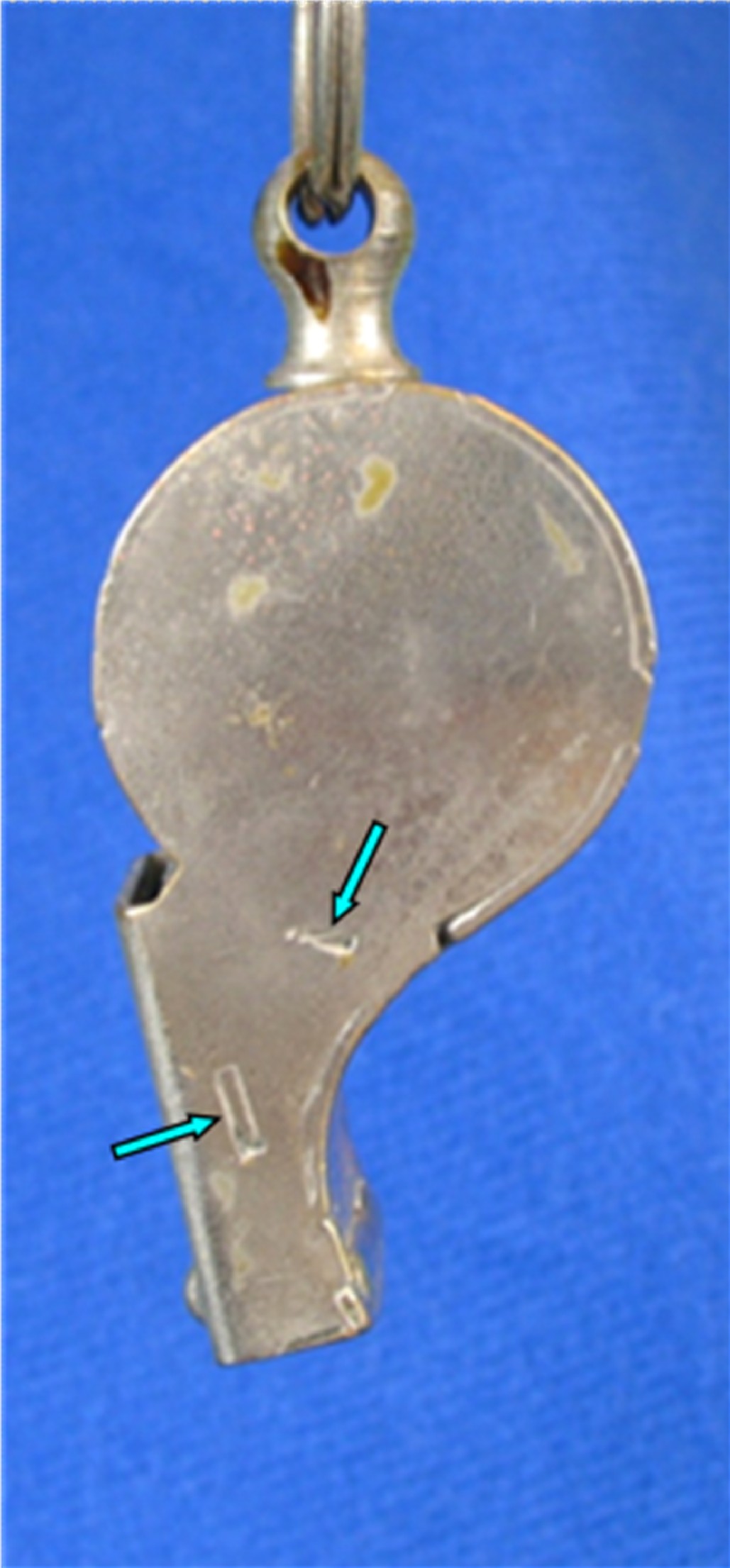
We’ll start with the interlocking teeth of which there are SEVEN total per side (Group A). Each ‘tooth’ measuring 3mm wide and not quite flushing with the top edge. They are evenly spaced commencing just below the mouthpiece and progressively getting further apart till reaching just above the window (5). Picture left, ‘teeth’ interlock, picture right side teeth (2).
In summary, 5 teeth at the rim and 2 teeth exiting the sides perpendicular from the tongue which make up the interlocking connections.
Review the Interlocking Sections of These Whistles
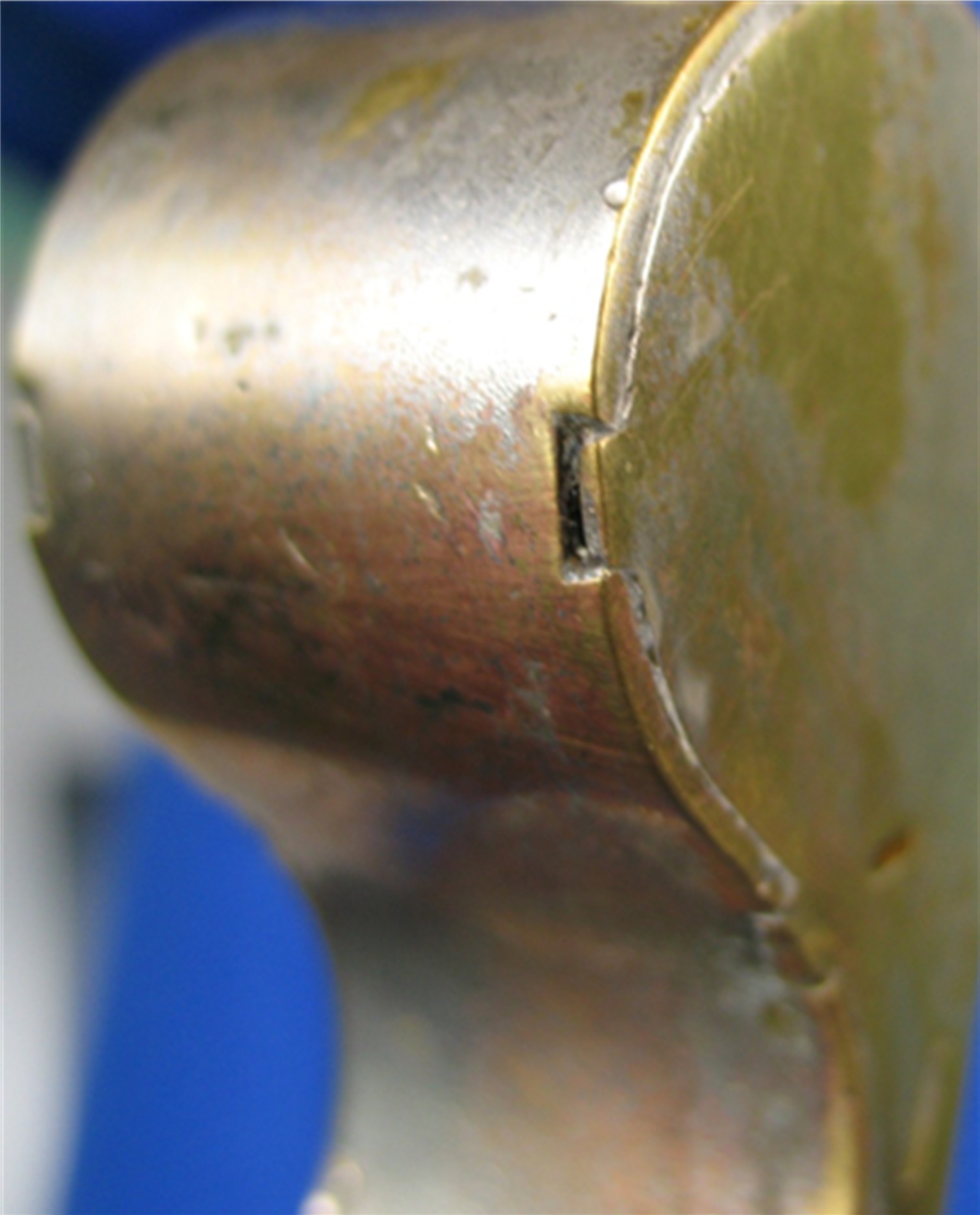
Now look at the actual interlocking sections. The manufacturer would go on to reduce them to three per side (and then down to one per side) apparently finding that much of this work was redundant or too expensive in labor, machining etc.
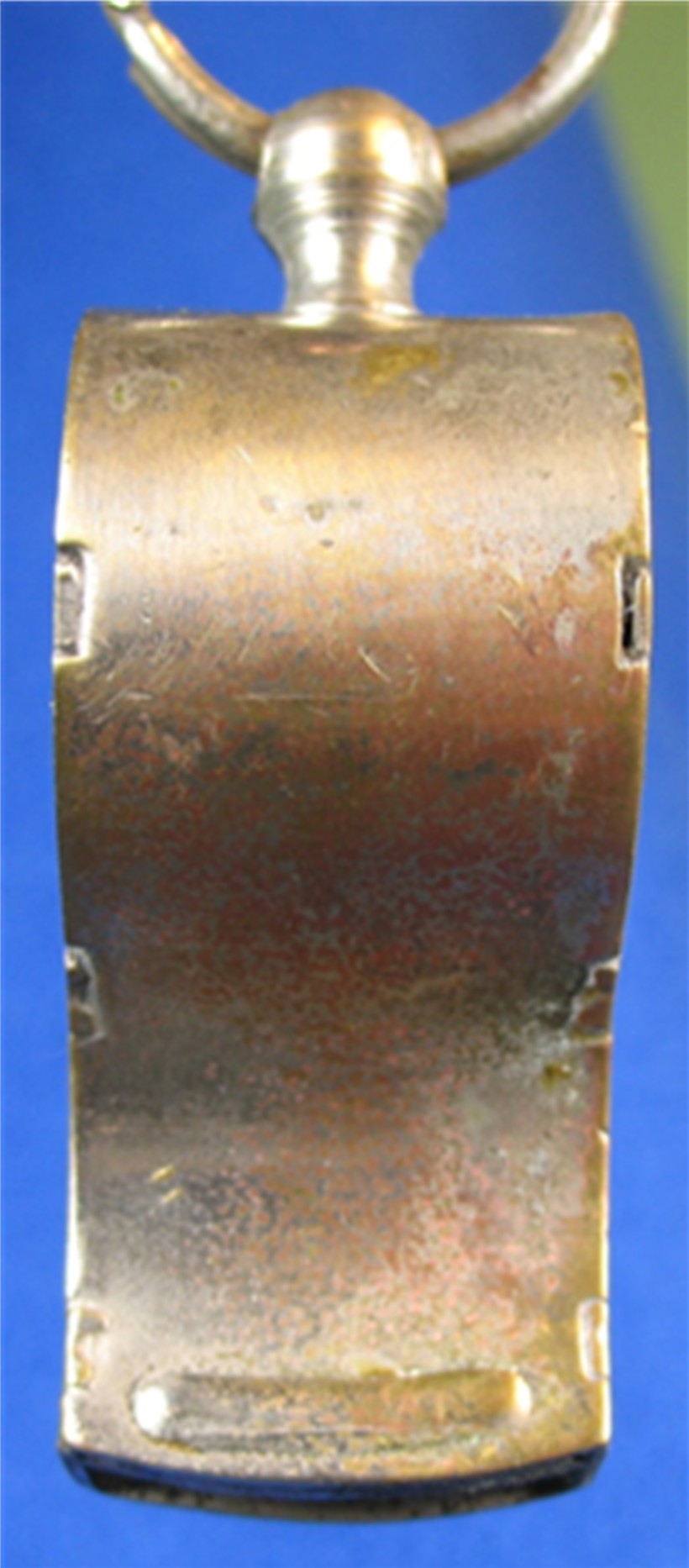
The teeth extending sideways were very innovative in that they were aimed at supporting the tongue itself, making the soldering even further secure.
The wider tooth was from the long side to the tongue through the side wall. The second tooth extended from the tongue as it curved down into the barrel so that the two teeth were close and perpendicular to each other creating a very sturdy whistle.
Here is a close-up of a single tooth located at the top position of the window edge. One only to each side was the reduction chosen close to the end of this series, with four different stamped examples known.
Known Stamps are:
- Dardevle
- D&M Sporting Goods
- Goldsmith
- Optimus
- Reach
- Referee
- Signal Police
- Thos E. Wilson
- Winchester
- Wright & Ditson
| Known stamps by Group: | |
|---|---|
| GROUP A | 7 teeth per side — large Glasgow escargot – plain, no stamp – Goldsmith – Referee – upside down – Signal Police – Thomas E. Wilson – Reach |
| GROUP B | 3 teeth per side — large Glasgow escargot – Dardevle – D&M sporting goods – Goldsmith – Reach – Referee – upright – Thomas E. Wilson – Winchester 1805 – large – Winchester 1806 – large – Wright & Ditson Victor Co. |
| GROUP C | 3 teeth per side — midsize Glasgow escargot – Winchester 1805 – med – Optimus – med – Referee – med – Goldsmith – med |
| GROUP D | 1 tooth per side — large Glasgow escargot – Reach – Goldsmith – Referee – Thomas E. Wilson |
| *** Reach circa 1914-22 (large) found without any interlocking teeth (large) |
Conclusions
During the outbreak of WW1 to the time of the great depression, a remarkable escargot whistle was marketed in the USA. It had interlocking teeth on the side walls, which improved in design and quality within a short period of time and expanded to two models.
It had a wide distribution in the sporting goods line and yet disappeared by the time of the great depression. We have yet to see if more stamps appear as of this revision. The manufacturer, whether in this country or another, is yet to be verified.
Most of the stamps were focused on sporting goods companies, the exceptions being Optimus (camping equipment) closely akin and Signal Police, a standalone divergence.
TWG
Posted April 5, 2013
Revised November 22, 2018
Revised August 15, 2020
Revised October 11, 2020
Revised February 12, 2021
Revised February 13, 2022
Revised March 27, 2025
Revised December 9, 2025
Revised March 13, 2026
Revised June 10, 2026
Bibliography:
- TWG Reference Collection
- The Whistle Gallery Archives
- Website: https://thewhistlegallery.com/
- Website: https://www.lib.uchicago.edu/collex/exhibits/meatpacking-midwest-thomas-e-wilson-family-collection/family/thomas-e-wilson/
- Website: https://www.fundinguniverse.com/company-histories/wilson-sporting-goods-company-history/
- Catalog: Winchester – 1923
© – All photos with blue background property of The Whistle Gallery reference collection. Please contact The Whistle Gallery for permission of use of any website content. Spotlight articles are copyrighted. Please contact The Whistle Gallery for permission of use of any website or Spotlight article material written or otherwise. Use of photos without authorization is prohibited.


 Users This Month : 1295
 Total views : 177407