Whistory
Any time highlighting a whistle, like this Lilly example, when it has not been seen before (monotypical) makes it hard to avoid words like remarkable and stunning and yet here it may be fitting.
It just goes to show you that whistle makers in production of whistles or otherwise, did not always ‘follow the rules’ or stick to just an average look or design, sometimes they went ‘outside the box’.
Why is it Difficult to Identify this Lilly Whistle?
B. Lilly remains enigmatic because Benjamin Lilly manufactured whistles, but also contracted other companies to make whistles for them for distribution such as from Yates, Ward and Guant, Mossburg and others.
Whistles then must be compared to differentiate who made them. Many manufacturers customarily did not stamp their name on the whistles they made.
This being the case, this whistle not only is unusual in design, but it does not have a stamp on it. Some comparisons then need to be made to identify the maker.
How Can This Lilly Whistle be Identified?
This civil whistle matches very closely to Lilly whistles in several aspects, who was a manufacturer from the UK. However, the mouthpiece is very unusual at 35mm long. Not only that, but you can see that a lot of thought went into the design of the mouthpiece.
In fact, it is unusually long by any whistle standards and as of this revision has not been seen in any other whistle. When we make a comparison of a known stamped whistle by Lilly, it matches in all ways except the mouthpiece. The top cap and loop, the diameter of the body, also the length of the body and the material.
This is really an unusual mouthpiece for any manufacturer, but to find it made by Lilly is even more interesting. They usually farmed out whistles to others; however, they did manufacture their own whistles.
Whistle Classification
| Type | tubular |
| Maker | Benjamin Lilly |
| Category | civil |
| Material | brass |
| Features | long mouthpiece |
Whistle Archeology
Martin Gilchrist on page 77 of Collecting Police Whistles and Similar Types side notes that Benjamin Lilly produced a catalogue of 1909. However, to date, this catalogue has not been produced for the public domain.
A civil whistle with Lilly’s identifying stamp is at TWG’s Reference Collection and known elsewhere. This whistle has been used for comparison studies.
Comparison has been verified of:
- Body diameter
- Top loop
- Top cap
- Diaphragm
- Material
Whistology
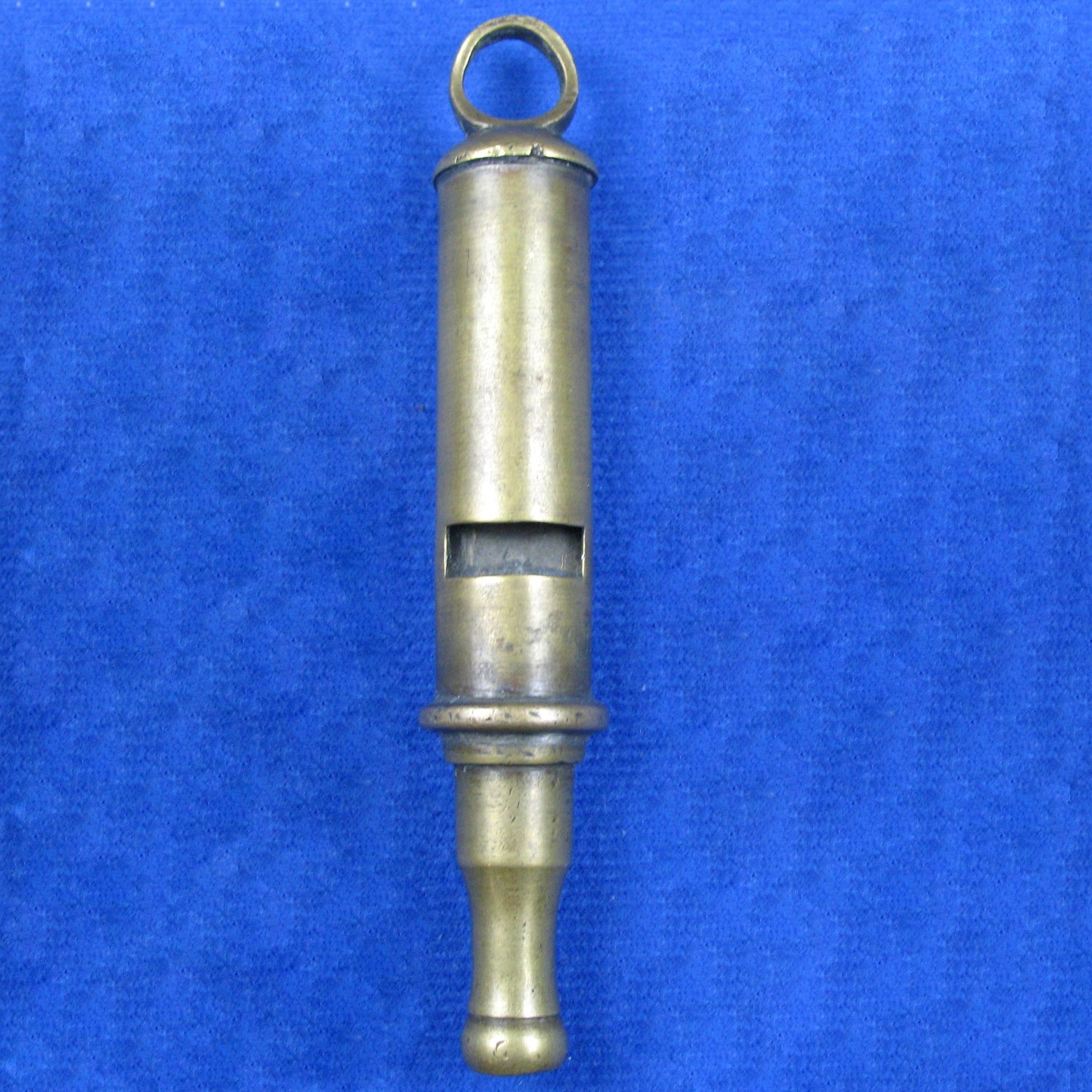
Full picture – 4.2 in. 106mm
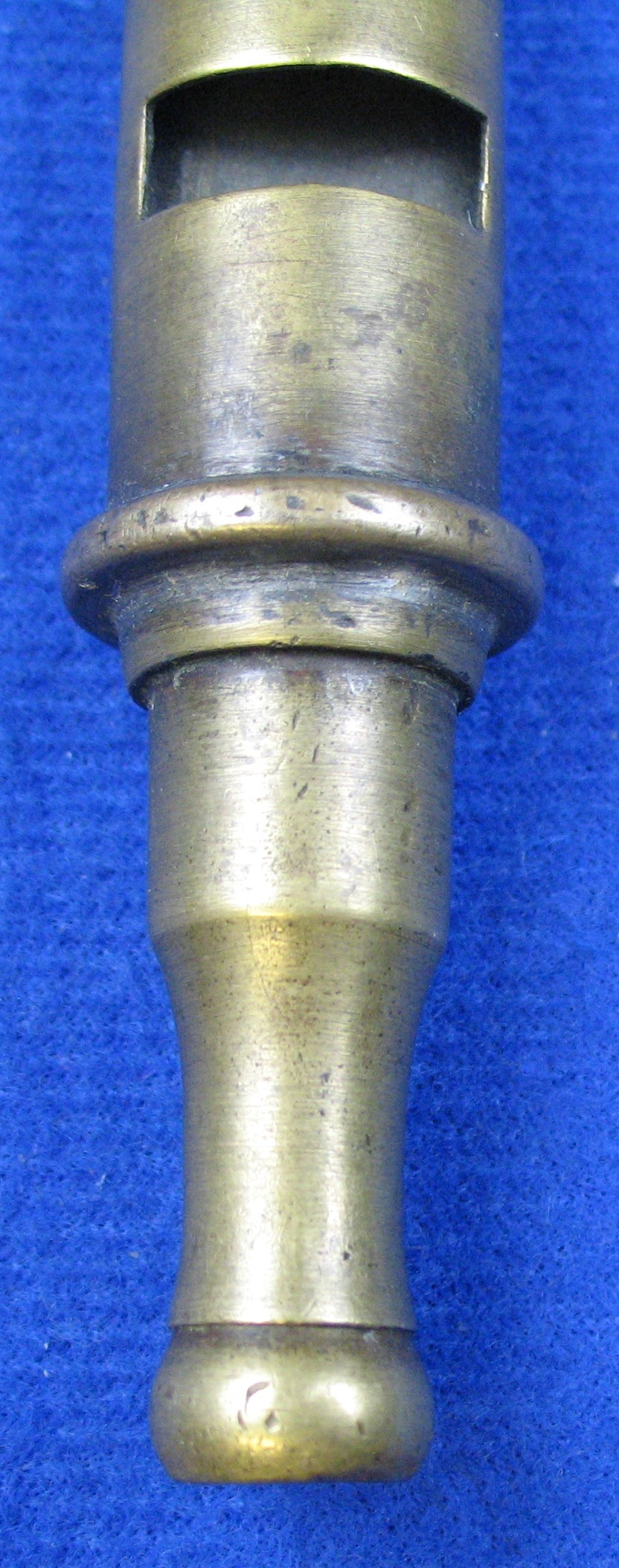
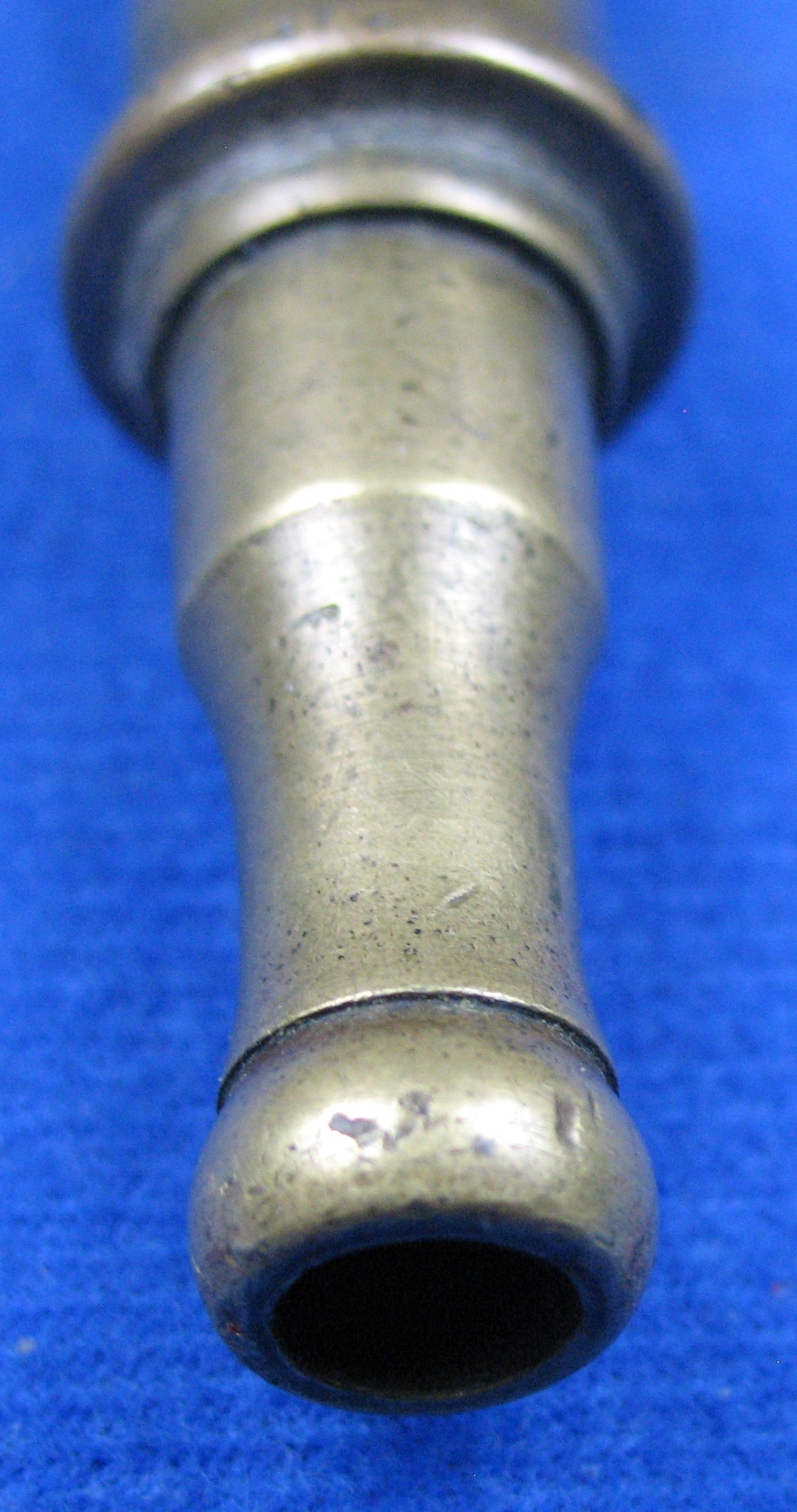
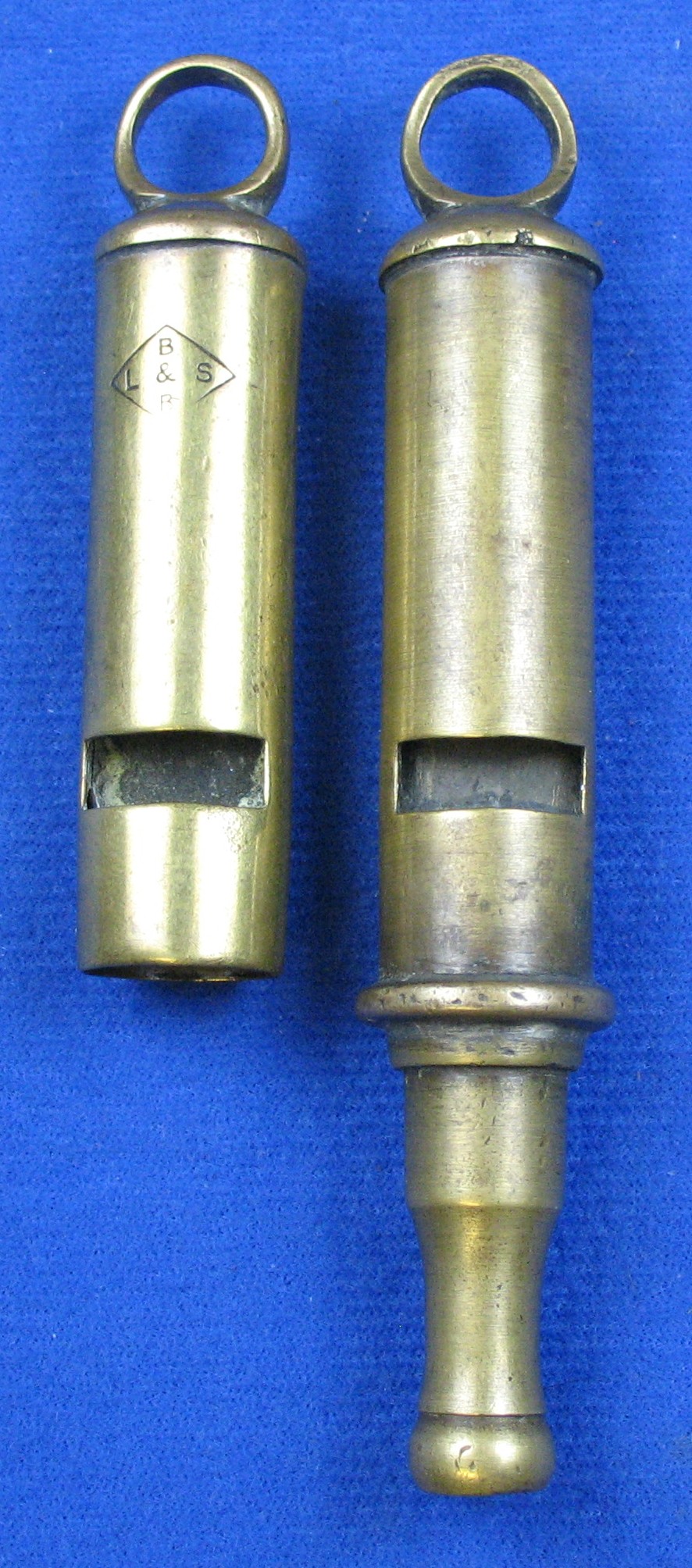
First picture – the long mouthpiece – 35mm
that is a signature for them and comparatively a shorter body.
The stamped Lilly design on the body of the second whistle is one of the few known to exist and is here at the Whistle Gallery reference collection.
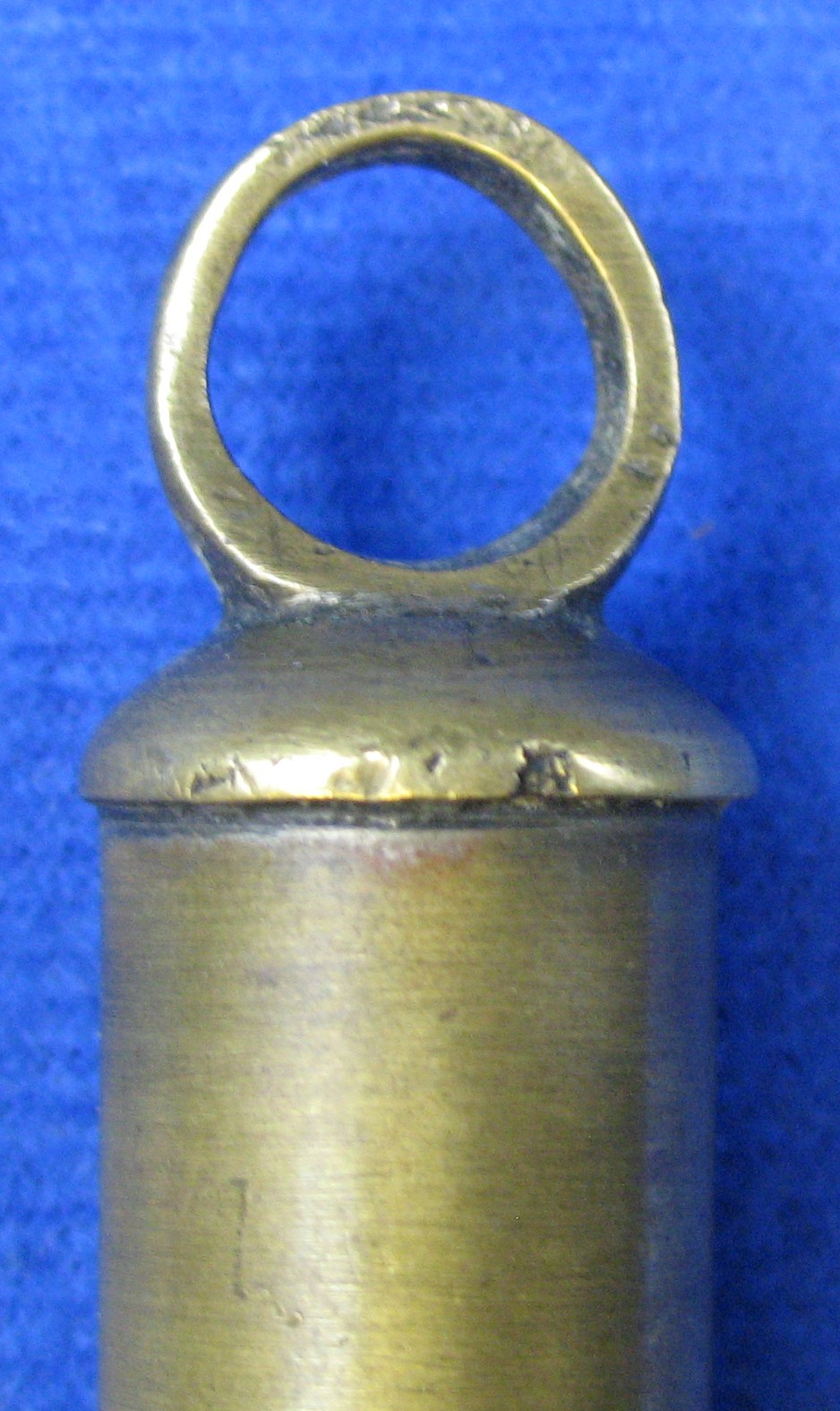
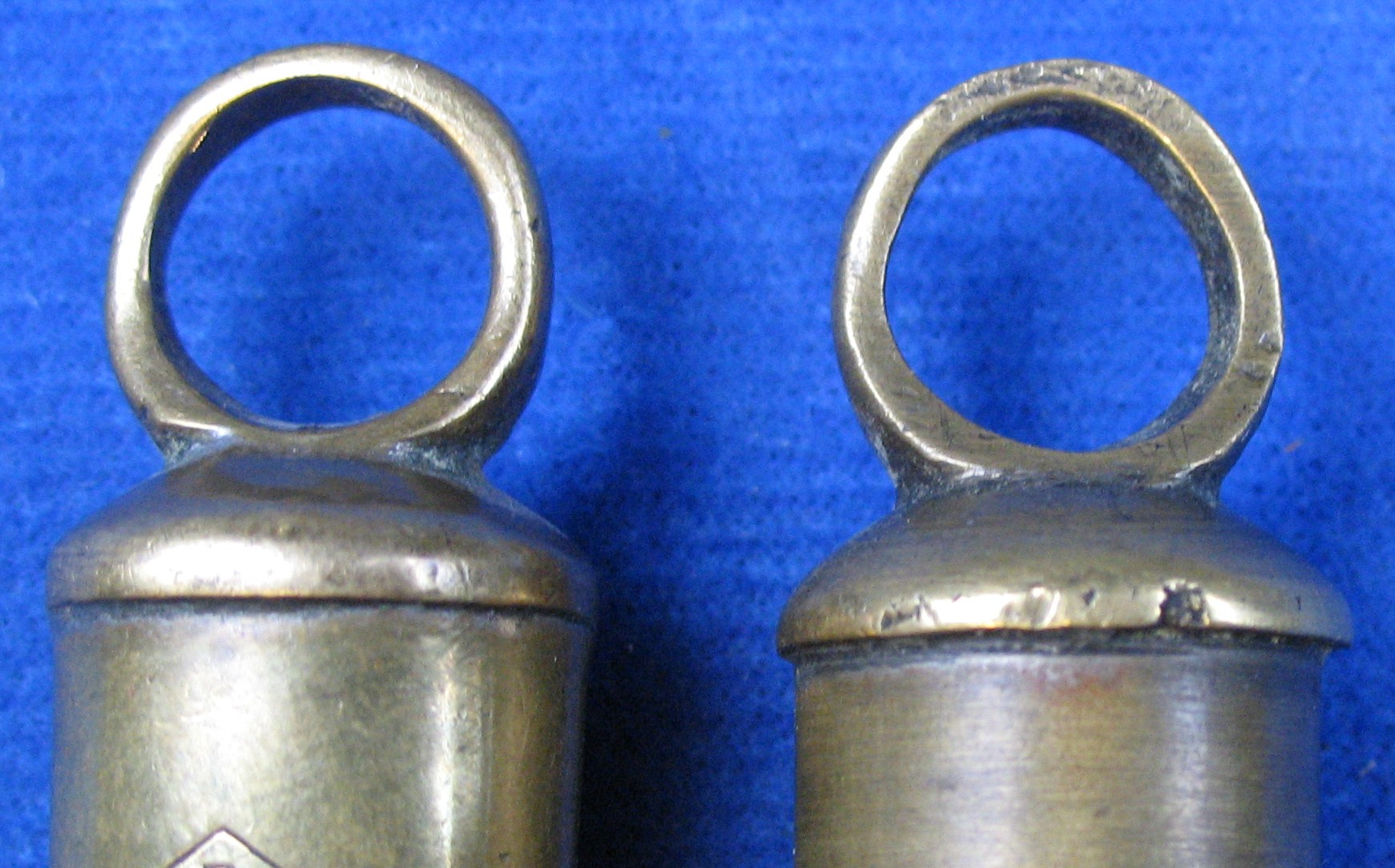
This would serve to identify this whistle as it was made by B. Lilly and Sons circa 1870-80. The diaphragm could place it more towards 1890.
Paired pictures – the stamped Lilly is on the left, the long mouthpiece on the right. You can see that the loops match perfectly.
We’ll see that matching up entirely is:
- Body length
- Body width
- Cast loop
- Top cap shape
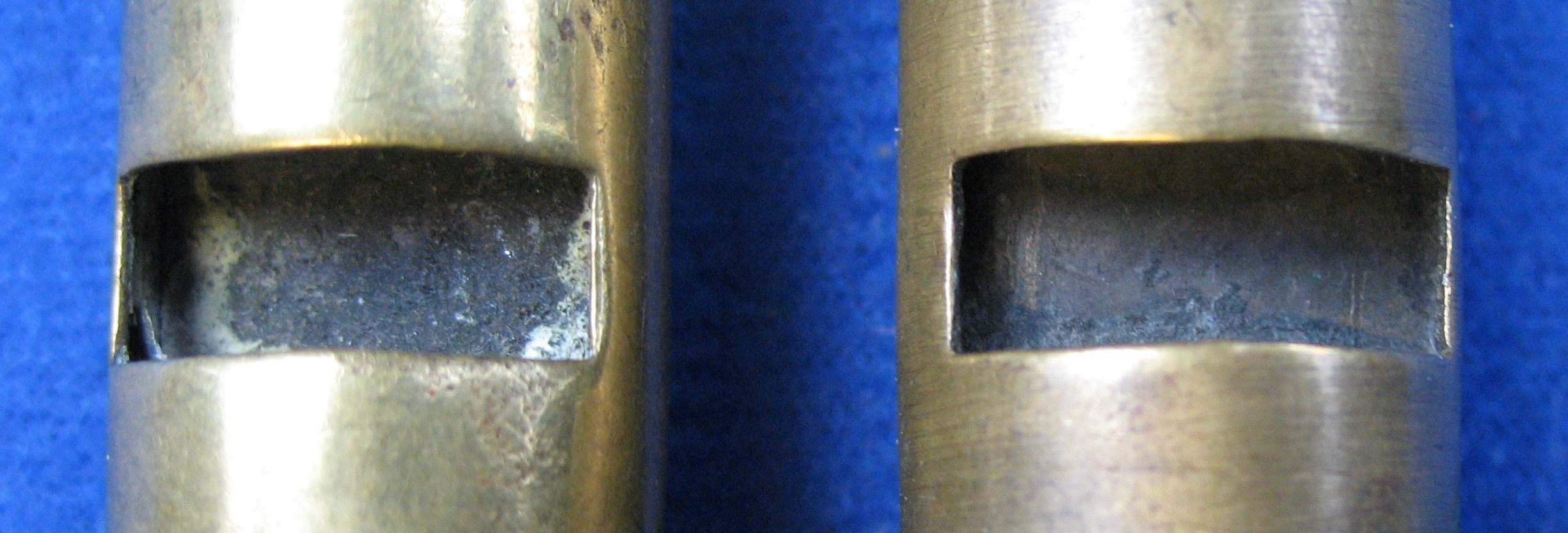
- Rectangular extension to the partition passing through the center of the disc — both whistles
(See: Collecting Police Whistles and Similar Types, pages 91-92)
A close examination also reveals the windows of which match very well to the known Lilly.
Conclusions
A monotypical whistle by Benjamin Lilly. It has an unusually long mouthpiece, but in all other respects matches a well-known and verified Lilly whistle.
B. Lilly typically did not stamp their whistles. They most times were a distributer of whistles for other manufacturers.
TWG
Posted April 5, 2013
Revised November 22, 2018
Revised August 15, 2020
Revised October 11, 2020
Revised February 12, 2021
Revised February 13, 2022
Revised March 27, 2025
Revised December 2, 2025
Revised June 10, 2026
Bibliography:
- TWG Reference Collection
- Collecting Police Whistles and Similar Types, by Martyn Gilchrist and Simon Topman, 1998.
- More Whistles, Martyn Gilchrist, 2005.
© – All photos with blue background property of The Whistle Gallery reference collection. Please contact The Whistle Gallery for permission of use of any website content. Spotlight articles are copyrighted. Please contact The Whistle Gallery for permission of use of any website or Spotlight article material written or otherwise. Use of photos without authorization is prohibited.


 Users This Month : 1295
 Total views : 177407