Whistory
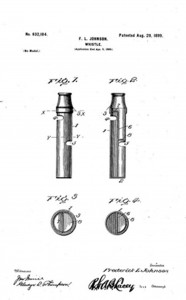
The SPOTLIGHT looks at split level windows in whistles. This is not a new concept, as it dates back to Thomas Yates circa 1870 in the UK, then Coney & Co. circa 1880-90? Accordingly came F.L. Johnson’s patent of 1899.
What sets split level windows apart?
The requirement for this to work is not just changing the window heights as in the Yates whistles. Consequently, there was a need for the internal parts to be radically altered in the diaphragm and separating wall. This made the whistle more expensive to make and therefore higher quality or at least more complicated.
How many split level window whistle designs came to be?
Not many models with this feature are known or at least have not been recorded, so here we will look at some 6 examples.
Why might the levels be made nonparallel? Sound quality is always being striven for and couple with the constant effort to be unique in sound.
Initially Yates used this concept to combine two notes with a civil whistle circa 1870.
Note under whistology that the right window is slightly below the left window. Yates used a wedge design that varied enough to meet the two window heights. This sound certainly predated Hudson’s famous Metropolitan two note claim to fame.
Whistle Classification
| Type | tubular |
| Maker | Yates Coney Johnson (Hatch) Hudson unknown (Harris) unknown (USA) |
| Category | civil police |
| Material | brass nickel plated brass lead |
| Features | rolled mouthpiece cast mouthpiece |
Whistle Archaeology
Interestingly Thomas Yates advertised a catalog of whistles in 1870 that was devoid of tube shaped, escargots, combinations whistles and others.
Although quite a quantity survives to this day of beauforts, rounds, tube shaped, even carriage keys, no catalogs have survived or patents although a carriage key reveal a registered design.
Coney did claim ‘patent’ by stamping it on some whistles, but no such patent exists.
F.L. Johnson patented his designs.
F.L. Johnson from the USA – 1899. He was in Wallingford, Connecticut. Connecticut was a real hotspot of industry, for whistle manufacturers and patents circa 1880-1900. This split-level dates to 1899. There are no cast parts, and they are light weight.
Note how the drawing shows the internal adjustments to the diaphragm. It would be interesting to see if this design was used in Germany or France in their pre 1900 productions. (The Nick Harris looks to be possibly German made, although distributed in the USA, like many Municipal stamped police models.
Whistology
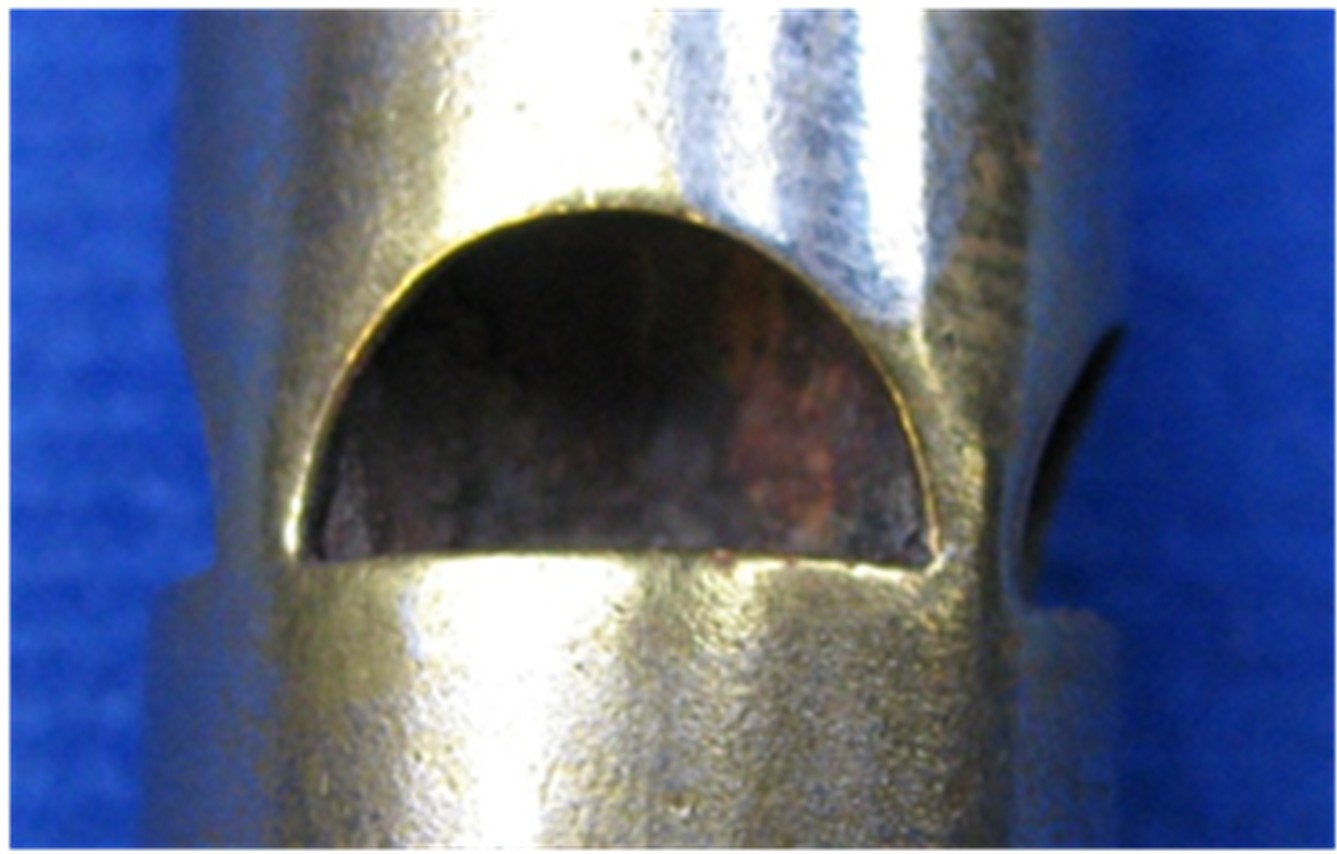
An early Yates has half-moon windows that can be seen at different levels
Coney would exaggerate this concept more and become renowned for it. This would be 10 to 20 years later, circa 1880-90. The inside stepped disc is cast. The windows are hand-filed.
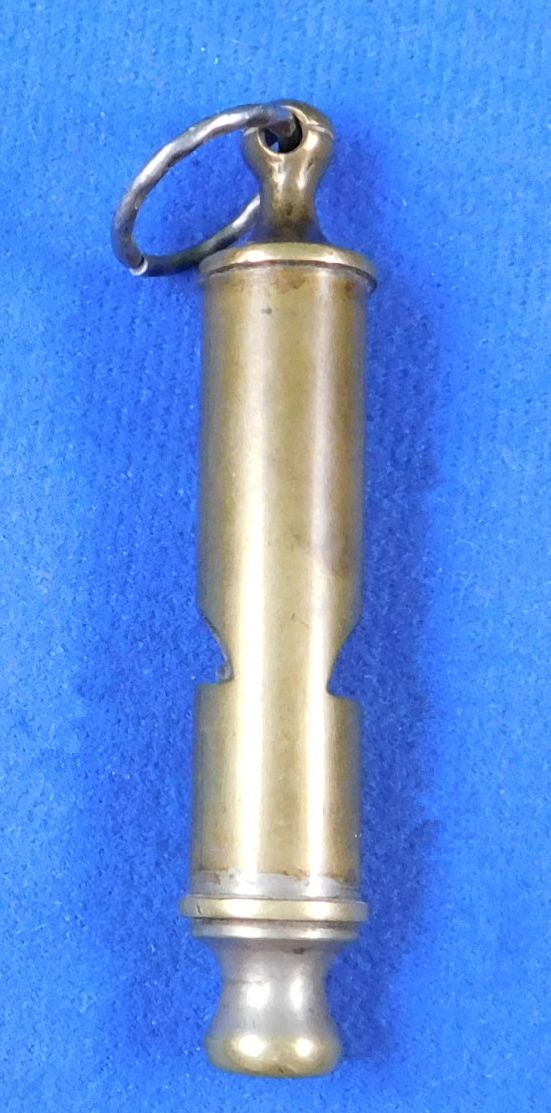
Coney would exaggerate this concept more and become renowned for it. This would be 10 to 20 years later, circa 1880-90. The inside stepped disc is cast. The windows are hand-filed.
The cuts come clear into the window edges to reach the diaphragm making the window width as extreme as possible. The windows are thinner than many civil whistles.

The F.L. Johnson was a very light weight whistle with a deep hollow sound.
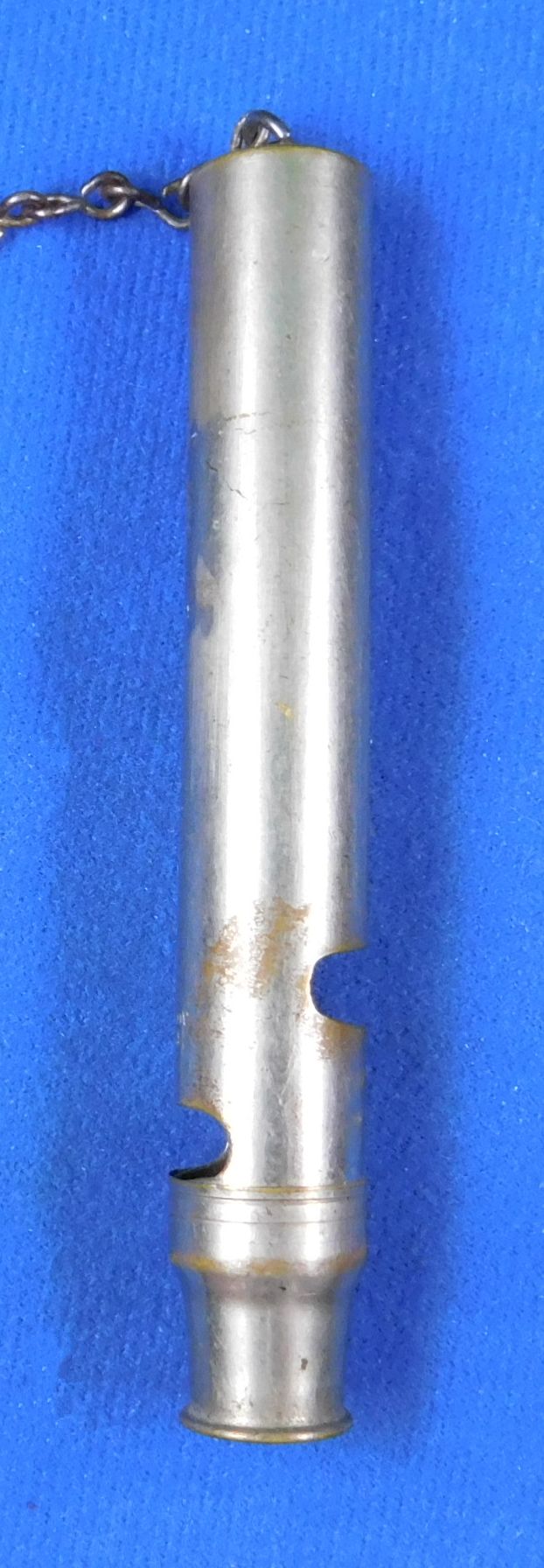
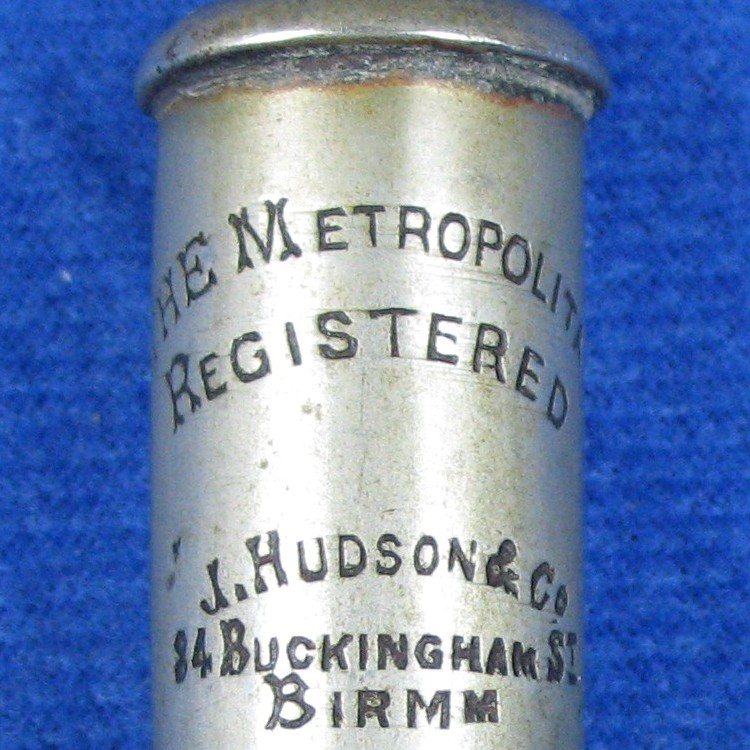
So, we progress in time after Coney was purchased by Hudson to a clone by Hudson (UK) also mentioned in Martyn’s book on page 81. Two similar stamps are described on page 81. However, Coney used the T.E. Thompson stamp on their own whistle that can easily differentiate from the Hudson model made with a split level, even with the same stamp.
Both are stamped as Coney’s Alarm. However, this one also has T.E. Thompson & Co. Ltd. and Calcutta Ld.. —–
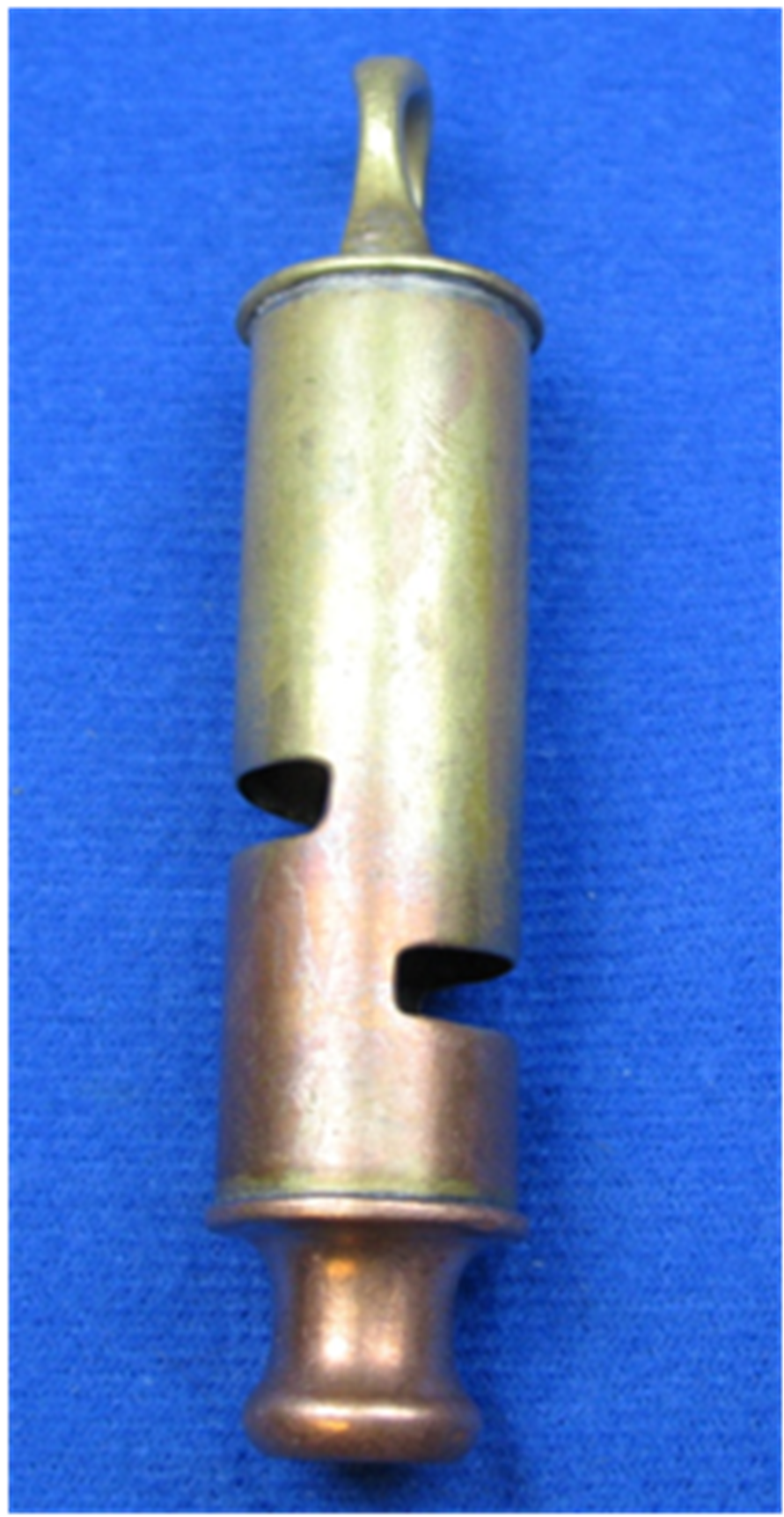
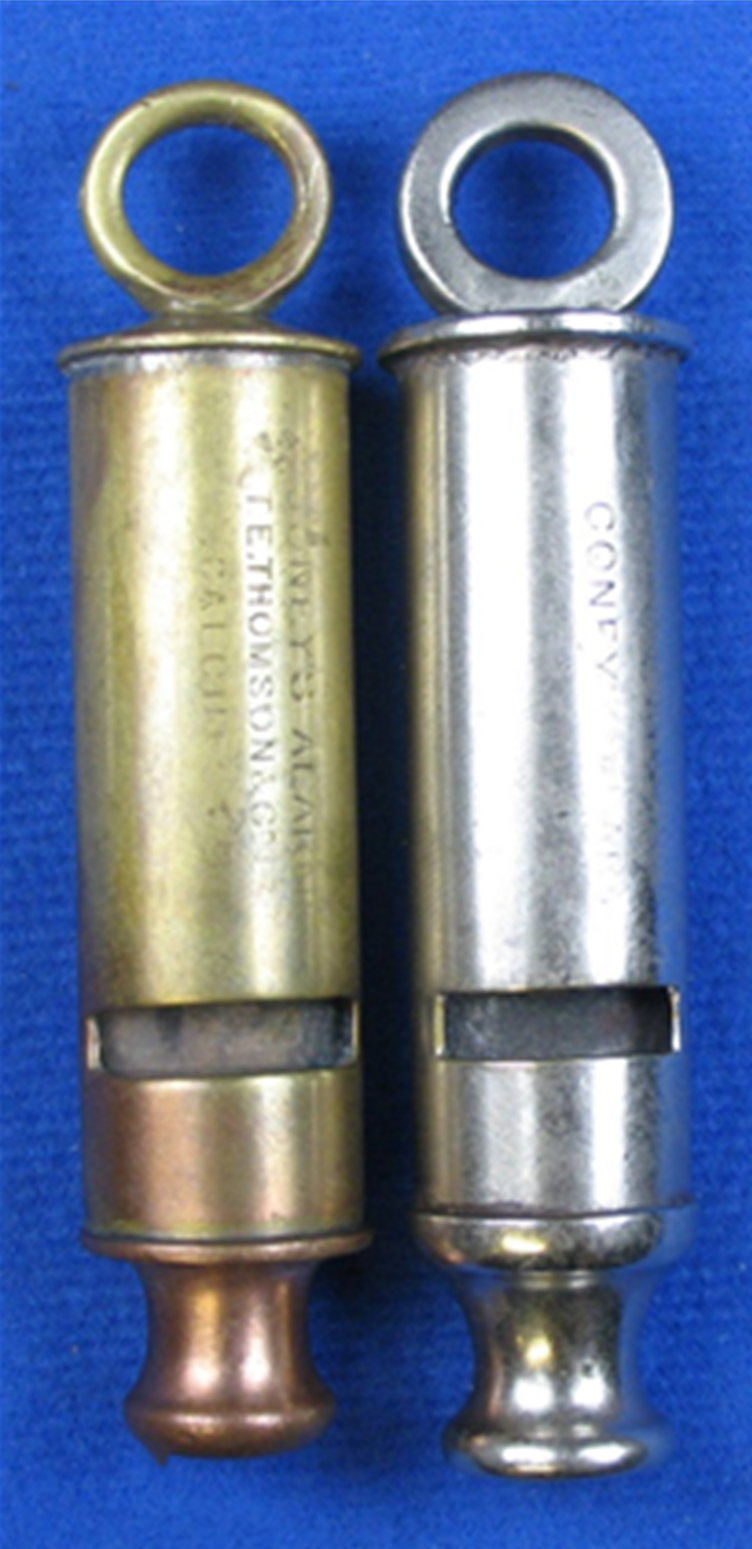
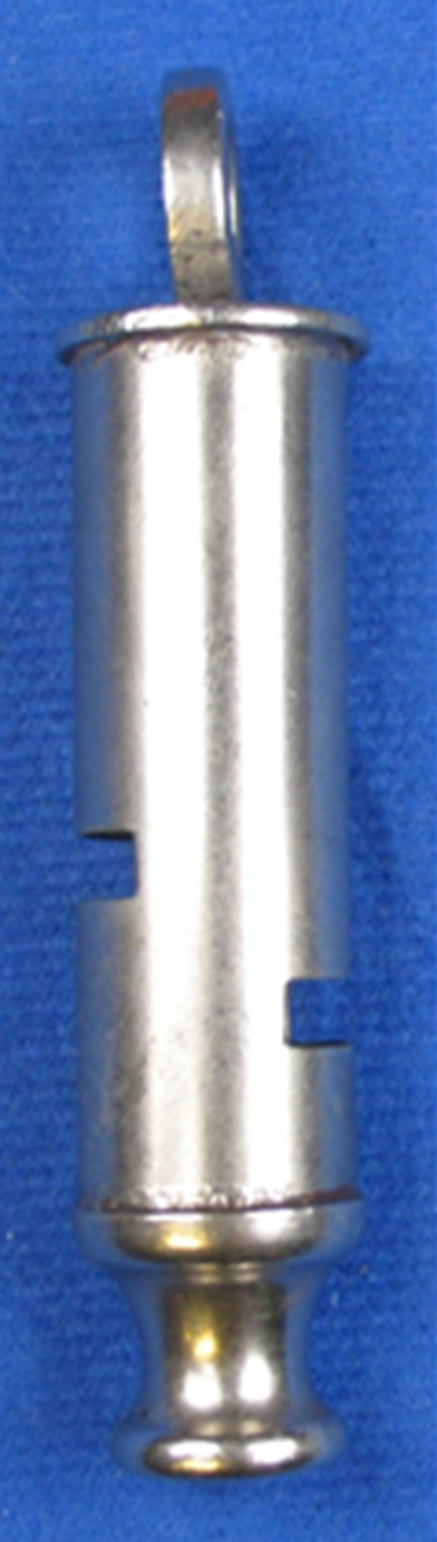
What differences do we note?
- Rolled mouthpiece, not cast
- Two-piece top stamped out and connected, not cast.
- Nickle plated brass, rather than brass or nickel silver
- Thicker flat cap
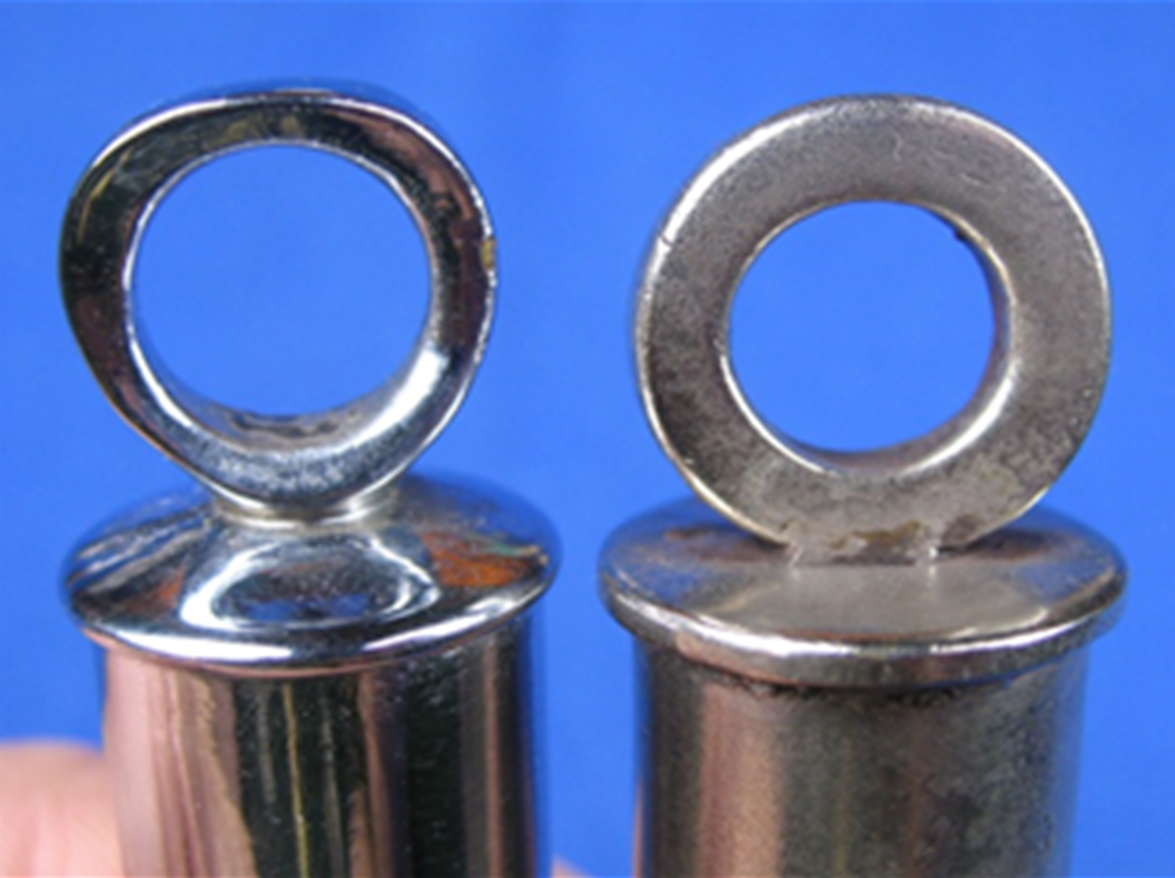
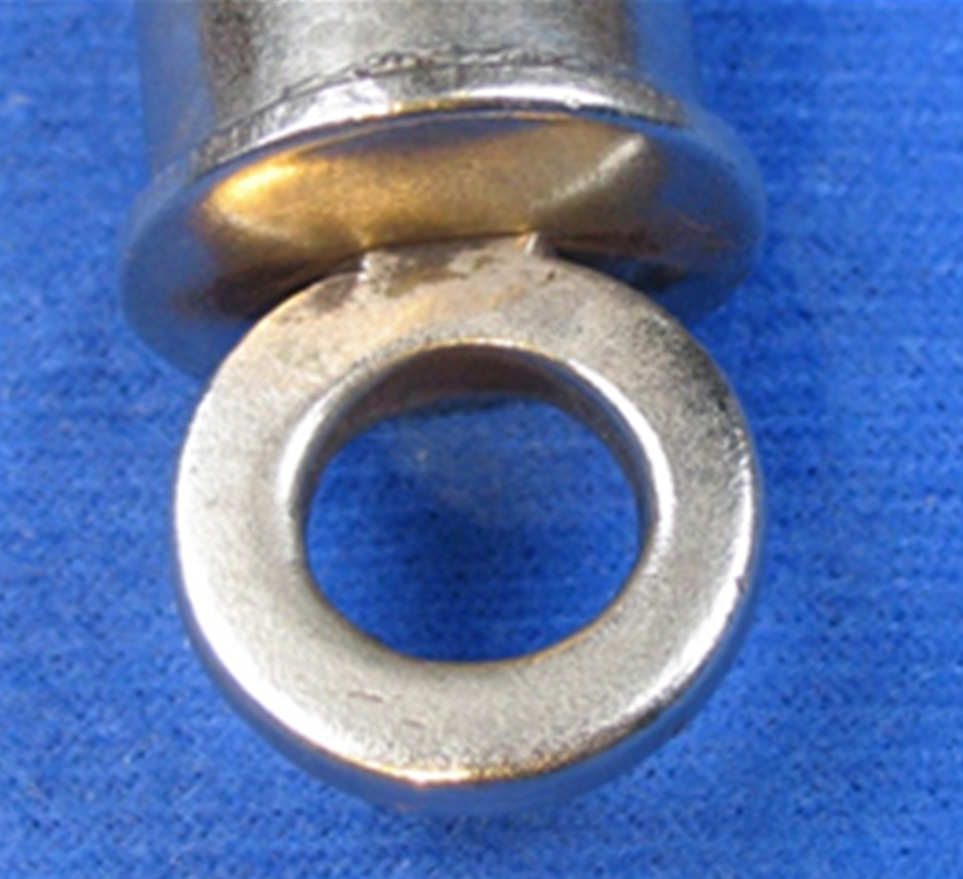
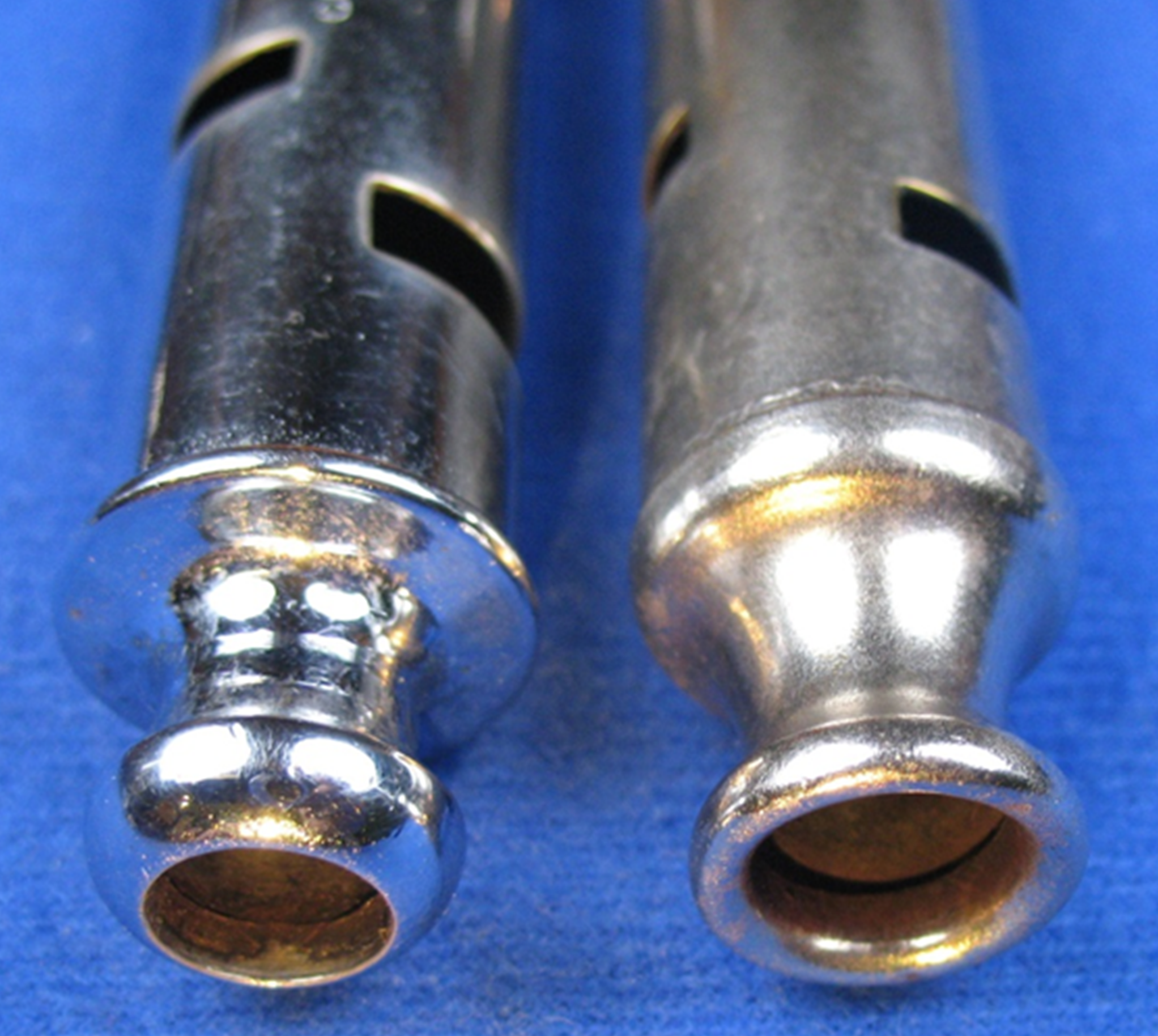
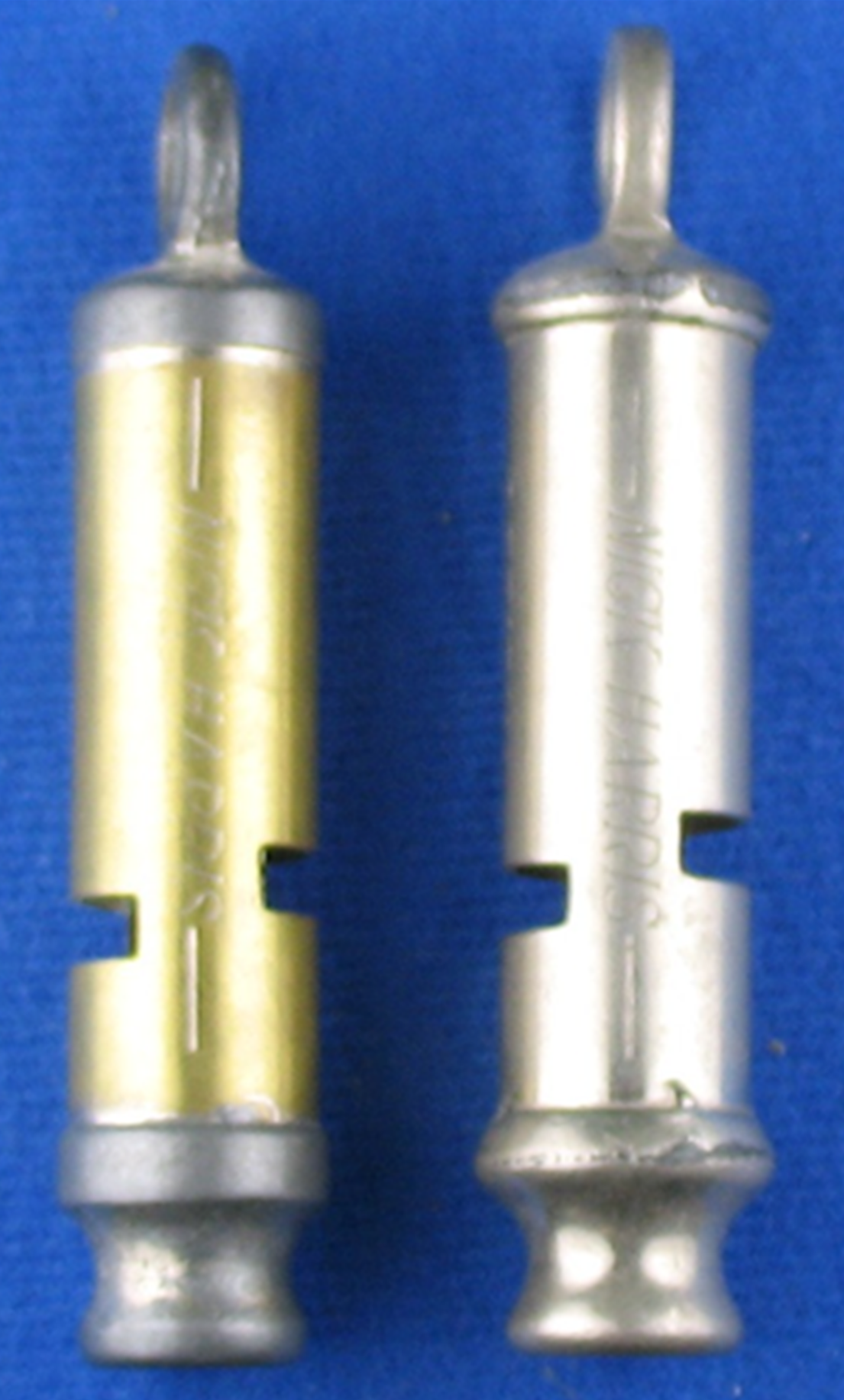
Now we are moving over to the USA where a heavy, bulky version with split level windows was distributed. It was made to promote the Ed Harris detective agency.
The Coney weighs in at 37g while the Hudson’s made comes to 3kg. However, Nick Harris weighs in at 57g or 20g more than the Coney. Seeing how the mouthpiece and top ring are made from lead it is not surprising. This whistle should never have been made of lead and then put in the mouth. This construction has mainly been seen of German made whistles marketed in the US circa 1915-25.
The sound is much shriller than the other two. Neither Coney nor Hudson utilized tines up from the diaphragm along the partition edges to contact the tube side walls for support, but Nick Harris uses extended tines on both sides. All three appear to be cast mouthpieces and top rings. Lastly this example shows much less variation in the window positioning, lending to the closer shriller sound.
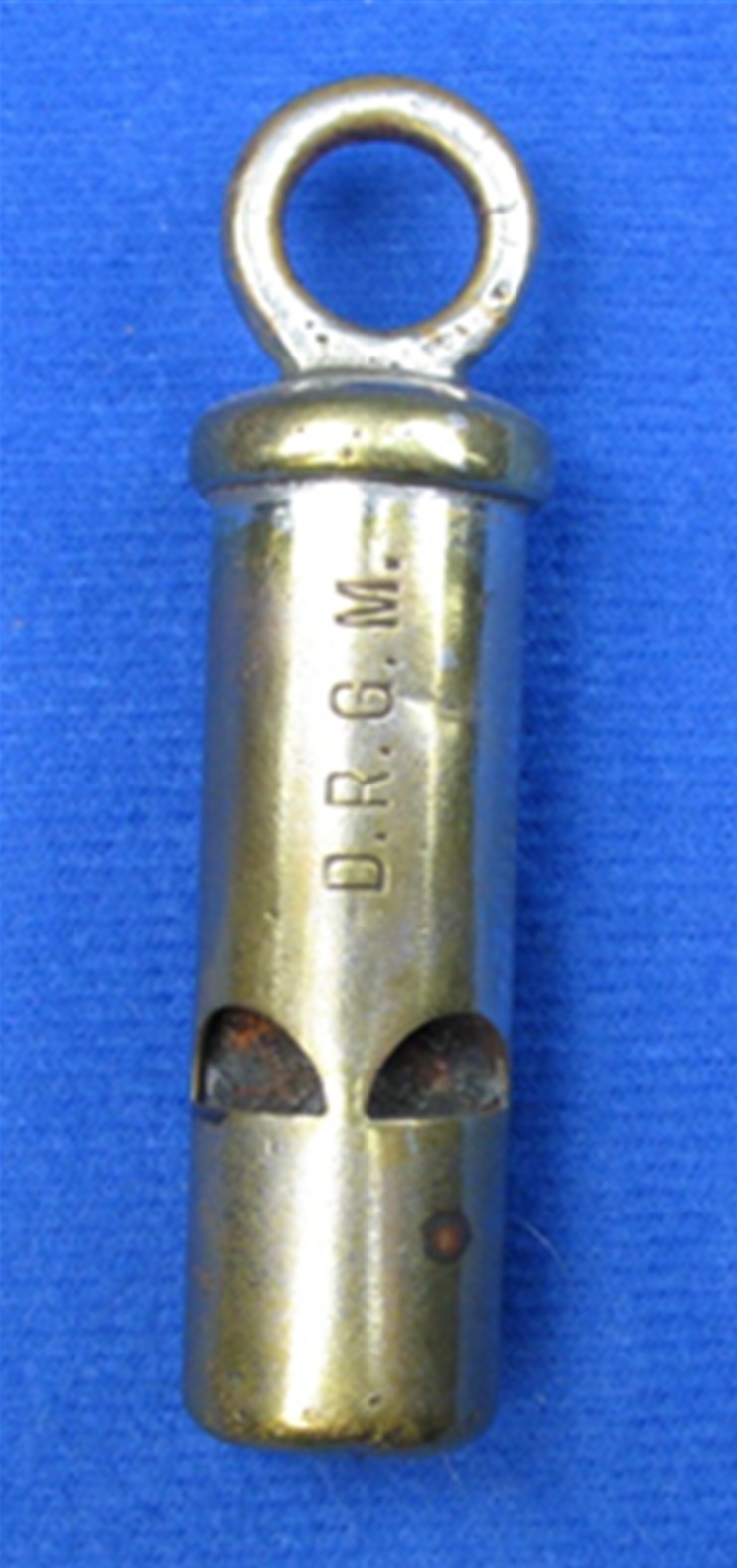
We will finish out by looking at a very unusual split-level model found in the USA manufactured entirely of machined brass parts.
Weighing in at 40g, it is closer to the originals in weight that we started with. The two levels are well split and the sound comparable.
Interestingly the top ring is machined in one direction to make the cap and then machined in the other direction to make the ring. The ring rests high up on the top cap like Coney does. Moving to the mouthpiece we see it is clearly machined inside and out leaving a slightly larger opening.
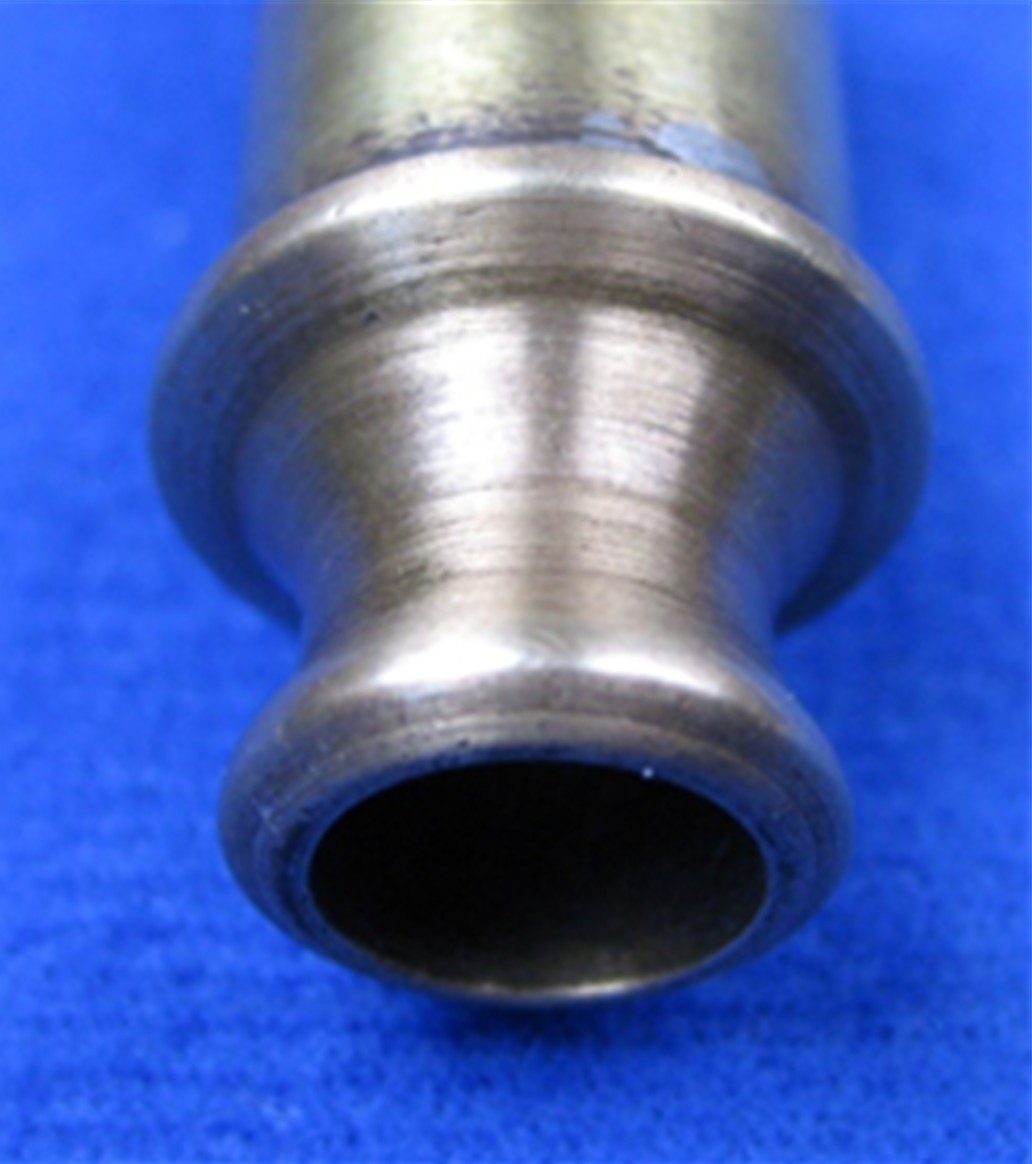
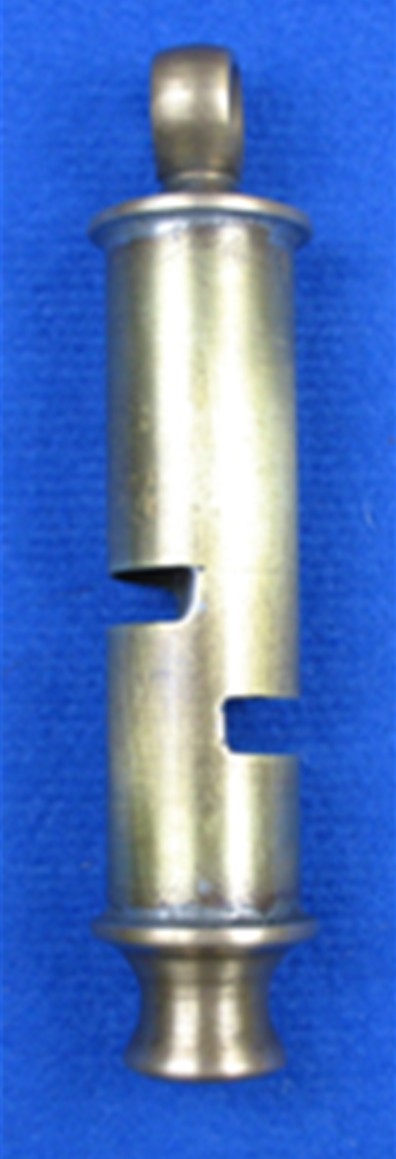
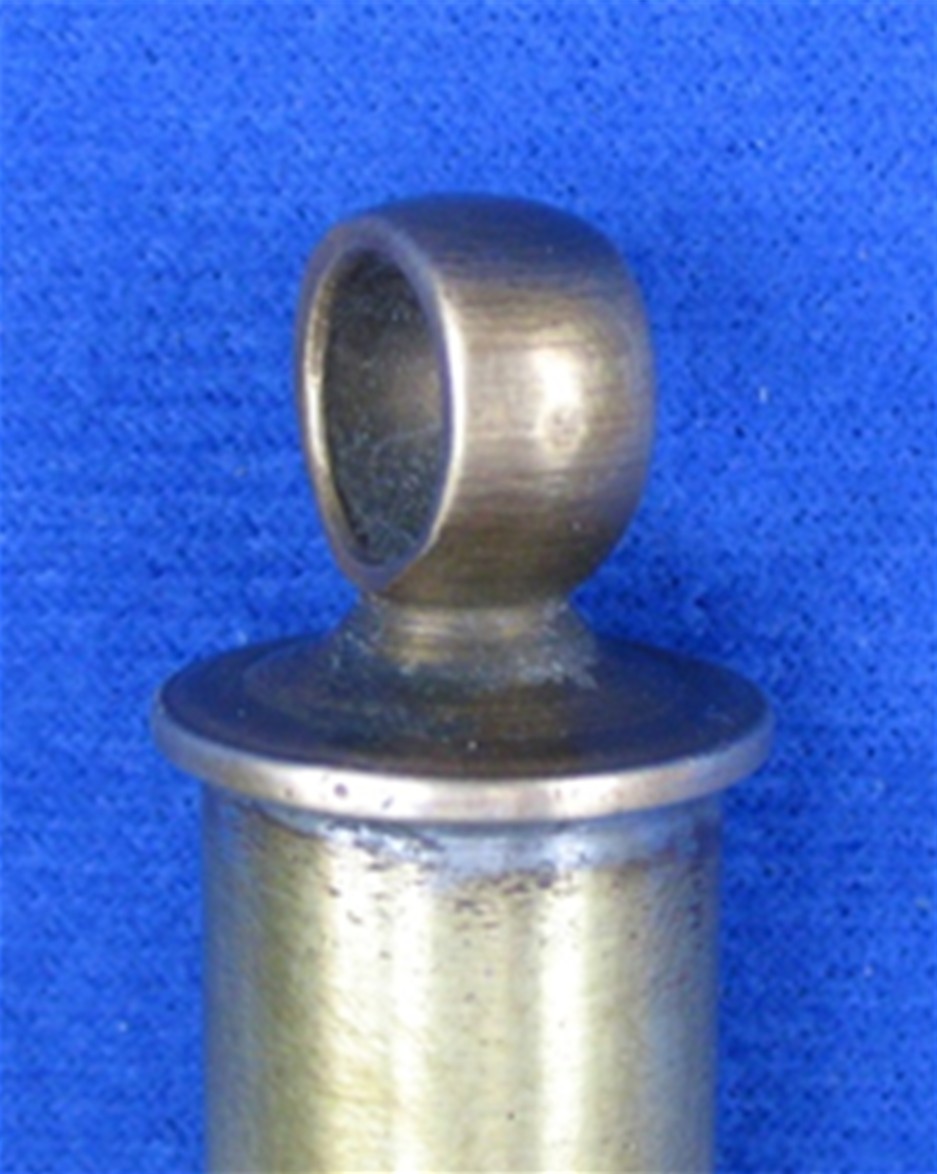
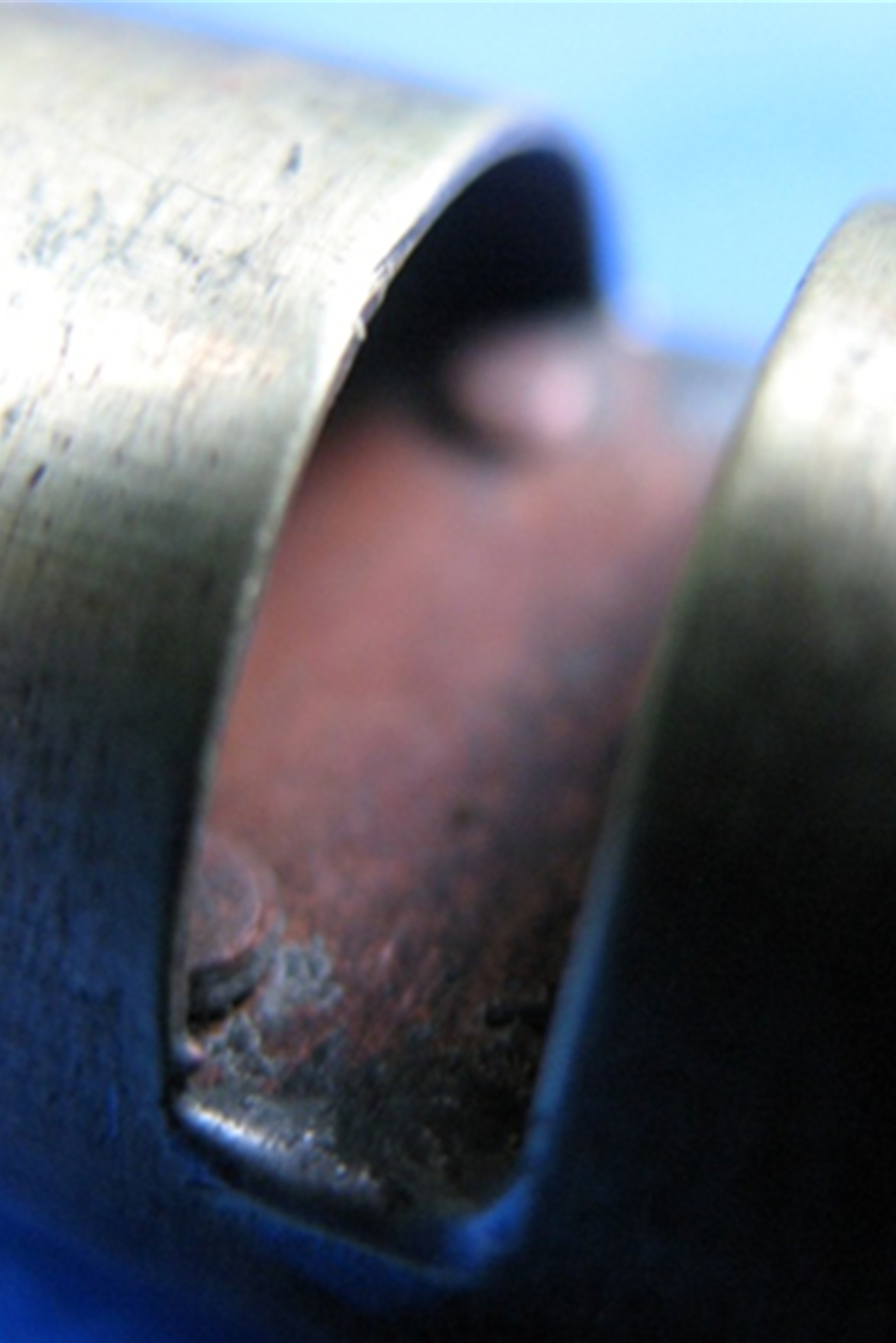
Looking inside is where the real surprise is found. The diaphragm disc and partition are riveted together twice to hold the partition together. This is the first time we have seen this done.
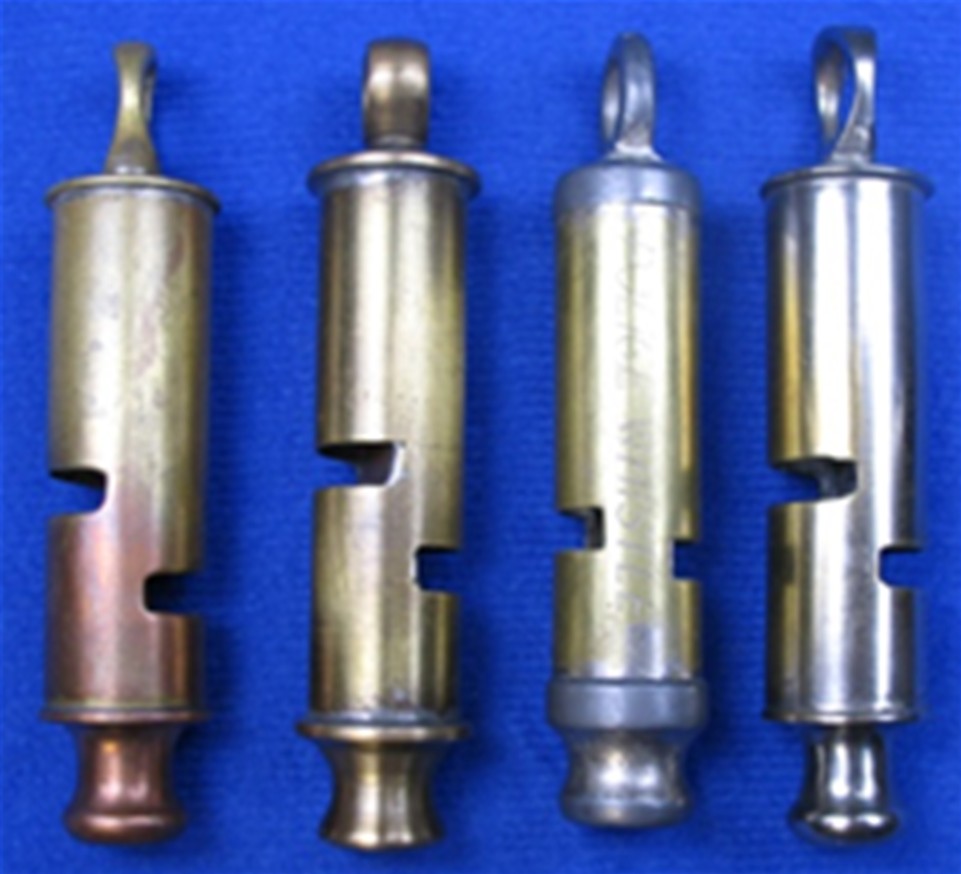
Now let’s compare the last four together. You will see similar lengths, however some variations in the windows are seen, especially Nick Harris. The sounds are directly proportionate to these levels although the construction is similar.
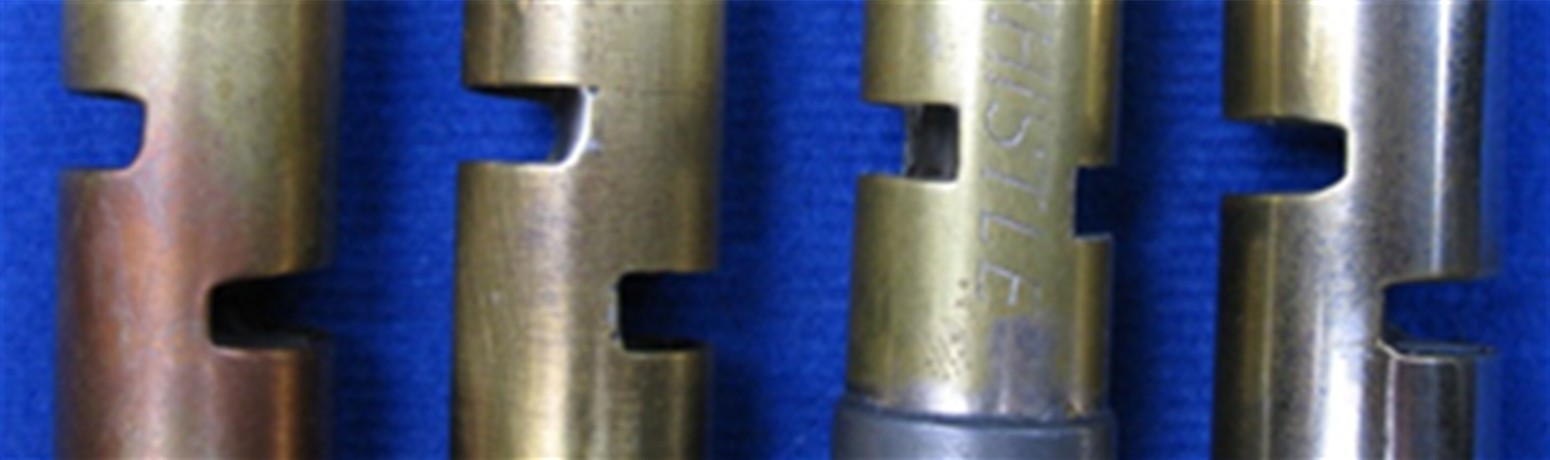
Just for comparison studies, we examine this four-window whistle from Germany. Inside the diaphragm it is divided into four levels, yet the windows are at the same level. It does not carry the sound that the actual window splitting does.
Conclusions
Rather than shortening or lengthening the tube chambers created by separating walls, the split-level whistles used this method to vary the sound accomplishing the same thing, albeit with much modification of the diaphragms.
This made some more complex in the internal and outside construction.
At the same time, this lent to idiosyncratic models and more easily identified as to maker and dates.
TWG
Posted July 8, 2012
Revised May 19, 2018
Revised October 10, 2020
Revised February 12, 2021
Revised December 27, 2021
Revised December 29, 2021
Revised January 30, 2022
Revised April 27, 2026
Bibliography:
- TWG Reference Collection
- Google Patents Search
- Collecting Police Whistles and Similar Types, by Martyn Gilchrist and Simon Topman, 1998.


 Users This Month : 3415
 Total views : 186044