Whistory
Initially when this Barrall round surfaced it was thought to be probably by Coney Co. And it was partially thought because the top ring sat high as Coney’s typically do. However, others have appeared with high rings now as of this writing. (See SPOTLIGHT 106)
And so, it was thought that it was possibly by John Barrall.
Why the revision of this Barrall whistle Spotlight?
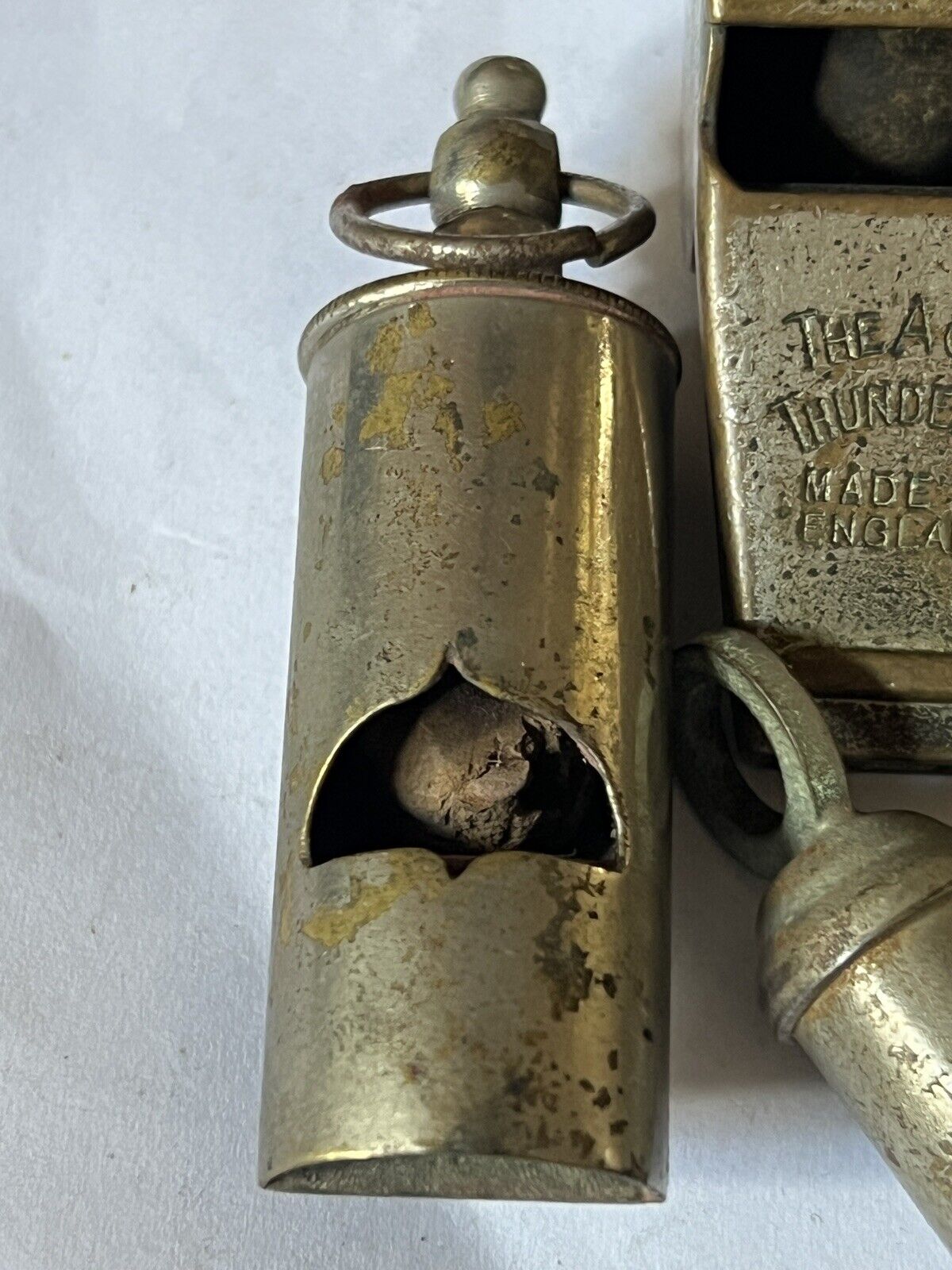
So it goes, now we have occasion to revise this article again in lieu of a smaller round that surfaced, and clearly it was made by John Barrall – and with the same unusual window. Therefore, it is fully reassigned from Coney to Barrall.
John Barrall made whistles at least from 1886 to 1898. Gilchrist describes (page 76-77, Collecting Police Whistles and Similar Types) his first whistles as a ‘lower standard of manufacture’ & basic in execution to something rather more proficient’ . Studies since this have challenged this assessment.
What about the top ring of this Barrall whistle?
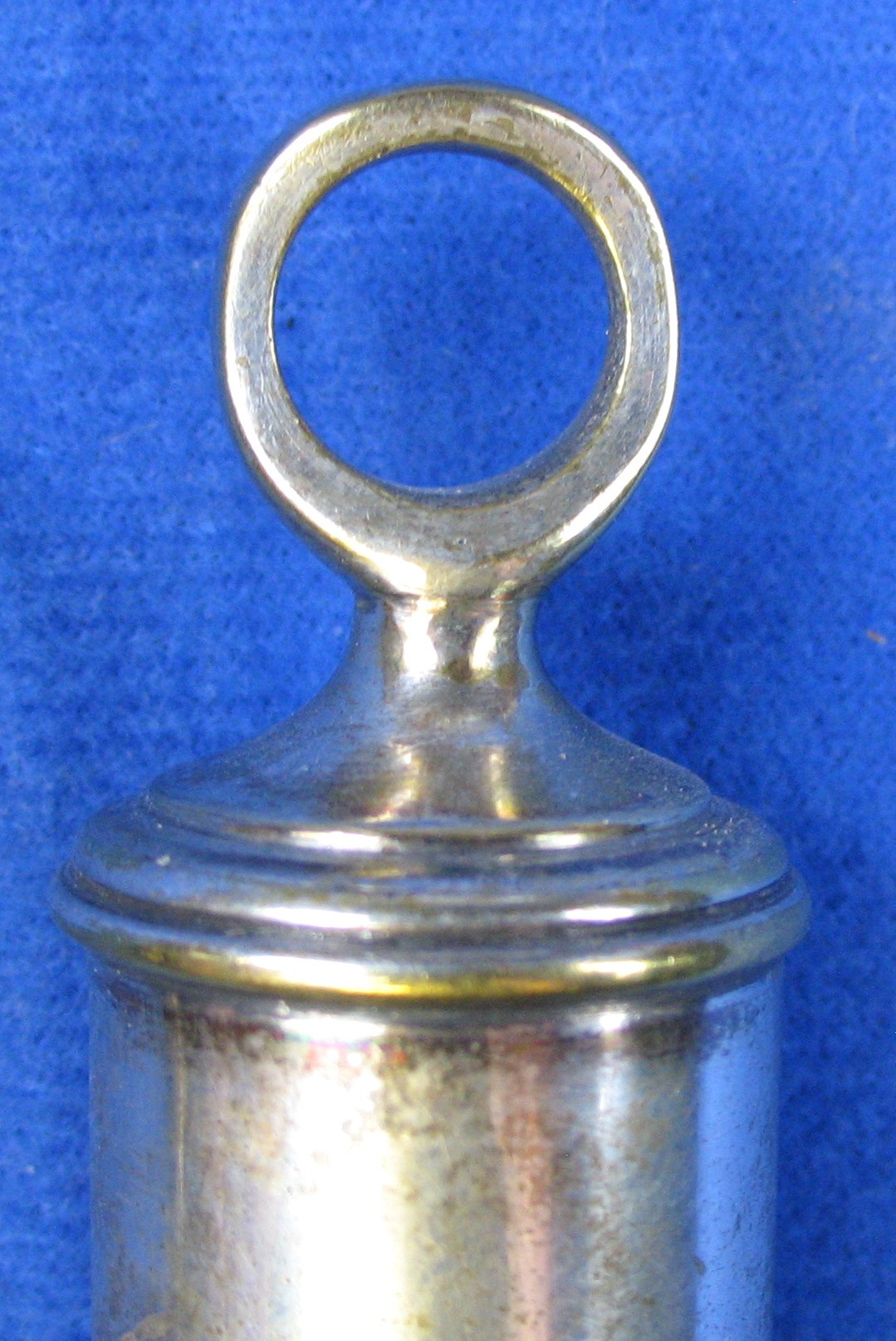
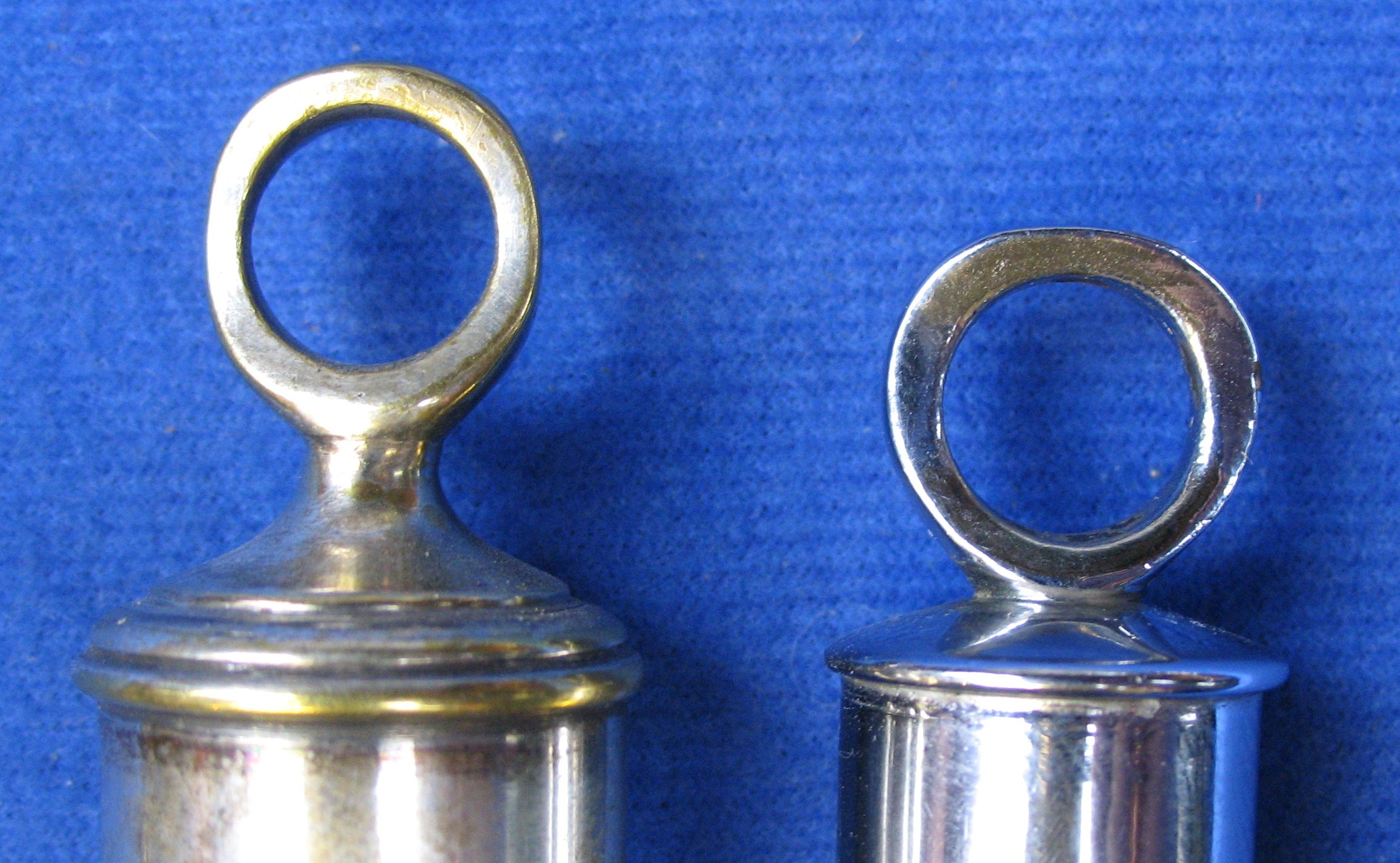
Barrall also made whistles with very high-top rings (compared below) Upon closer study, the matching loops are clearly evident. Each year it seems we are expanding our knowledge of John Barrall’s workmanship in whistles.
What is pertinent about the size of this Barrall whistle?
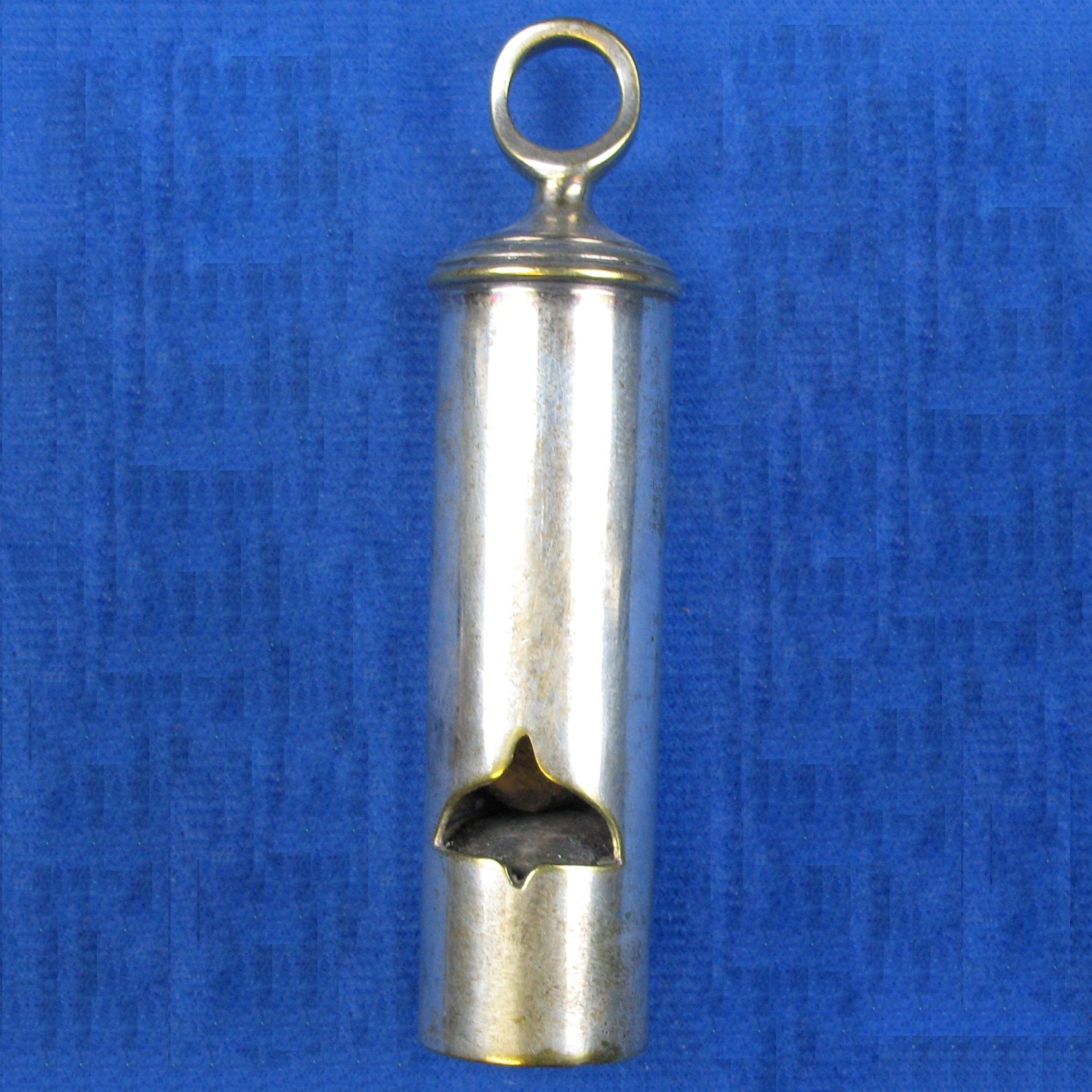
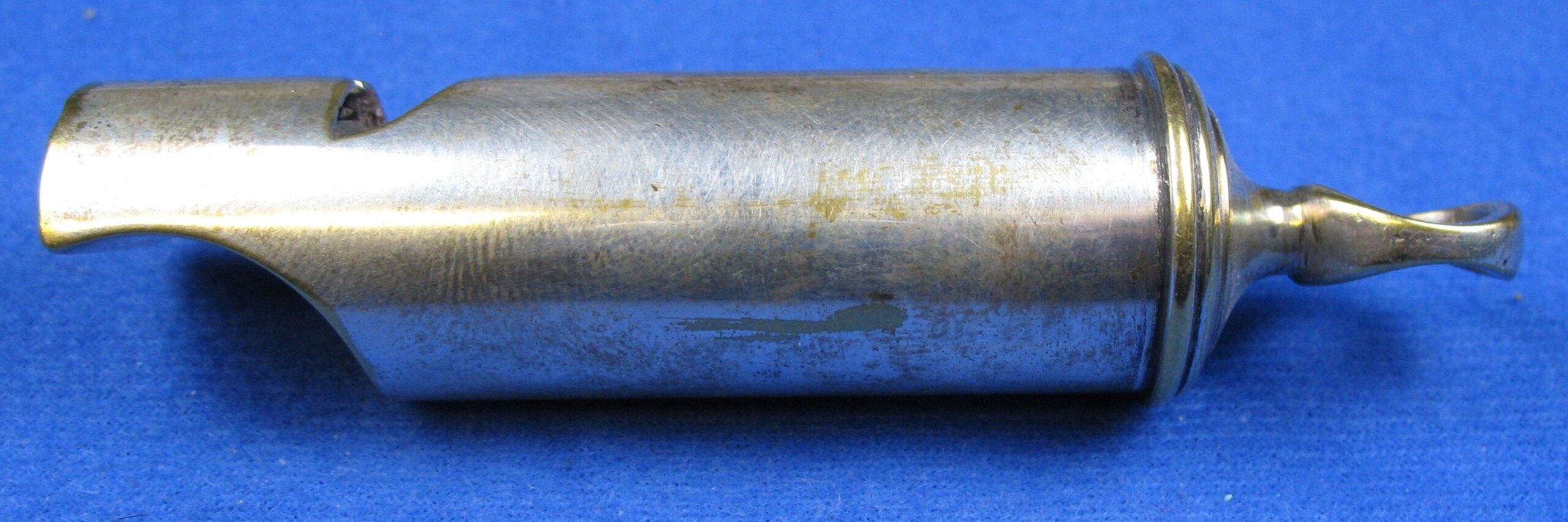
The overall length is unusually large at 95mm and has never been seen before. This coupled with the window makes it mono-typical.
Whistle Classification
| Type | round |
| Maker | John Barrall |
| Category | civil |
| Material | silver plated brass |
| Features | ornate window high top ring |
Whistle Archaeology
John Barrall was not known for large round whistles. Indeed, he was not known until recent years for round whistles at all.
Looking closely at the top ring reveals the very high standing ring, typically of Coney. However, John Barrall as well as others also used this design.
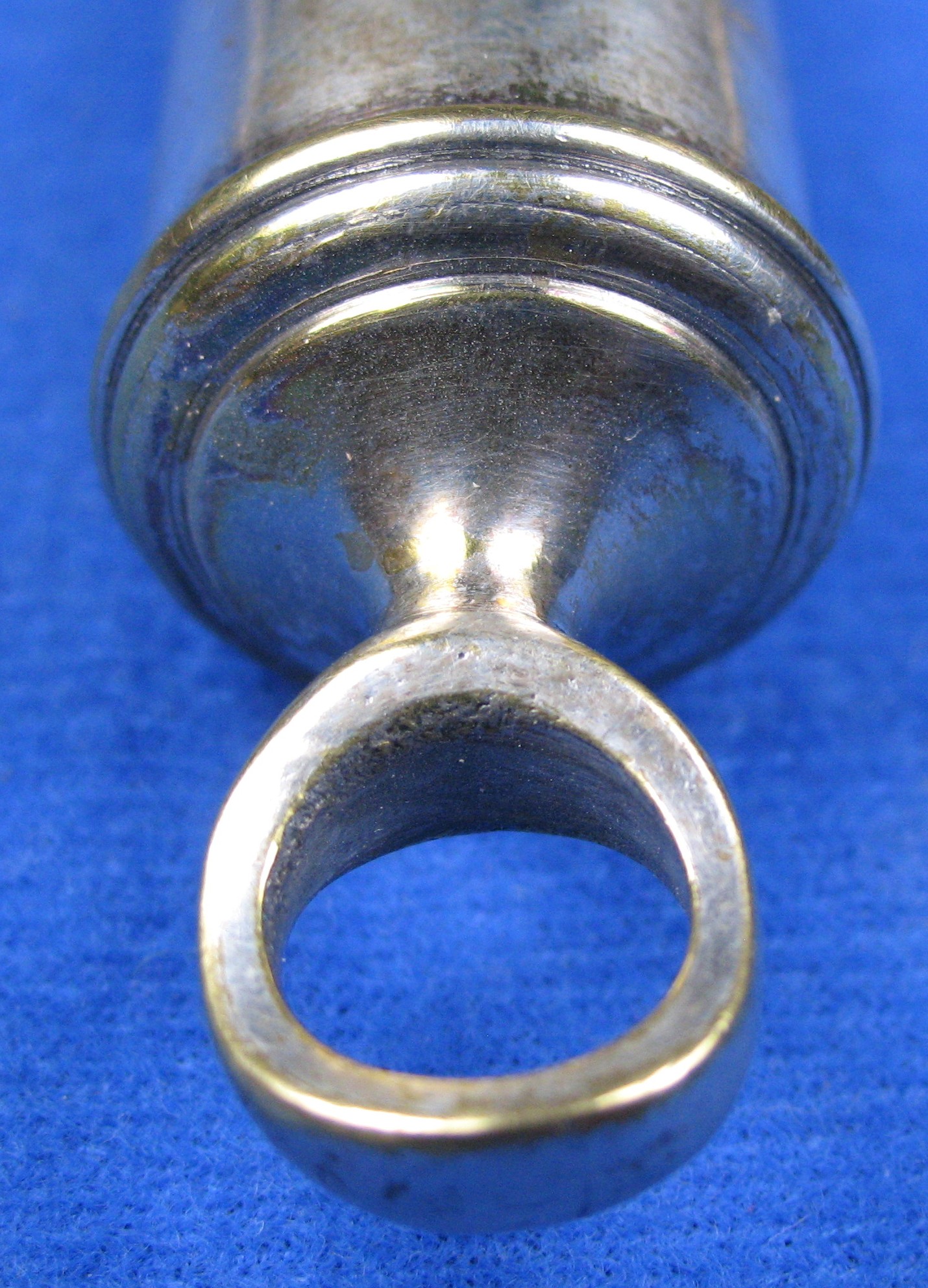
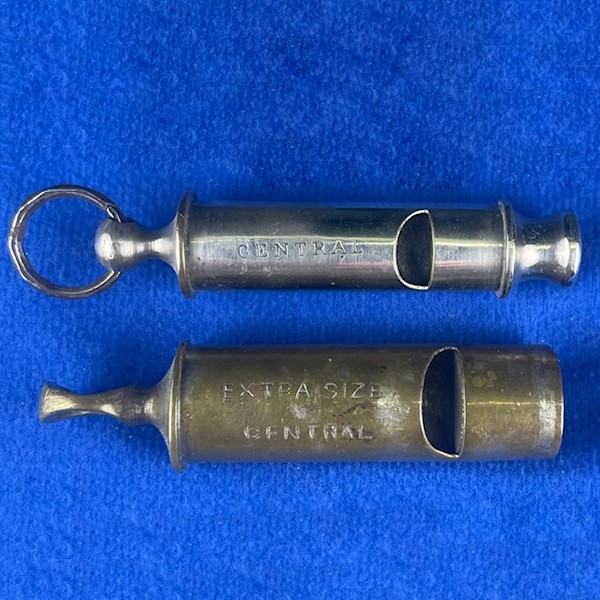
As seen in the following picture, Barrall’s ring sits even higher than Coney Central Extra Large.
The Coney Extra Large Central needs closer scrutiny if it is indeed by Coney or possibly Yates.
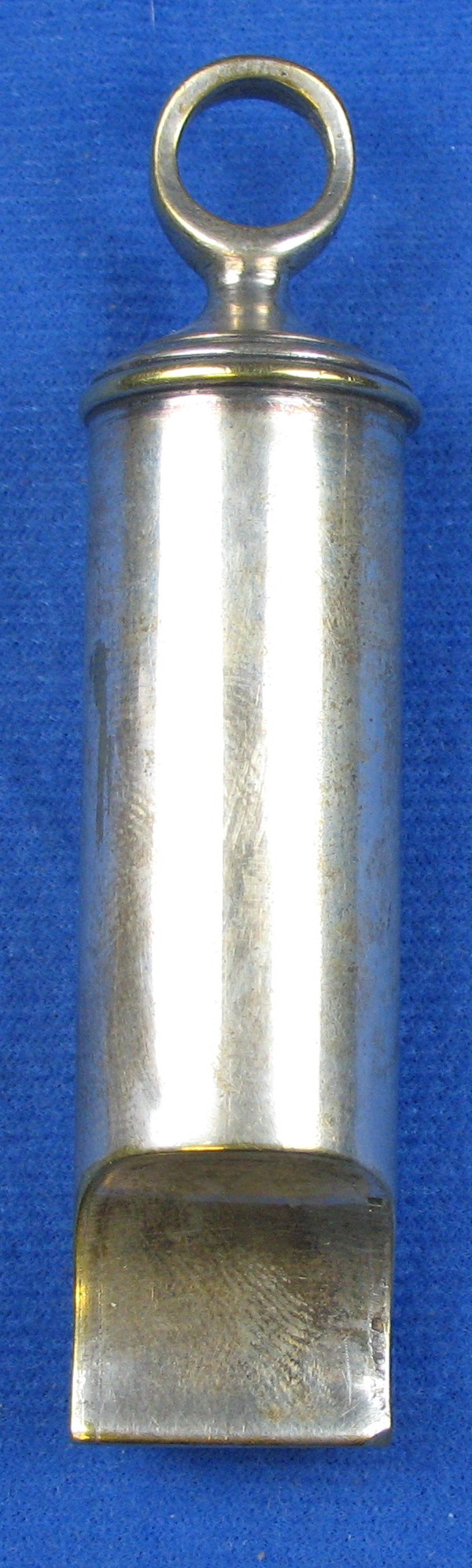
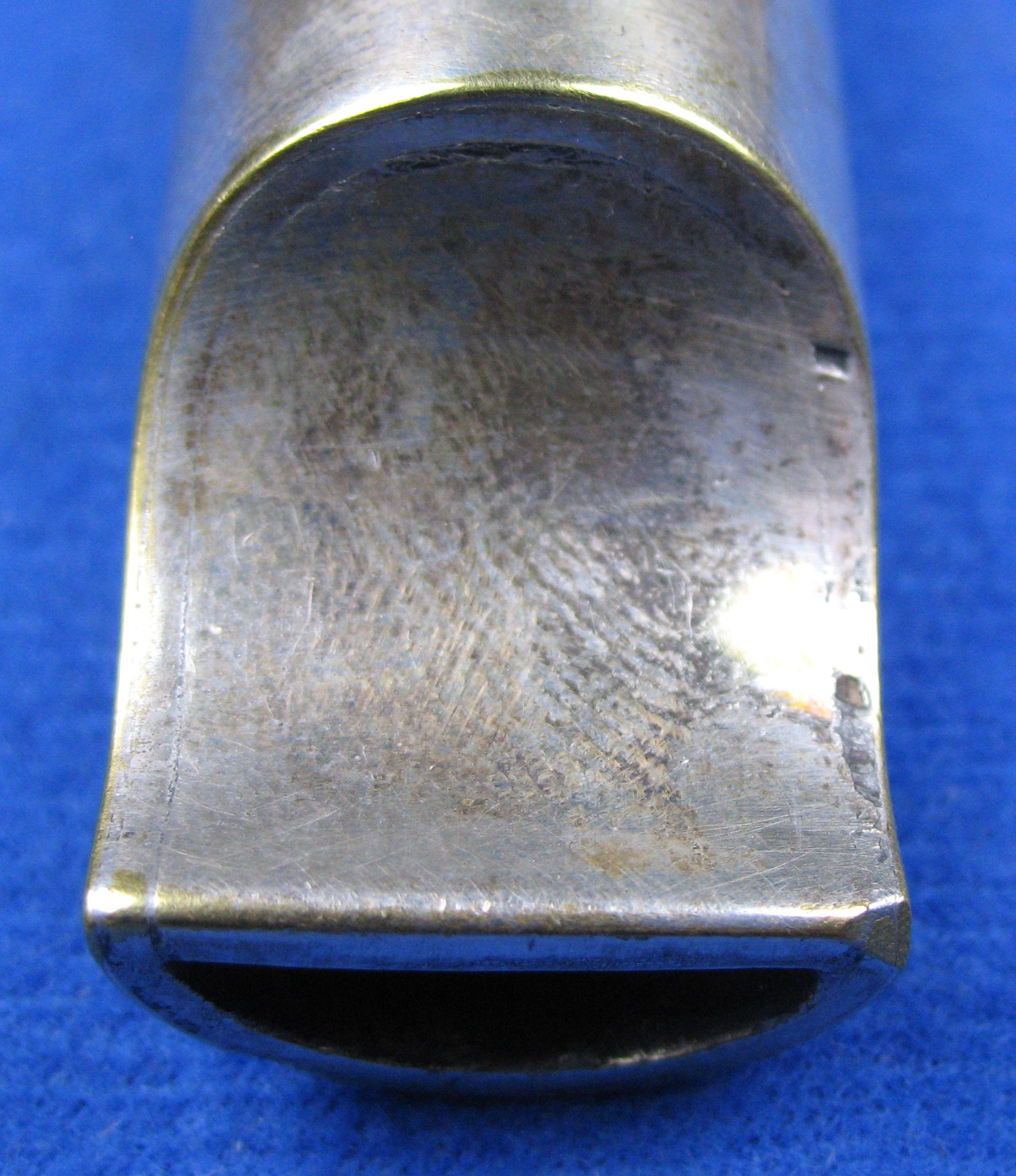
The mouthpiece is quite arched like DeCourcy does and zooming in on the fipple one sees that it is well machined as it attaches to the side walls.
The fipple itself is very slanted lending towards a higher pitch, but with a long body, it is very low and hollow sounding, not unlike a King whistle.
Finally, we give special attention to a spectacular window opening. This approach has not been seen before in this application.
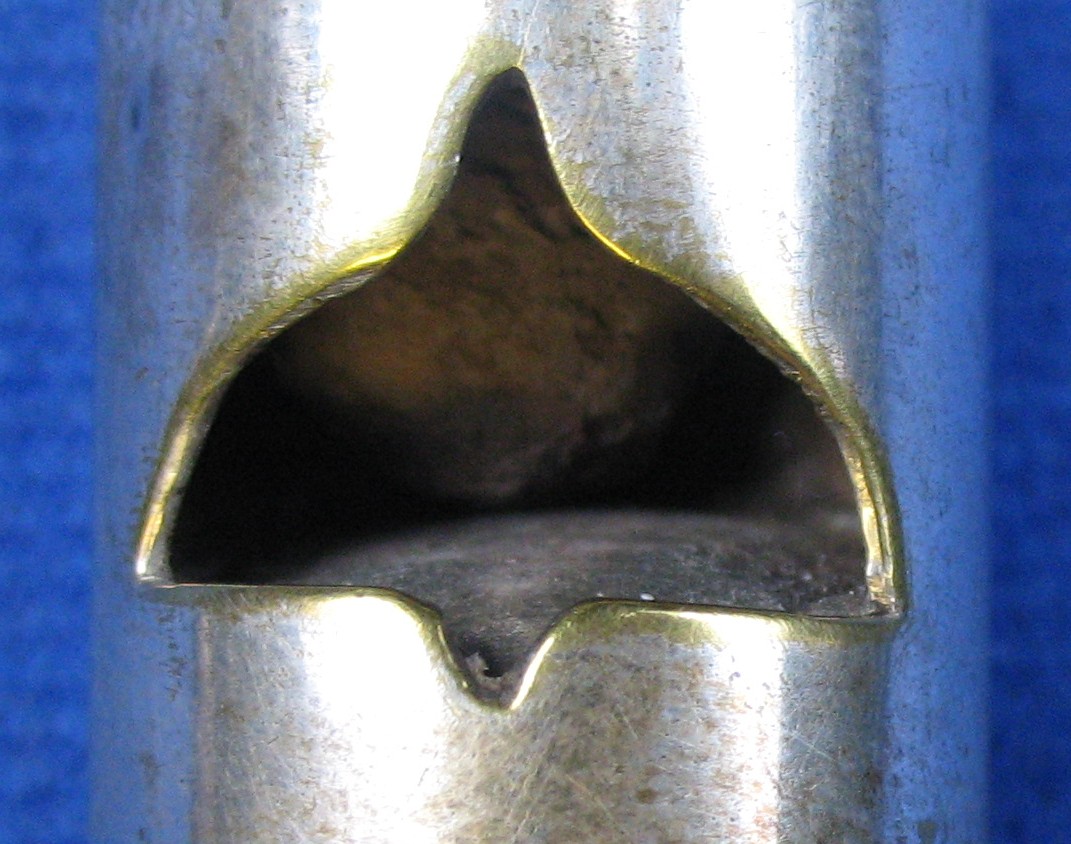
It is very ornate, distinct and aesthetic sweeping up and down to arching points. The whistle is complete with a large cork ball for that staccato sound when blown.
Taking a closer look, one sees that it was silver plated over a brass body.
Dating this one is difficult. The body itself seems to be from a thick solid stock of brass, with a cast top and then cast fipple.
It would be considered to fall within 1880 to 1890 during Barrall’s recorded era.
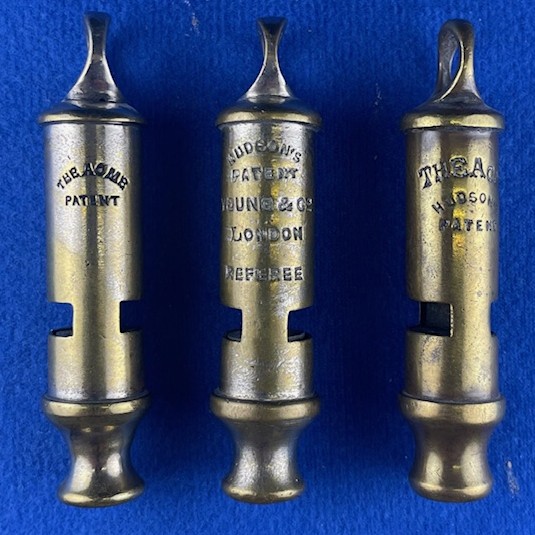
Lastly let’s make a size comparison for size to a Tudor rose Hudson.
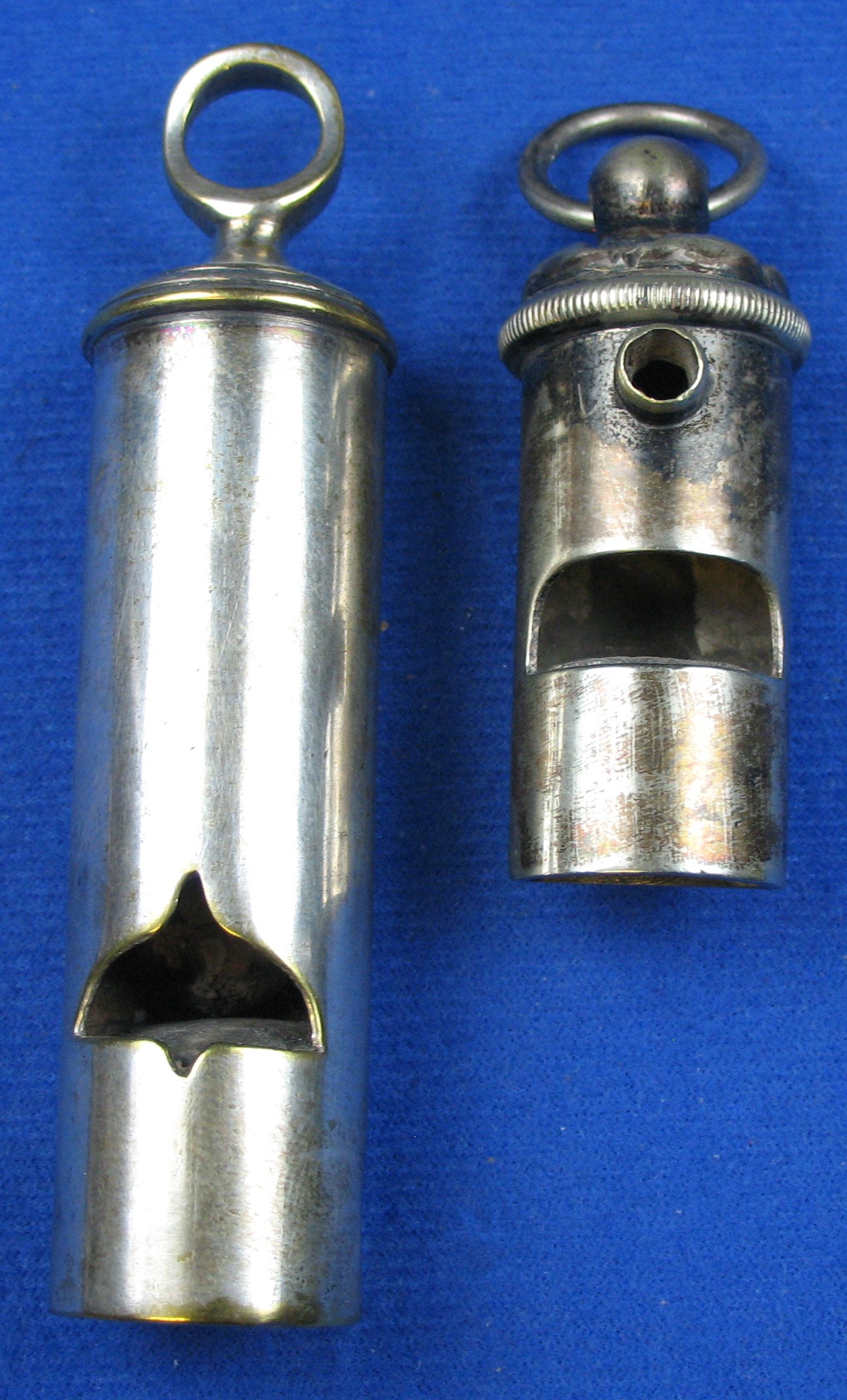
This round whistle that surfaced matches pillar tops only found on John Barrall’s whistles (i.e. heavy wall duplex, Tubular, small round whistles and conical whistles) Additionally due to the combination of this top and his unique window, we can verify that the large round was made by him now.
(See SPOTLIGHT 39)
Whistology
Conclusions
Large whistles of this magnitude are unusual as can be imagined and how they would be used is left to the imagination. It is certainly above average workmanship, even for a manufacturer. As can be seen, John Barrall was a master whistle maker.
It dwarfs the Tudor being nearly double in size. This came from the Phayne collection in the UK, which we would like to acknowledge as a truly remarkable contribution to the whistle world — as it is the only one known at this time.
TWG
Posted March 2, 2013
Revised October 10, 2020
Revised February 12, 2021
Revised December 27, 2021
Revised December 30, 2021
Revised January 30, 2022
Revised March 27, 2025
Revised December 2, 2025
Revised June 10, 2026
Bibliography:
- TWG Reference Collection
- The Whistle Gallery Archives
- Collecting Police Whistles and Similar Types, by Martyn Gilchrist and Simon Topman, 1998.
- More Whistles, Martyn Gilchrist, 2005.
© – All photos with blue background property of The Whistle Gallery reference collection. Please contact The Whistle Gallery for permission of use of any website content. Spotlight articles are copyrighted. Please contact The Whistle Gallery for permission of use of any website or Spotlight article material written or otherwise. Use of photos without authorization is prohibited.


 Users This Month : 3415
 Total views : 186044