Whistory
In 2020, we reassigned this short conical/round from Benjamin Lilly to Alfred DeCourcy. This was done because on page 35 of More Whistles – Martyn Gilchrist this whistle was attributed to him under ‘beauforts’.
What are the First Two Reasons for Reclassifying? (Lilly to DeCourcy)
It is classified there as a beaufort whistle, due to the conical shape. However, upon closer study we now place it under short conical whistles. This reclassification is done for three reasons, one of which is the use of a single window atypical of conical shaped whistles. Two windows are found in this subsection of whistles (with few exceptions). Furthermore, a fipple is integral with the mouthpiece, which is rarely found on beaufort/conical type whistles.
Typically, a round whistle has a straight body. Indeed, this whistle could arguably be placed in either category. However, for study purposes and communication, we move it into short conical whistles.
What Further Reason Necessitated Reclassifying? (Classified to DeCourcy)
Thirdly, B. Lilly and Sons did indeed farm out their whistles to local manufacturers, as well as manufacturing their own whistles. So, it is not surprising to find out that this whistle design was made by another manufacturer. In this case it was most likely Alfred DeCourcy, due to the stamp found on a dated whistle (seen below).
In simple words, Hudson designed it, DeCourcy copied it.
Whistle Classification
| Type | short conical |
| Maker | Hudson (designer) DeCourcy (manufacturer) |
| Category | military railway |
| Materials | plated brass |
| Features | na |
Whistle Archaeology
The 1915 whistle resides here in the reference collection. And it was only when 1915 surfaced with the A. DeCourcy & Co. stamp on the front, that reassignment from Lilly to DeCourcy occurred.
The original design is now further reassigned to Hudson, due to surfacing of a whistle picture showing the St. Marks stamped whistle. This address would have been before De Courcy was even employed at Hudson’s.
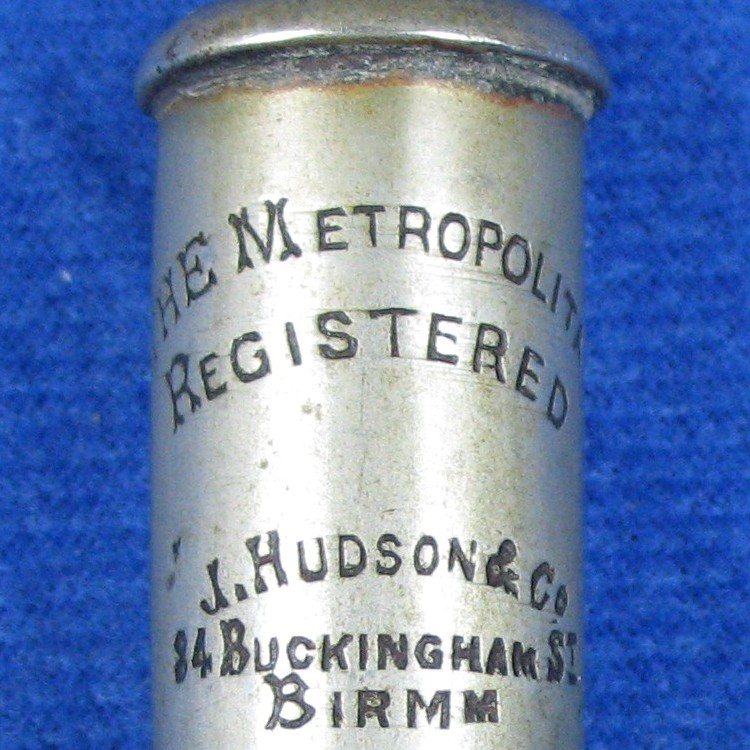
Finding a manufacturer’s name stamped on a round whistle was exceptional as stated in More Whistles on page 36 under Round Whistles, “Only occasionally are round whistles marked with any maker’s, seller’s or organization details”. Reference is made to certain extant UK whistles by:
- Auld
- Hudson
- Linegar (very rare)
- Stevens and son(s)
- Yates
(additionally: De Courcy, Dixon, Ward)
Wikipedia reports — The military and strategic concerns for securing the border with Afghanistan were such that, Francis Langford O’Callaghan (who was posted from the state railways as engineer-in-chief) was called upon for a number of demanding railway projects, surveys?and constructions in the Northwest Frontier. What initially started off as military and strategic railway project, ended up becoming part of the North Western State Railway network upon its formation in 1886. The Bolan Pass railway was completed in 1886 and in 1887 the Khawaja Amran Railway Survey included the Khojak Tunnel and the Chaman Extension Railway. The Khojak Tunnel opened in 1891 and the railway reached Chaman near the Afghan border. By 1905, it was the longest railway under one administration and the strategic railway of the entire Northwest frontier. The North Western State Railway was renamed as North Western Railway in 1905. In 1947, much of the North Western Railway fell in Pakistan territory domain and became part of the Pakistan Western Railways, while railways in Indian territory became incorporated into the Eastern Punjab Railway.
The 1915 whistle that surfaced is a railway stamp for North Western, a dated whistle that are usually only for the military. So, we have a railway/military whistle, and it was made with Alfred DeCourcy’s stamp – A. DECOURCY & Co. Under that it is ground or scratched off and appears to once have been BIRMINGHAM.
Presently we have seen four dated whistles matching this (minus the manufacturer’s name):
- 1905
- 1911
- 1912
- 1915
Whistology
Here are the dated ones showing that these were assigned for the railway NWR (Northwestern Railway). As we have seen dated whistles have always been for the military, but some that were government/state owned railways did use arrows and dates. Were the others (i.e. OFFICER) targeted at military forces or still railway? DeCourcy marketed for both from 1905 onwards with the Police Whistle Works.
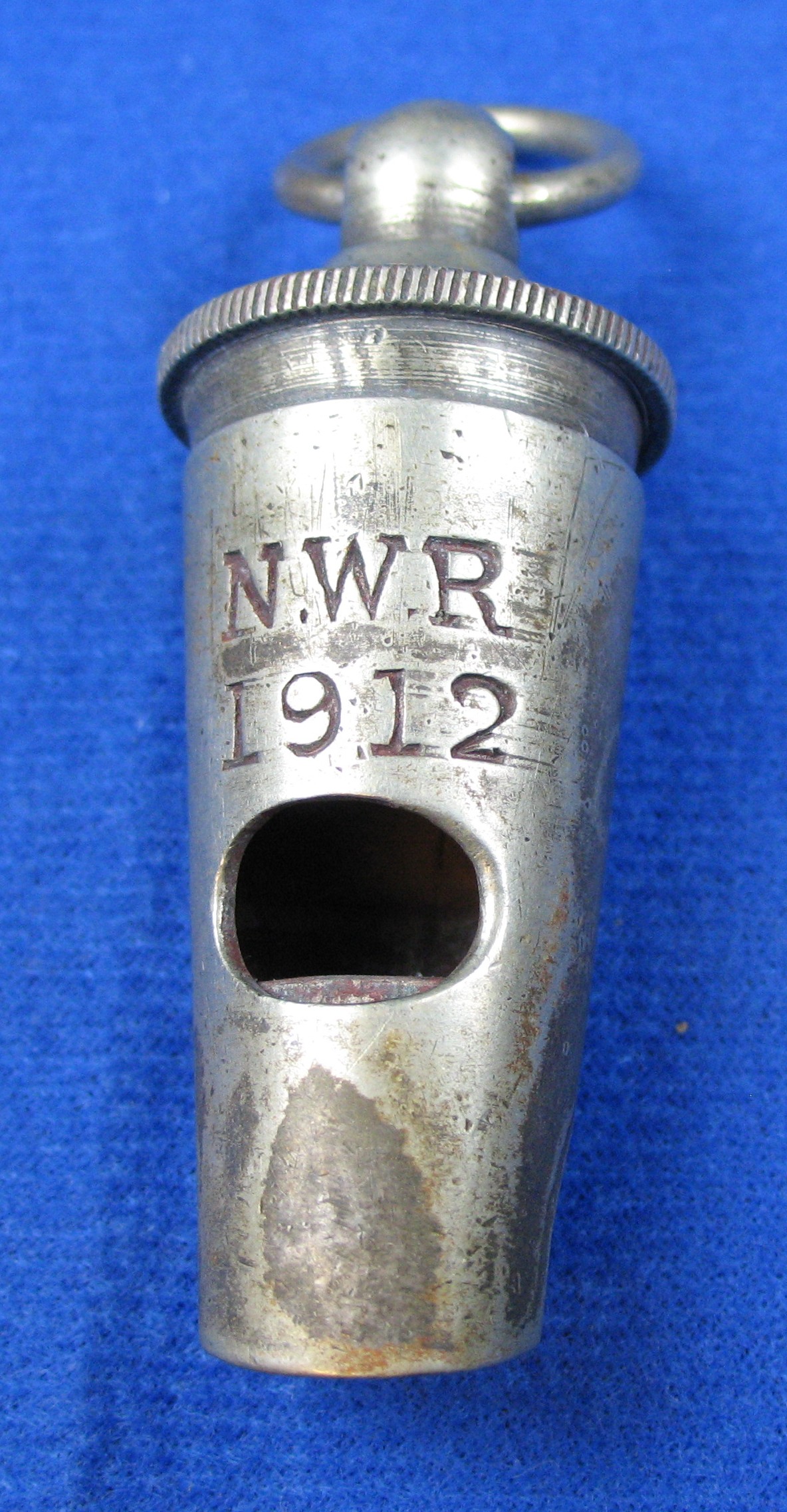
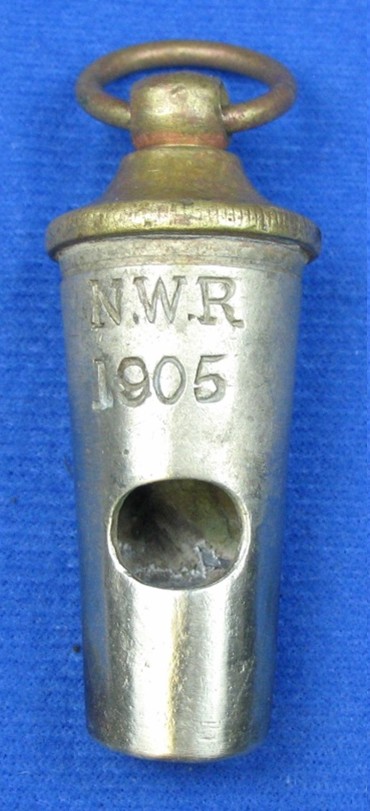
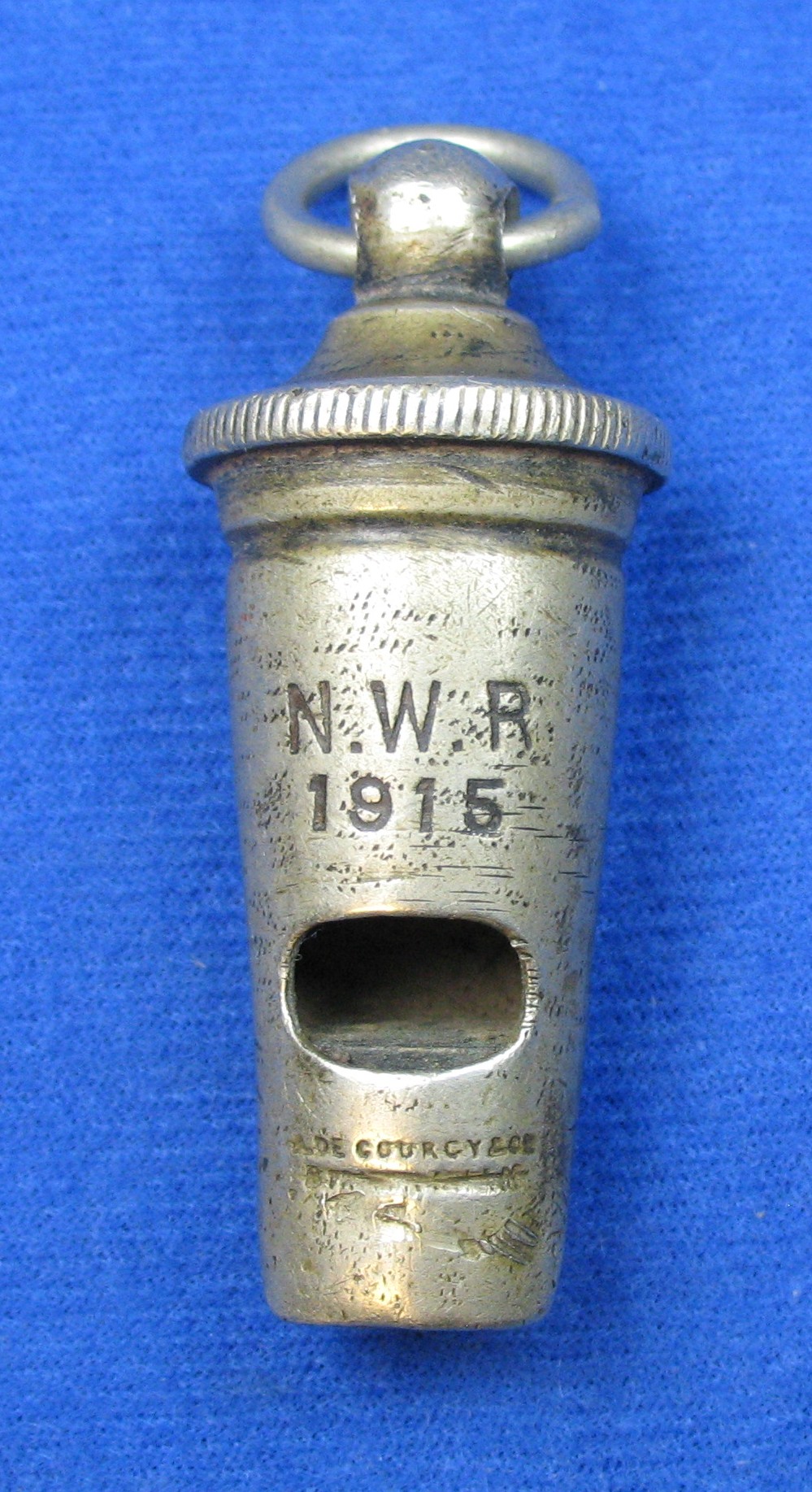
As you may recall from our SPOTLIGHT on DeCourcy’s early years, he first started dating his whistles at his address at 20 Frankfort street in 1906, although patents taken out by his brother Edgar are dated to 1905 as well as a patent by himself in 1905.
At his Mary street address prior, no dated whistles before 1906 have surfaced till now. He is listed in trade directories as a whistle manufacturer from 1890 (established 1888) to 1903 (see Collecting Police Whistles and Similar Types page 62), but as can be seen here, he at least started dating them in 1905 and nameless at first.
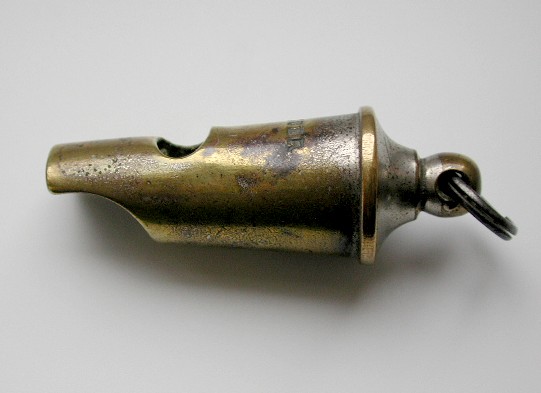
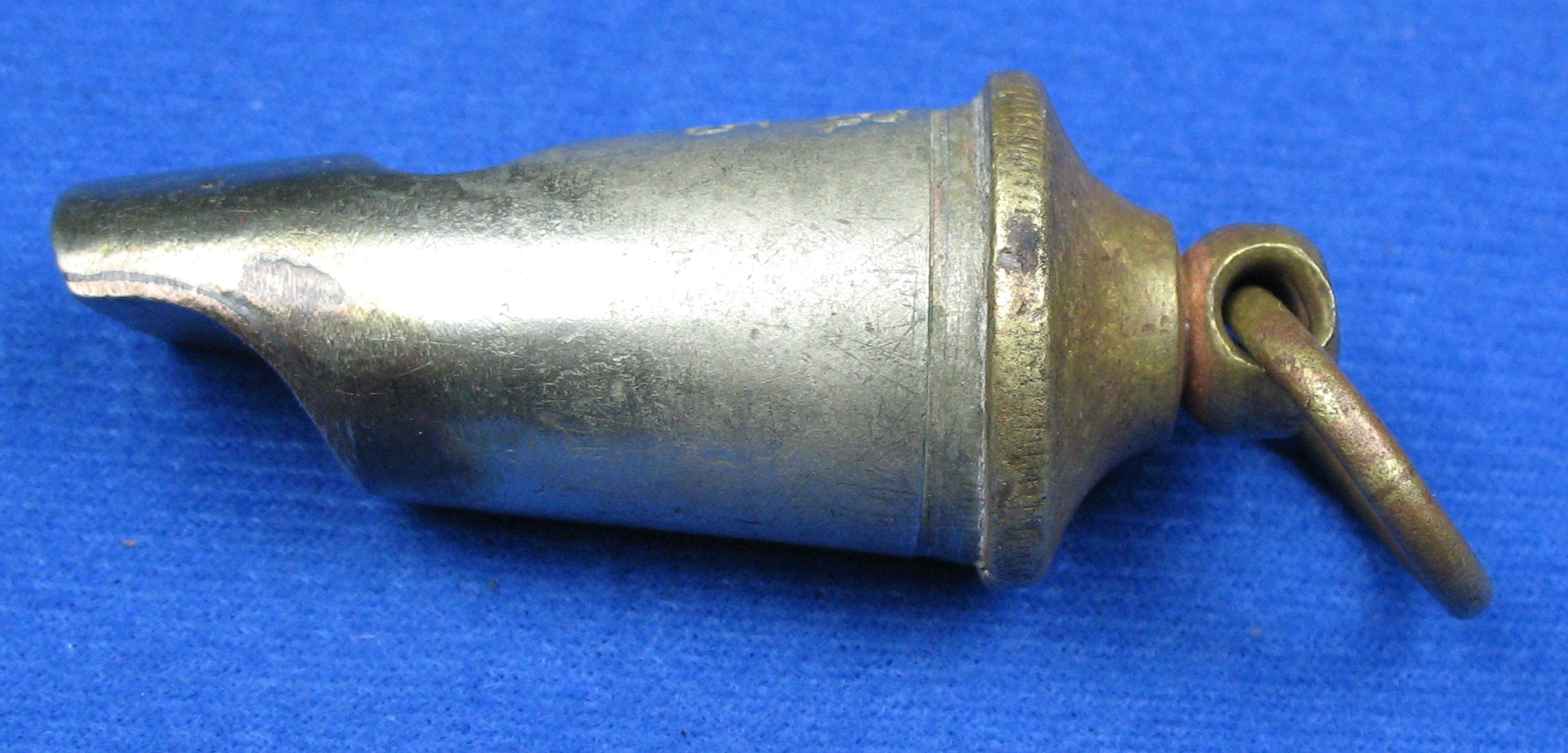
‘OFFICER’ picture on the left (courtesy of Leif Bailey).
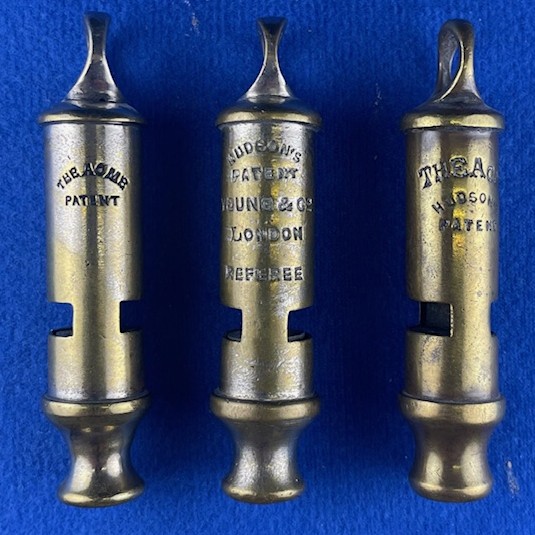
We see a series of whistles atributed to different makers who may have made this whistle design:
Hudson, Lilly, De Courcy, unknown.
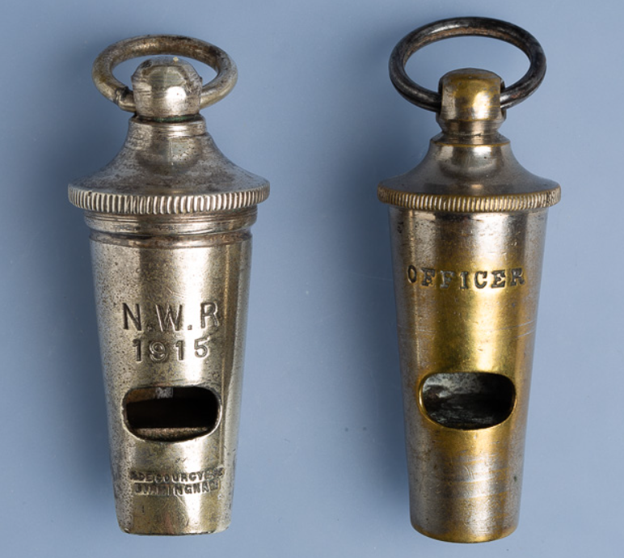
Photo Courtesy of Chris Mattison.
From a private collection, if you look closely, you can see the Officer is stamped on the front over the window as well as Alpha 121 on the side. This one with milling around the edge.
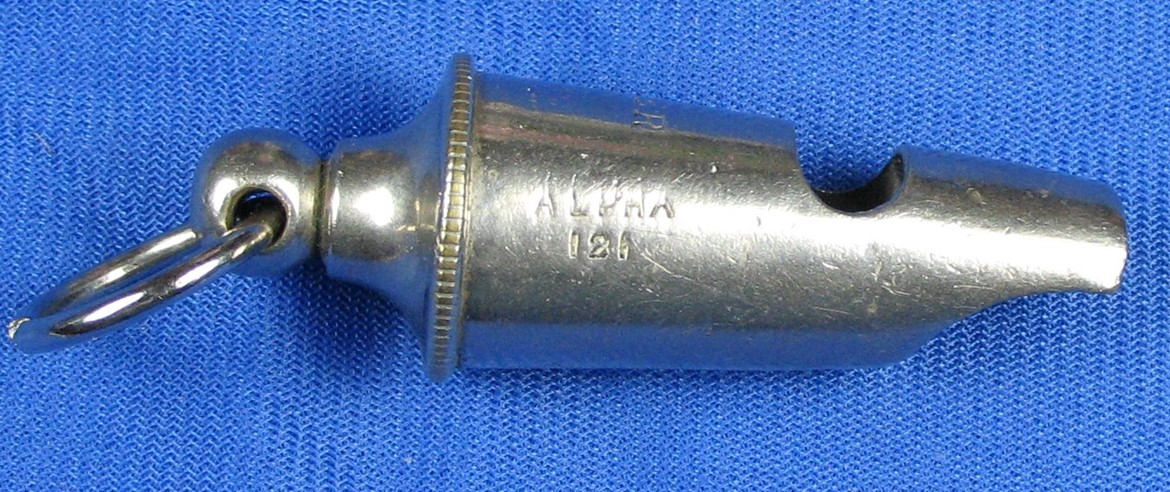
Side by side the same design can readily be seen. The conical/round top is not seen on any other whistles. This makes it a distinct design characteristic. Couple this with the knop placed right on top and the rarely seen oval window.
Here is the picture that surfaced of an existing whistle that updates our research. It is the same design but predating De Courcy and Lilly back to circa 1890 by Joseph Hudson and so the deserving reassignment.
Currently, the owner of this whistle is unknown, but the picture deepens our knowledge of this original design. At the same time, the stamp for St Marks is the earliest such stamp for Hudson at that location.
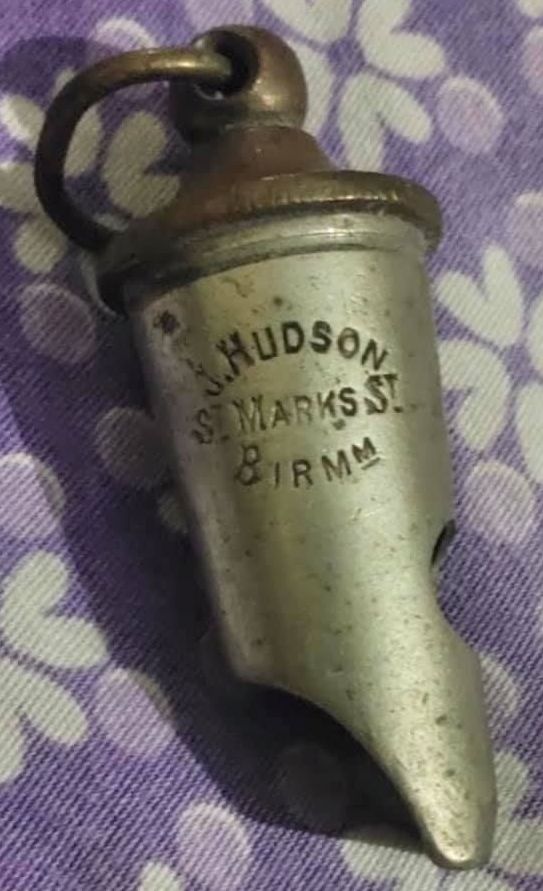
Photo credit pending.
Conclusions
Looking in a rear-view mirror can be difficult to be firm about identification. However, it certainly shows that Hudson designed this whistle before Lilly or DeCourcy. Hudson themselves did indeed copy other maker’s designs, so perhaps that sword cuts two ways and Alfred DeCourcy took that whistle design knowledge with him when he left there as a foreman. Perhaps he made it for Lilly for distribution. At some point fully manufacturing it for NWR. Yet, it is all speculation after Joseph Hudson’s design.
TWG
Posted September 17, 2013
Revised September 12, 2020
Revised October 11, 2020
Revised February 21, 2021
Revised December 31, 2021
Revised June 12, 2022
Revised December 3, 2025
Revised July 13, 2026
Bibliography:
- TWG Reference Collection
- The Whistle Gallery Archives
- Collecting Police Whistles and Similar Types, by Martyn Gilchrist and Simon Topman, 1998.
- More Whistles, Martyn Gilchrist, 2005.
© – All photos with blue background property of The Whistle Gallery reference collection. Please contact The Whistle Gallery for permission of use of any website content. Spotlight articles are copyrighted. Please contact The Whistle Gallery for permission of use of any website or Spotlight article material written or otherwise. Use of photos without authorization is prohibited.


 Users This Month : 2407
 Total views : 184729