Whistory
A delightful category of whistles are skeleton whistles. Called that because of the obvious. Yes, they are just the frame of a whistle and need to have the sides finished — when you press your fingers to each side, thereby completing the ‘body’ you can make the whistle complete and whistle.
Typically, skeletons are on the smaller size. Perhaps due to being marketed towards women and children with smaller fingers. Most of what we have seen of quality is done by silversmiths from the UK and these date clear back into the early 1800s. They are found presently from the UK, France and the USA.
What are Lozenges Used for on Skeleton Whistles?
Early 1800s whistles can be found with lozenge stamps from the UK. These most certainly were decoratively aimed at the lady’s market. Small, petite and fragile, they would have hung from a neck chain, chatelaine or wristlet as a charm.
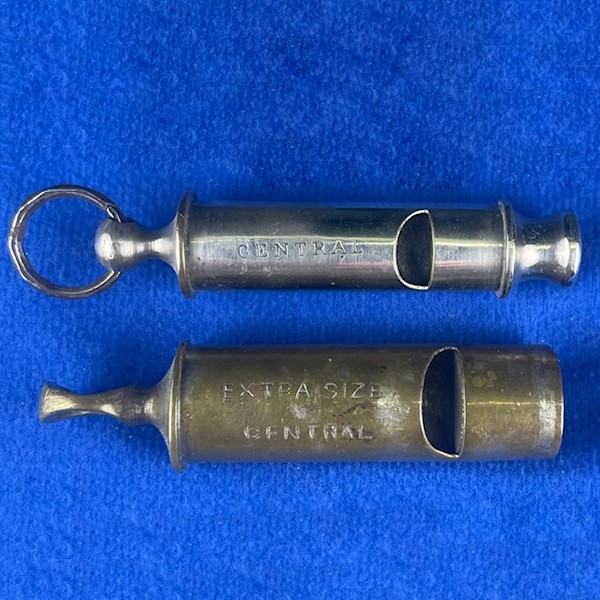
French examples are more sturdy or even closer to an escargot, with thicker plated brass.
Circa 1900, although silversmiths continued to make skeleton whistles, they became a little bulkier. There were fewer and heavier silver and less details. At the same time steel skeletons surfaced.
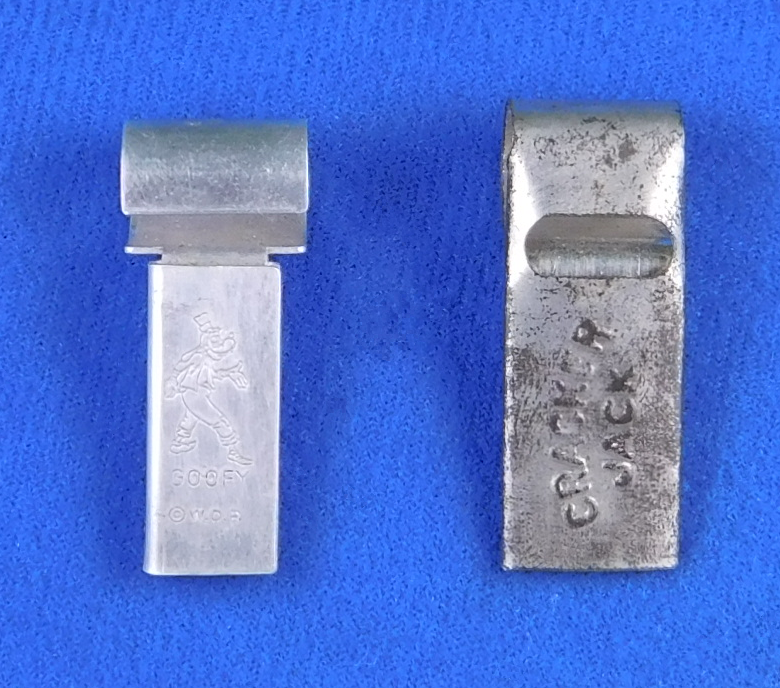
Post 1900, they transitioned into more of a novelty toy or advertising tool. After the turn of the century in 1900 they were made with less quality and mainly are now seen in ‘tin’, an exception being the Disney skeletons from the USA made of aluminum with Disney characters stamped on top.
During this time the tin litho arose for the children’s market
What Materials were Used to Manufacture Skeleton Whistles?
We have seen them manufactured from silver, steel, — thicker steel and thinner steel (mistakenly called ‘tin’) and as litho advertising whistles – even copper. In the USA BGI made a model of thicker steel. Many were made with lithograph artwork and even Disney skeleton whistles are seen commonly for sale with Disney figures on them. Crackerjacks skeletons are always around for nominal prices.
Whistle Classification
| Type | skeleton |
| Maker | silversmiths Mergott unknown |
| Category | jewelry adverising toys |
| Material | silver steel tin |
| Features | litho |
Whistle Archeology
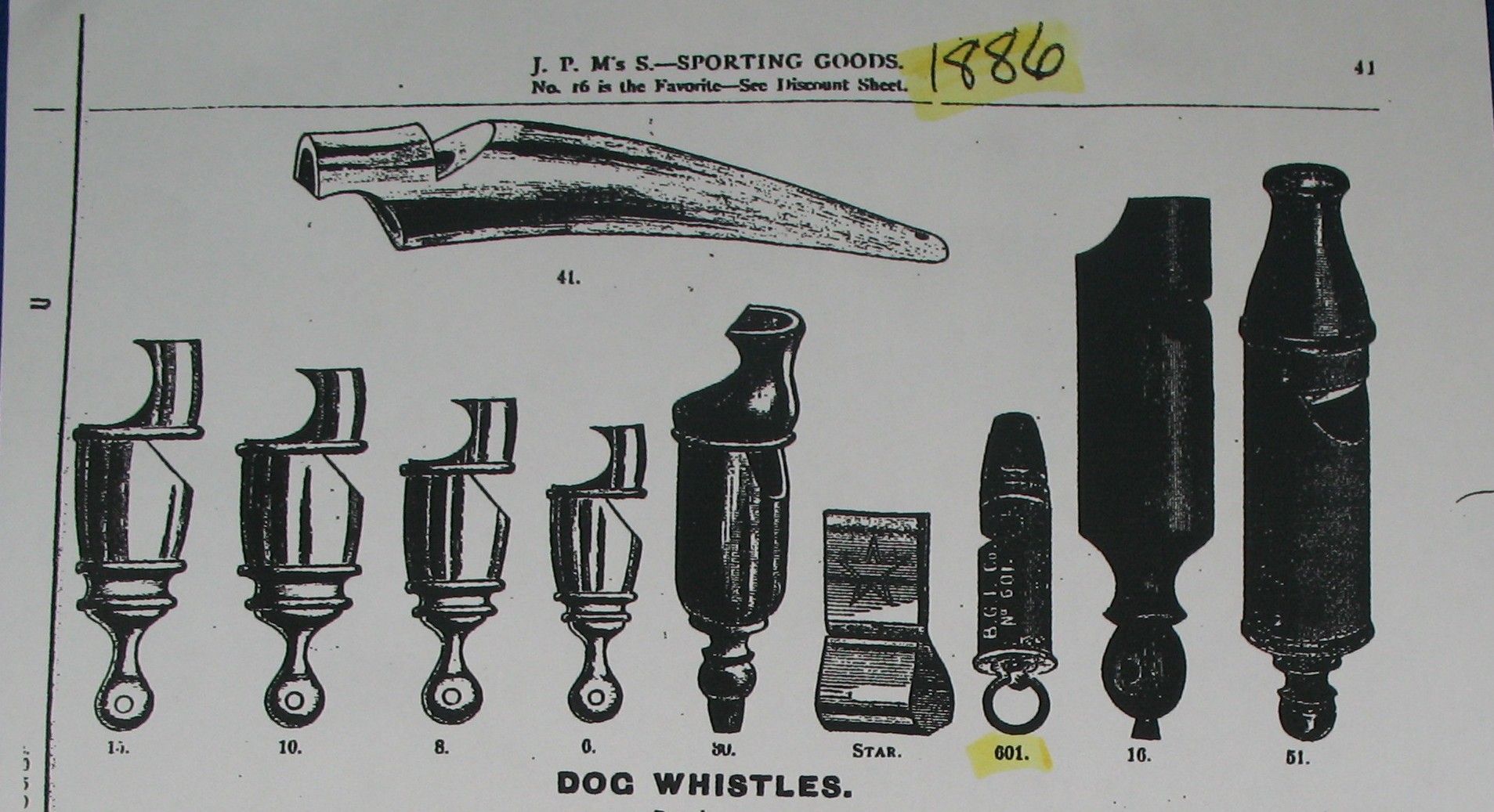
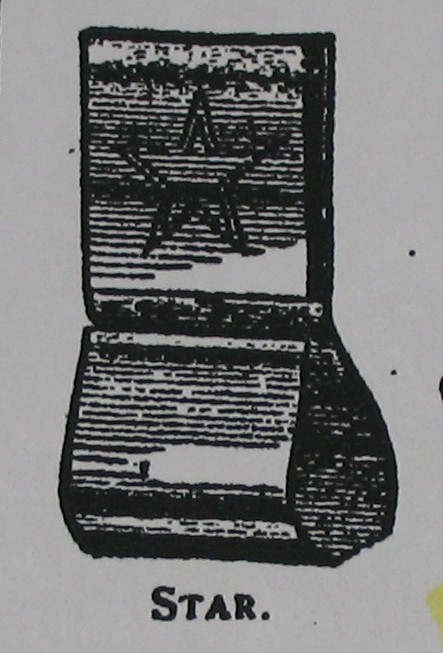
From an 1886 BGI catalog:
1927 H. Nicholas French catalog:
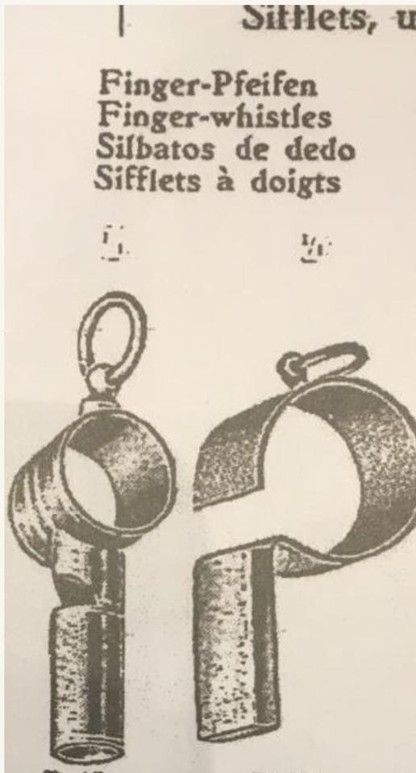
It is surprising that skeleton whistles are few to be found in catalogs and advertisements.
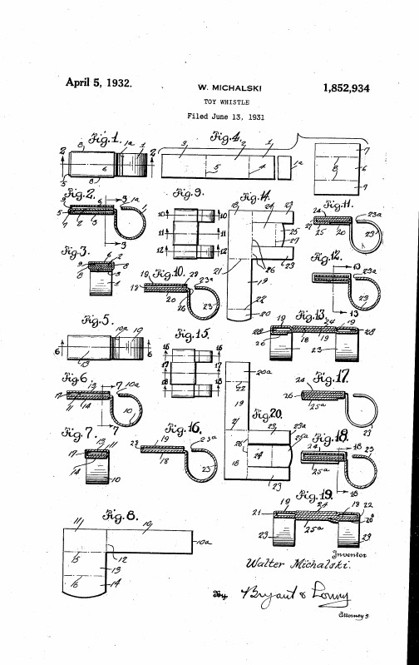
1932 toy patent:
Whistology
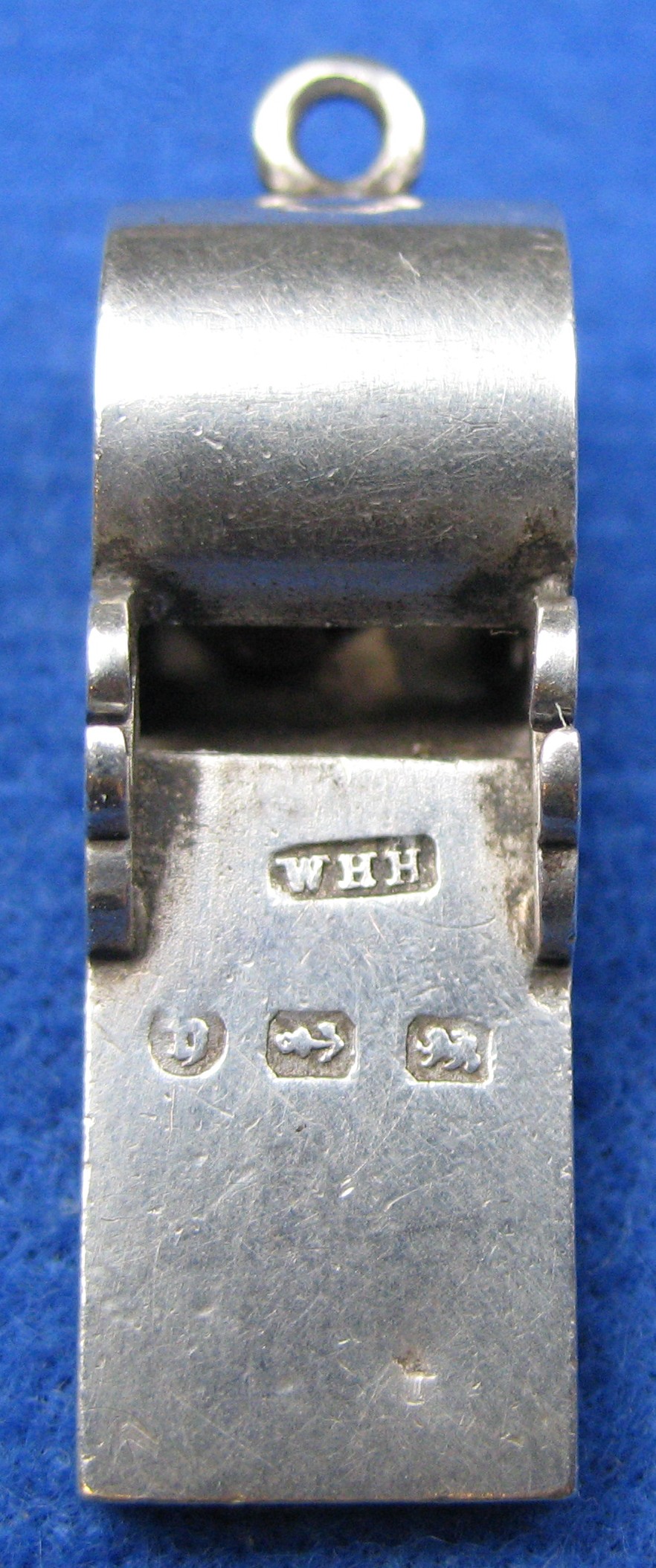
Earliest examples are from the UK as early as mid-century with lozenges and/or hallmarks.
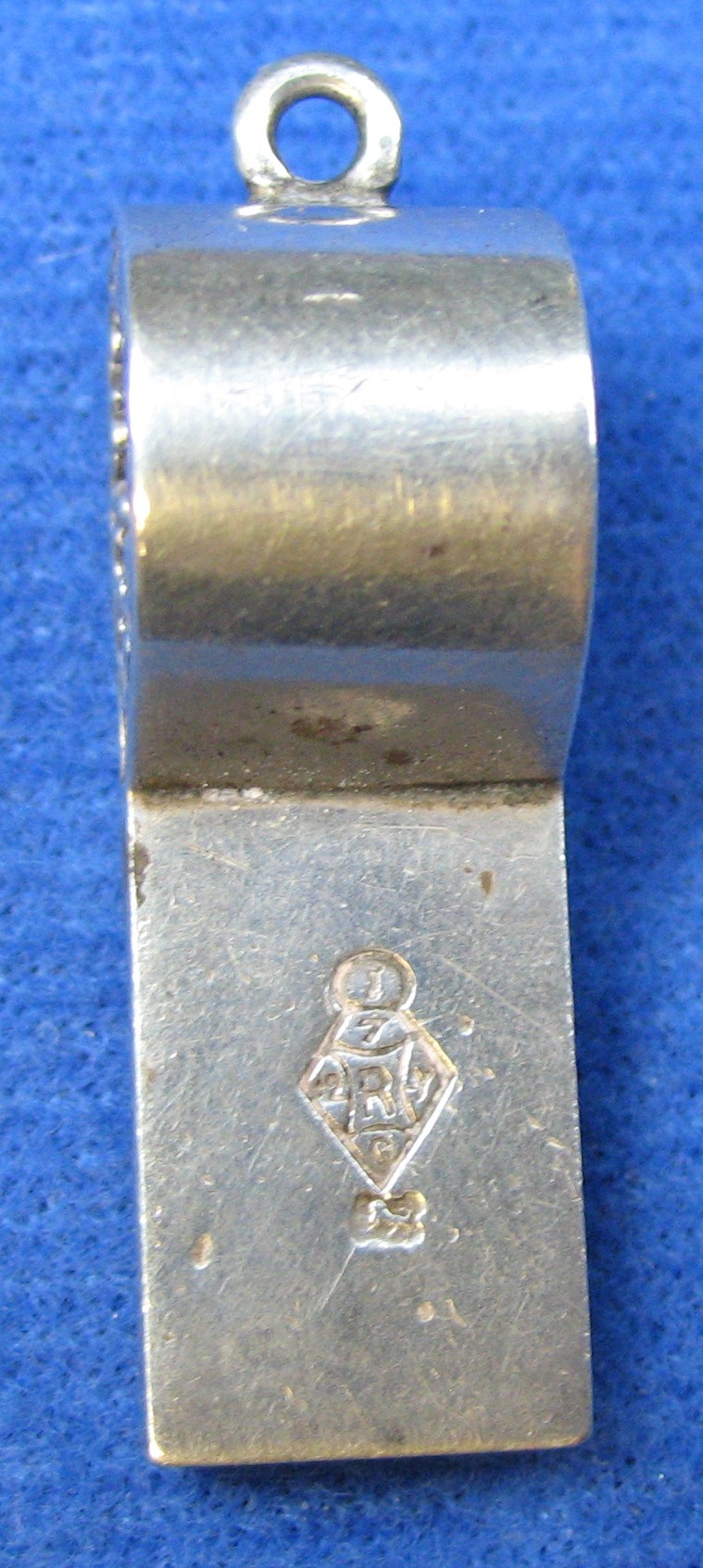
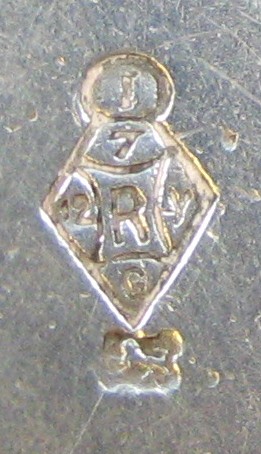
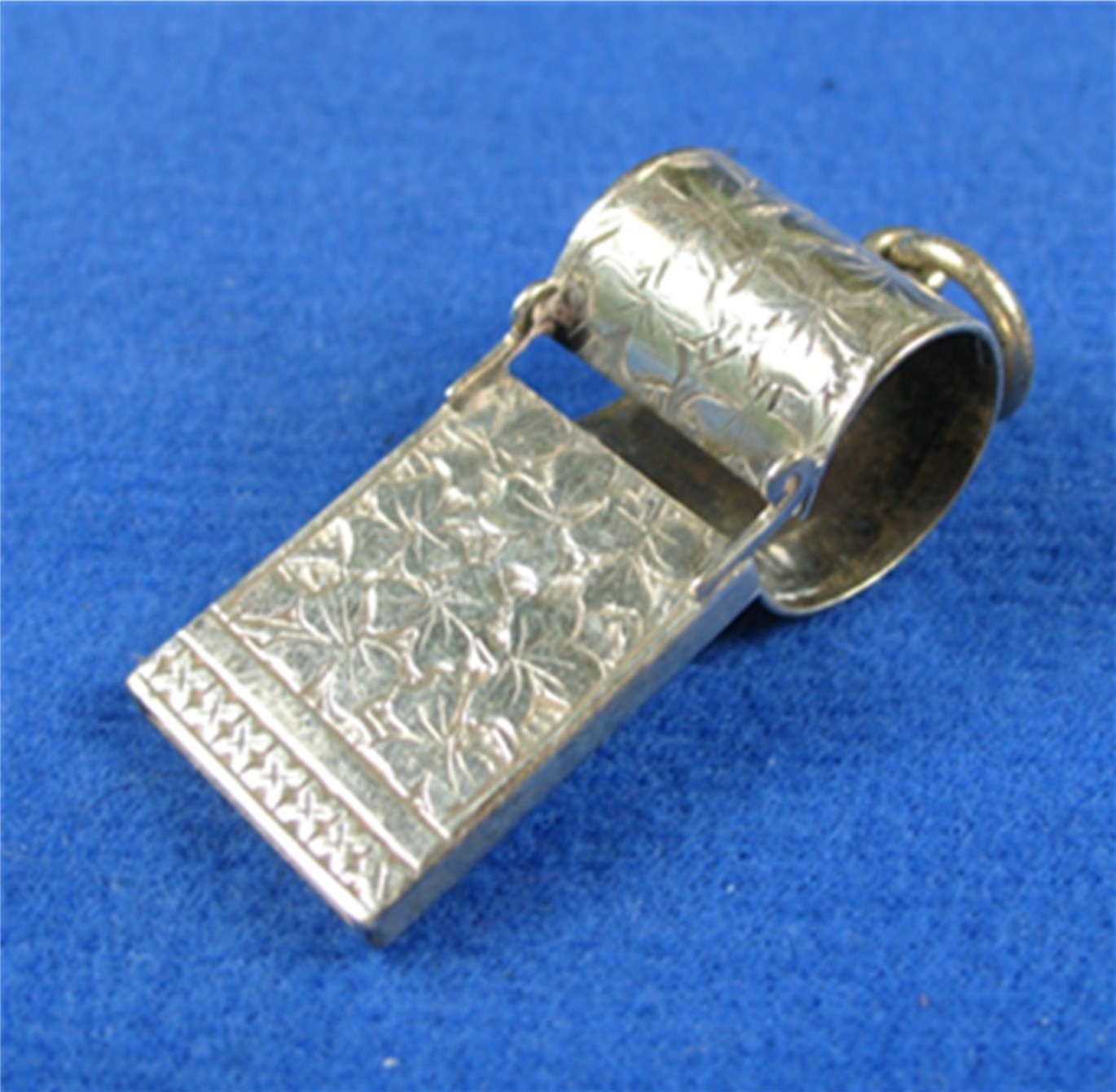
S. Blankanese dated to 1892
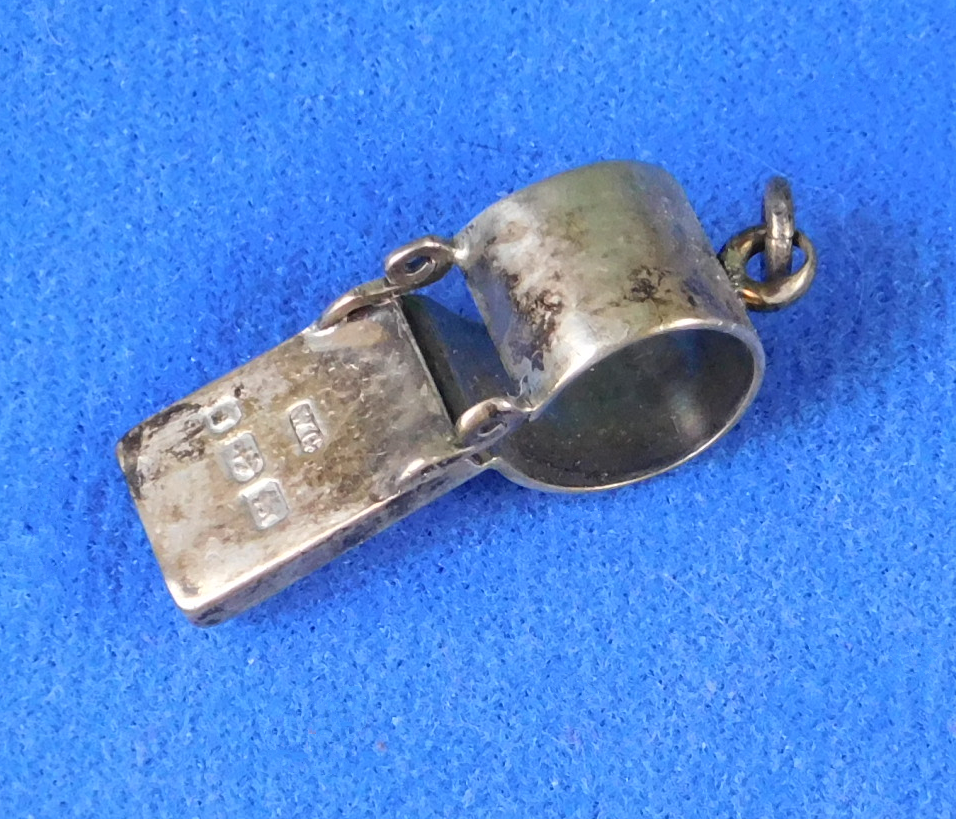
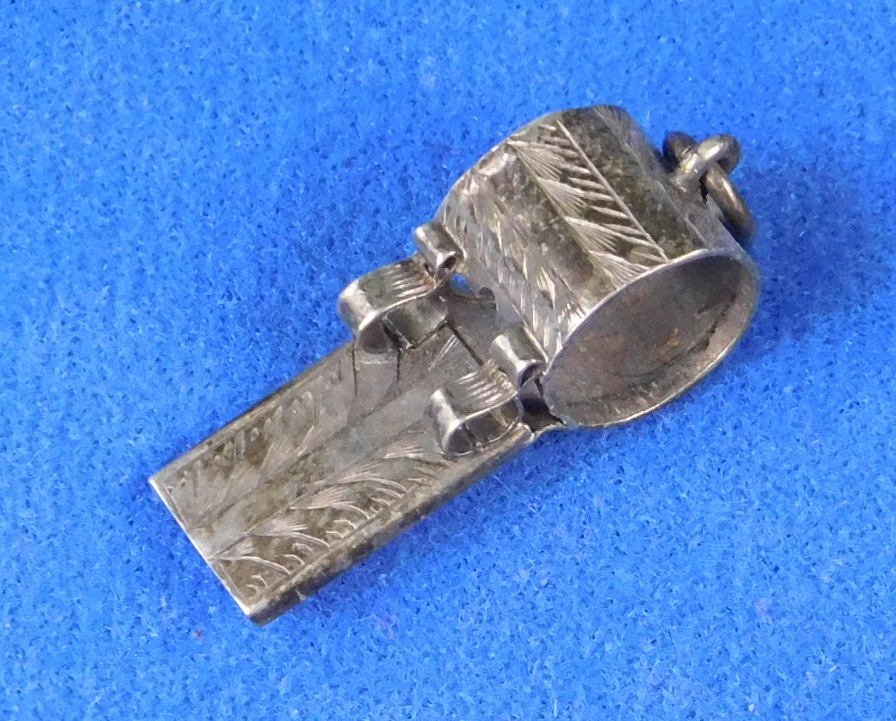
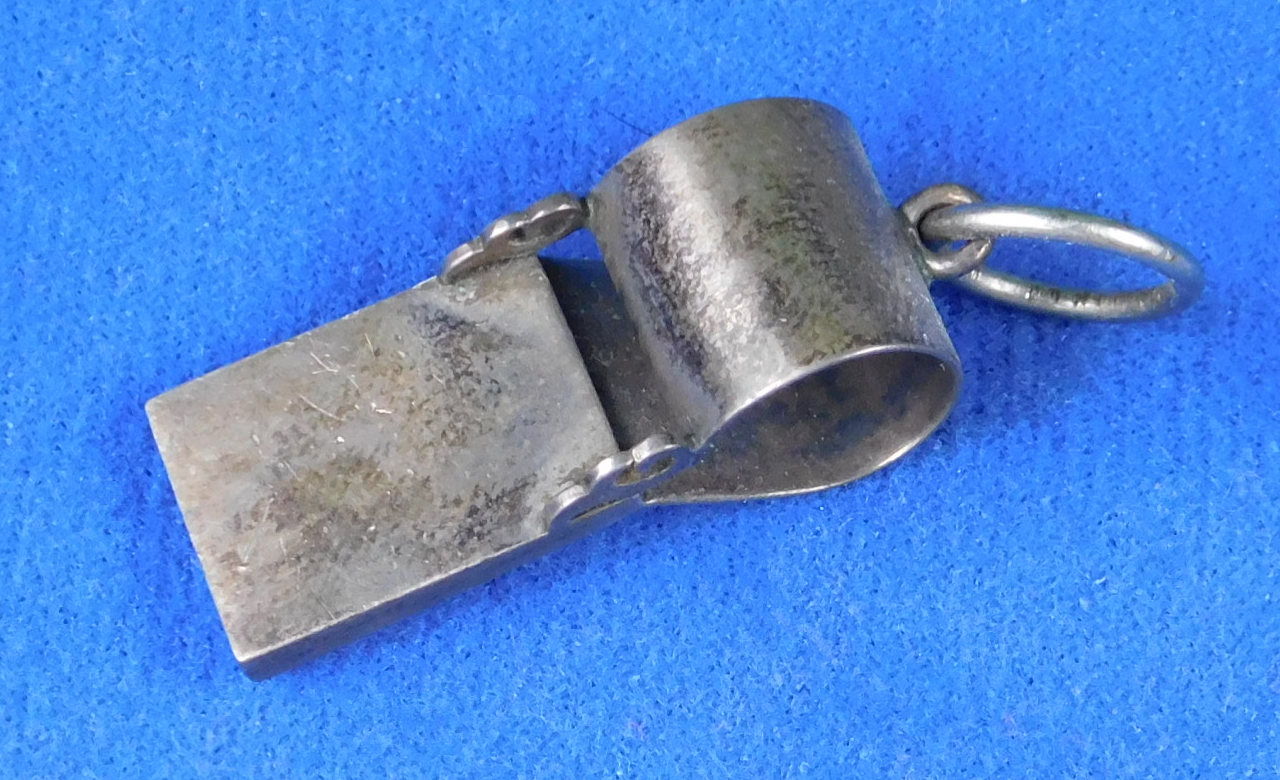
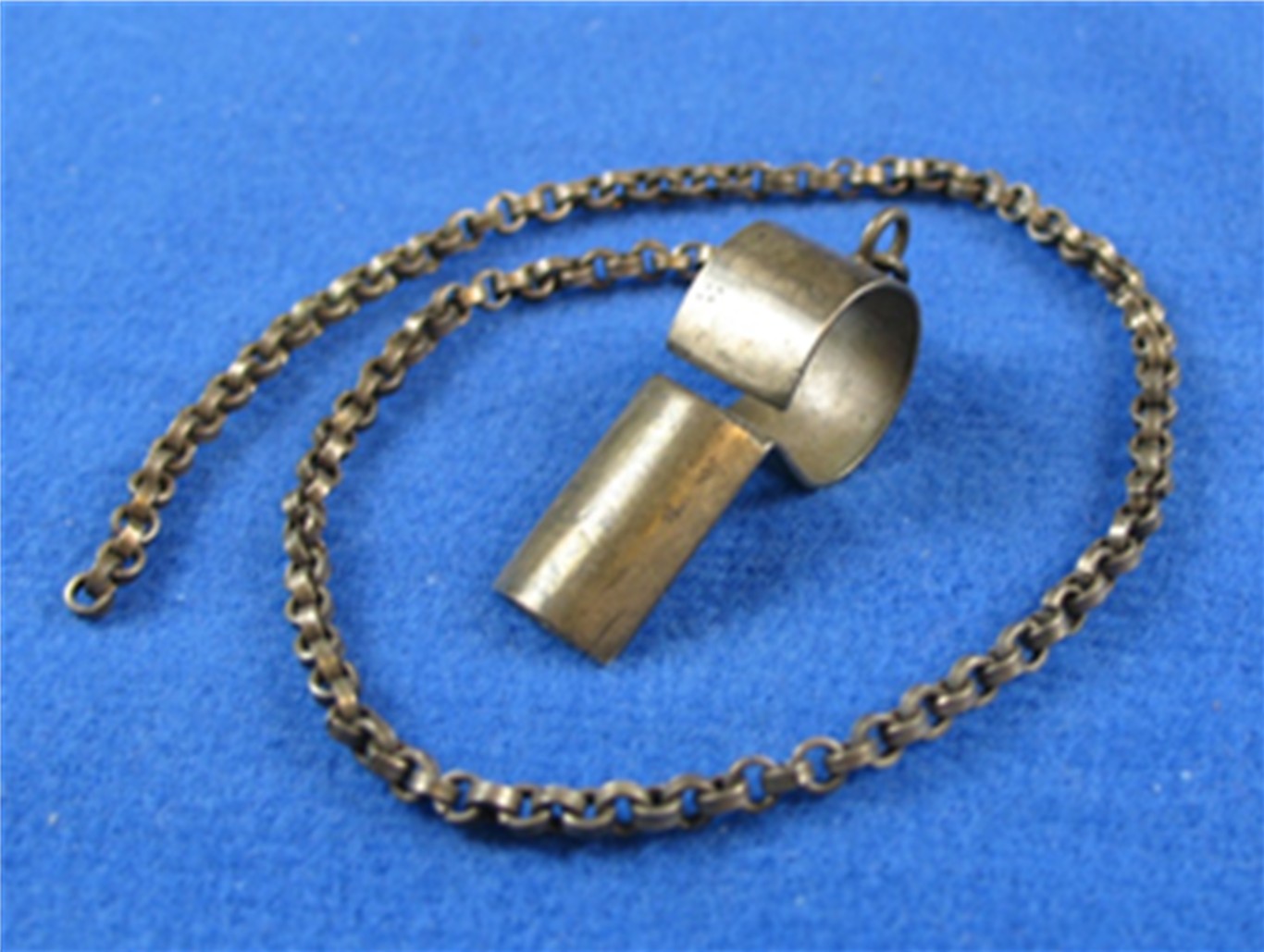
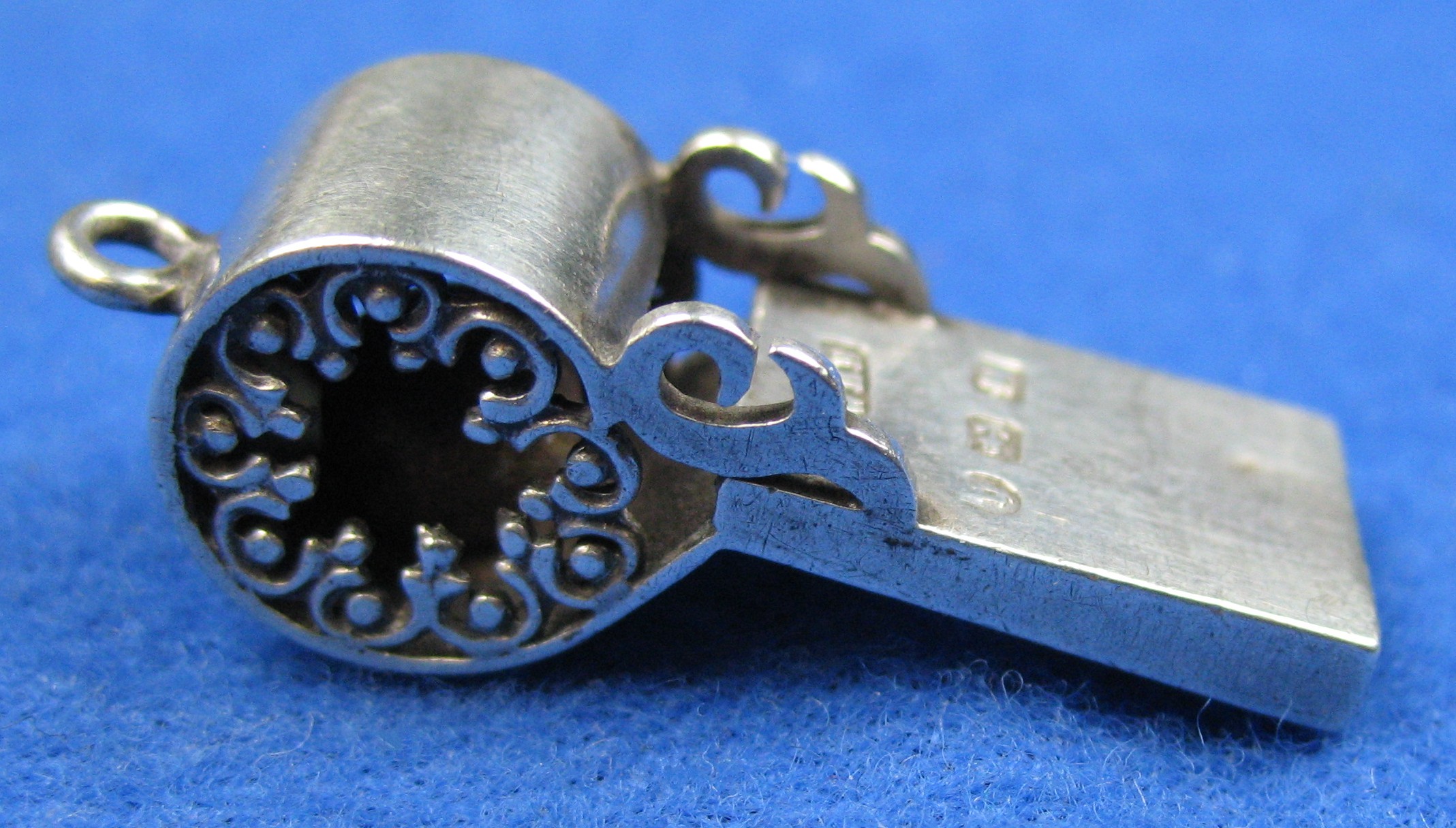
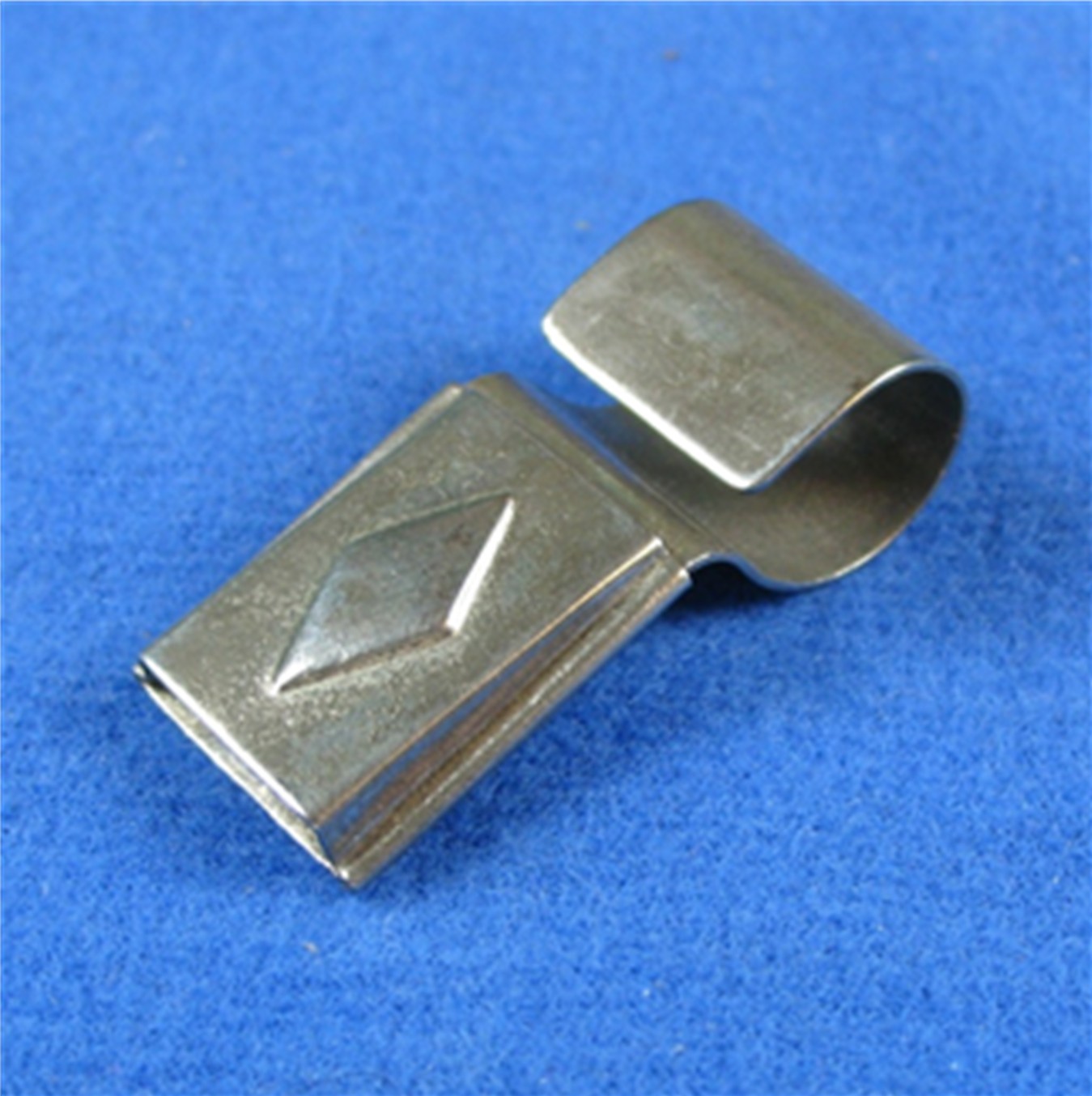
A diamond pattern, but no star yet. It is a heavier gauge steel and can now date back to at least 1886, by the 1902 catalogue it had been discontinued.
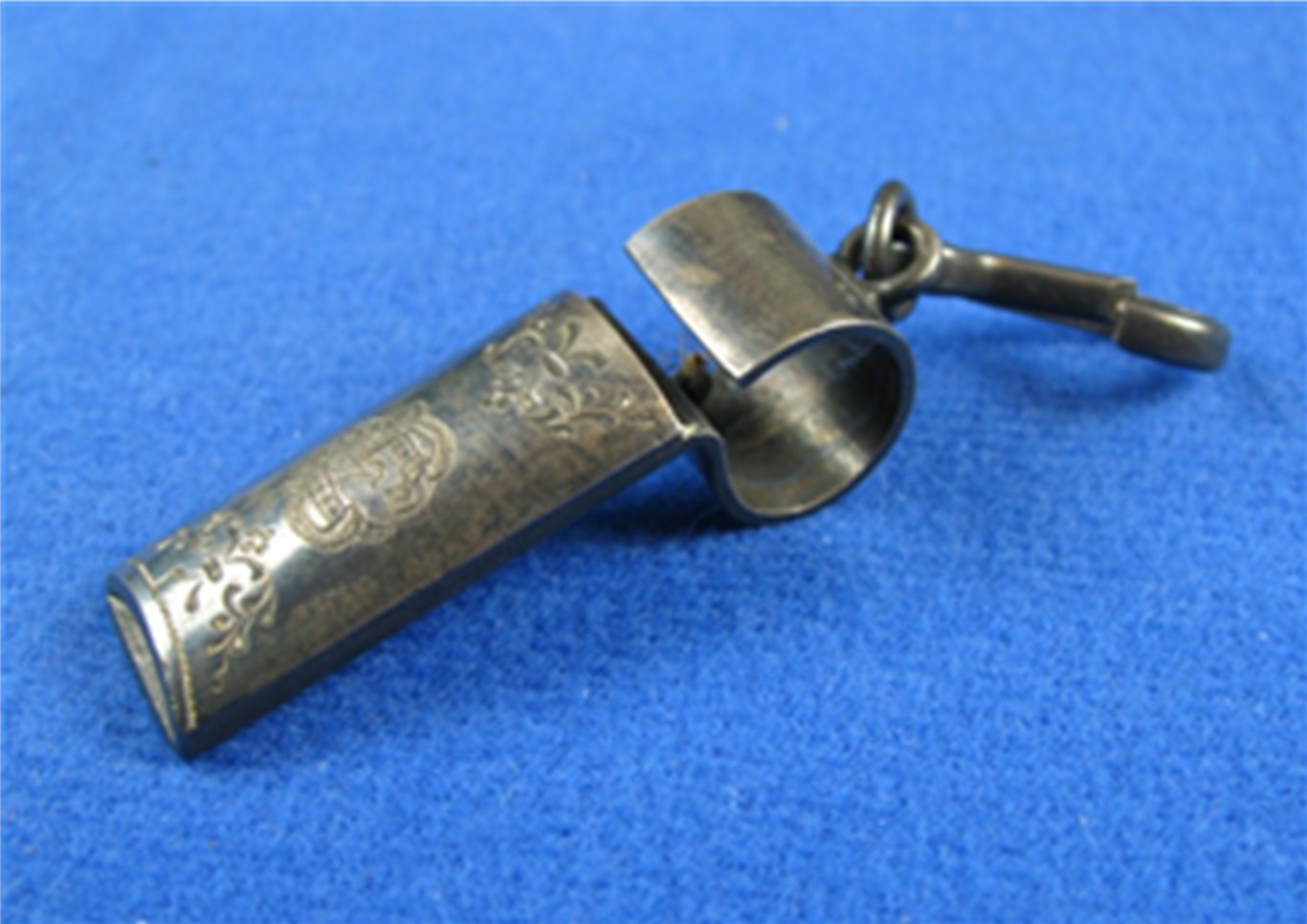
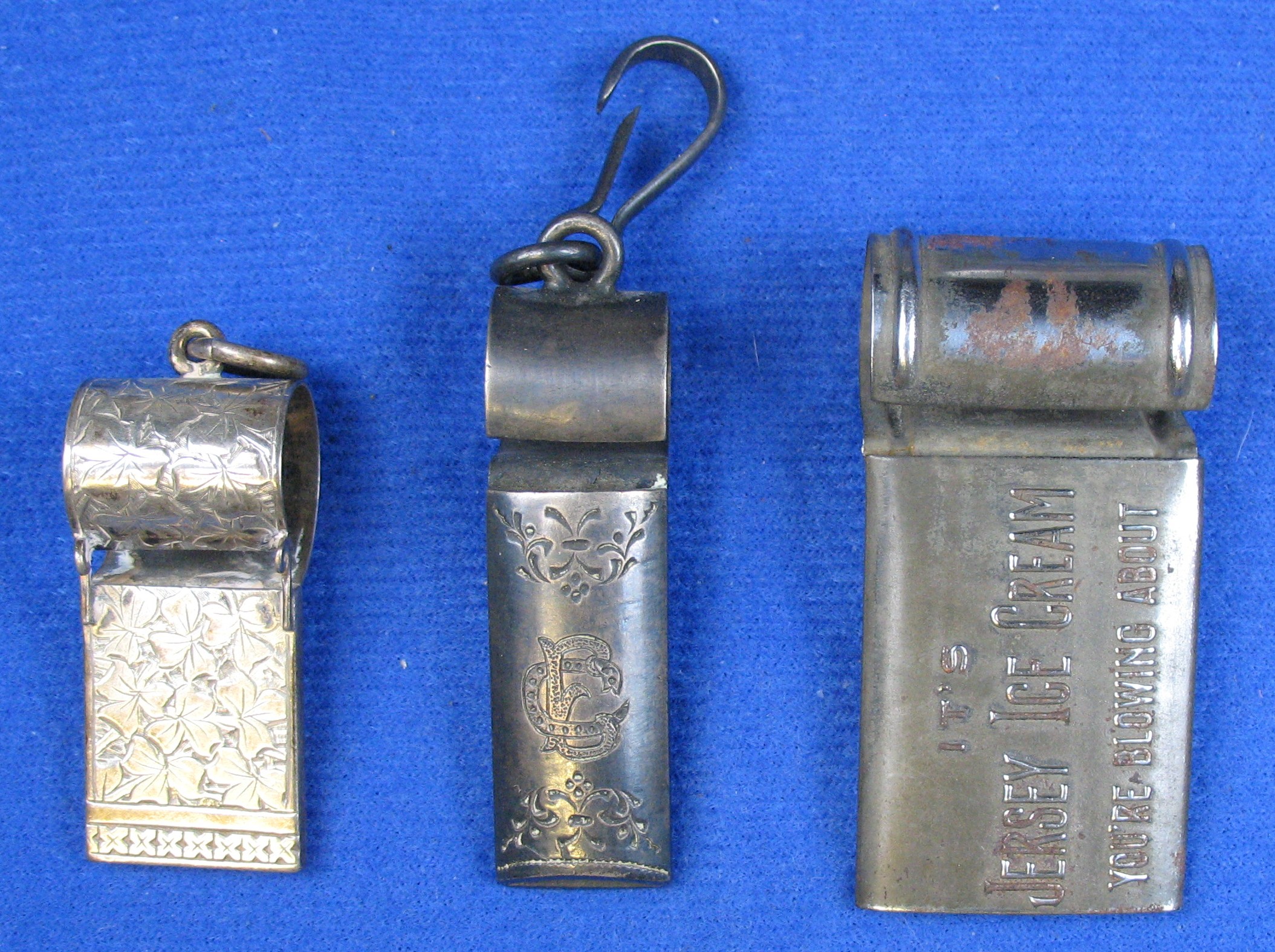
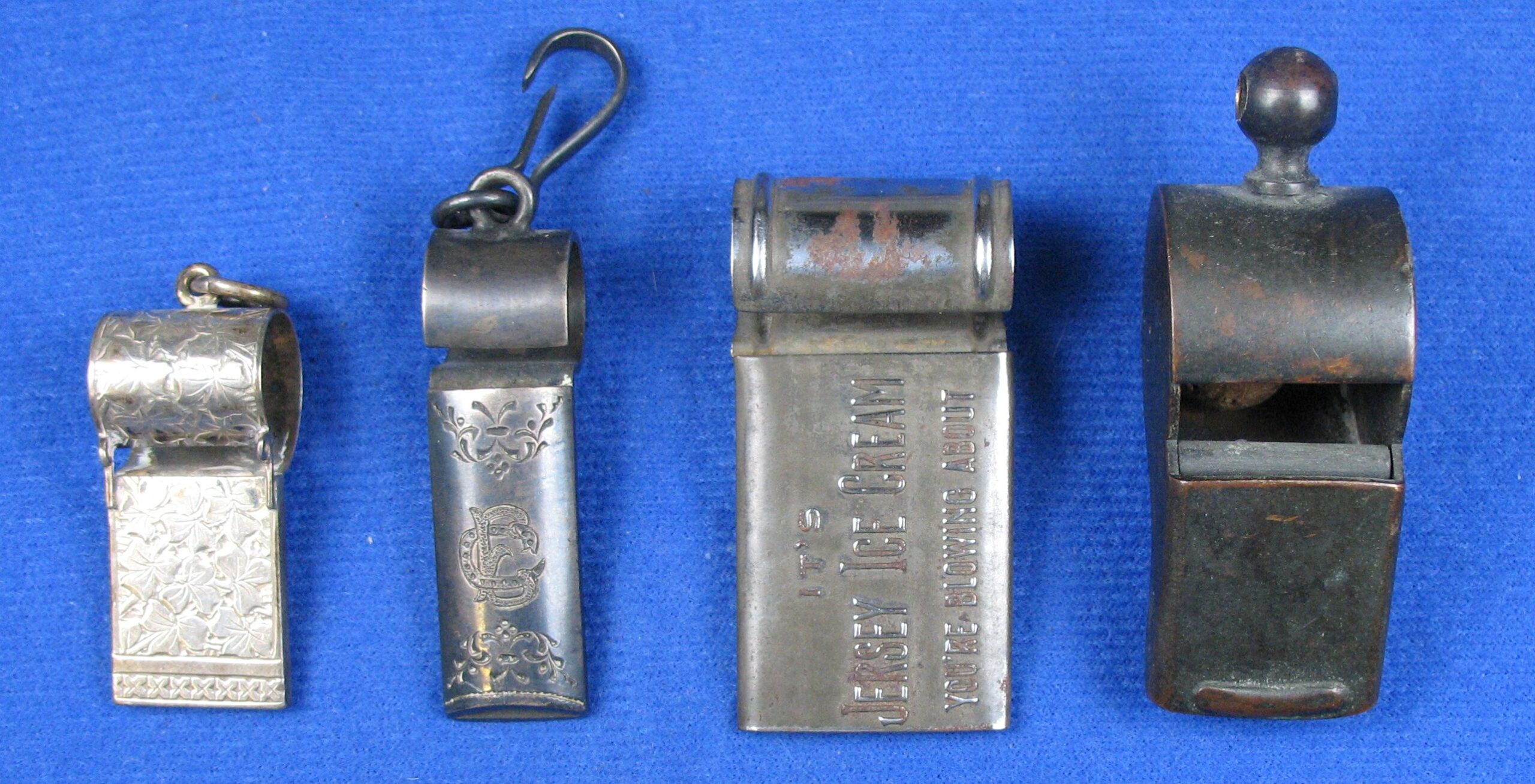
This following scrolled one here at the reference collection has an elongated mouthpiece, unusual for skeletons. It is not hallmarked and has a heavy patina. silver — out of the State’s west coast of California. It has a crest engraved on the front C E . very heavy and well made.
Post 1900 came the onset of advertising on skeletons, look at a large steel advertising skeleton. Mergott came out with many different stamps for advertising different companies. (See SPOTLIGHT 71)
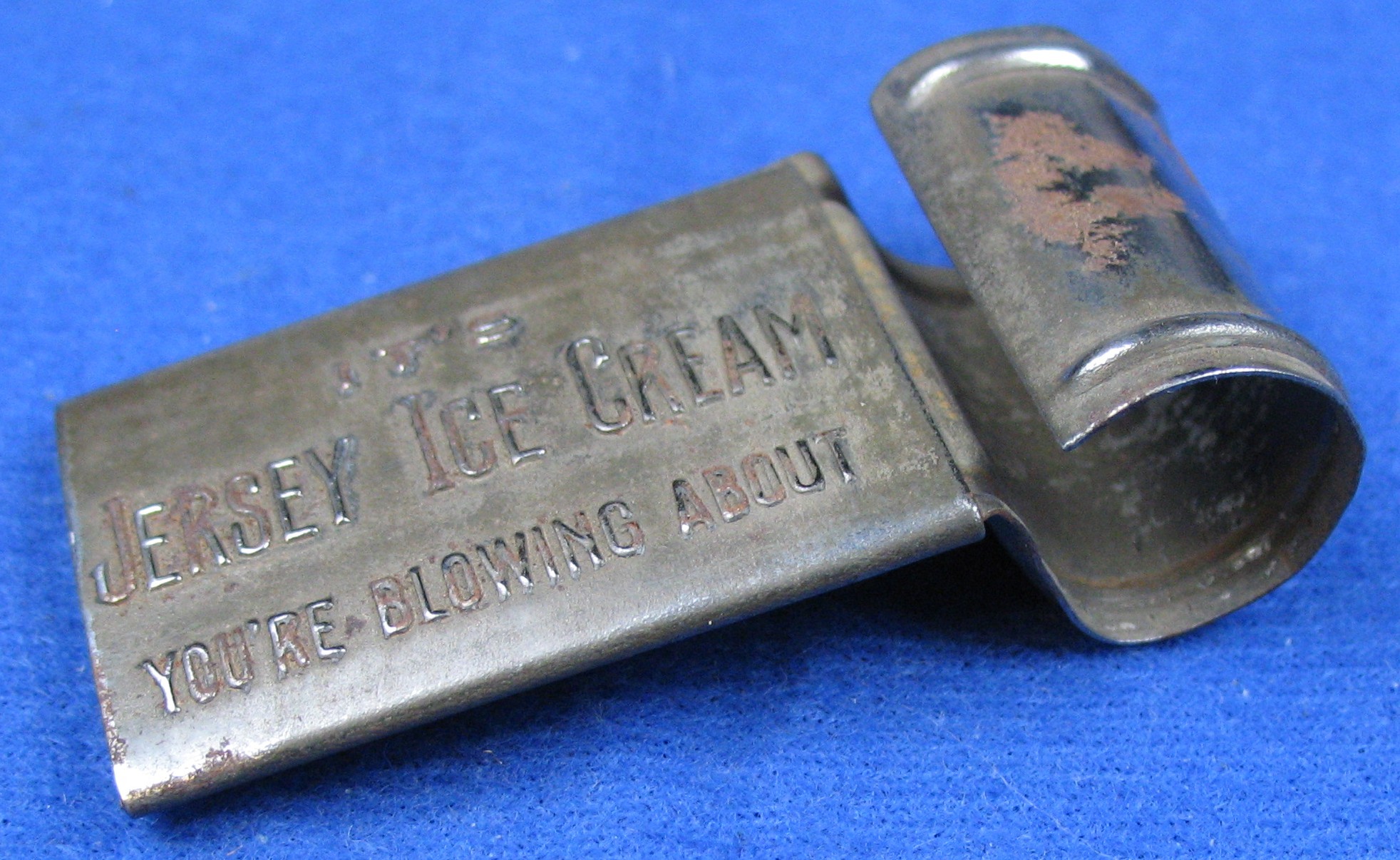
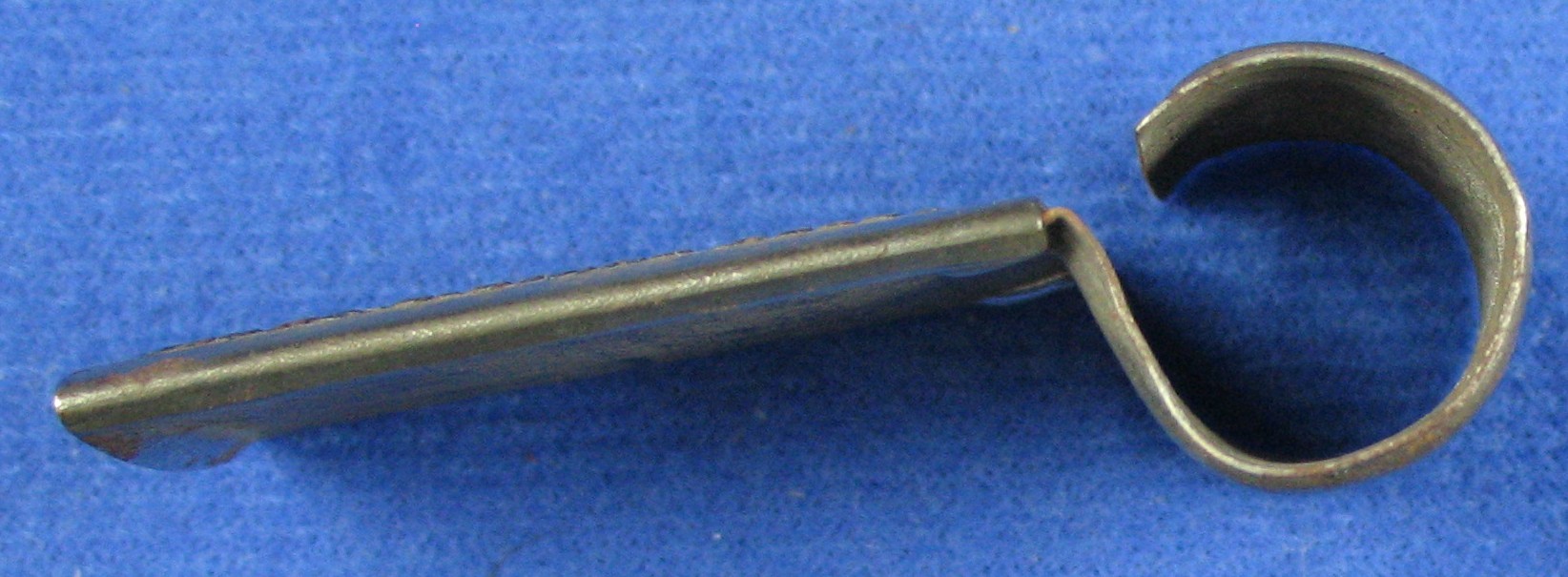
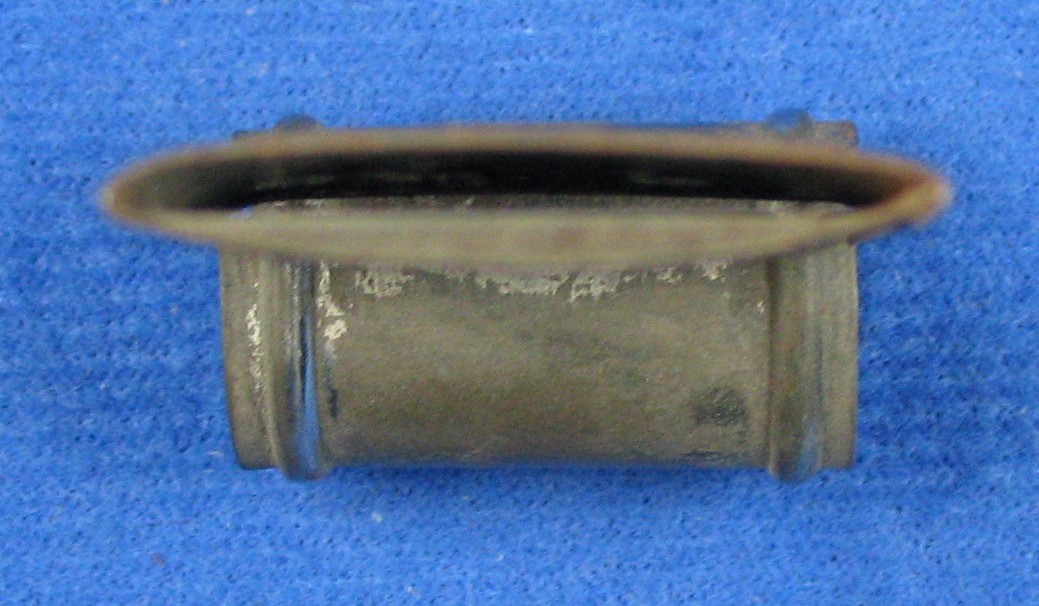
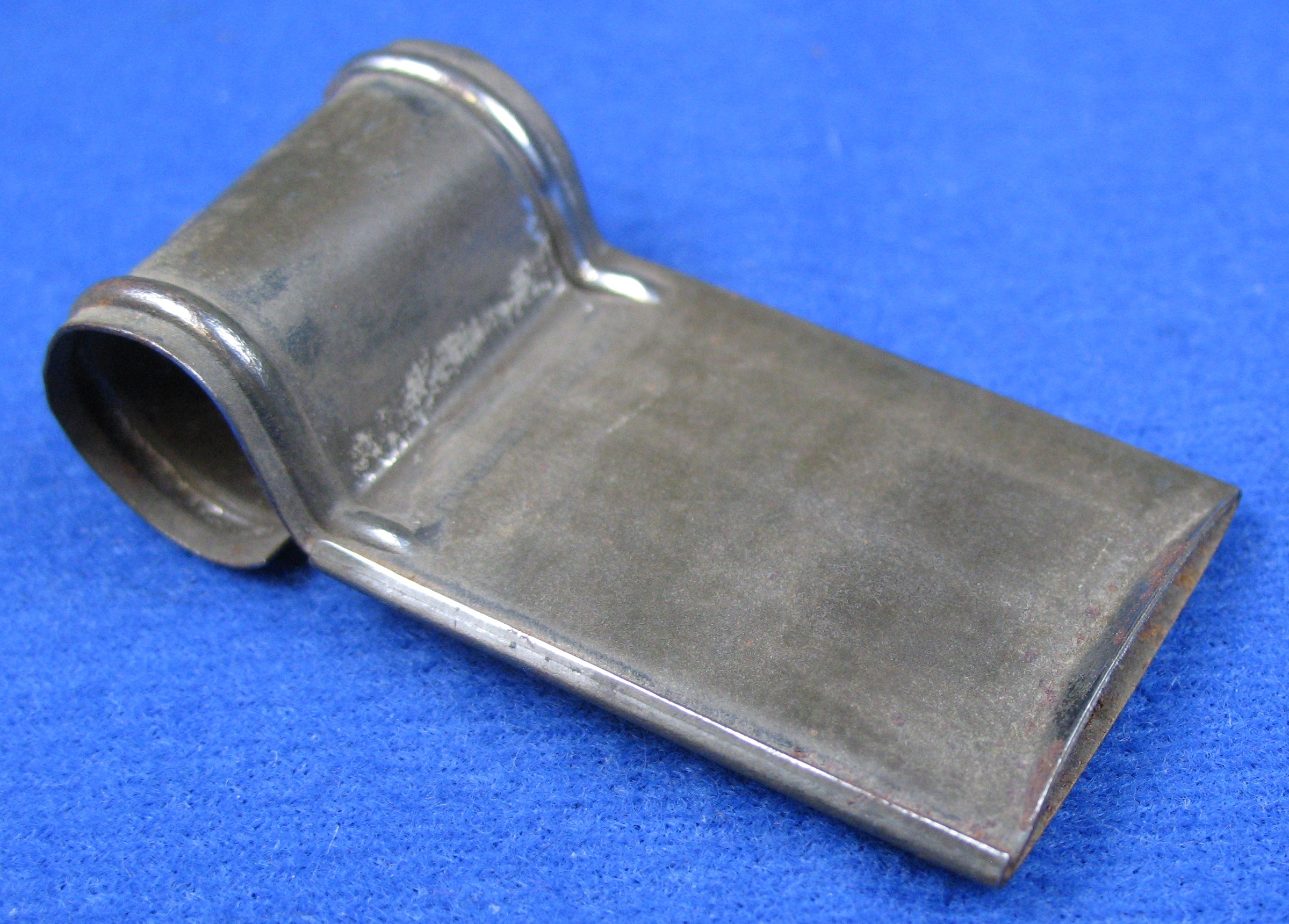
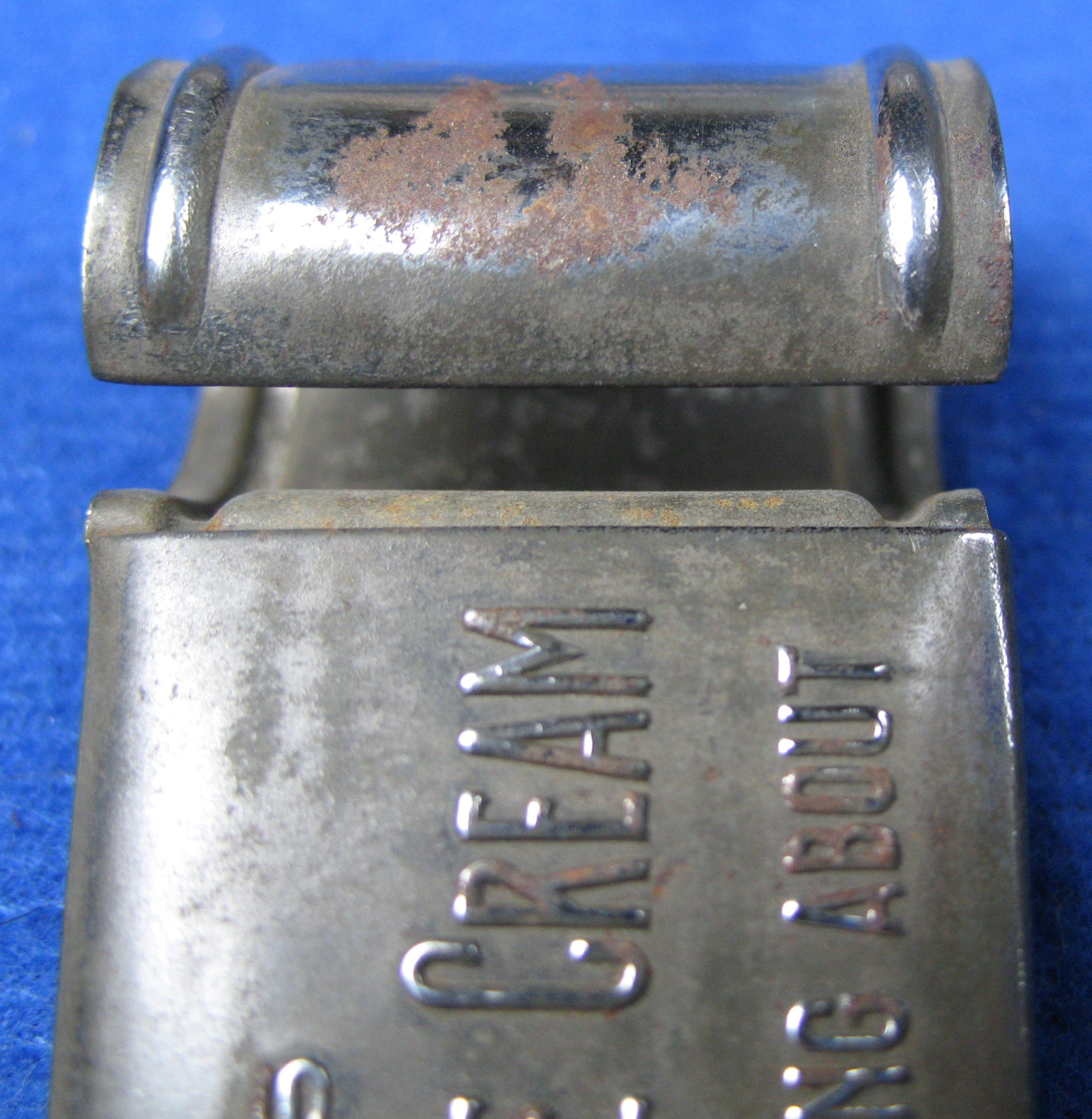
This one is quite wide for a skeleton. The sound is sharp. It will not work without completing the sides.
Perhaps about this time in France we see entry of a variation of the skeletons with an almost escargot design.
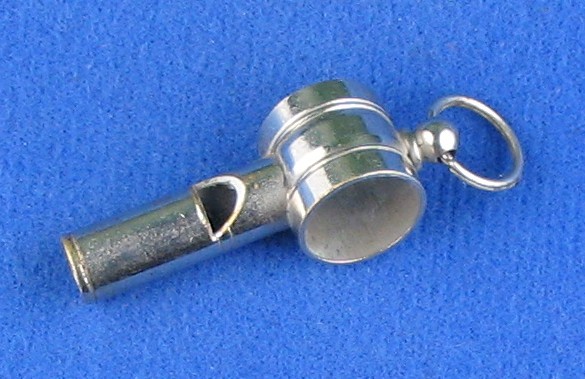
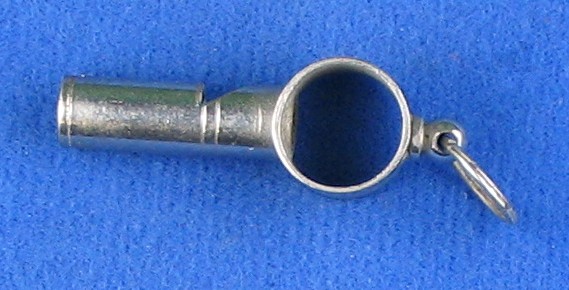
Later into the 1900s came tin litho and novelty skeletons.
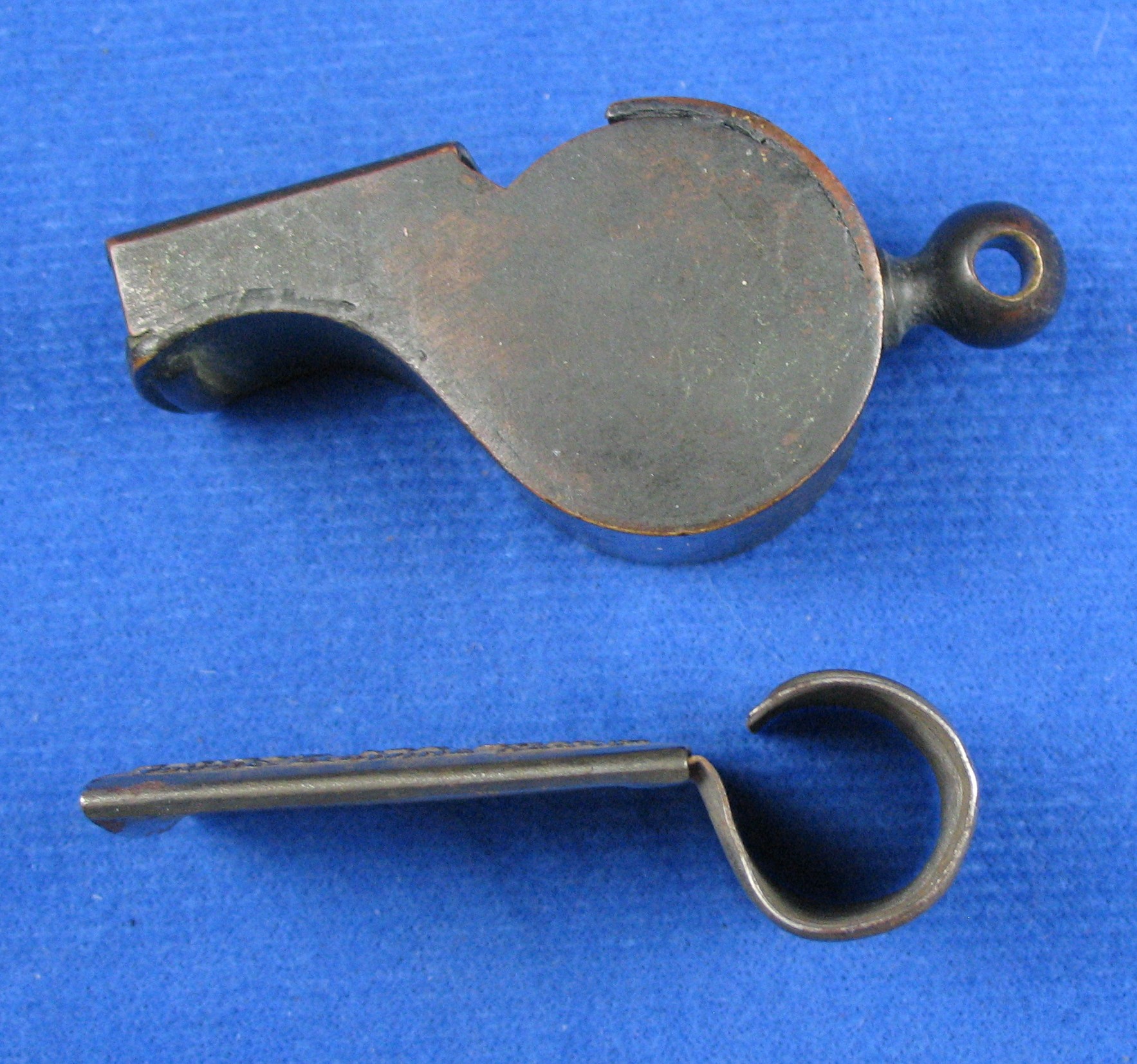
To help get a relative bearing on sizes, now look at some comparisons to each other and a full-size escargot from the states.
You can see the typical smaller size of a silversmith’s model, the unusual, crested model and a larger steel model.
Now let’s compare them to an escargot…
and side by side…
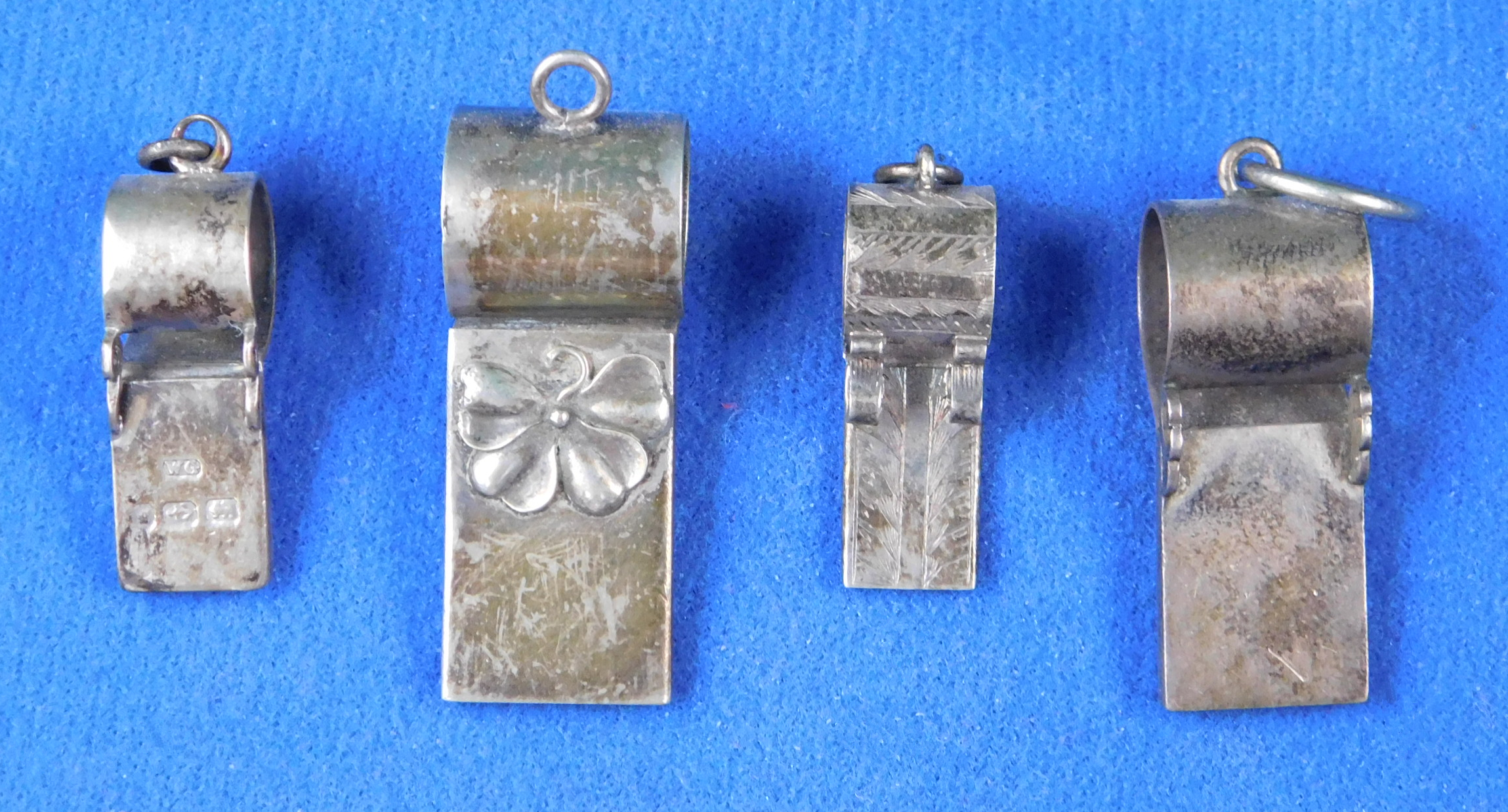
Here is another size comparison of skeletons that are almost ‘charm’ sizes, fobs for ladies’ charms to larger decorative skeletons.
Conclusions:
Skeletons onset was aimed at small hands and ladies with crafted and decorative silver. They emerged from the mid-1850s.
This changed towards the end of the century and steel examples with little decoration came into use and sales.
Eventually skeletons fell in quality into cheaper steel advertising models. In the 1920s-30s we see the onset of tin litho toys and finally merely as novelty items such as Cracker Jack and Disney.
TWG
Posted April 19, 2013
Revised November 22, 20218
Revised August 16, 2020
Revised October 11, 2020
Revised February 12, 2021
Revised February 13, 2022
Revised February 21, 2025
Revised March 27, 2025
Revised December 9, 2025
Revised June 10, 2026
Bibliography:
- TWG Reference Collection
- Google Patents Search
- Catalog: BGI – 1886, 1902
- Catalog: H. Nicholas – 1927
© – All photos with blue background property of The Whistle Gallery reference collection. Please contact The Whistle Gallery for permission of use of any website content. Spotlight articles are copyrighted. Please contact The Whistle Gallery for permission of use of any website or Spotlight article material written or otherwise. Use of photos without authorization is prohibited.


 Users This Month : 2186
 Total views : 184472