Whistory
The named whistle, the Extra Size Central has been attributed to Coney and Company in Collecting Police Whistles and Similar Types and More Whistles. In fact, Coney ‘type’ loops have followed this description and therefore have been misleading.
Upon further examination there is reason to reassign the Extra Size Central from Coney to Thomas Yates matching his whistle stamped Central.
What Calls For This Coney Reassignment?
- The first reason is that John Coney & Company typically stamped their whistles and other products such as the patented (1871) corkscrew with Coney Patent, Coney & Co. or the registration number on their products. This whistle is never stamped by the maker.
- The second reason is that name Central was used by Benjamin Lilly as a trade name. The name Central is used with a larger whistle than normal and therefore understandably stamped the Extra Size Central.
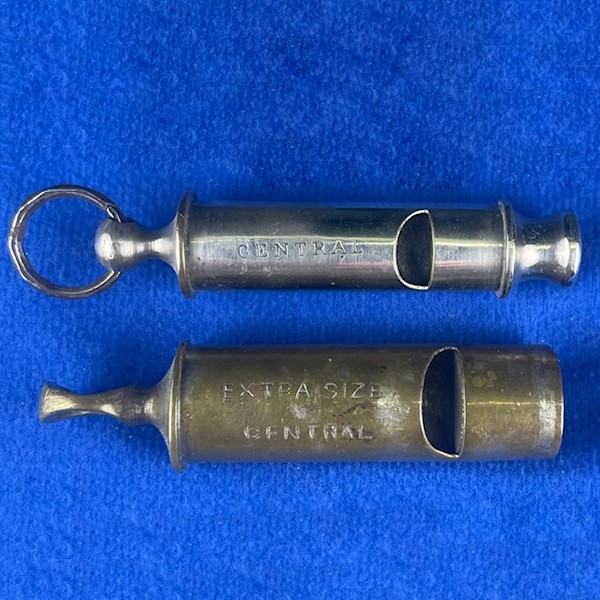
- The third reason is that the windows match perfectly to Yates Central being half moon shaped and of the same exact shape.
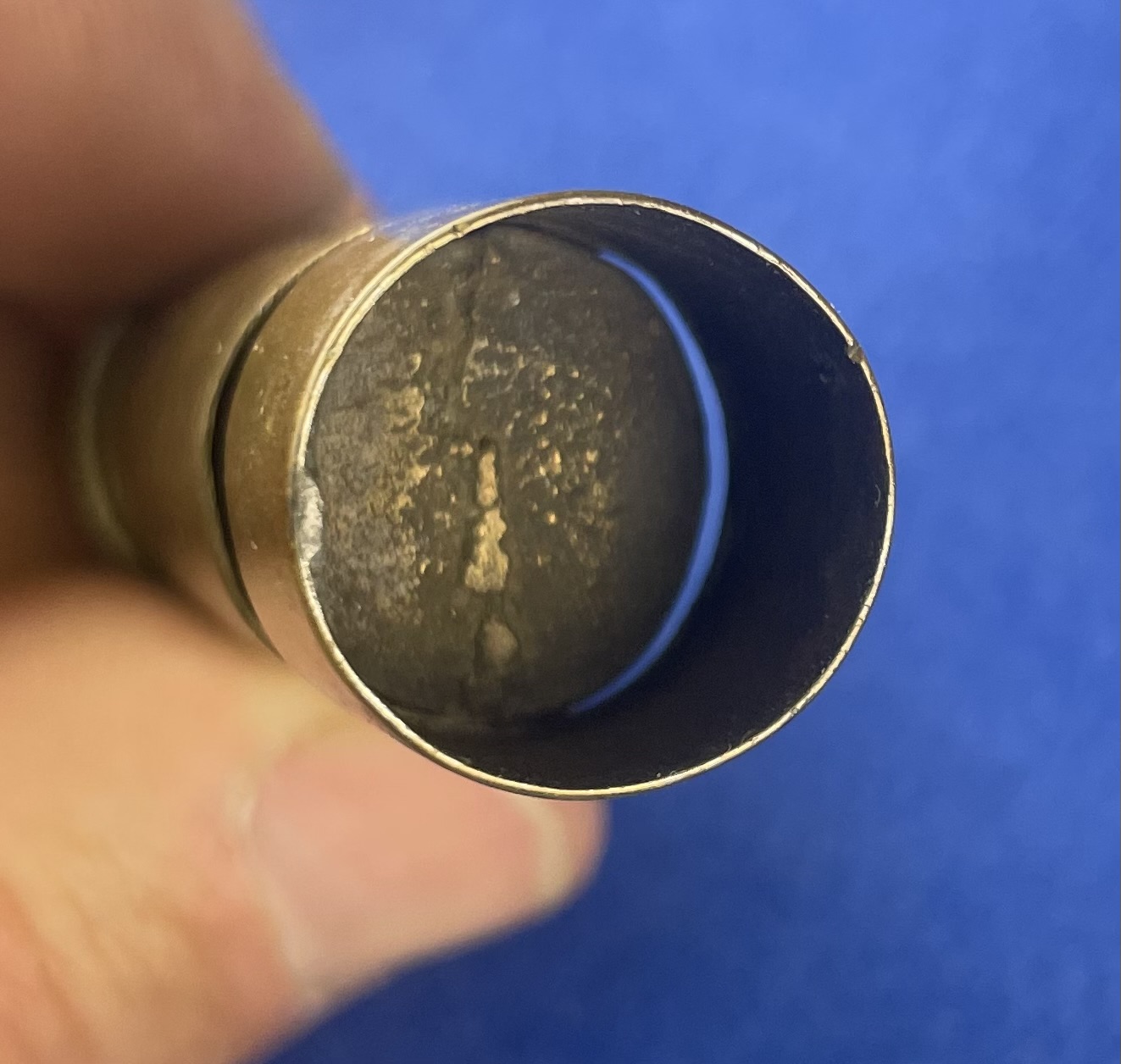
- Lastly the disc is cast. Coney & Co is listed in More Whistles date from the late 19th century to early twentieth century, long after cast diaphragms were used. Whereas Yates used the prior to this time.
Are there any reasons to think that Coney & Co. did indeed make the Central Extra Large
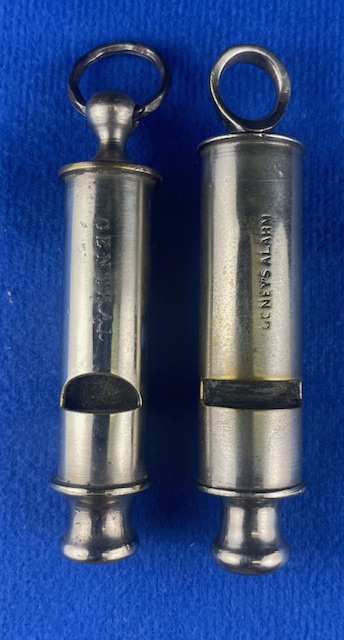
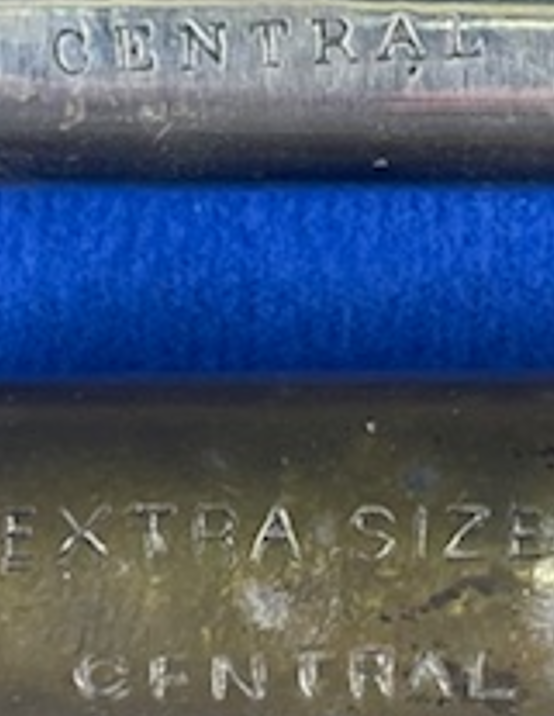
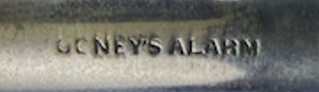
Admittedly the split-level Coney Alarm does have a cast (two level) diaphragm. The font on the Coney Alarm is closer in style to the Central Extra Large whistle. The Central whistle font is distinctly different from the Coney Extra Size.
Whistle Classification
| Type | tubular |
| Maker | Yates |
| Category | civil |
| Materials | nickel plated brass |
| Features | perpendicular loop for Lilly |
Whistle Archaeology
Page 75 of Collecting Police Whistles and Similar Types by Topman & Gilchrist states in the marginal reference that Model 4 in the Benjamin Lilly and Sons catalog was a trade name of Central.
Gilchrist states that this was a marketing practice for Lilly, to use proprietary names on their whistles. Lilly is described there as a wholesaler but did also make whistles themselves.
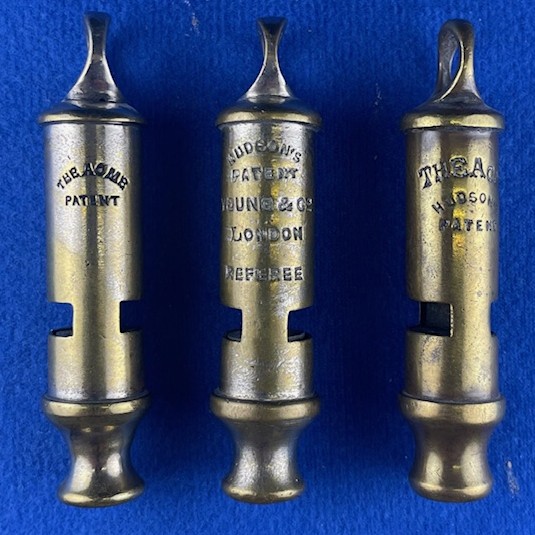
The picture there (Figure 81) displays three Yates whistles. Besides being listed/pictured in the catalog, Lilly ordered whistles that are identified with loops placed perpendicular to the windows.
Whistory
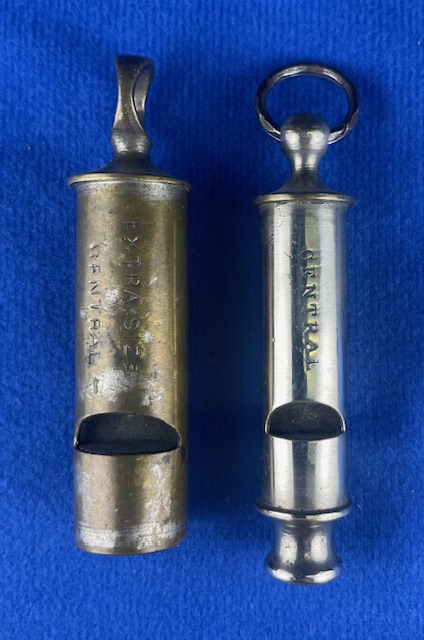
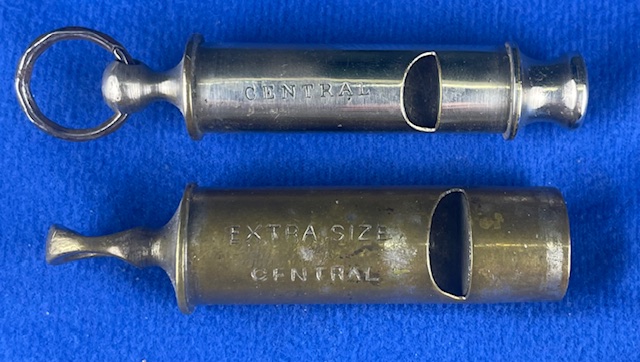
The following picture shows the window similarity. Although a longer whistle body, the height is proportionate, the curvature of the arch is very close.
Coney Vs Yates: Comparisons
See the Central & Extra Size Central.
Comparison between the Central and the Coney Alarm.
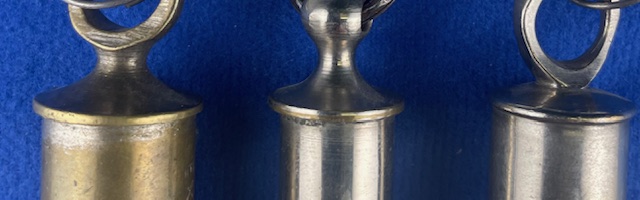
The top caps. Extra Size Central, Central, Coney and Co.
Cast disc inside the Extra Size Central.
Lastly compare fonts.
Conclusions
There are solid reasons to reclassify what was thought to be the Coney Extra Size Central from Coney & Co. to Thomas Yates.
Due to Lilly’s catalog name of Central, and loop placement. The disc is cast which points to an earlier date from when Coney & Co. were making whistles.
The window matches between the two Central whistles. The top caps necks also match.
TWG
Posted December 23, 2025
Revised August 9, 2026
Biblography:
- TWG Reference Collection
- The Whistle Gallery Archives
- Collecting Police Whistles and Similar Types, by Martyn Gilchrist and Simon Topman, 1998.
- More Whistles, Martyn Gilchrist, 2005.
© – All photos with blue background property of The Whistle Gallery reference collection. Please contact The Whistle Gallery for permission of use of any website content. Spotlight articles are copyrighted. Please contact The Whistle Gallery for permission of use of any website or Spotlight article material written or otherwise. Use of photos without authorization is prohibited.


 Users This Month : 2039
 Total views : 184309