Whistory
Few makers of 5-piece heavy escargot whistles circa 1890 are known. It has been thought that whistles stamped Black and Co. (manufacturer unknown), Hudson, DeCourcy and a scarce few unidentified makers were the only manufacturers.
How Many Escargot Models Were Known Previously by Peter McDonald?
On page 29 of More Whistles by Gilchrist it states in the body of the text next to a McDonald 6-piece 1890 escargot picture, that “only one model of escargot made by Peter McDonald is known, it is possible others exist.” (italics added)
How Many More Of This New Escargot Model Are Known?
Presently a monotypical 5-piece has surfaced made and stamped by Peter McDonald. The background of any manufacturing by McDonald whistles is scanty. There is a connection to Henry Arthur Ward, but Peter McDonald comes on the scene and leaves shortly. However, they are connected to a patent application of a 6-piece escargot circa 1890. How long they were associated is unknown.
Significantly this whistle adds to our fund of knowledge. The construction details are below as we breakdown by comparison to other known whistles of the same period.
Whistle Classification
| Type | 5-piece |
| Maker | Peter McDonald |
| Category | civil |
| Material | brass |
| Features | London style |
Whistle Archeology
No known catalogs or advertisements are known for McDonald who was in Glasgow. This 5-piece is monotypical as of this second revision 5 years after it surfaced.
Whistology
You will note Peter’s cast knop, very heavy and unusual for a 5-piece escargot.
However, you would usually see such a large one like this on a 6-piece escargot.
It is cast and has a groove around the knop.
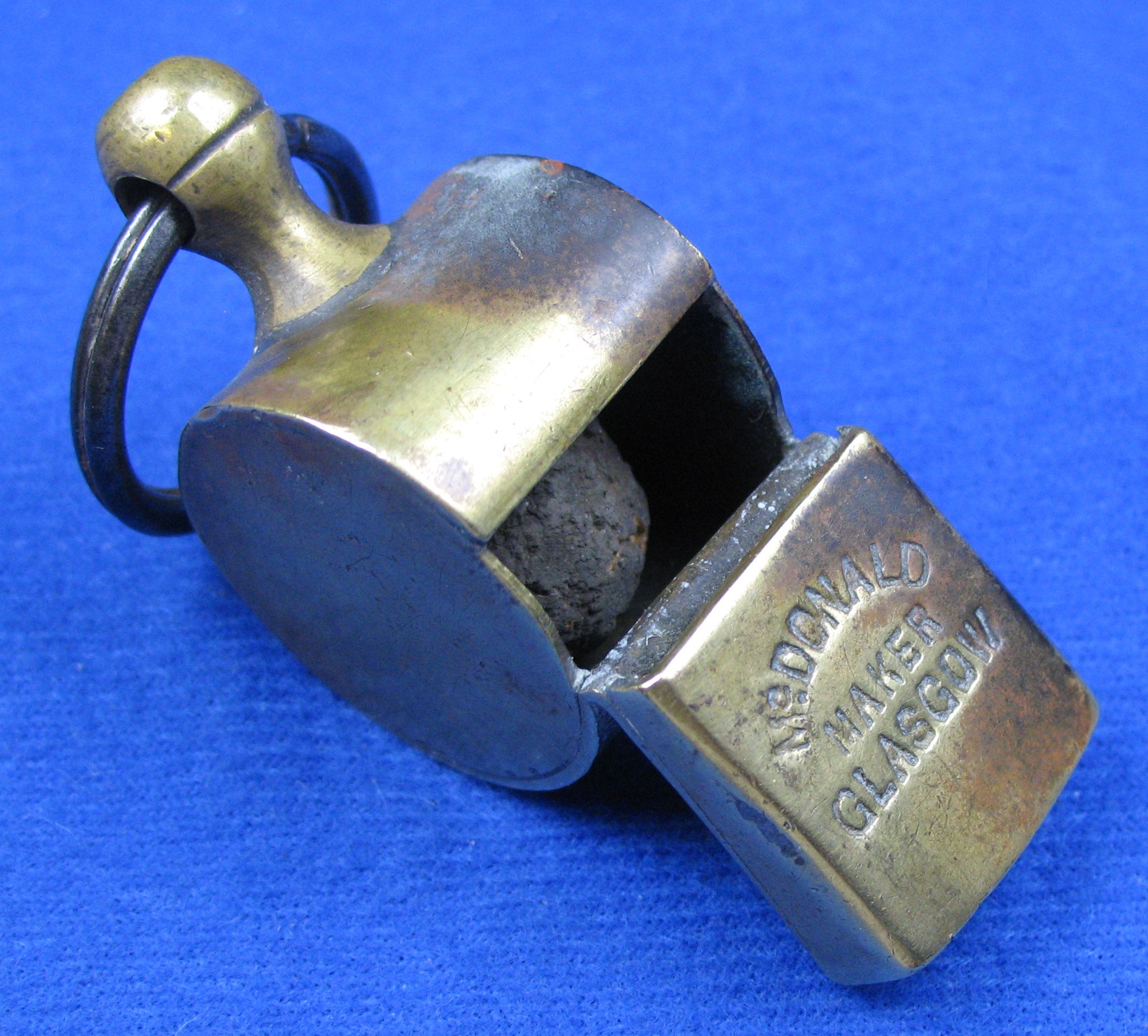
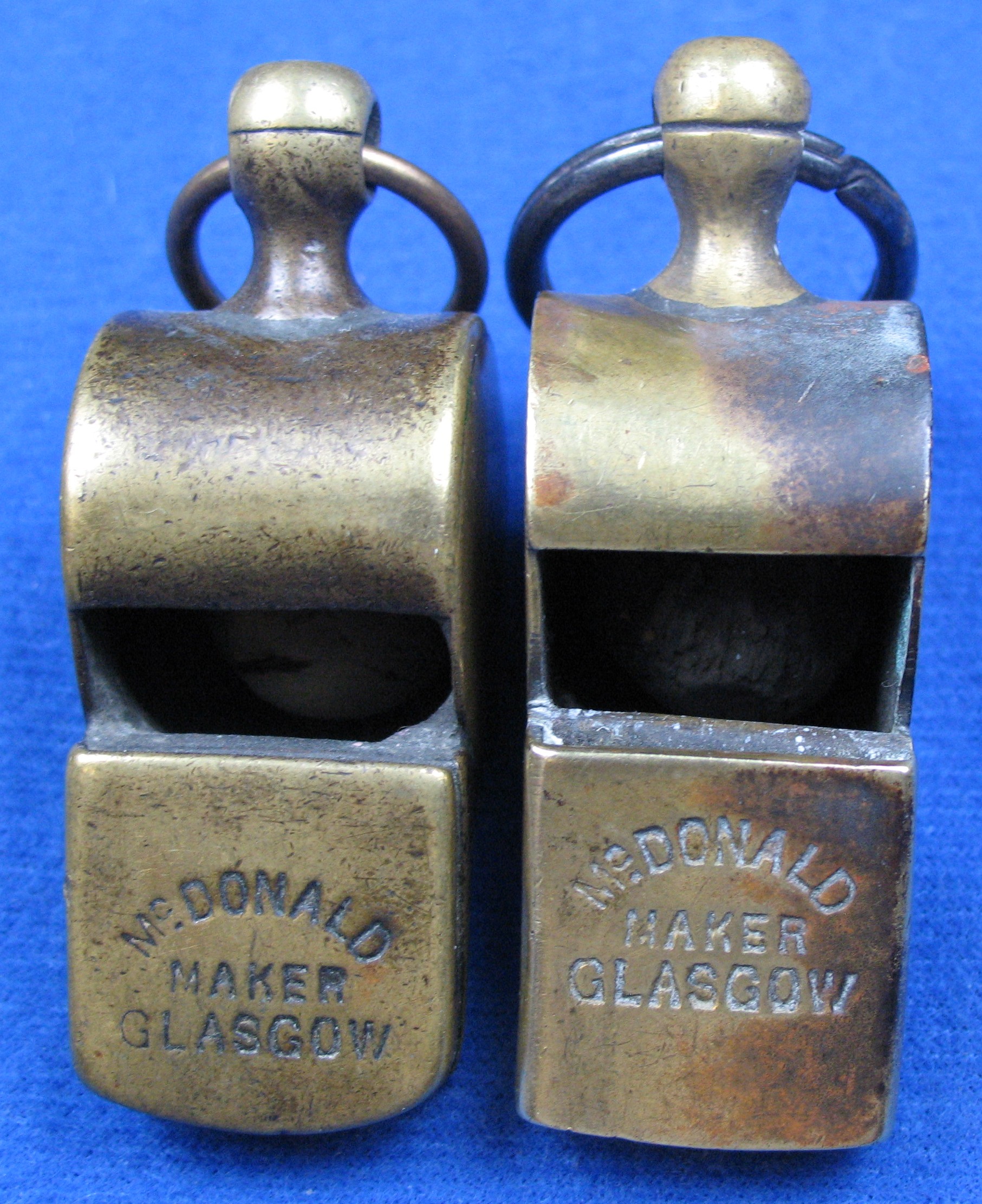
This example has an oversized window. It is a larger size model as we will see shortly. In fact, in the following picture compare the window, the knop, the writing and size to a 6-piece McDonald escargot from 1890.
It is true that there was a patent shared with Ward that they abandoned because Samuel Auld beat them to the patent office by two months, but registering for his six-piece model. However, it appears that Peter McDonald continued for at least a short period, to manufacture whistles — albeit on a limited basis.
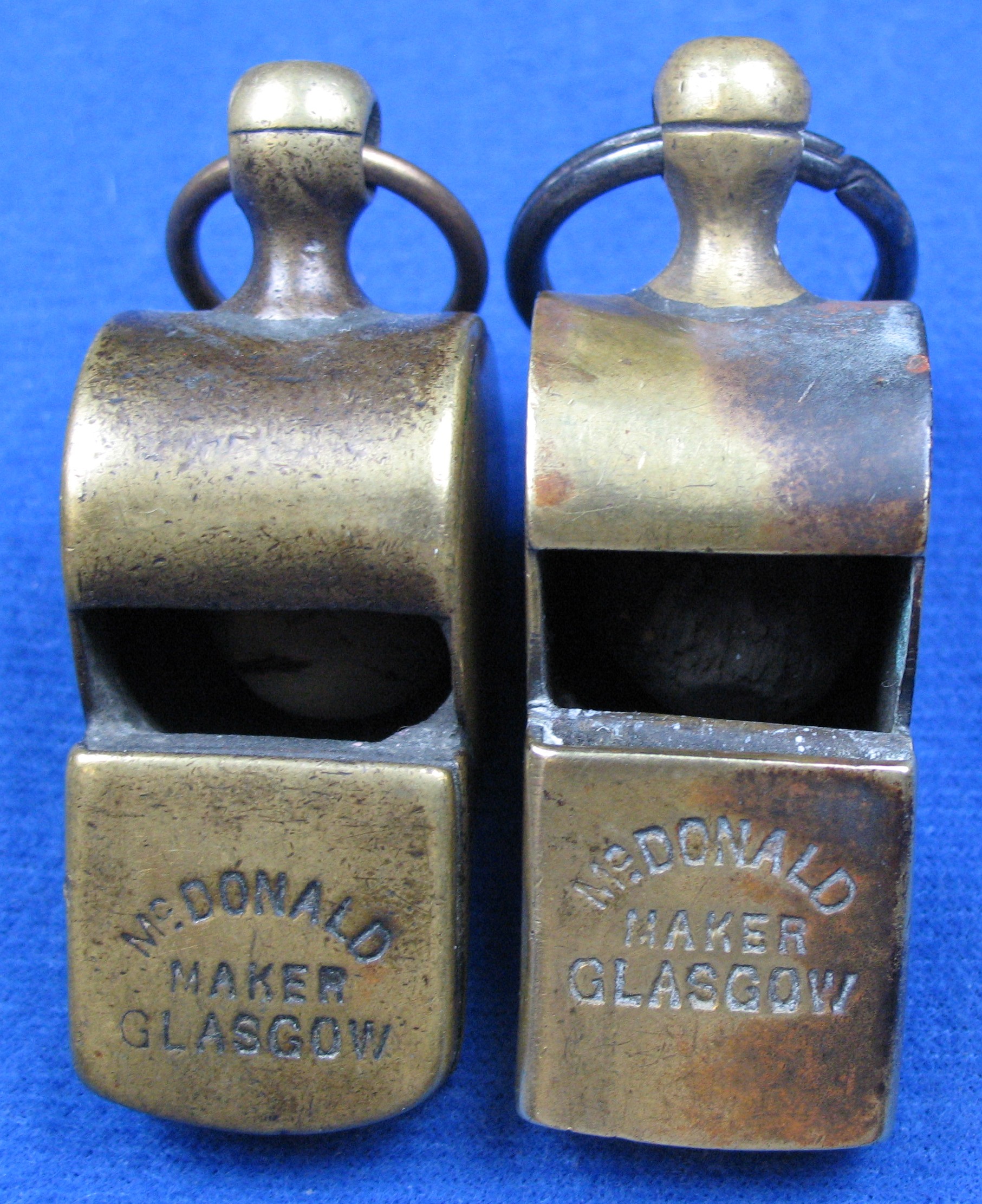
The stamp matches perfectly. One change is to note the rounded front of the mouthpiece is now squared off. We have two 6-piece escargots here at the reference collection and one has rounded edges, the second is also squared just as the 5-piece is squared off.
More typical of the body in other makers, is his 5-piece escargot model with a single piece that makes up the body of the mouthpiece base as follows…once around the barrel and under the mouthpiece as a single piece.
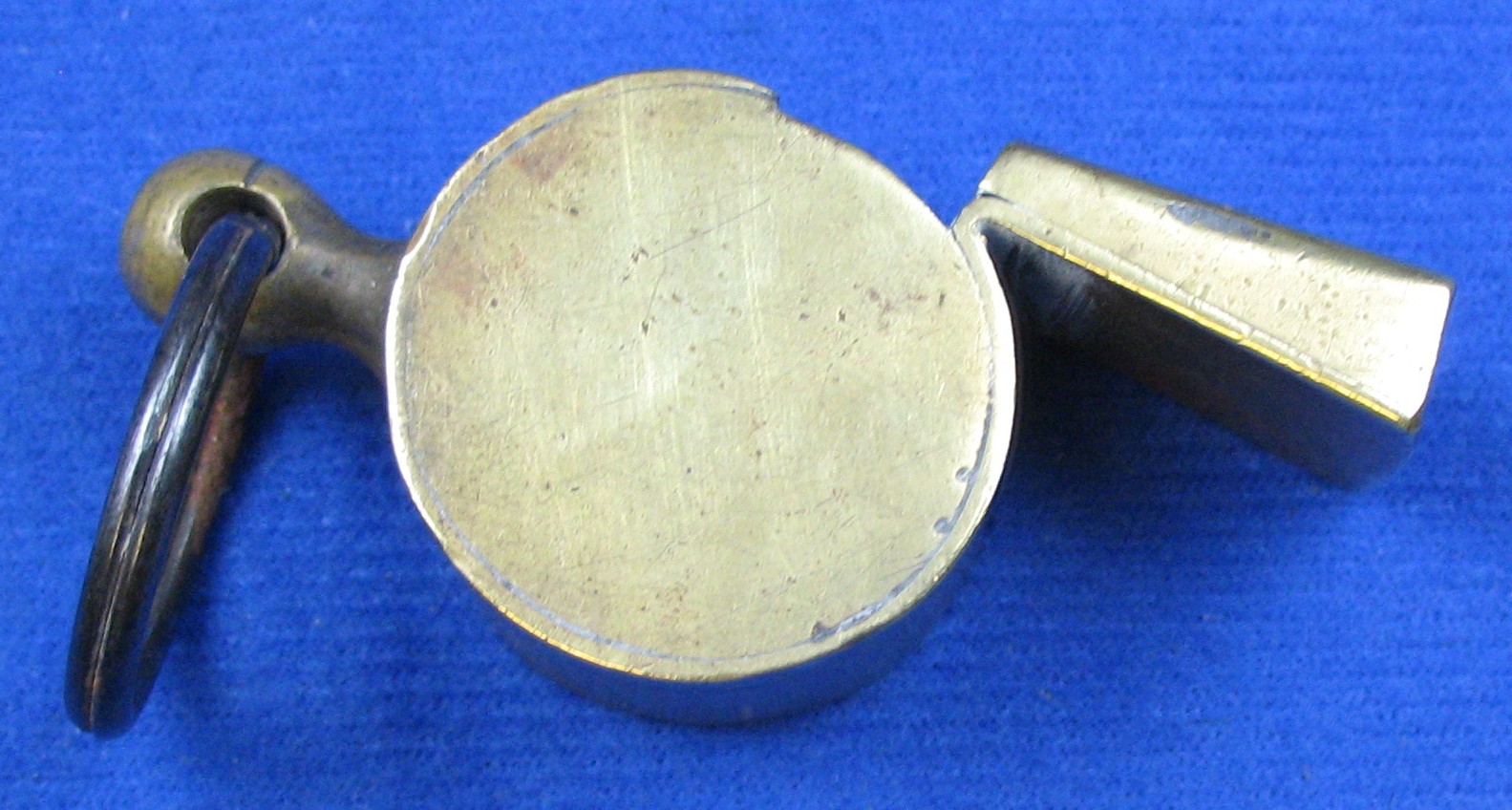
Now compare his 6-piece and his 5-piece whistle together (below)
We see the under strengthening has been removed and the barrel is all one piece. No more of the labor-intensive cast extra pieces.
This also made the whistle lighter, and no doubt came rather quickly after the first heavier design. It appears that for several manufacturers the heavy six-piece whistles quickly became obsolete, Ward possibly being the exception, only lasting a few years, from 1889 to perhaps 1892 adding to their scarcity.
The top piece to the mouthpiece likewise is attached on top and could still come loose. This too would be completely modified and simplified by Hudson’s 1891 patent making these type escargots dinosaurs. Interestingly, despite Hudson’s patented 3-piece machine made escargot of 1891, other European countries for decades used the simple 5-piece concept of the underlying barrel/mouthpiece concept in manufacturing for years.
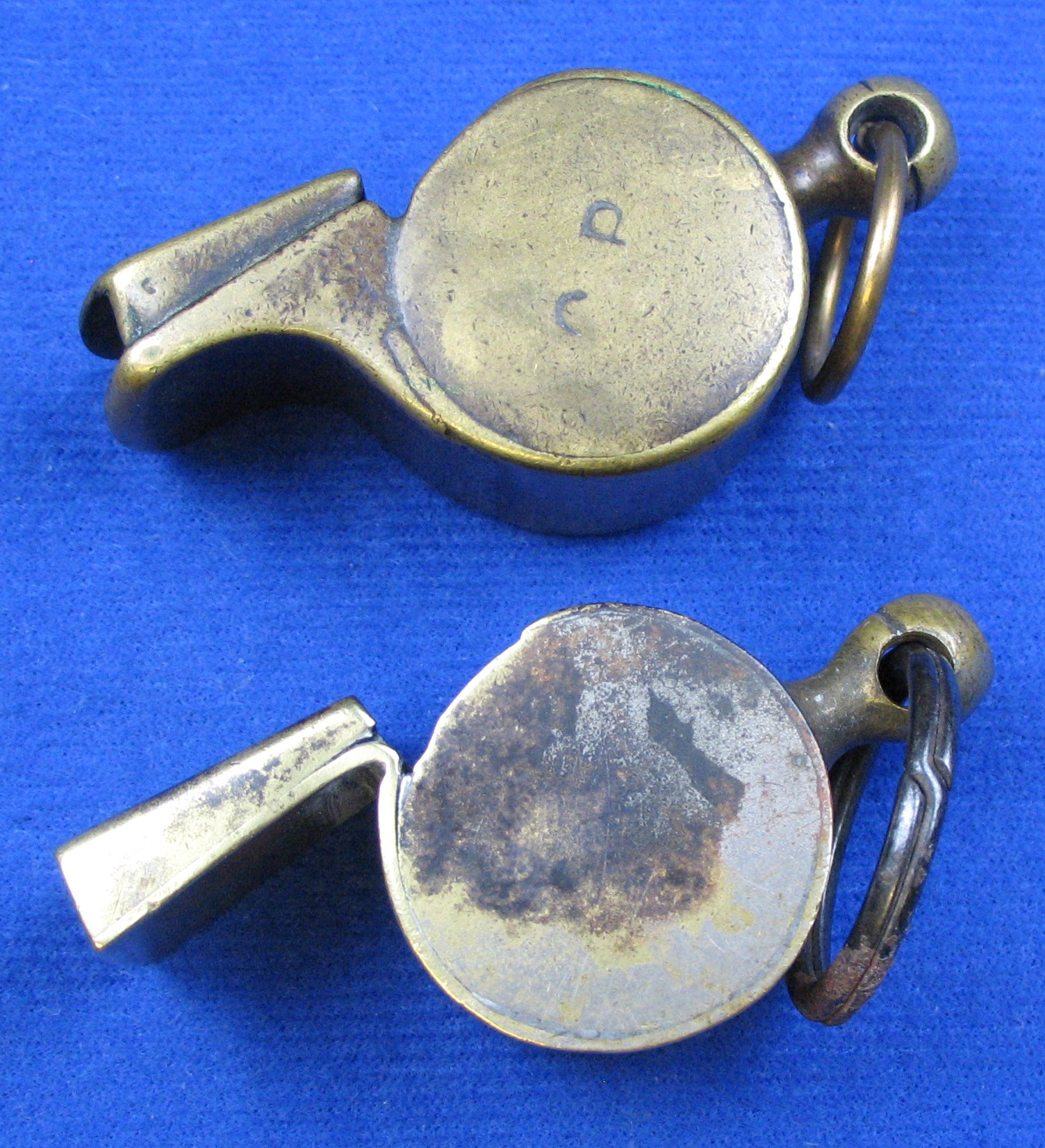
And next compare his 5-piece and another 5-piece stamped Black and company, a proposed contemporary manufacturer of his day. You can see that his whistle is larger in both pictures. The McDonald is on the left, and the Black is on the right.
But the innovation of the one-piece barrel is clearly a better design. It rolls around and bends flat.
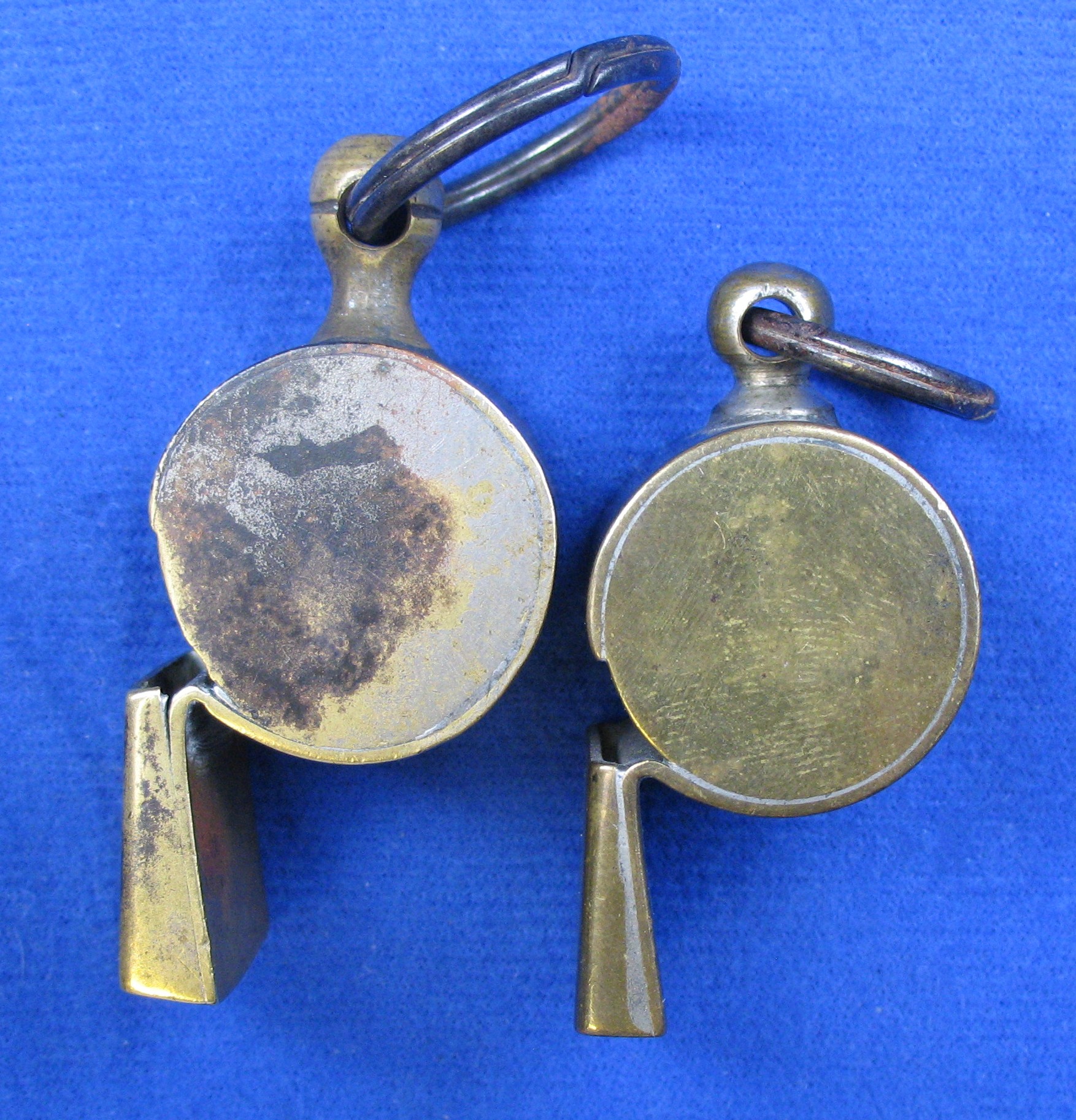
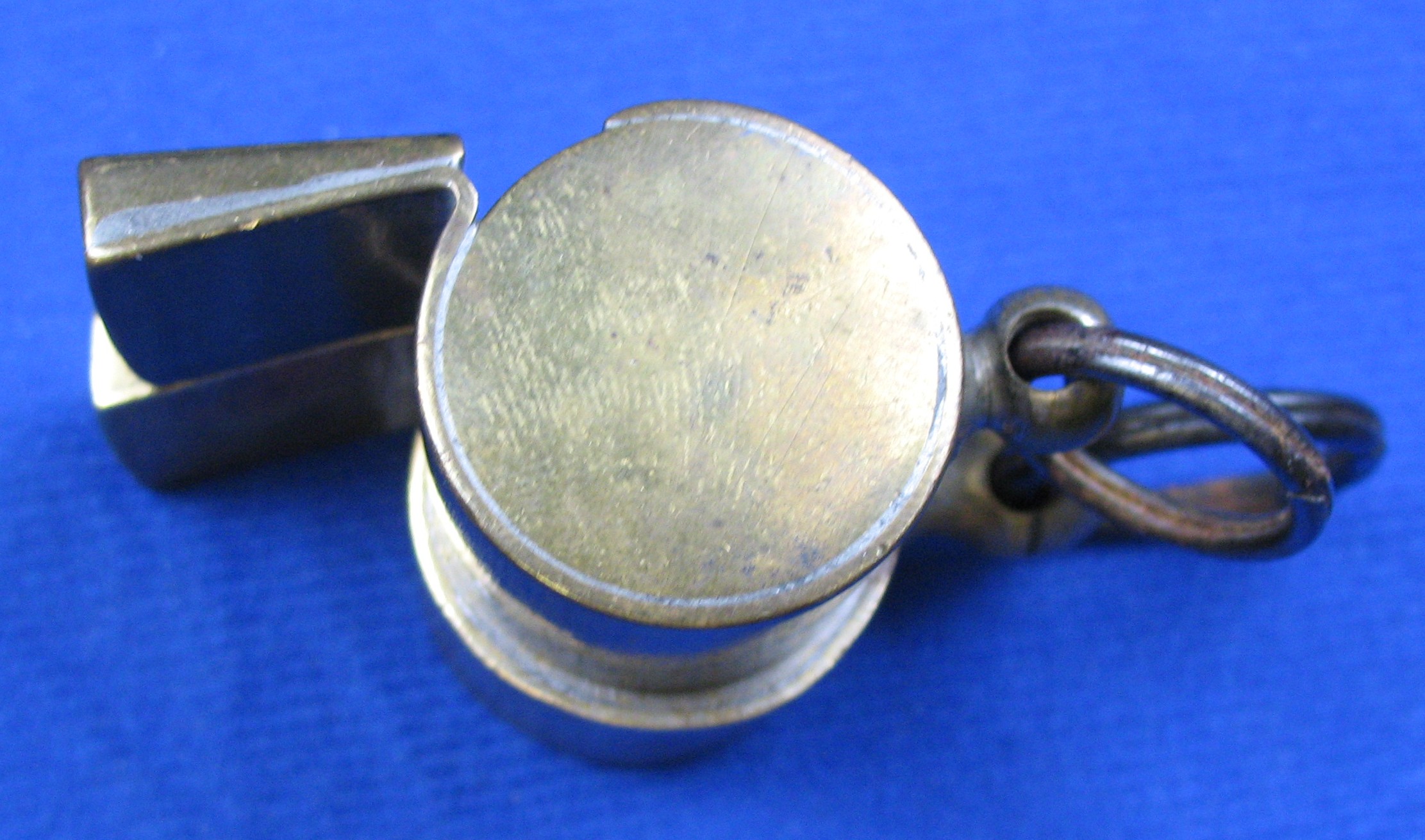
We also laid the Black on top of the McDonald to get a better comparison. Peter McDonald’s whistle is a robust whistle — for a ‘lighter ‘whistle, — compared to a 6-piece.
This was while Hudson designed and patented his own three-piece escargot whistle that would emerge as the front runner. It was on the smaller side and still a little heavy, but it would be the direction that escargots would go in the future inside the UK. In the process Hudson was spelling out the demise of 4, 5, and 6-piece escargots, especially 6-piece castings.
Conclusions
While light weight escargots were made during the 1880s by Hudson, it would appear, that 6-piece escargots were trailing off during this time. They did not find their demise until the 5-piece escargots emerged and the 3-piece 1892 assured it. The McDonald being only a rarity along the steps.
6-piece escargots were labor intensive, yet important steps along with button whistles in the development of the escargots we see today.
TWG
Posted September 23, 2013
Revised September 23, 2020
Revised October 11, 2020
Revised February 12, 2021
Revised February 28, 2021
Revised June 19, 2022
Revised December 3, 2025
Revised July 16, 2026
Bibliography:
- TWG Reference Collection
- The Whistle Gallery Archives
- More Whistles, Martyn Gilchrist, 2005.
© – All photos with blue background property of The Whistle Gallery reference collection. Please contact The Whistle Gallery for permission of use of any website content. Spotlight articles are copyrighted. Please contact The Whistle Gallery for permission of use of any website or Spotlight article material written or otherwise. Use of photos without authorization is prohibited.


 Users This Month : 2201
 Total views : 184488