Whistory
Hiatt and Co. has its roots dating back to 1780, founded by Thomas Griffen Hiatt, primarily having to do with iron restraints. Records can be gathered from a 1780 directory up to an 1859 census describing lock manufacturing. Scant information is readily available until the bombing of its premises in 1941
Along the way Hiatt’s became famous for their handcuffs, which are well known today by collectors. So much so that data in this regard is mostly tied to the development of different models and improvements.
There seems to be a gap in reliable records of the company between the time that John William Hiatt took over his father’s business (1847) and a leap forward to the bombing of the manufacturing facility in 1941, during WW2.
How did whistles come to be connected to Hiatt’s company?
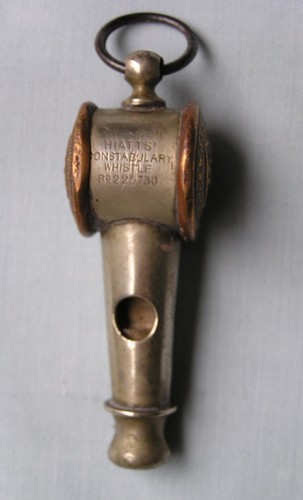
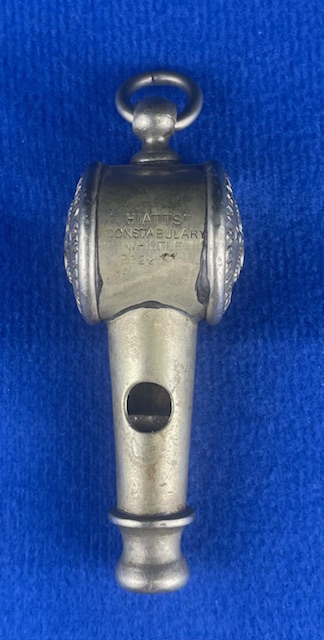
During this time, in 1894 a unique whistle design that was stamped with their name on it as: Hiatt’s Constabulary Whistle Rd. 225730/94 emerged.
This makes sense as they had become a major supplier of police items (i.e. handcuffs mainly) by this time, especially supplying the Metropolitan Police. Originally this force was established in 1829, and they both were in Birmingham itself. As the slave trade had been fully abolished inside the UK (1807) by this time, accordingly Hiatt Co. had refocused its direction towards criminal restraints.
Did Hiatt & Co. manufacture this whistle?
Was this whistle designed and manufactured by them? Likely not. It features a combination of what on the surface is an escargot (button) attached to a conical whistle with an additional mouthpiece. By looking inside the conical whistle, it reveals a truncated wedge design, indicating it was designed and manufactured by William Dowler for Hiatt and Co.
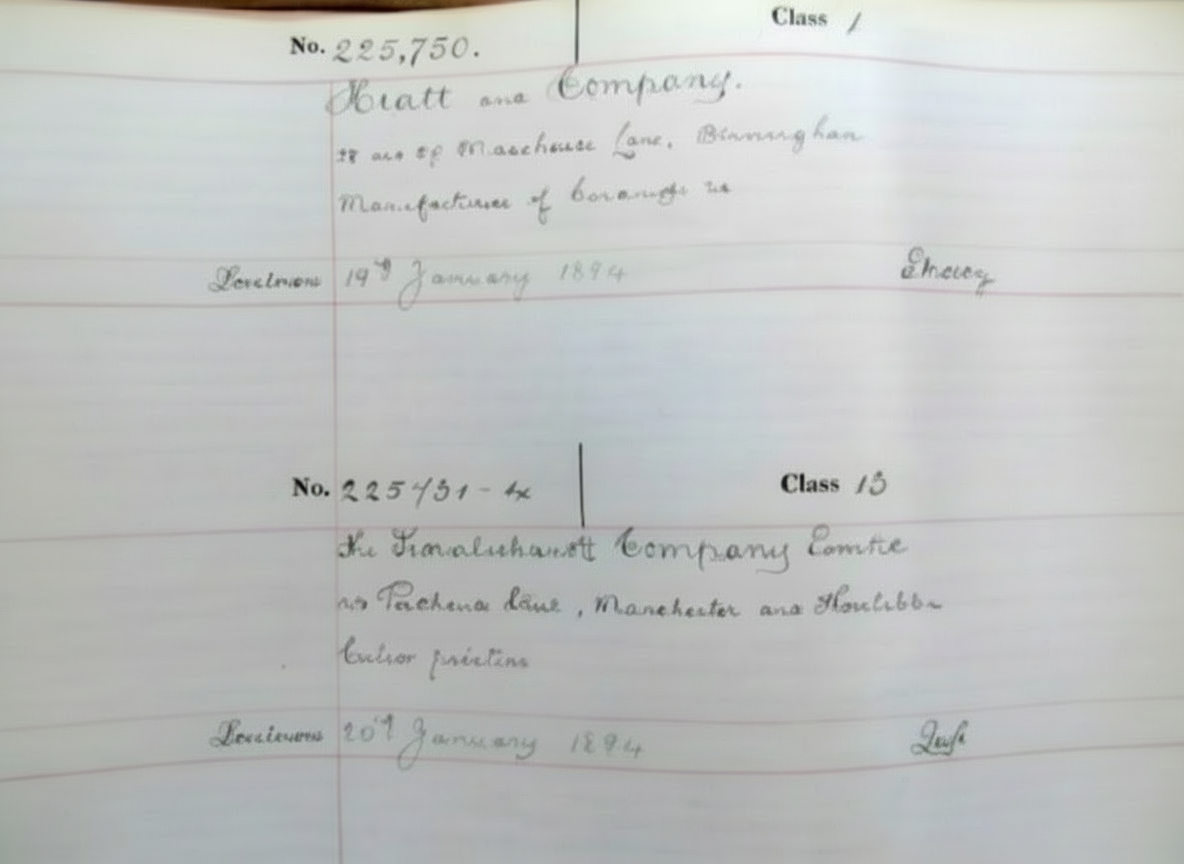
A copy of the registration for design protection is presented showing that the design registration was filed by Hiatt and Co. January 19, 1894, and not by William Dowler.
How was the larger conical end inserted during production?
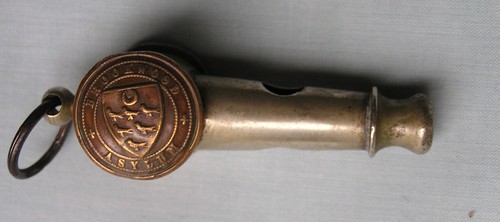
Pictured below is the Brookwood Asylum whistle. It is exceptional as it has a Hiatt stamp for constabularies yet it has mental hospital buttons.
Who else stamped the Hiatt name on their whistles?
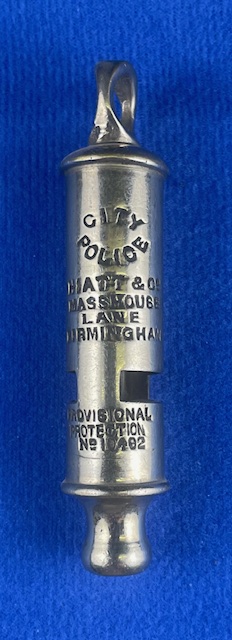
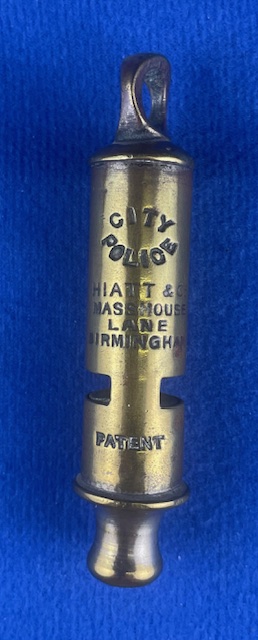
Interestingly, Hiatt also ordered tubular whistles with their name stamped on them from R.A. Walton, who made them between 1898 and 1904. One Is dated 1898, the other between 1899 to 1904. These were made just a few years before Dowler ceased making whistles
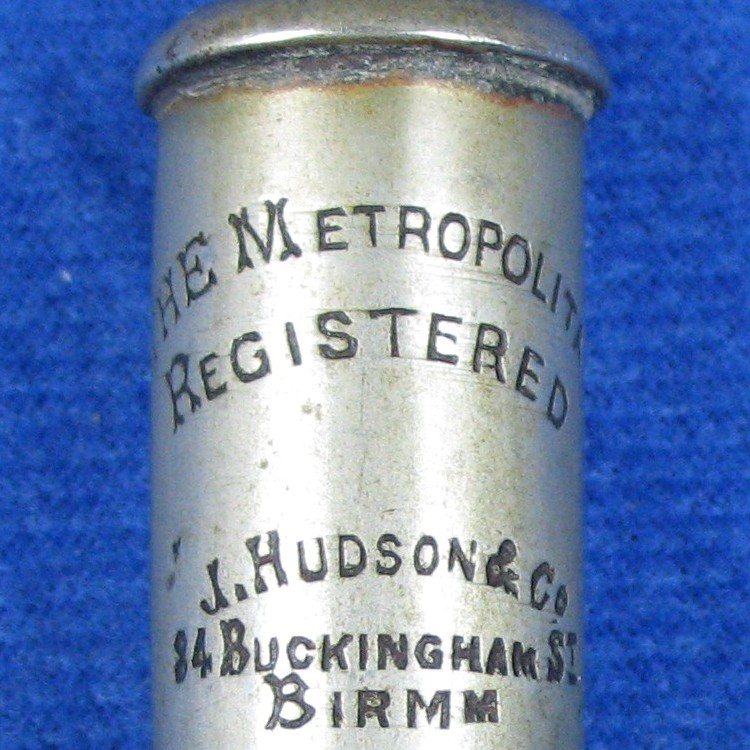
Although Hudson & De Courcy picked up making Dowler whistles in 1904, only Hudson made their own Hiatt registered design model circa 1905-1910 — made according to Hiatt’s registered design (but without the Hiatt stamp).
Whistle Classification
| Category | conical |
| Order | Dowler Hudson |
| Type | police asylum |
| Class | nickel silver |
| Features | buttons |
Whistle Archeology
Known stamps
| Brookwood Asylum | picture |
| Cambridge Borough Police | picture, Leif Bailey |
| Cheshire Police | no picture |
| Cumberland & Westmoreland Police | TWG |
| Devon Constabulary | picture, eBay |
| Durham City Police | picture, anonymous |
| Kent Constabulary | picture in More Whistles |
| Staffordshire Constabulary | no picture |
| Westmoreland & Westmoreland | erroneous |
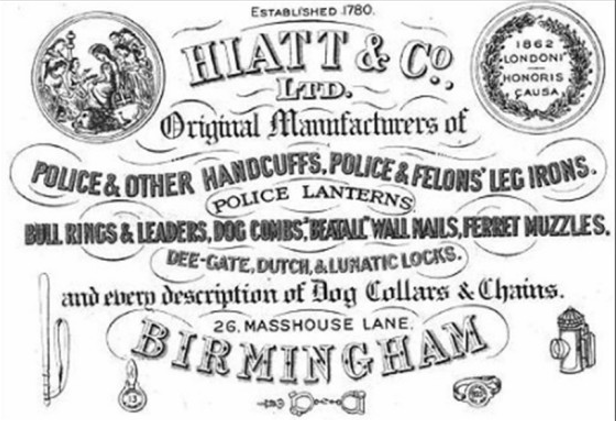
1780-1818 Moor St. Birmingham
1818 – 1941 26, 27 Masshouse Lane
Stamps
| Brookwood Asylum | picture by permission |
| Cambridge Borough Police | Leif Bailey by permission |
| Cheshire Police | no picture |
| Cumberland & Westmoreland Police | TWG |
| Devon Constabulary | eBay |
| Durham City Police | eBay |
| Kent Constabulary | More Whistles |
| Merionethshire Police | eBay |
| Staffordshire Constabulary | no picture. |
Whistology
Available pictures in alphabetical order.
The Brookwood whistle went for almost 1500, on auction in 2013 and pictures are granted by permission.
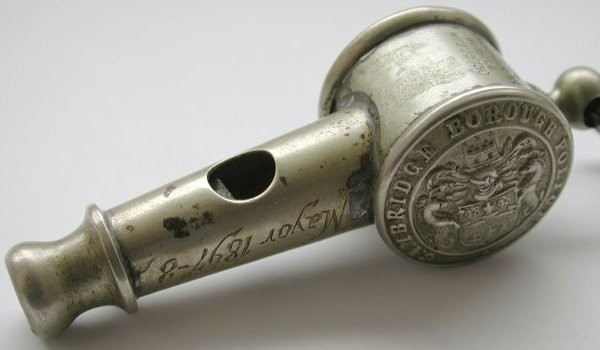
The Cambridge Borough Police picture is by Leif Bailey. The whistle was inscribed for Mayor 1897-8, just a few years into the registration.
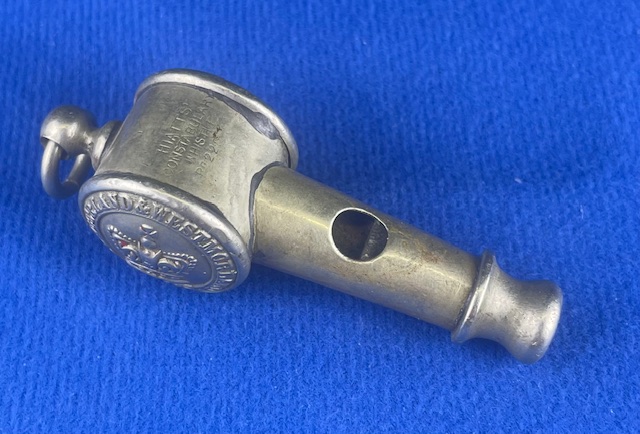
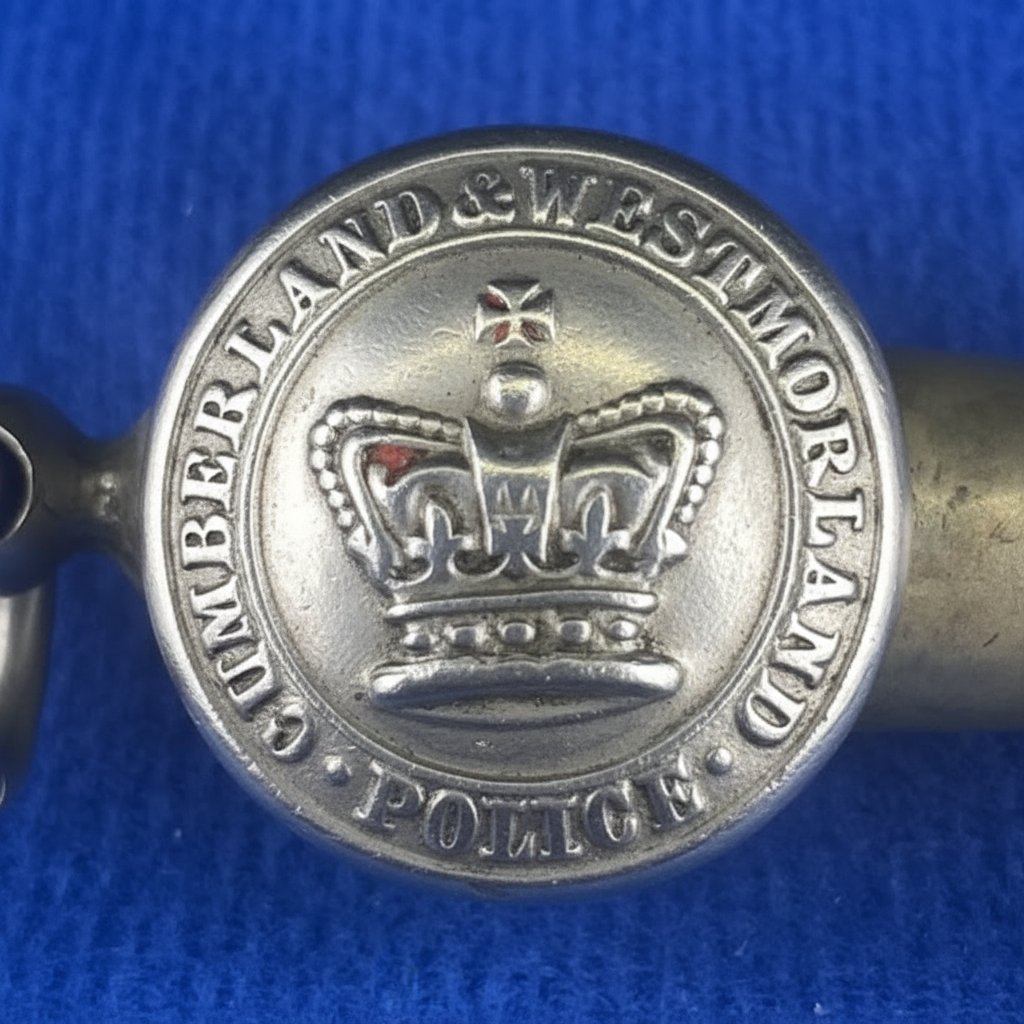
Cumberland & Westmoreland is held at TWG so that we can show more angles in the pictures.
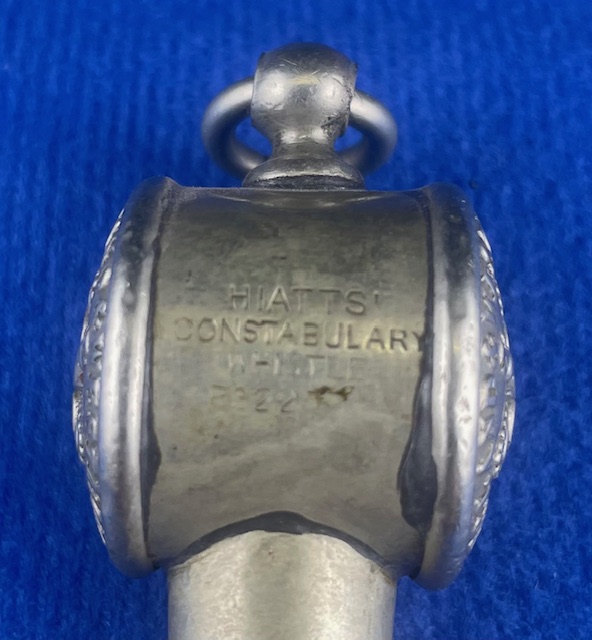
Devon Constabulary seems to be the most common of a rare whistle. The two whistles pictured next sold on auction for 900gbp.
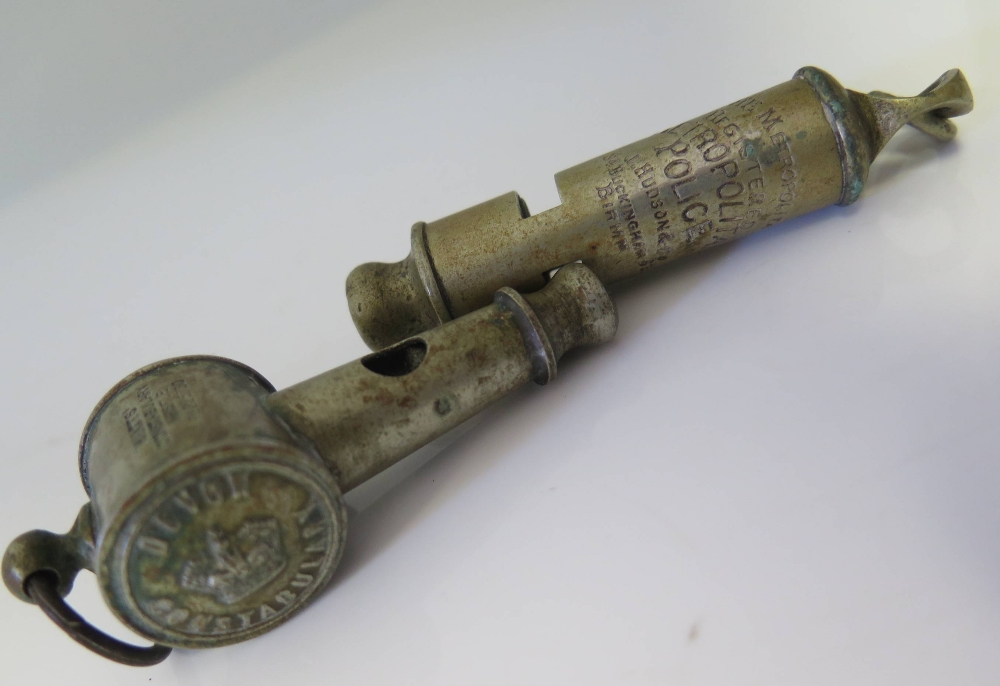
Permission requested
Hiatt Durham Police
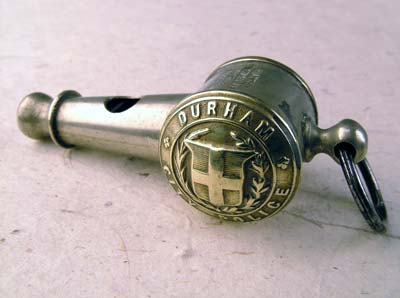
Permission requested
Hiatt Merionethshire
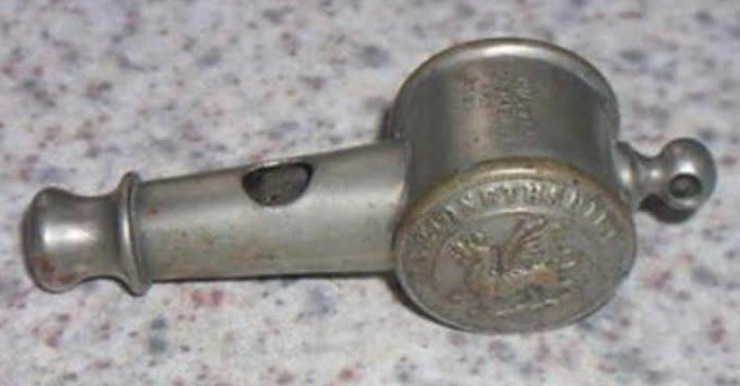
Permission requested
Two tubular whistles were ordered from Ray Walton who left Hudson’s employ and started his own whistle company that existed from 1998 to 1904 before returning to Hudson.
This fine nickel model on the left is stamped for the year (1898) it was made and stamped patented as provisional.
The whistle on the right was made within the next 5 years. It was made of nickel-plated brass; the brass has oxidized away now.
Why Hiatt went to Walton is unclear, but it would be within just a short time of Dowler ceasing to make their own whistles, De Courcy and Hudson then making whistles with Dowler stamped on them.
Conclusions
While the Hiatt Registered Constabulary whistle was a limited-edition whistle and rare to find today, we can see that to date almost ten different stamped whistles exist.
It demonstrates another facet to Dowler’s craftmanship as a master whistle designer and maker. Is there more to be found? Time will tell.
We have learned that despite its appearance of a combination of two whistles, it is indeed a conical whistle.
TWG
First Printing November 23, 2025
Edited April 1, 2026
Posted April 7, 2026
Bibliography:
- Wrighton Directory
- TWG Reference Collection
- TWG Picture Archives
- More Whistles, by Martyn Gilchrist
- Collecting Police Whistles and Similar Types, by Martyn Gilchrist and Simon Topman
- https://www.oldcopper.org/special_topics/registered_designs.php
- http://pattyroy.com/pattyroy/BiographyHiattThomasGriffin.html
- https://www.blueline.ca/a_history_of_handcuffs-2396/


 Users This Month : 303
 Total views : 181692