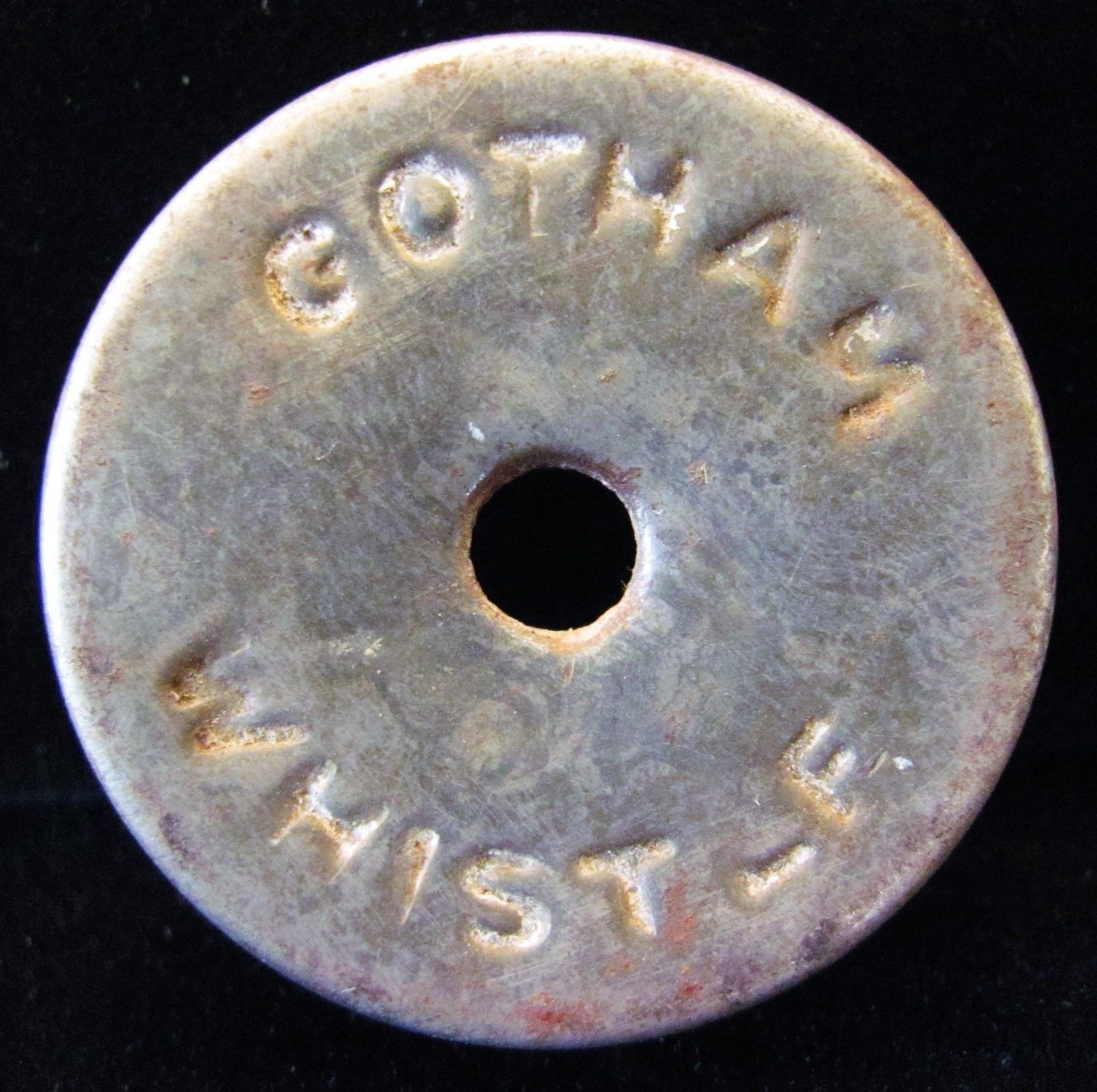
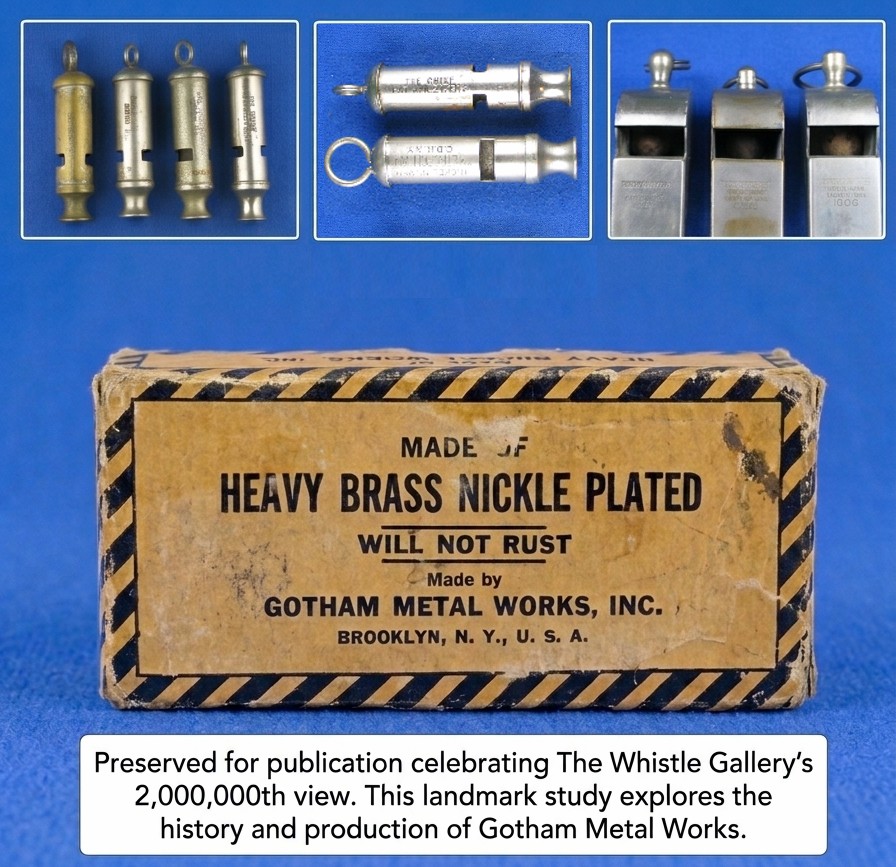
This SPOTLIGHT article has been preserved for publication in celebration of The Whistle Gallery website’s two millionth view (2,000,000). This landmark two-part study explores the history and whistle production of Gotham Metal Works.
Whistory
Records place Gotham Metal Works at 46 Walworth Street in Brooklyn, yet, the company has remained an obscure whistle manufacturer. After years of research, researchers have found no catalogs or advertisements. However, two specific news articles from 1950 printed in the Brooklyn Eagle have opened up our research. Even so, it has been difficult to trace out their roots and accomplishments.
Why Has Researching Gotham Metal Works Taken So Long?
We will attempt to reconstruct their start to end and at the same time try to trace out their manufacturing of whistles. Necessarily it has been recorded in two parts. Doing so will create some significant questions for research. After many years of study, it was apparent that although there is much still to fill in, we were at an impasse. With the advent of AI, deeper research has helped in regard to their earliest addresses. We would hope that others can build on what we have uncovered so far. Additionally, if we learn more a revision will happen.
What Was the Ice Breaker of History for Gotham Metal Works?
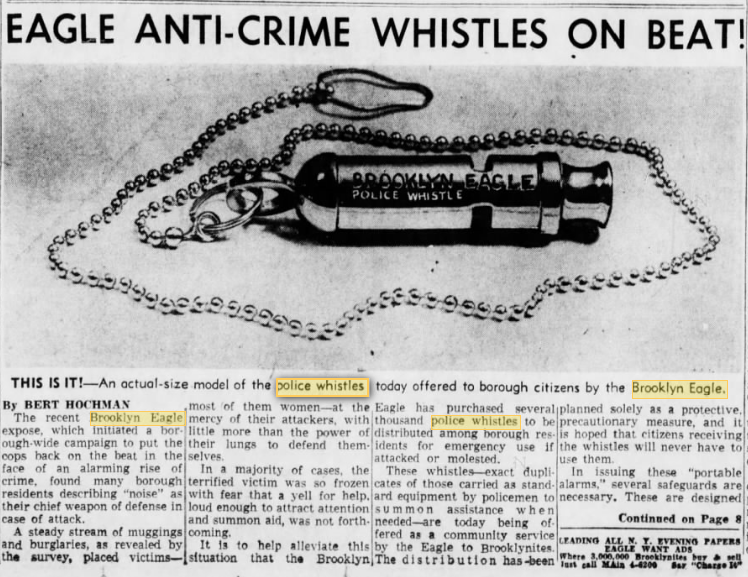
In 1950, The Brooklyn Eagle launched a promotional campaign for a safety whistle stamped “The Brooklyn Eagle Police Whistle“. This whistle, along with a 20-inch beaded chain, was offered free (upon request to the newspaper). The newspaper mailed it free of charge with a cloth bag. This first order placed was to Gotham Metal Works and may have been for as few as 3000 whistles, the premises were located merely two blocks away from the Brooklyn Eagle newspaper building. These whistles usually sell for a nominal amount today, probably because very little is known about them and the fact that they are comparatively of a lesser quality of manufacturing. This was commonly happening to tubular whistles by 1950 most everywhere.
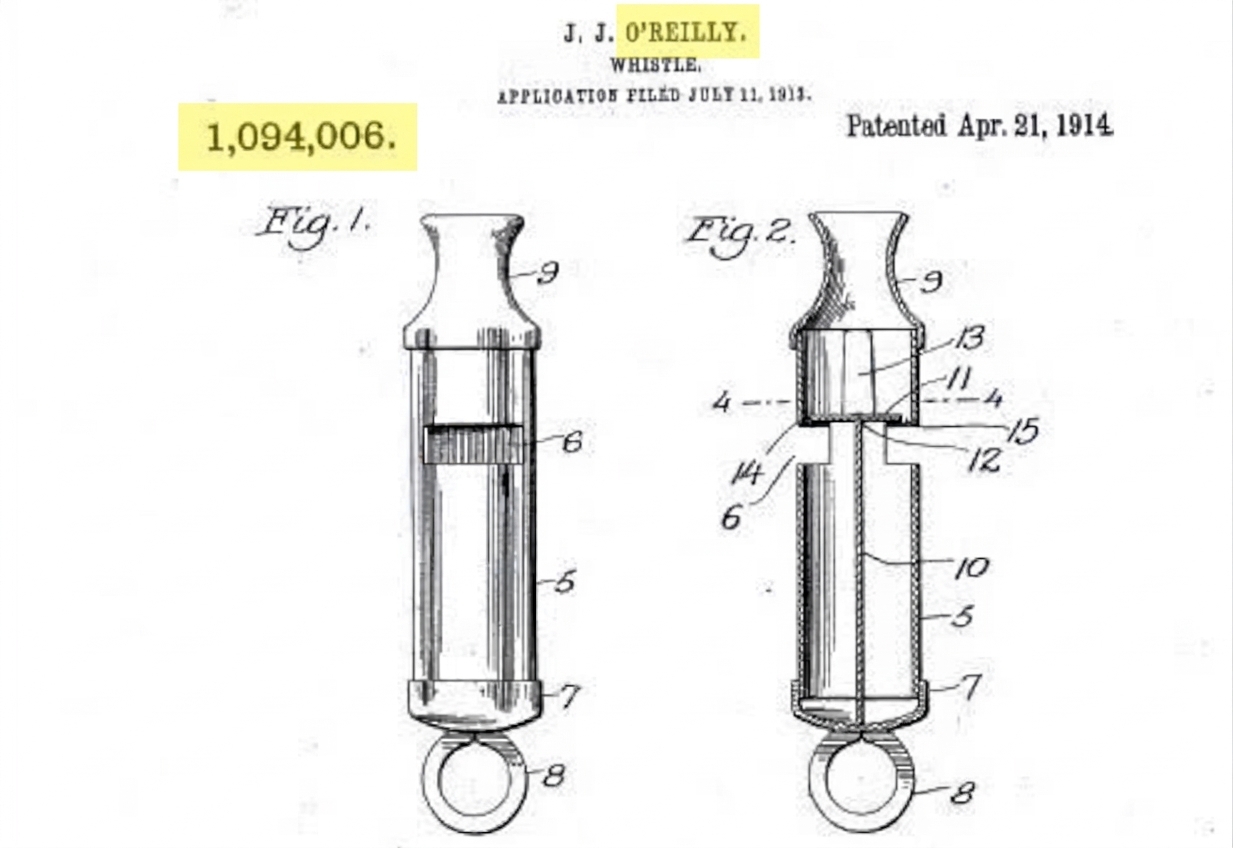
Earlier, Joseph J. O’Reilly patented a corresponding whistle, The Chief, on April 21, 1914 (see SPOTLIGHT 84). The Federal Reporter: with key number annotations, records that O’Reilly filed an infringement case against The Benjamin Harris Company Inc. Jan. 26, 1918, just 4 years after patenting his whistle design. O’Reilly lost.
What whistle(s) Harris Co. was manufacturing is not known. It is noted that Girl Scout tubular whistles made to W. H. Burt’s design were made in the USA (assigned to Waterbury Manufacturing Co.) and Boy Scout whistles made to the Burt patent were being made in the UK (Hudson). However, in settling this court case, reference is made to designs by W.H. Burt’s patent (i.e. 1,002,493 Sept 5, 1911) of Bridgeport, Conn. and A.P. Hatch’s patent of Bridgeport Conn. (i.e. 649576 May 5, 1900)
Why Review the Chief and Winchester Whistles?
Why build all this background, how is it relevant? Because the CHIEF patented whistle is seen to be named with the same name as the publishing house and the newspaper was. Whether O’Reilly named the whistle after his own newspaper itself or named them all after Fire Chiefs and Police Chiefs in general is not known. — It is interesting that 36 years later a corresponding whistle would similarly be named after the Brooklyn Eagle newspaper itself.
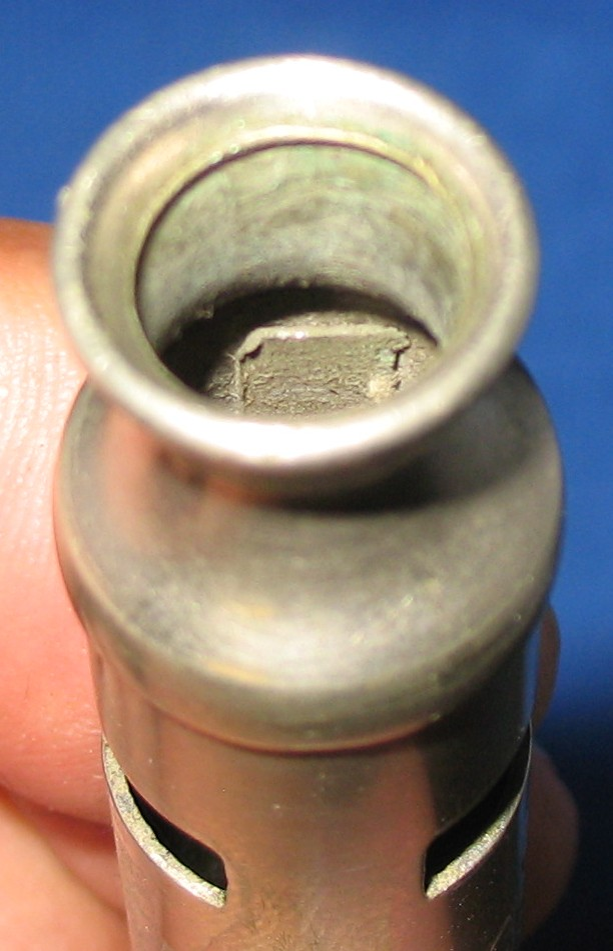
O’Reilly was endeavoring to vary the circumference of the flat disc to create two different notes. In studying the attachment within the tube itself we see he used what he called ‘EARS’ which would in the UK be called ‘TINES’ and we will also refer to them as such. The tines are wide and squared (2) and point towards the mouthpiece. This is seen also in the Winchester whistle and progressively in time used in the Brooklyn Eagle whistle.
Therefore this creates a connected design timeline where we see an exact match for the Chief, the Winchester, The Brooklyn Eagle (and another whistle stamped the CDR). As the timeline proceeds, a significant fire occurred at the Gotham factory in 1928. We would like to predate the first two whistles ( i.e. the Chief & The Winchester ) to the fire of 1928 at Gotham Metal Works. This seems to be a pivotal break point in the manufacturing process there, and it would be logical, perhaps sensible that with available insurance funds, that re-tooling would have occurred after this pivotal date, including the great depression which crippled the economy for at least another 5 years. Economic recovery for the country would eventually be dependent on the entry into World War II.
What Still Needs to Be Verified?
Much of this is speculation/theory and as proposed, must be opened up for scrutiny. The following are AI generated addresses, which required verification and weeding out rabbit holes. TWG has not recorded documentation for the first two addresses in TWG’s bibliography.
- 444–446 Adelphi Street (c. 1914–1915):?The earliest documented manufacturing site in the Fort Greene/Clinton Hill area, used for stamped and spun metal production shortly after the initial $10,000 incorporation. In 1914–1915, this location consisted of approximately?5,000 square feet?of manufacturing space. The ground floor was dedicated to the heavy machinery required for “stamping” (using pneumatic presses to shape metal sheets), while the second floor was used for “spinning” metals and finishing work.
- 140–146 Pennsylvania Avenue (c. 1915–1921):?Following the 1915 re-incorporation and capital increase to $25,000 (the record shared), the company moved to this larger facility in the East New York/Brownsville industrial section to scale operations. The move to?140–146 Pennsylvania Avenue?represented a massive leap in production capacity, with the facility spanning approximately?20,000 square feet. Structure:?The site consisted of a large, mid-block industrial complex. The “140–146” designation indicates it occupied four standard Brooklyn tax lots (each roughly 25′ x 100′), creating a wide footprint for heavy machinery.
- 46 Walworth Street (c. 1921–1930s):?By the late 1920s, the company relocated to the Wallabout/Bed-Stuy area.
- By the 1940s, the combined operations at?46–56 Walworth Street?totaled roughly?15,000 to 20,000 square feet, returning the company to the high production capacity it had reached during its peak years in East New York.
Whistle Classification
| Type | tubular escargot variety |
| Maker | Gotham Metal Works |
| Category | police fire civil sporting goods |
| Materials | nickel plated brass nickel silver steel |
| Features | flat knops squared forward tines |
Whistle Archaeology
Incorporation and Early Leadership
Records indicate that Gotham Metal Works incorporation was started in 1914 with 10,000 dollars and then was reincorporated in 1915 by three founding members with 25,000 dollars more. Founding members.
- Moses Tuscano 541 West 114th Street
- Frances Weinberg 205 West 119th Street
- Charles F. Frank 14 Covert Street Brooklyn New York
Initially from 1914 to 1943 Moses Tuscano was President. He died at age 86, February 11, 1948, just 5 years after retiring. Charles Frank takes over Gotham Metal Works officially in 1948 and dies circa 1964.
Charles F. Frank had been in the whistle business since 1905 states an article from The Brooklyn Eagle in 1950 and appears to be the driving force for whistle manufacturing.
The 1928 Walworth Street Fire
In the main building on Walworth Street, there was a fire destroying most of the building on April 19th 1928. This was the year prior to the New York stock market crash of October 29th, 1929.
- Duration of Immediate Halt: Operations were interrupted for the duration of the firefighting and the immediate investigation by Fire Marshal Thomas Brophy, which began the same day.
- Firefighters brought the blaze at 46 Walworth Street under control in approximately three hours. While the fire caused significant smoke and water damage to the “stamped and spun” metal inventory and the paper/rag packing materials used by the company, the structural integrity of the factory allowed them to remain at the site.
Gotham Metal Works After the 1928 Fire
After the fire, Gotham Metal Works shows up at 46 Walworth St in a 1932 Brooklyn newspaper’s business listings.
Later, the final Brooklyn telephone-directory entry for Gotham Metal Works appeared in 1956.
The Move from Brooklyn to Hempstead
Then, in 1957, a publication of the Industrial Directory of New York listed GMW at 48 Walworth, Brooklyn, NY. By 1958, the Directory placed the company at 39 Newman Ct., Hempstead, NY, doing business in whistles and hotel bar supplies.
The Employment, Unemployment, and Wage Status of the Labor Force posted a small article indicating that Union Local 18 of the Allied Trades Union, attempted unsuccessfully to unionize production and maintain workers of GMW and M. Genzale Plating Company of Hempstead, NY. – 1960.
Finally, the last reference of GMW is a listing in the Official Gazette of the US Patent Office reviewing a renewal request of a Patent held by GMW of Hempstead, NY. – 1964.
Charles F. Frank had been an officer of GMW since at least its incorporation in 1915. In 1964 Frank had to have been in his mid-70s or older. In searching for an obituary for Charles F. Frank, there is a recorded birth and death of a man by this name in 1966 (Hempstead, NY). Birth year of 1874 and death 1966. There was no standard obituary notice, probably because there was no close relative publishing one. Researchers have found no bankruptcy record or sale record for the company. The company simply disappeared after 1964.
Several important points have now been established here at TWG:
- The Chief patented by O’Reilly in 1914 matches Winchester model 1807 9 years later, and the Brooklyn Eagle another 27 years later.
- A devastating fire stopped production 1928 – possibly retooling, post-depression stamps disappeared.
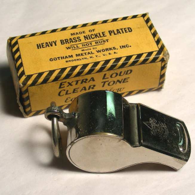
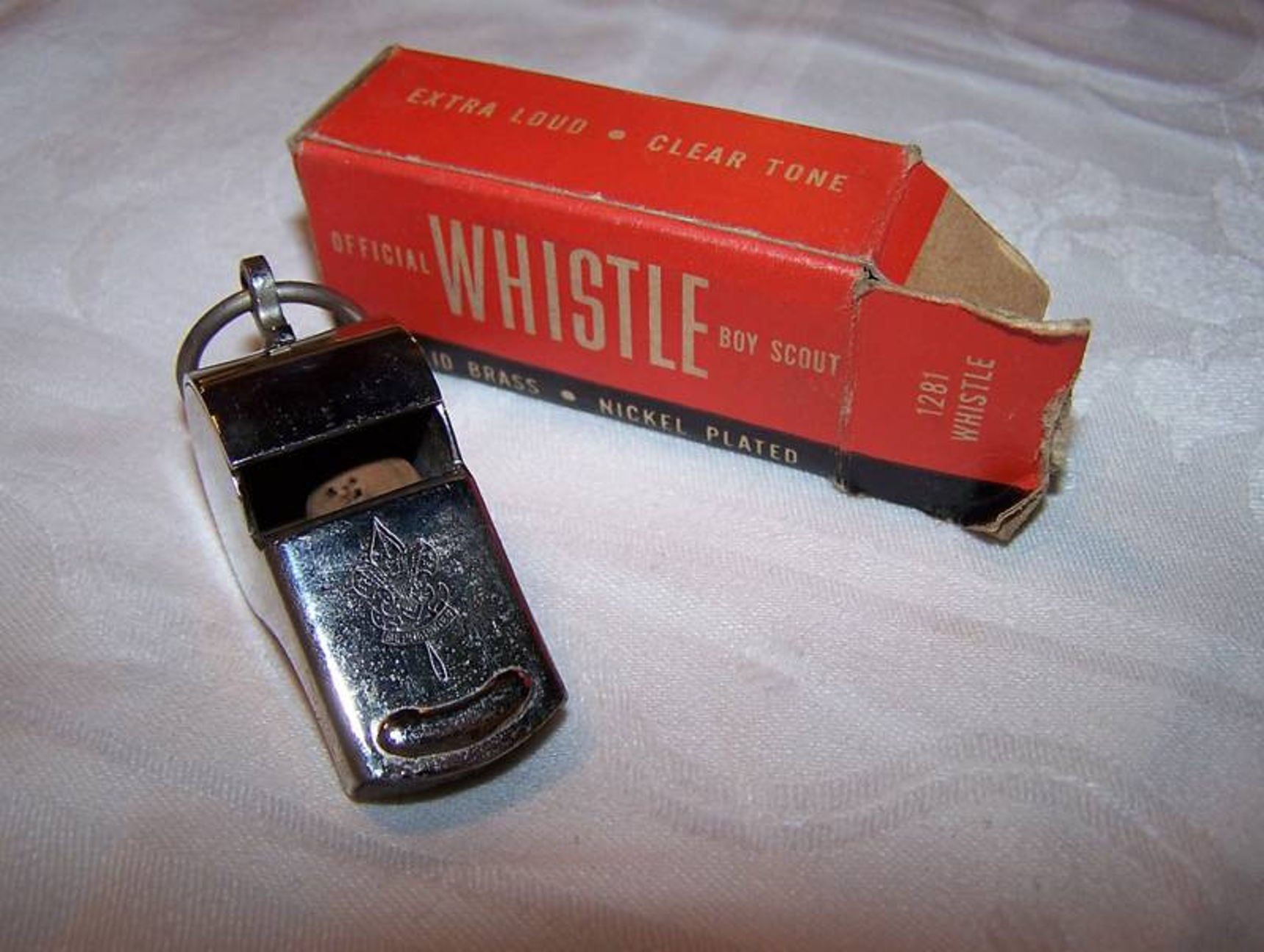
- Whistles sold on eBay with the original box number 1281 had a signature flat knop identifying Gotham Metal Works on the box.
- An article in the Brooklyn Eagle on Gotham Metal Works dated 1950 verifies detailed research.
From these sources, records available on the internet and whistles collected or seen and recorded, the following outline can be established for Gotham Metal Works addresses.
- 1914 –1915 444 – 446 Adelphi Street
- 1915 –1921 140 – 146 Pennsylvania Avenue
- 1921 – 1928, 48 Walworth Street, Brooklyn New York
- FIRE – 1928 – rebuild time unknown, 18 months from fire to depression
- 1929 – 1957, 46 – 56 Walworth Street, Brooklyn New York
- 1958 – 1964, 39 Newman Court, Hempstead, New York
The Benjamin Harris Company was incorporated in 1918 reports The American Stationer and Office Outfitter to manufacture celluloid parts and for gold and silver plating. Founding members were:
- D.B. Harris
- D. Harris
49 Argyle Road, Brooklyn New York.
Starting capital is reported as 10,000 dollars US. They are in court that same year.
Two non-whistle patents are recorded by B. Harris 1900, 1901.
We turn our attention to Joseph J. O’Reilly (Joseph John Edward O’Reilly) and his whistle patent No. 1,094,006 April 21. 1914
Born 1872, died 1933 at 61 years of age.
Father Edward J. O’Reilly – city hall reporter N.Y. Times 1855 to 1880
Mother Mary Daugherty O’Reilly
Julia E. MCarthy wife.
Owner: Chief publishing company of New York
Office 13 Spruce street
239 Broadway
The Chief – The Government Weekly
5, 7 Beekman street, corner Nassau, N.Y.
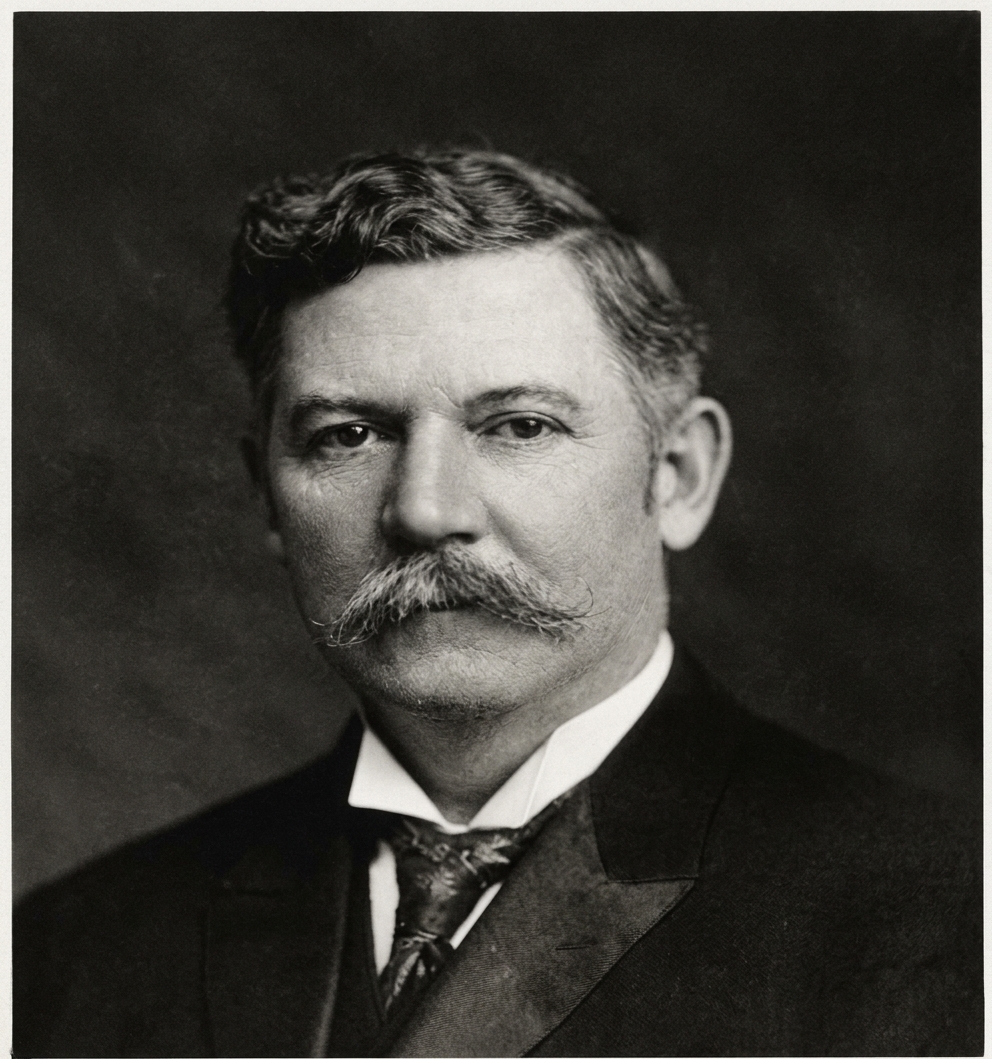
Joseph J. O’Reilly – Photo courtesy of US Postal Service
He was a writer, collator and publisher on books for firemen, policemen, mailmen, public service.
In 1897 he establishes his publishing company and sells to Frank J. Prial 1920.
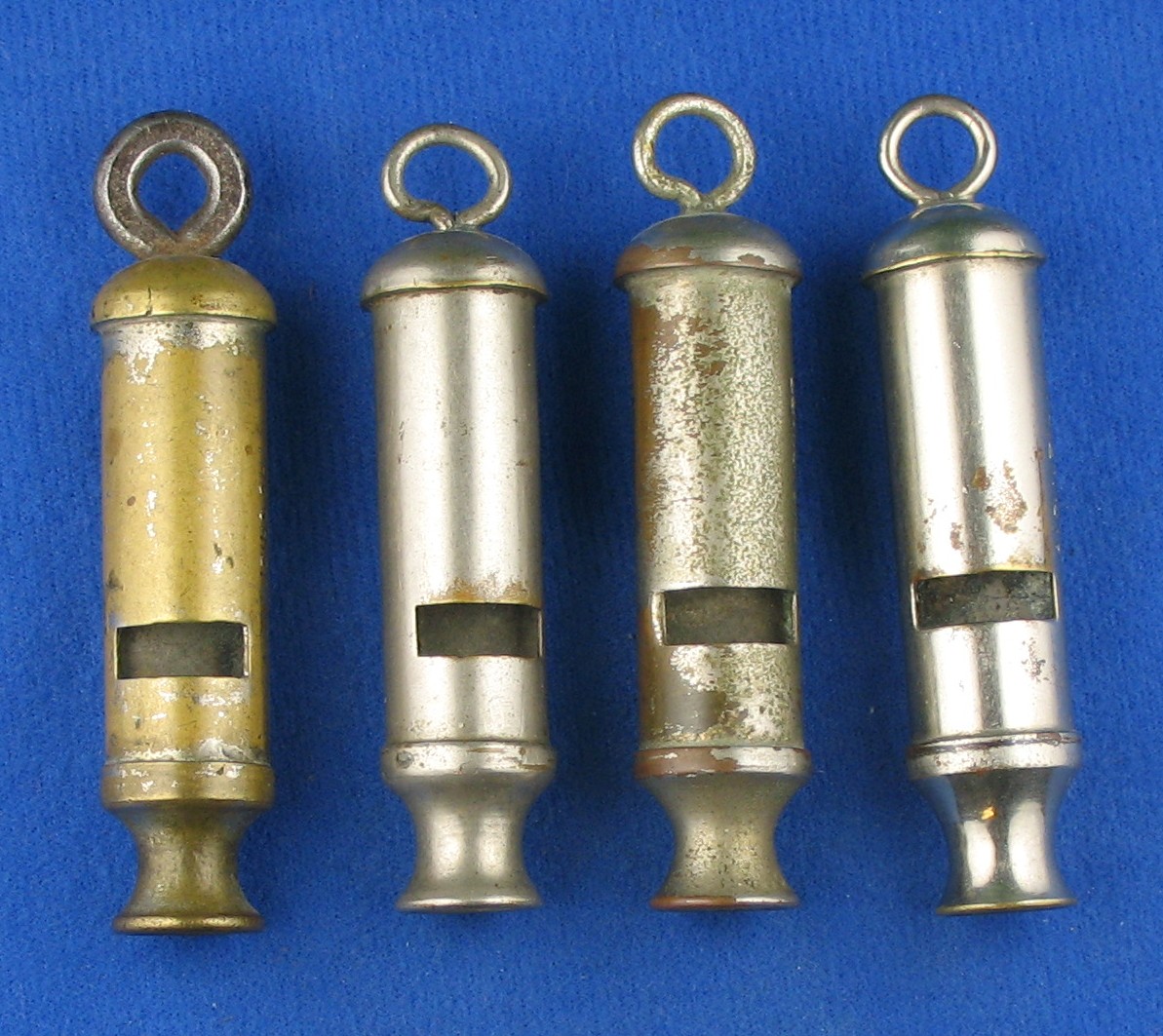
The earliest whistle would be the Pat. Applied For during the year 1914, followed by later variations, note the top ring changes. The whistles would change in length from 3 inches to 3 3/8 inches. All these mouthpieces were machine rolled.
From left to right there are several changes over time, following then the matching Winchester and CDR. The two middle whistles are different lengths.
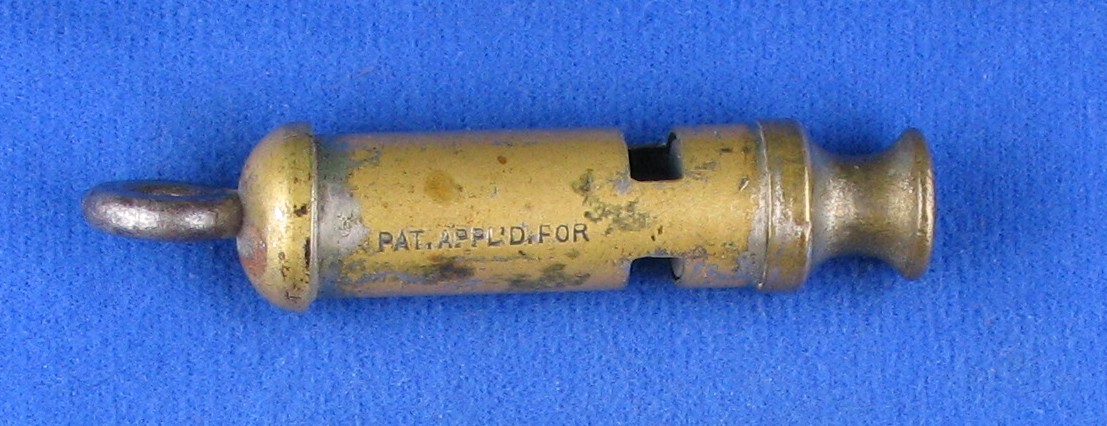
The Chief, Winchester, and CDR Comparison
Usually, researchers often overlook this NICKEL SILVER METROPOLITAN CDR.
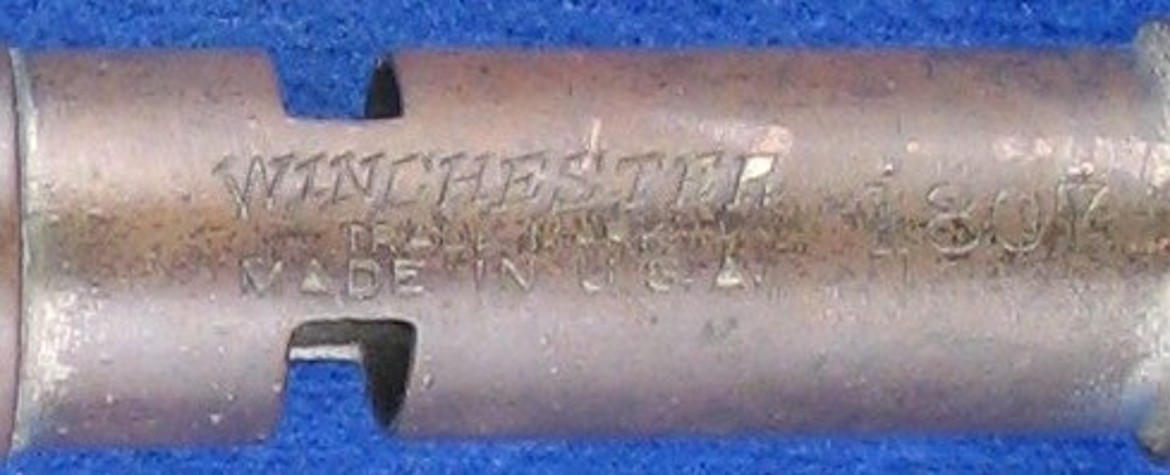
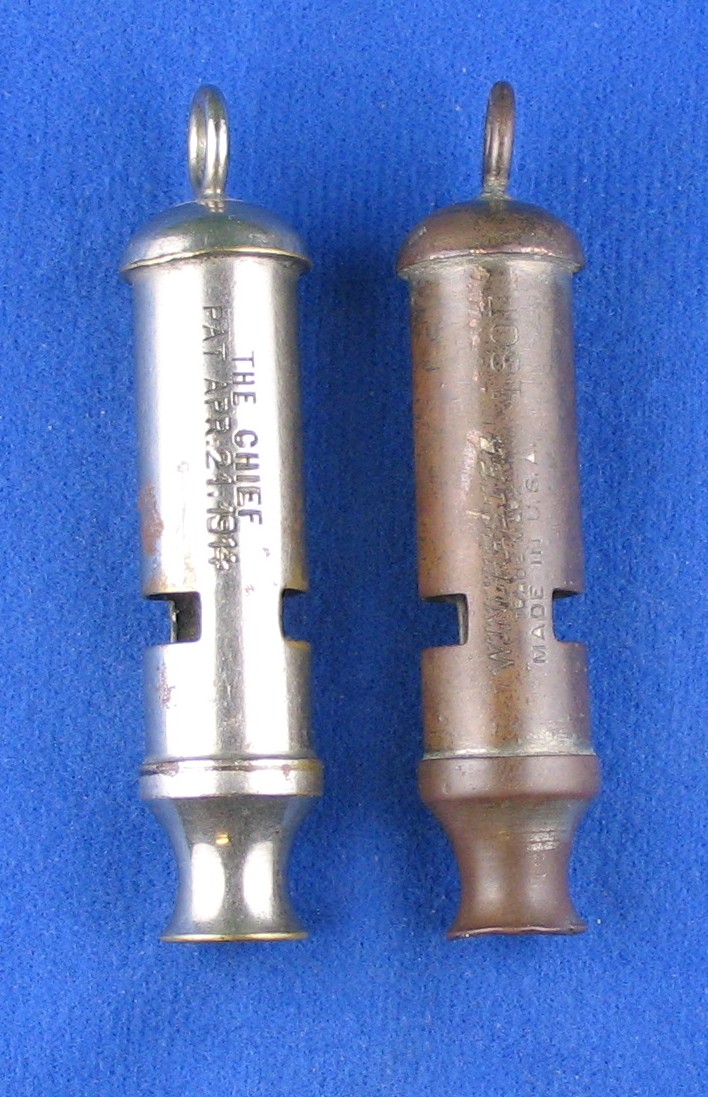
The CDR matches the last in the series of Chiefs and the Winchester 1807. All three whistles, the Chief, The Winchester and the CDR match and would date to a 5-year time of 1923 to 1928 period.
Features: Matching top cap, windows, mouthpieces, lengths. Internal parts are the same, tines toward the mouthpiece, wide and squared off.
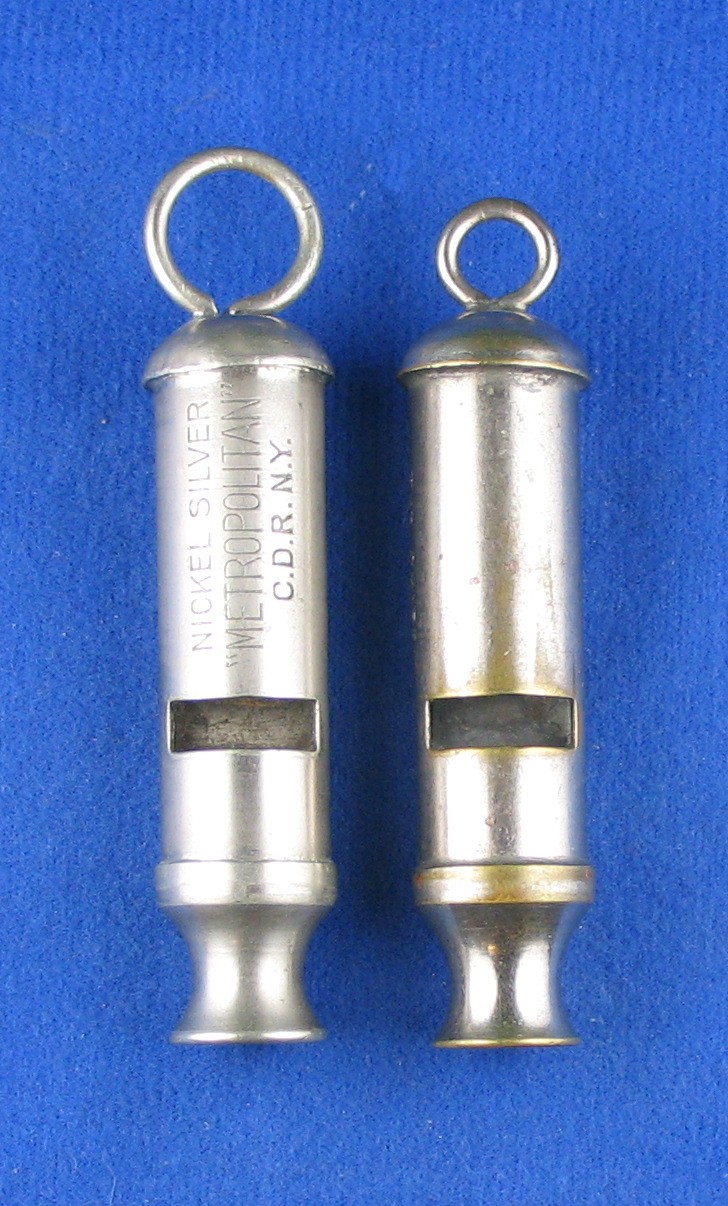
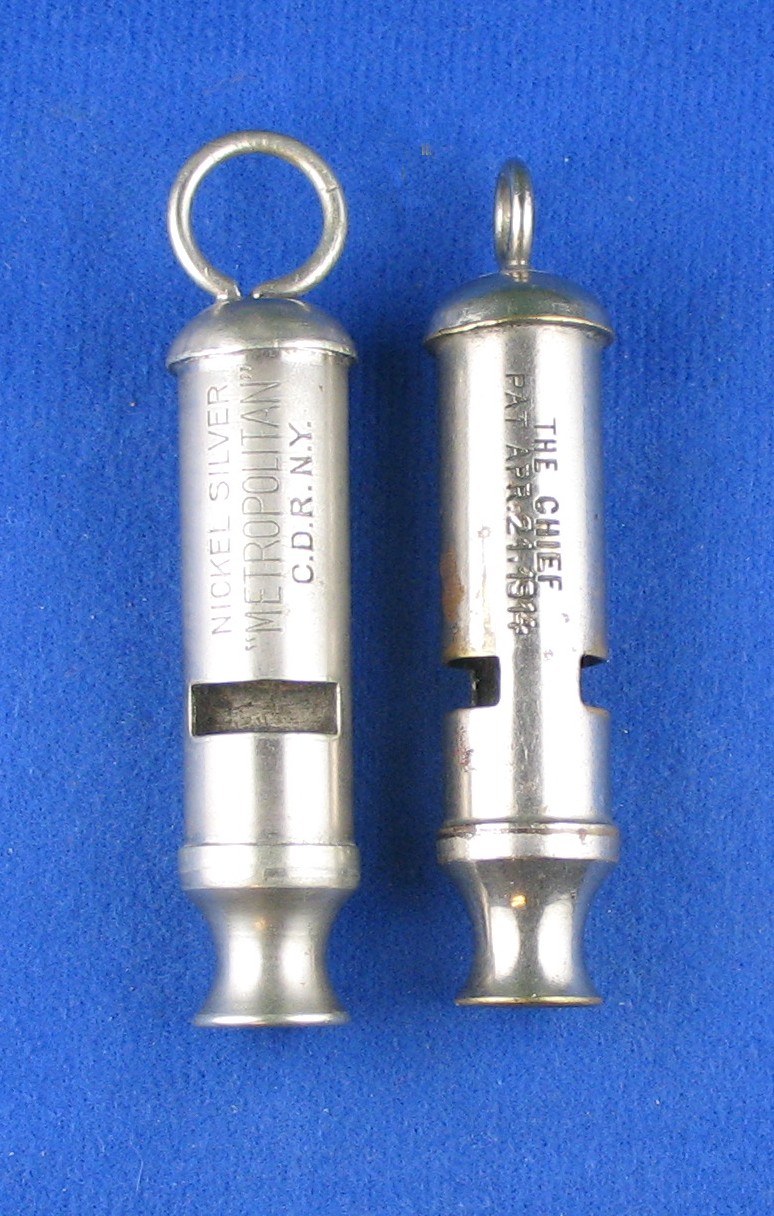
Did GMW manufacture O’Reilly’s whistle? It cannot be said for certainty. However, there is reason to consider them. The Brooklyn Eagle article points out that Charles Frank had been involved in whistle making for 45 years. That would bring him back to 1905 – ten years prior to GMWs incorporating. Gotham Metal Works appears to have made the Brooklyn Eagle whistle according to O’Reilly’s patent.
Post-Fire Changes in Construction
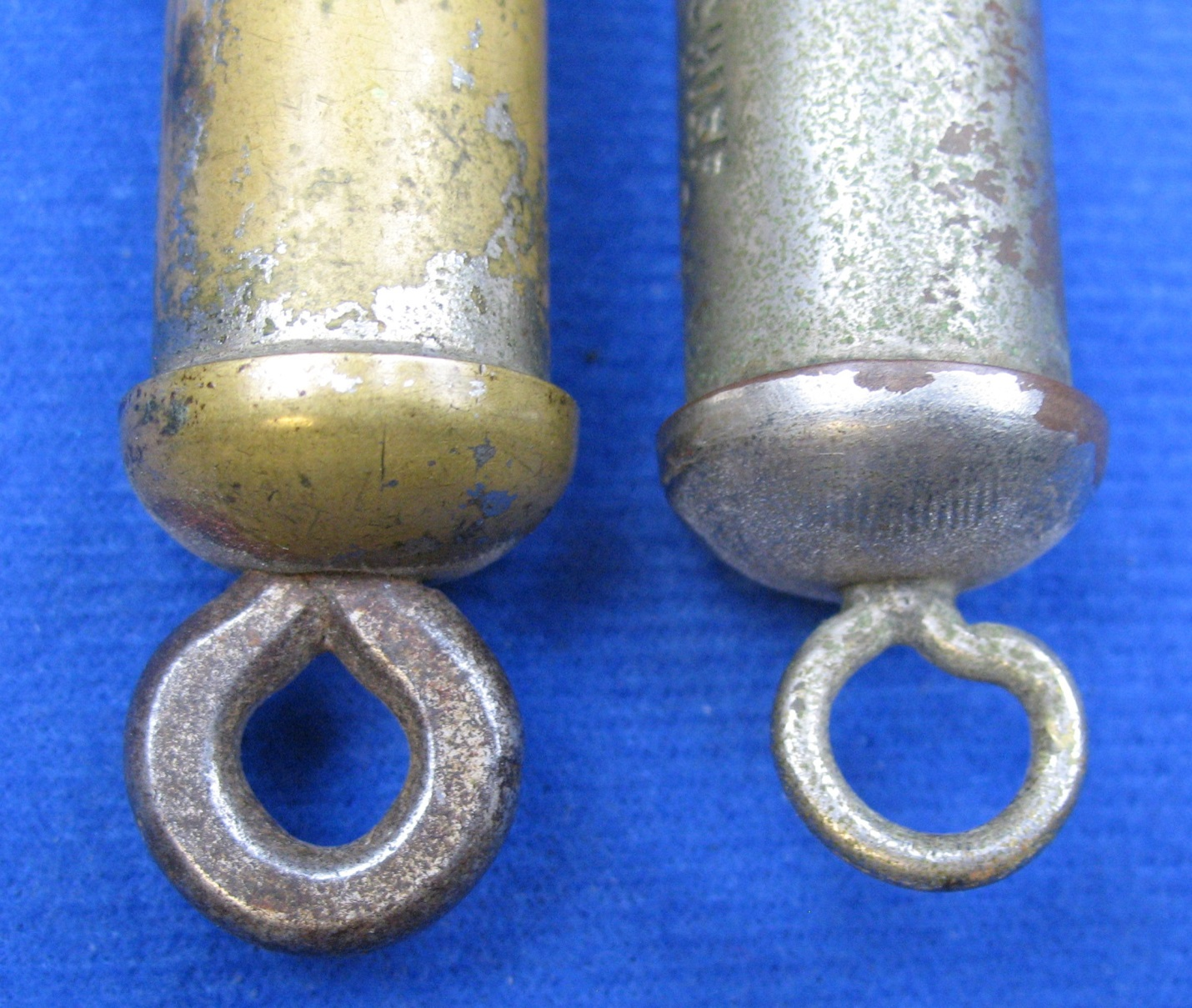
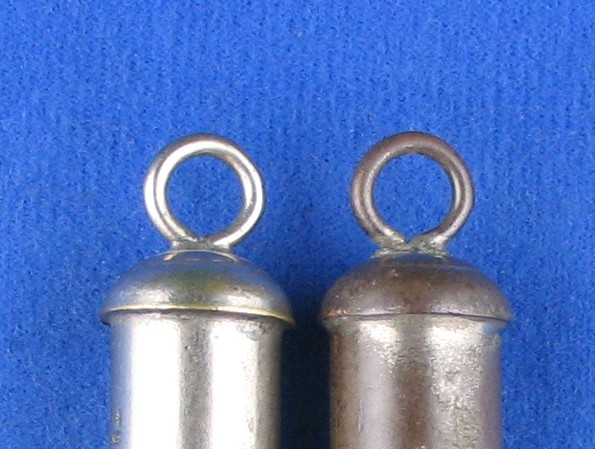
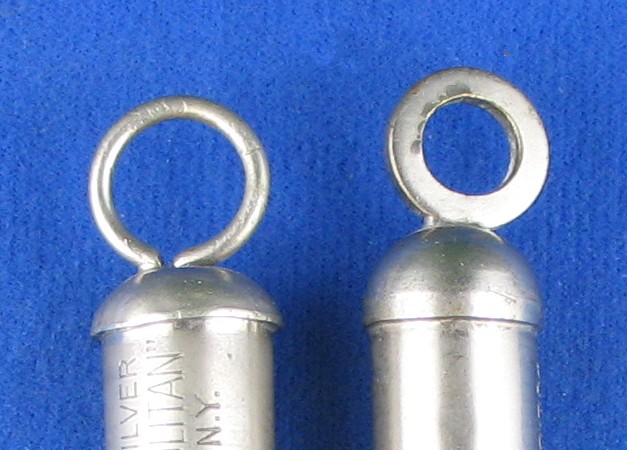
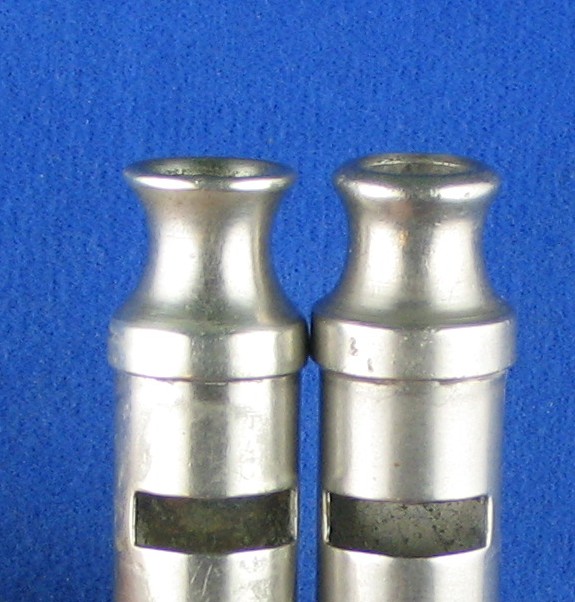
The differences in the following pictures show:
- The top cap is more domed and with a flat ring.
- The mouthpiece is solid stock and lathed out.
These changes after re-tooling make sense but most importantly note:
- the body length is the same
- the top cap is new
- the windows match perfectly
- the internal parts match perfectly
- the tines toward the mouthpiece
- the two tines are squared and wide, the same.
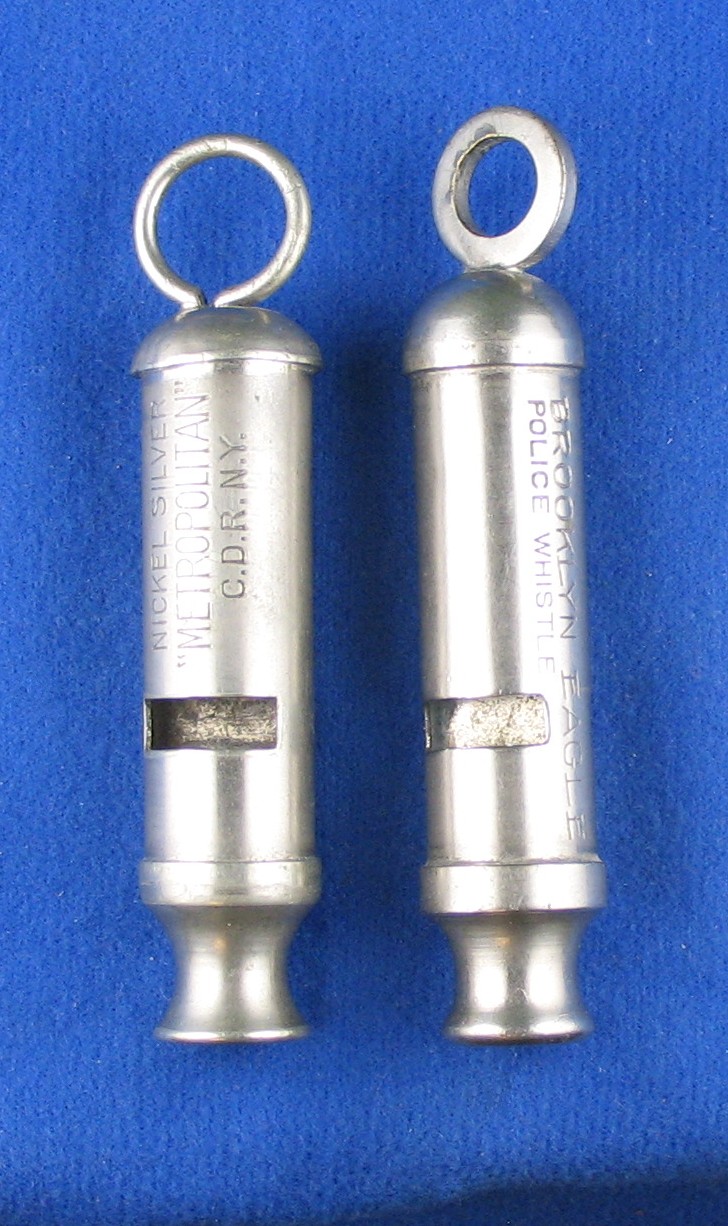
The Nickel Silver “Metropolitan” C.D.R. New York compares well to the Brooklyn Eagle — a similar Nickel Silver Metropolitan Police C D R New York was made in Germany and marketed for the USA at about the same time.
What have we established so far?
- O’Reilly patented his whistle in 1914.
- GMW incorporated in 1915.
- Winchester 1807 was also made to the O’Reilly patent 1923
- Nickel Silver CDR was also made to the O’Reilly patent circa 1923-28
These whistles ceased to be made by the time of the fire of 1928 at GMW.
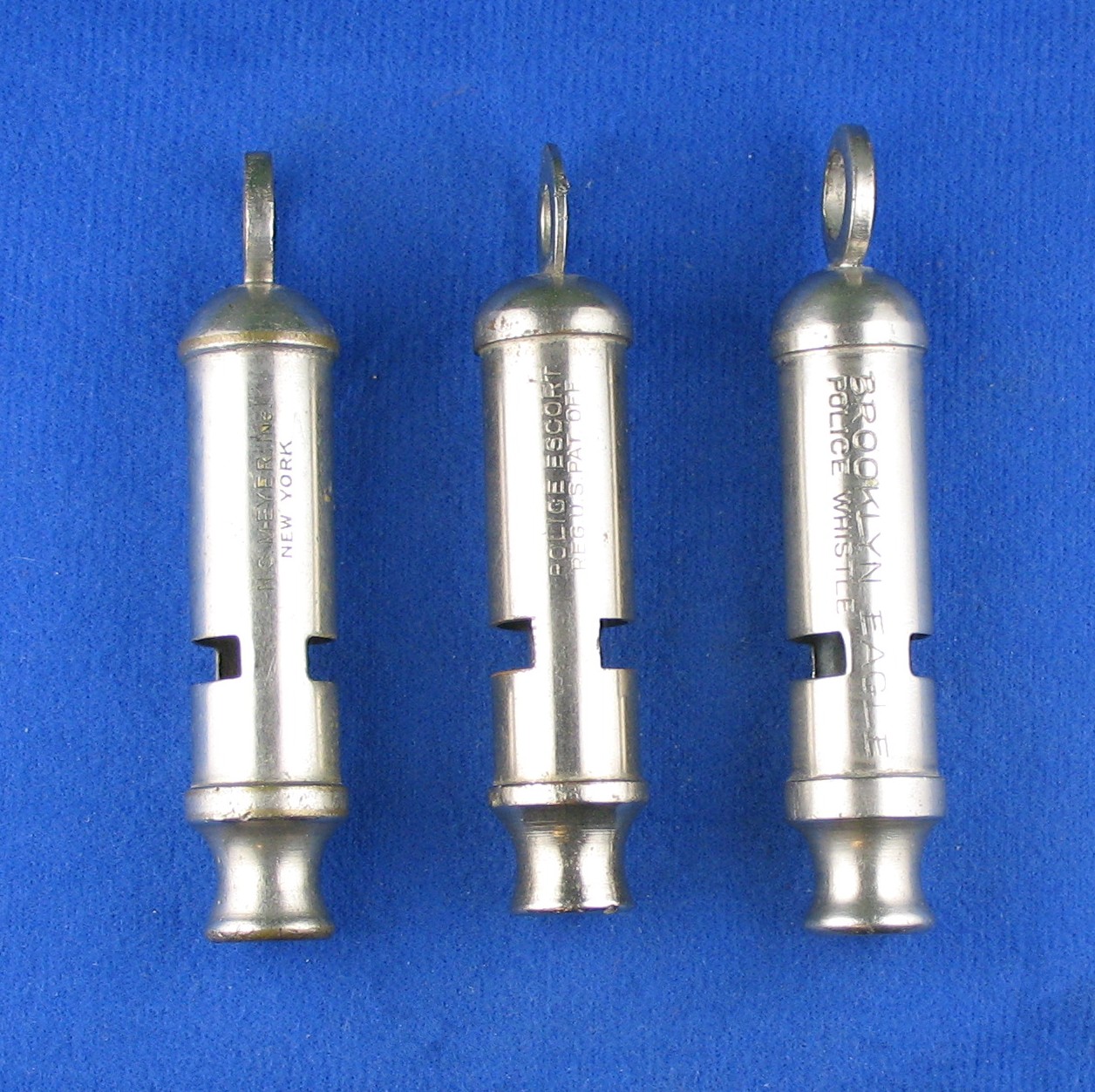
Likely Post-1928 Gotham Metal Works Whistles
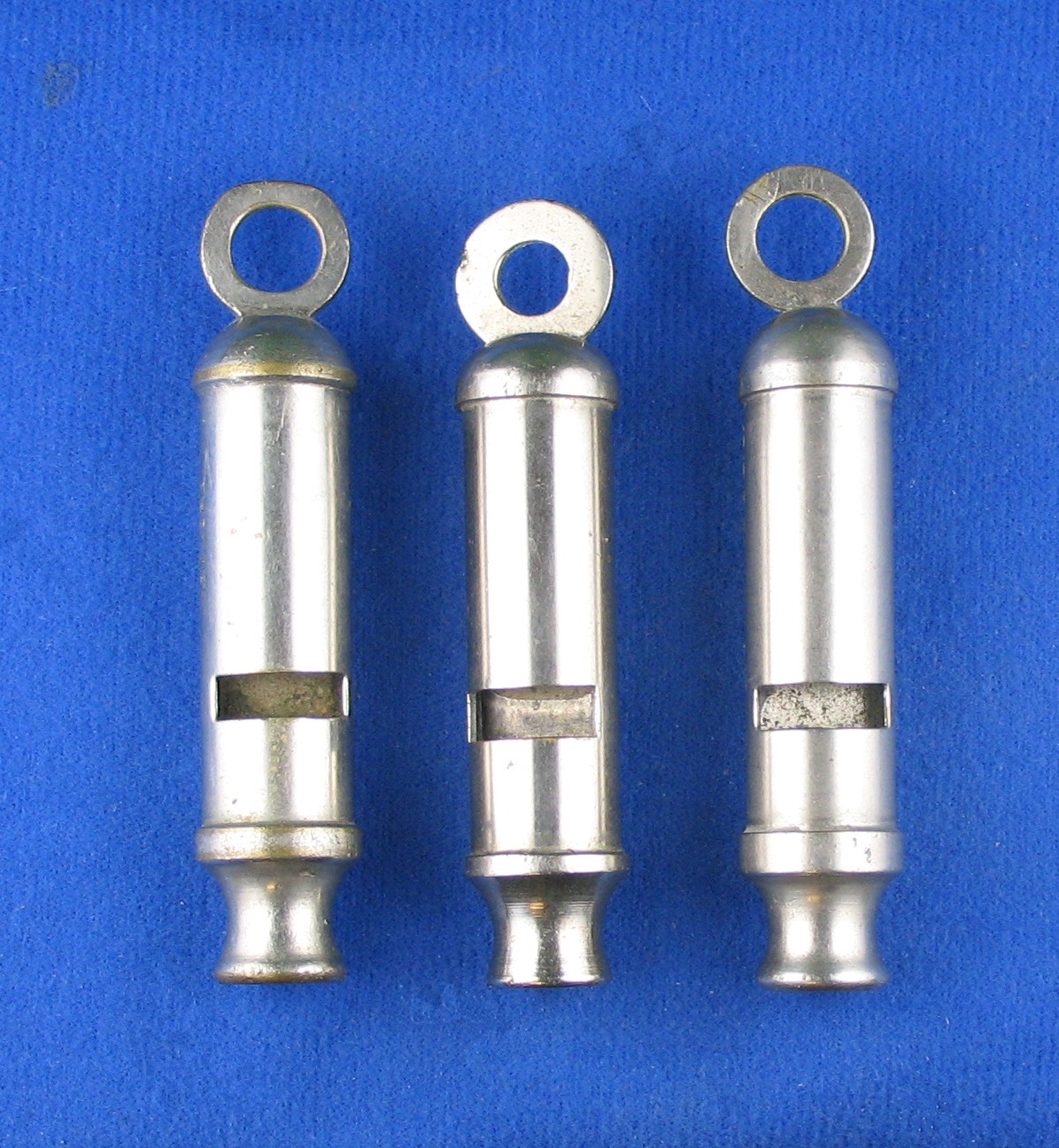
Gotham Metal Works appears to have made the following stamped whistles after the 1928 fire with different manufacturing methods. They all have lathe-turned mouthpieces and the windows vary — as the top rings. In addition, the tines are toward the mouthpieces, wide and squared off circa 1929-1950.
Accordingly, the following whistles appear to have been made by Gotham Metal Works:
- Brooklyn Eagle Police Whistle
- Police Escort Registered U.S. Patent office
- N.S. Meter, Inc. New York
The Police Escort is the most questionable, yet the internal construction matches.
Gotham Metal Works and Winchester Whistles
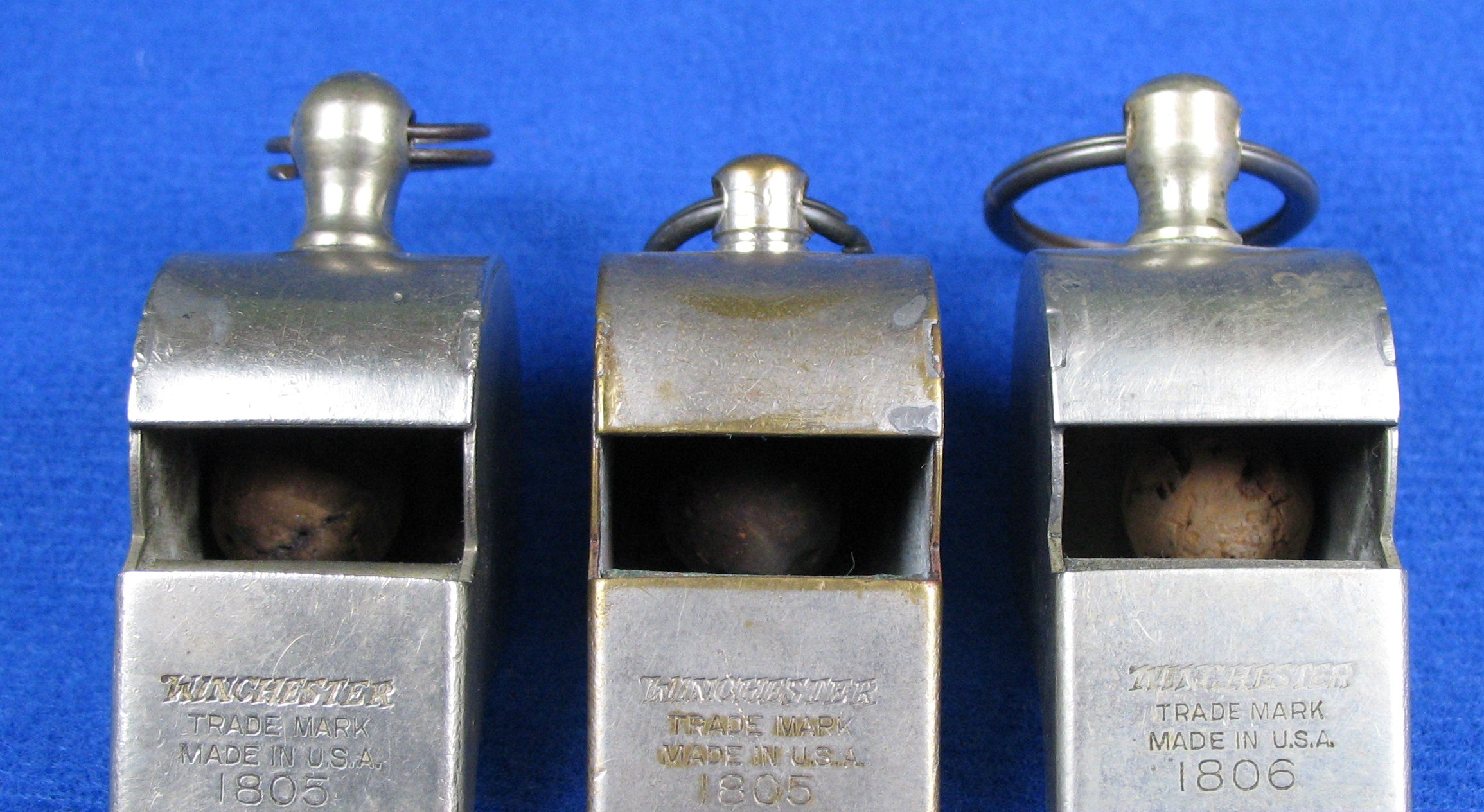
Against this background, the Winchester Model 1805 escargot whistle becomes a key transitional example. It only makes sense that the same manufacturer would have made all three known Winchester models, which would be two escargot models and a singular tubular whistle.
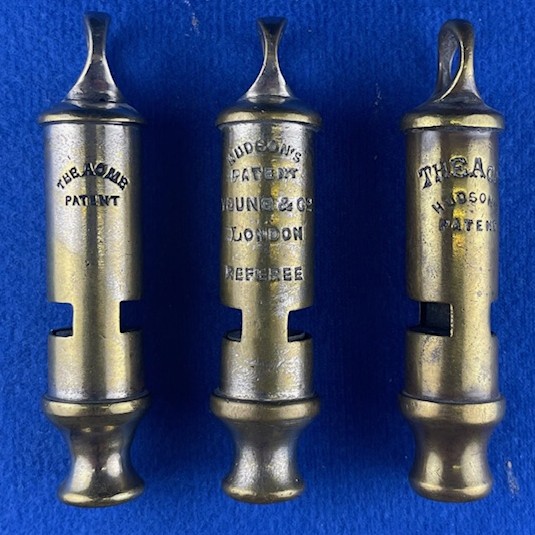
The earliest recorded catalog, from circa 1923, shows the Winchester escargot with three interlocking teeth per side. It has not been seen with earlier construction. 1805 is found in two models, a large escargot with a round knop and small with a short pillar like top. To date, researchers have found only two large Model 1805 examples.
Coinciding with the 1928 fire, the Winchester whistles disappear from production. If the Winchester escargots were correspondingly manufactured by GMW, then that would also identify them, along with the signature interlocking teeth design as seen going back to 1916. Researchers have not found Winchester escargots with the earlier almost rustic 7 teeth construction. These earliest were made from 1916 to 1923 and were 7 teeth per side as with interlocking teeth escargots described in SPOTLIGHT 10.
Winchester 1805 and 1806 escargots date between 1923 to 1928, just 6 years, and likely have been made by the same manufacturer with a series (i.e. being the 1805 escargots, the 1806 escargot and the 1807 tubular whistle)
Did Gotham Metal Works manufacture all the Winchester series of whistles, tubular & escargots? At this point it would seem to be so. It would not be likely for the Winchester company to retail these models from separate companies. Especially if we include the merger of Winchester Simmons corresponding to this same time.
Therefore, this would identify that a series of escargots including those with interlocking teeth (see SPOTLIGHT 10) stretching from circa 1916 to 1928 would identify Gotham Metal Works as the manufacturer.
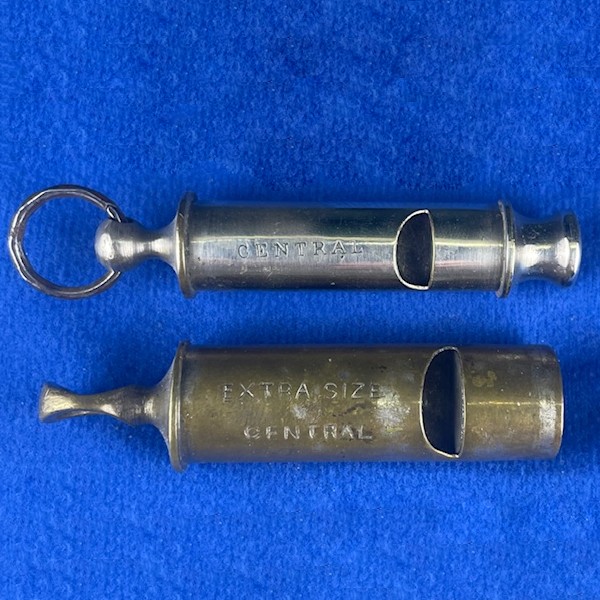
Almost all escargots were stamped in this series were for sporting goods companies. Most stamped names ceased by 1930 and were not seen on any other whistle stamps after.
Known stamps on interlocking teeth models:
| Dardevle | not seen post 1930 |
| D&M Sporting Goods | questionable |
| Goldsmith | questionable |
| Optimus | not seen post 1930 |
| Reach | not seen post 1930 |
| Referee | not seen post 1930 |
| Signal Police | questionable |
| Thomas E Wilson | not seen post 1930 |
| Winchester | not seen post 1930 |
Winchester contracted only with this manufacturer. A much later model Winchester stamp has been found on another escargot design, but with labels attached to the sides.
Winchester models are recorded as model 1805 stamped on two sizes and 1806 has only been found stamped on the large model. Model 1807 is only on a tubular whistle.
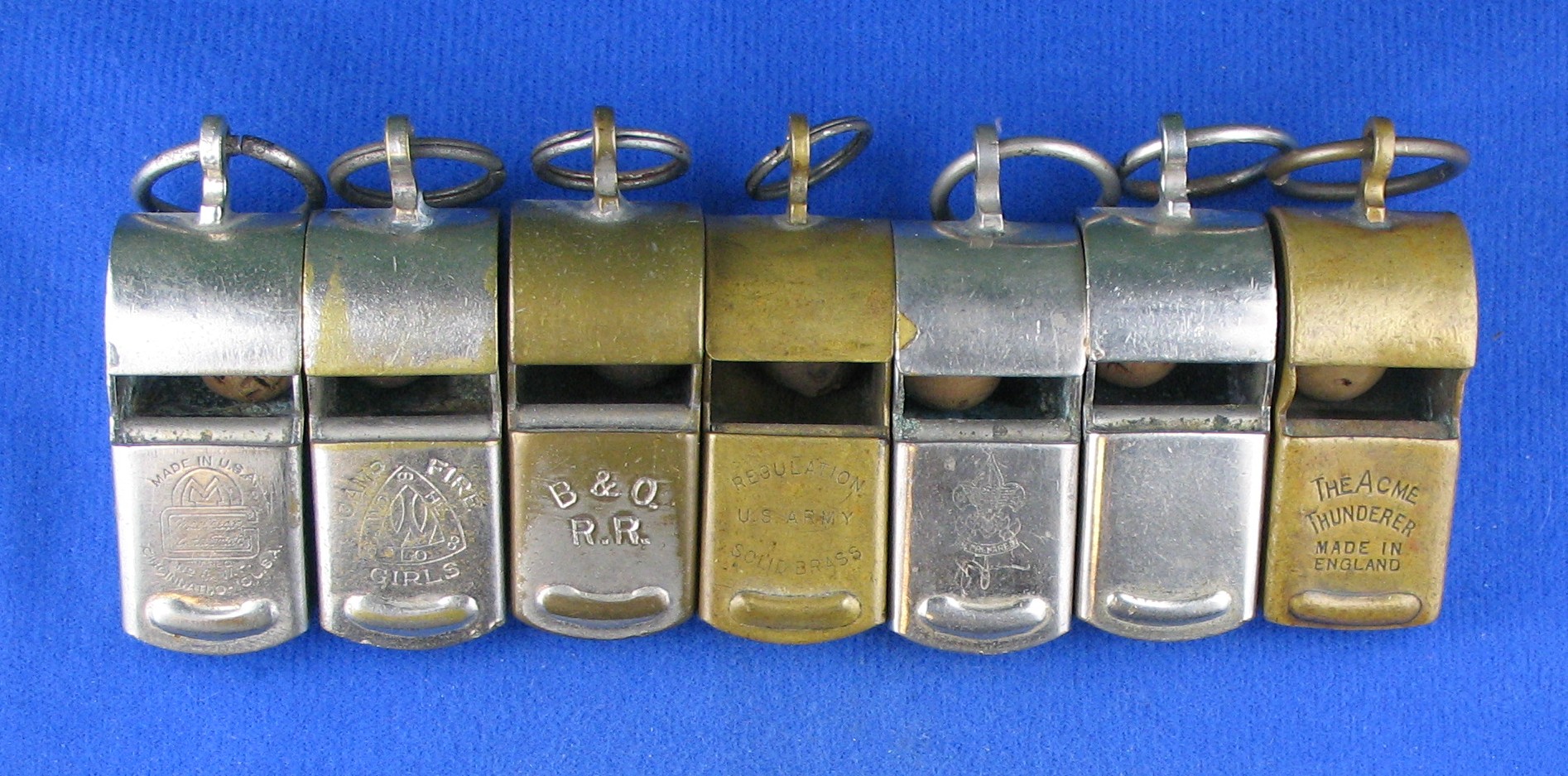
Gotham Metal Works Flat-Knop Whistles
Flat knop models, circa 1940-1950:
- Boy Scout
- MacGregor Goldsmith (Sporting Goods)
- B&O (railway)
- Camp Fire Girls
- Regulation (military)
- unstamped
- N.S. Meyer (side stamp) – not pictured
- The Acme Thunderer (made in England)
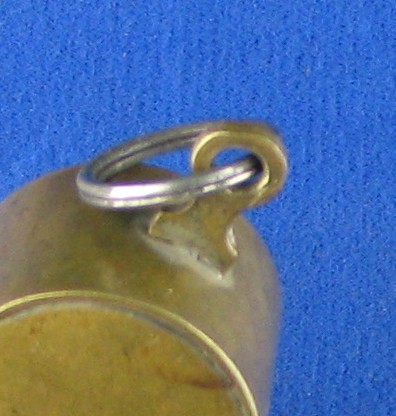
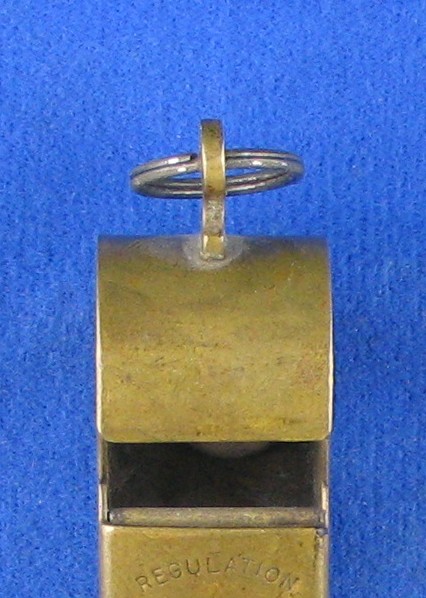
We have 7 stamped whistles from GMWs with the following stamps. They all display the same flat knop. The last shows a UK stamp.
Conclusions
Gotham Metal Works is the likely maker of these whistles. The evidence works backward from the Brooklyn Eagle whistle, whose design matches both the Winchester Model 1807 and O’Reilly’s patented Chief whistle. This connection is significant as it reveals the maker of Winchester’s interlocking-teeth escargot whistles.
Conclusively then, the evidence shows that one manufacturer made all three Winchester-stamped models—1805, 1806, and 1807. Therefore, that same manufacturer made the other interlocking-teeth escargot whistles produced during the late 1910s and 1920s.
These ceased by 1930.
History shows Gotham Metal Works has had two lives, or two distinct periods of operation. One dating from its inception in 1916 to 1930, and from 1930 to 1958.
This research has been ongoing for over twenty years, and bibliography was not kept early on. Many clippings are held in the archives. AI generated research has not revealed verification. For example, records kept at the New York County Clerk’s office for the dates 1918 to 1938 can only be accessed by specific requests.
TWG
Created August 1, 2005
Revised December 7, 2016
Revised March 13, 2026
Revised October 11, 2026
Posted November 6, 2026
Bibliography:
- TWG Reference Collection
- The Whistle Gallery Archives
- Google Patents
- Brooklyn Eagle Newspaper, archive records
- The American Stationer and Office Outfitter
- Official Gazette of the US Patent Office
- Industrial Directory of New York
- The Employment, Unemployment, and Wage Status of the Labor Force
© – All photos with blue background property of The Whistle Gallery reference collection. Please contact The Whistle Gallery for permission of use of any website content. Spotlight articles are copyrighted. Please contact The Whistle Gallery for permission of use of any website or Spotlight article material written or otherwise. Use of photos without authorization is prohibited.


 Users This Month : 1137
 Total views : 189265