Whistory
For many beginning collectors, using Collecting Police Whistles and Similar Types, by Martyn Gilchrist and Simon Topman, the ‘bible’ of whistle collecting, might be a leap too far at first. Yet there may be a real interest in police issued whistles and nowhere to start on a smaller scale to learn about them.
Predominantly this is a UK phenomenon, as whistles outside the UK were not as avidly stamped for different police forces. Yet doing this type of learning and how to categorize one’s whistles is transferable to other types of whistles. So here a smaller group is presented. To help things along, these are mostly the original whistles that are pictured in that pivotal book.
Why This Article Rather than Use the Book to Research Police Whistles?
Now you can study them up close and if you decide you want to take the next step, you can buy the book too. We have thrown in several other MP whistles to fill in some gaps.
So, what we have here is MP1 through MP11 Hudson’s model # 015. There are more (extending through MP 25) after these, and variations, but this is a most important base line and they in effect set the bar for all the rest of police whistle collecting. You may know already that MP stands for Metropolitan Police. Perhaps you are thinking that many cities are called metropolitans. True, but in 1884 London was one of the big three metropolitans (four if you count Glasgow) along with Paris and Berlin.
However, in England Metropolitan stood for London. There were about 9 million people at the turn of the century. The police force was changing over from ‘rattles’ to whistles and this whistle manufactured by Hudson’s there emerged as the whistle of preference by this premier police force.
What Makes Hudson Police Whistles Special?
True there were other manufacturers of police whistles in the UK. Yet it was Hudson’s who won the contest for the contract and then set the bar for everyone. Looking back before their initial issued tubular whistle and later on, makes it in reality a pivotal point in whistle making history. Circa 1883-4 would be the pivotal date point. Other manufacturers of police whistles such as Auld, Dowler, Ward, DeCourcy etc. were overshadowed by the dominance of Hudson, and the contract with London Metro, eventually emerging as the premier police whistle manufacturer with the iconic name Metropolitan.
It must be borne in mind that Joseph Hudson made police whistles for forces like Manchester City before the Metropolitan name. However, once the first contract was won in 1883, this name, the Metropolitan, emerged and took over for the Hudson Company with its initial order of 7000.
Initially, Hudson made whistles devoted to the Metropolitan Police itself (first order was 7000), a whistle that became iconic. Accordingly, they used the Metropolitan name — coupled with other police forces and eventually other entities (i.e. asylums, fire brigades, prisons etc.)
How Important is the Word ‘POLICE’ on Police Whistles?
However, at the same time, whistles that looked alike, were made that also said Metropolitan on them but lacked the important word Police on them and therefore were primarily for the public, in other words civil.
For a short period of time the registered name Metropolitan was coupled with surrounding police forces and then also stamped for Fire Brigade, Asylum. Prison, etc.
We find that by lining them up in a series of Metropolitan police force issued for decades and recording all the modifications and improvements, they can be classified into numbered steps (with variations of course). Some additional work has been done to record stamp imperfections with dated whistles. We will however focus primarily on the first 11 which are called MP1 through MP11.
From 1884 to 1908 MP1 through MP13 were made, with vriations. That amounts to 25 years of whistle production and at least 13 productional changes over those years, coinciding with the first three out of four literal address changes. The first address where Metropolitans were manufactured was 84 Buckingham Street, the second was 131 Barr Street, the third was 13 Barr Street. They would later move to 244 Barr Street where they reside as a company today. More accurate information suggested that 131 Barr Street was re-addressed to be 11 & 13 Barr Street and did not actually move to a new location.
Whistle Classification
| Type | tubular |
| Maker | Joseph Hudson |
| Category | police |
| Material | brass nickel plated brass nickel silver |
| Features | James Hudson mouthpieces cast mouthpieces |
Whistle Archeology
Broken down in order we see:
- 84 Buckingham – MP1 & MP2…..2 whistles – they were addressed here two years
- 131 Barr street – MP3 — MP6…..3 whistles – they were addressed here 4 years
- 13 Barr street — MP7 – MP13….7 whistles – they were addressed here 20 years
MP4 was made by Bent & Parker and included here, this one matches the one pictured in ‘the book’ but has different numbers. Let’s start with two group pictures. The first picture displays the following:
The following are pictured in the article, some being the actual whistles pictured in Collecting Police Whistles and Similar Types (CPW).
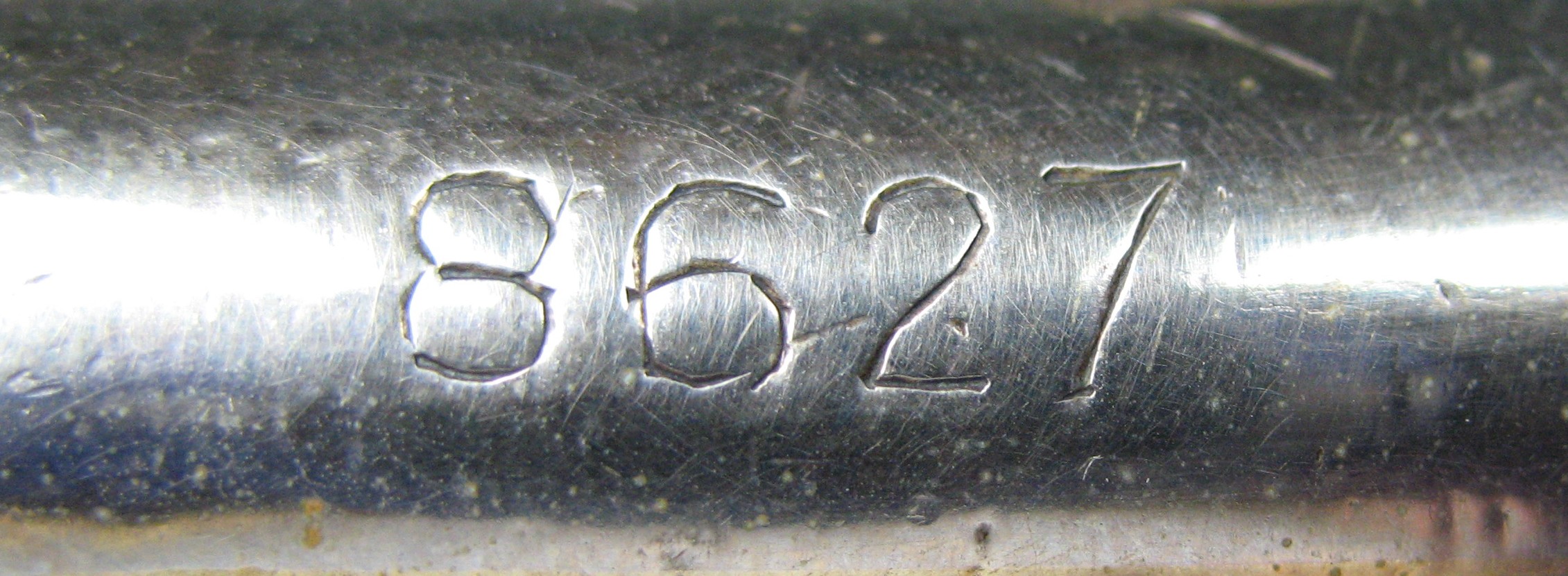
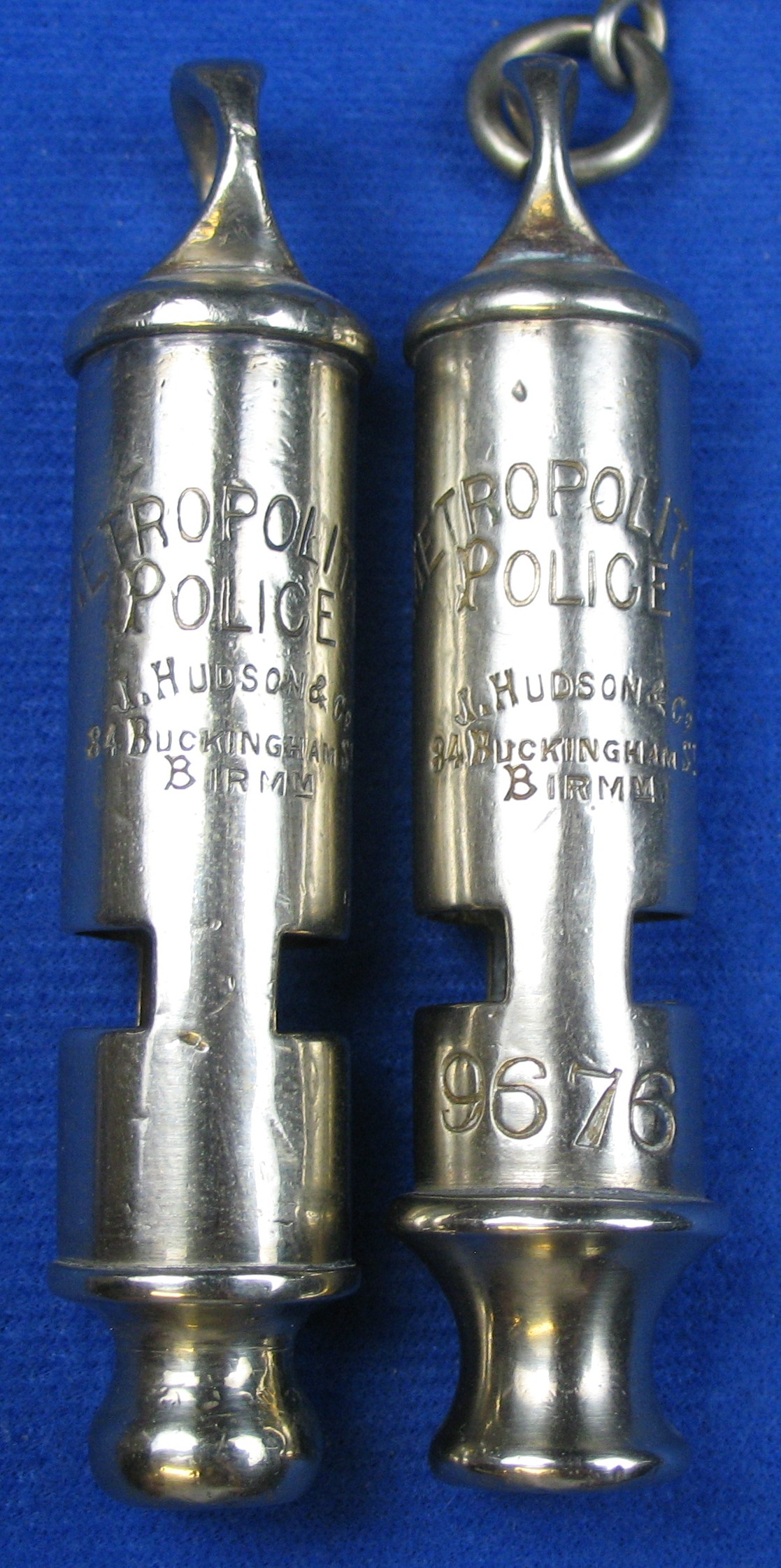
- MP1 – original (pictured in CPW) #8627 engraved down the back
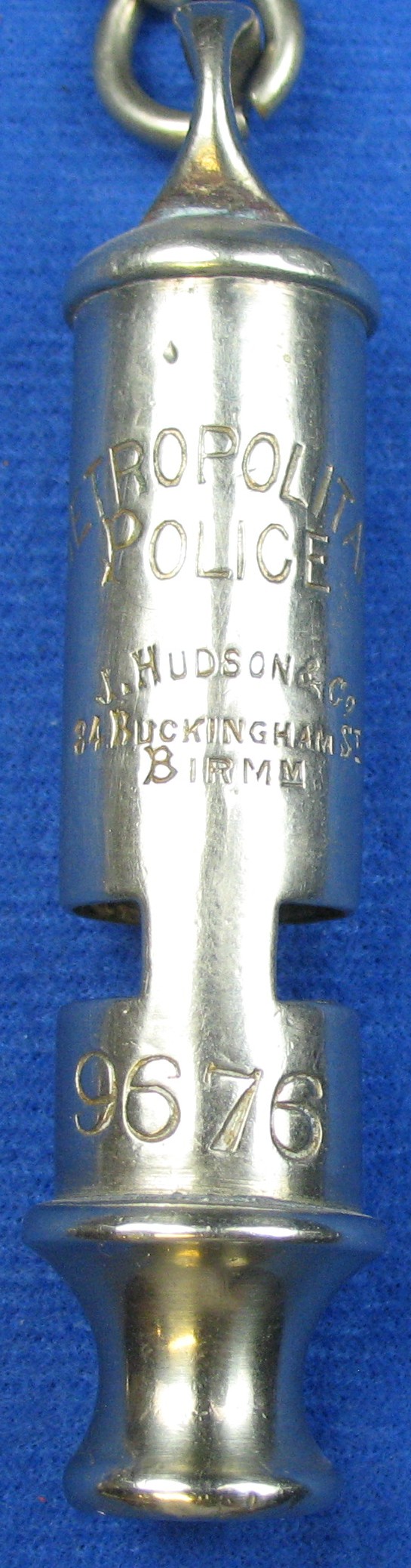
- MP1 – not from book, a refurbished mouthpiece, stamped #9676, also engraved down the back
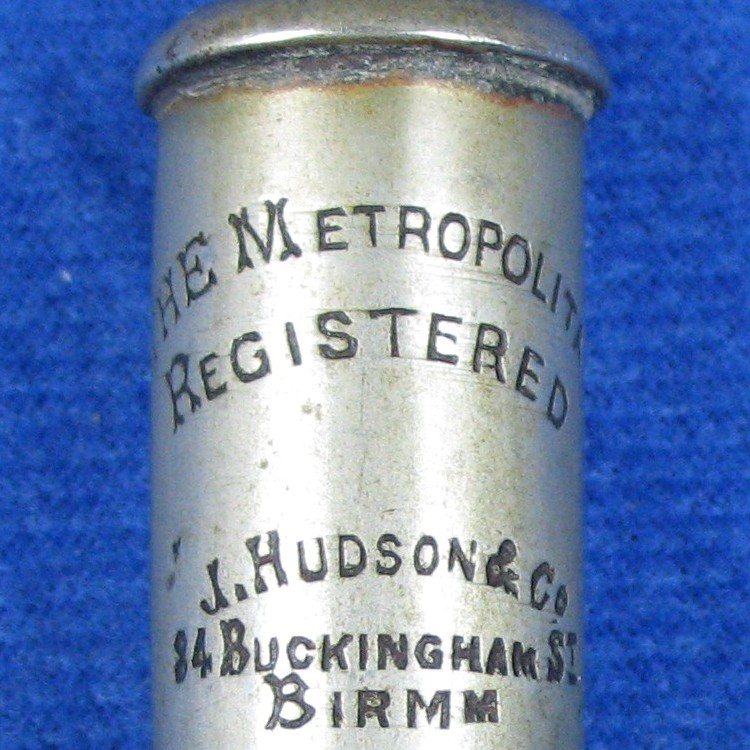
- MP2 – not from book, a publicly issued ‘registered’ model – missing the inspection mark on the loop.
- MP3 – original (pictured in CPW) #5105 engraved down the back, inspection mark on loop
- MP3 – not from book, refurbished mouthpiece, #3751 engraved down the back, inspection mark on loop
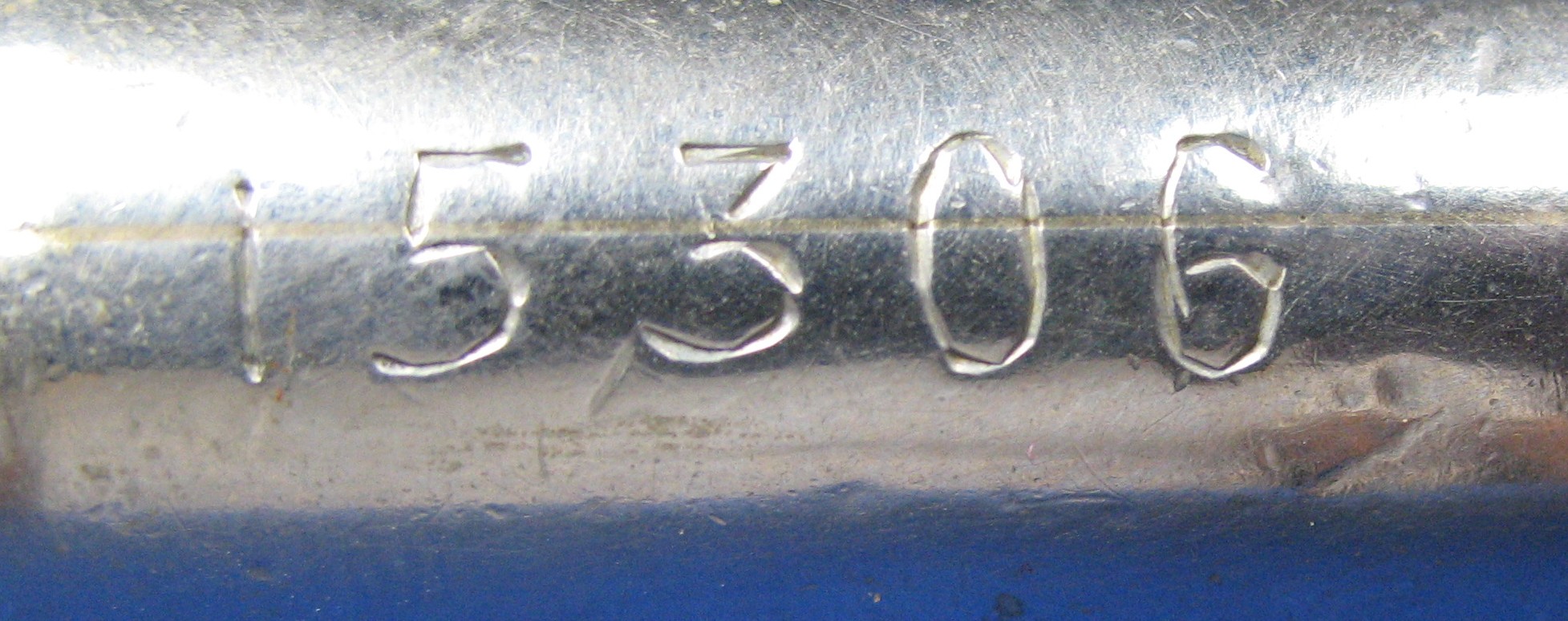
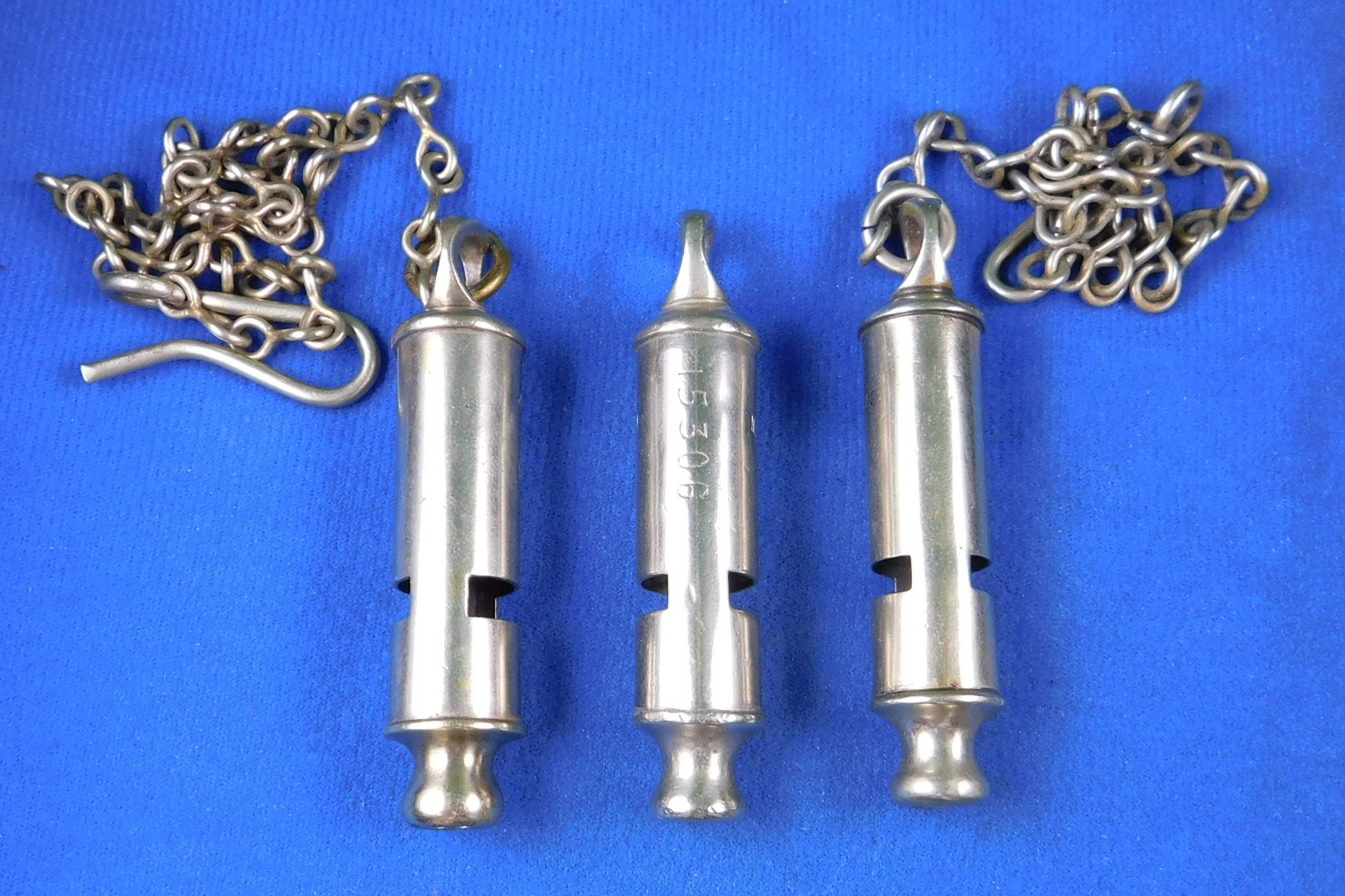
- MP4 – not from book, # 15306 engraved down the back. Bent and Parker
- MP5 – original (pictured in CPW) refurbished and stamped with number
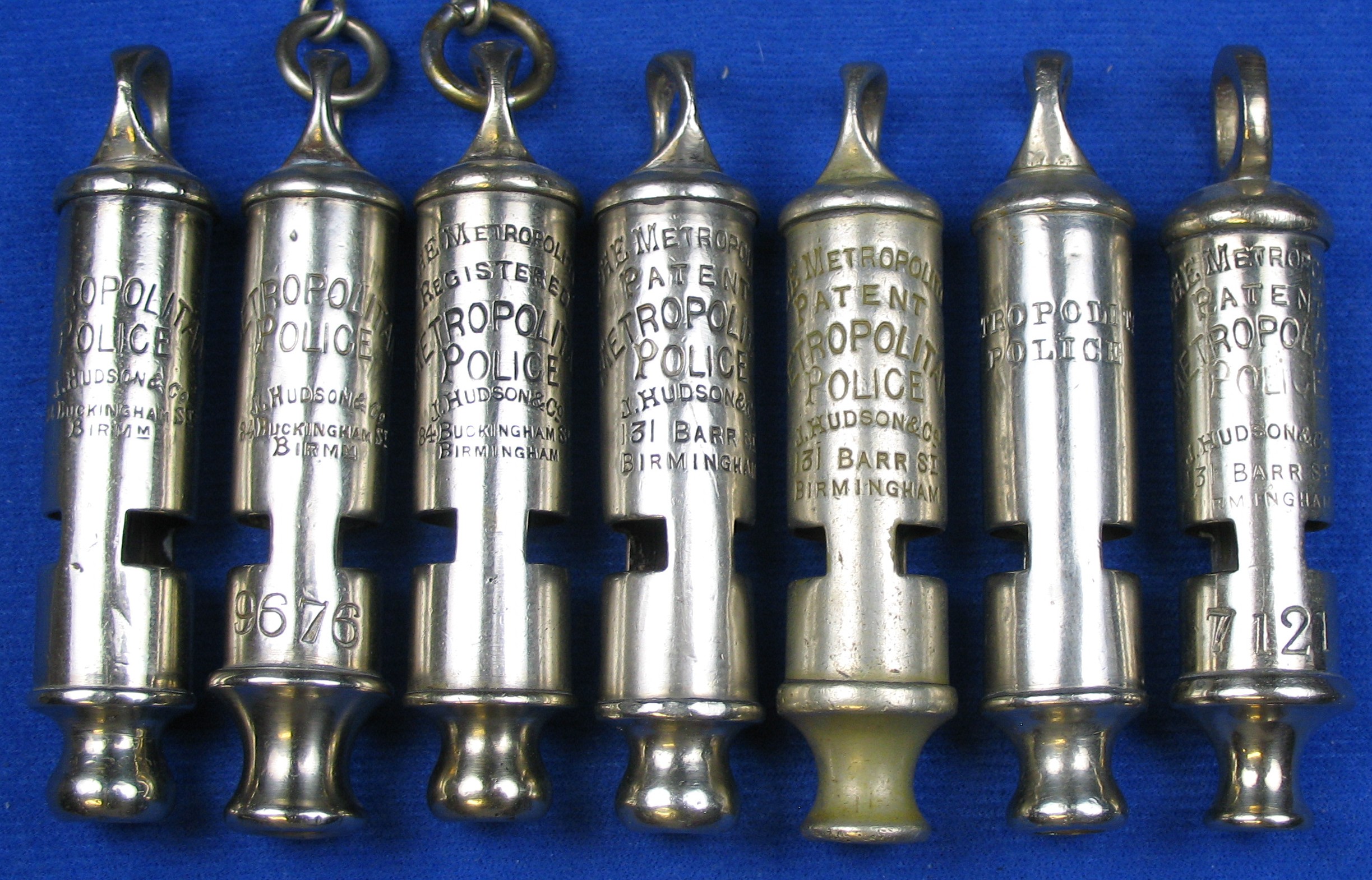
MP6 through MP 11 are the originals pictured CPW) and we will go over the changes whistle by whistle. Only MP5 and MP11 have two-piece tops, so we will note most often mouthpiece changes.
The main reason for refurbishment was that the internal disc was weak at its soldering point, it needed tines to adhere the disc to the side walls. Once these were added to the simple disc, it would no longer come loose from merely soldering to the partition. It could also be soldered to the sidewalls. The mouthpiece was replaced at this time with a more modern machined one with a rolled edge.
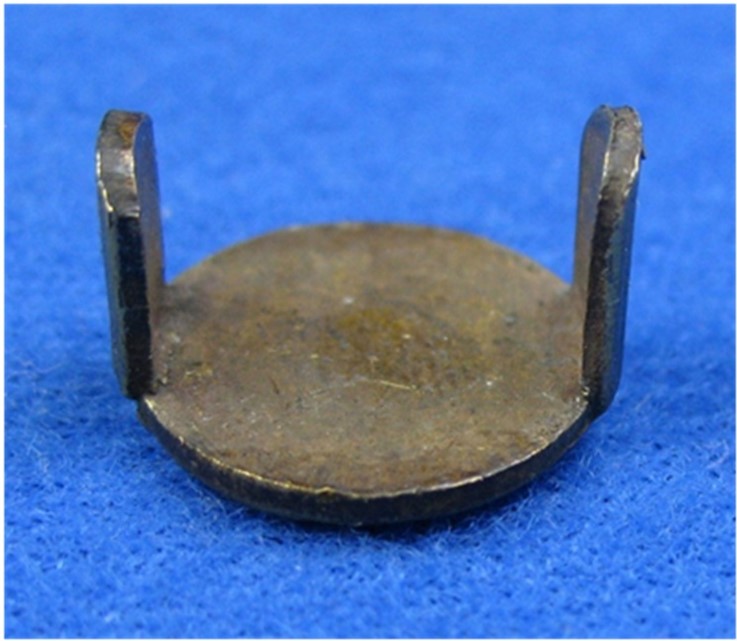
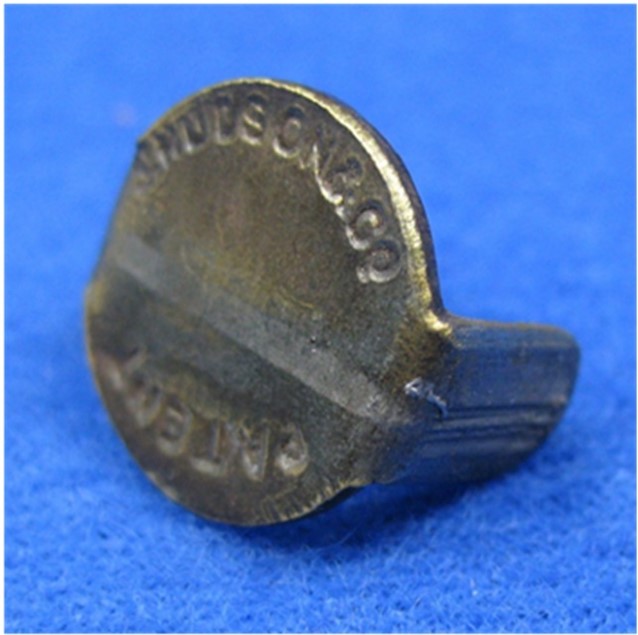
The improvements were made and then retrofitted. By that time, the mouthpiece had changed from a cast mouthpiece to a machined ‘rolled’ edged mouthpiece.
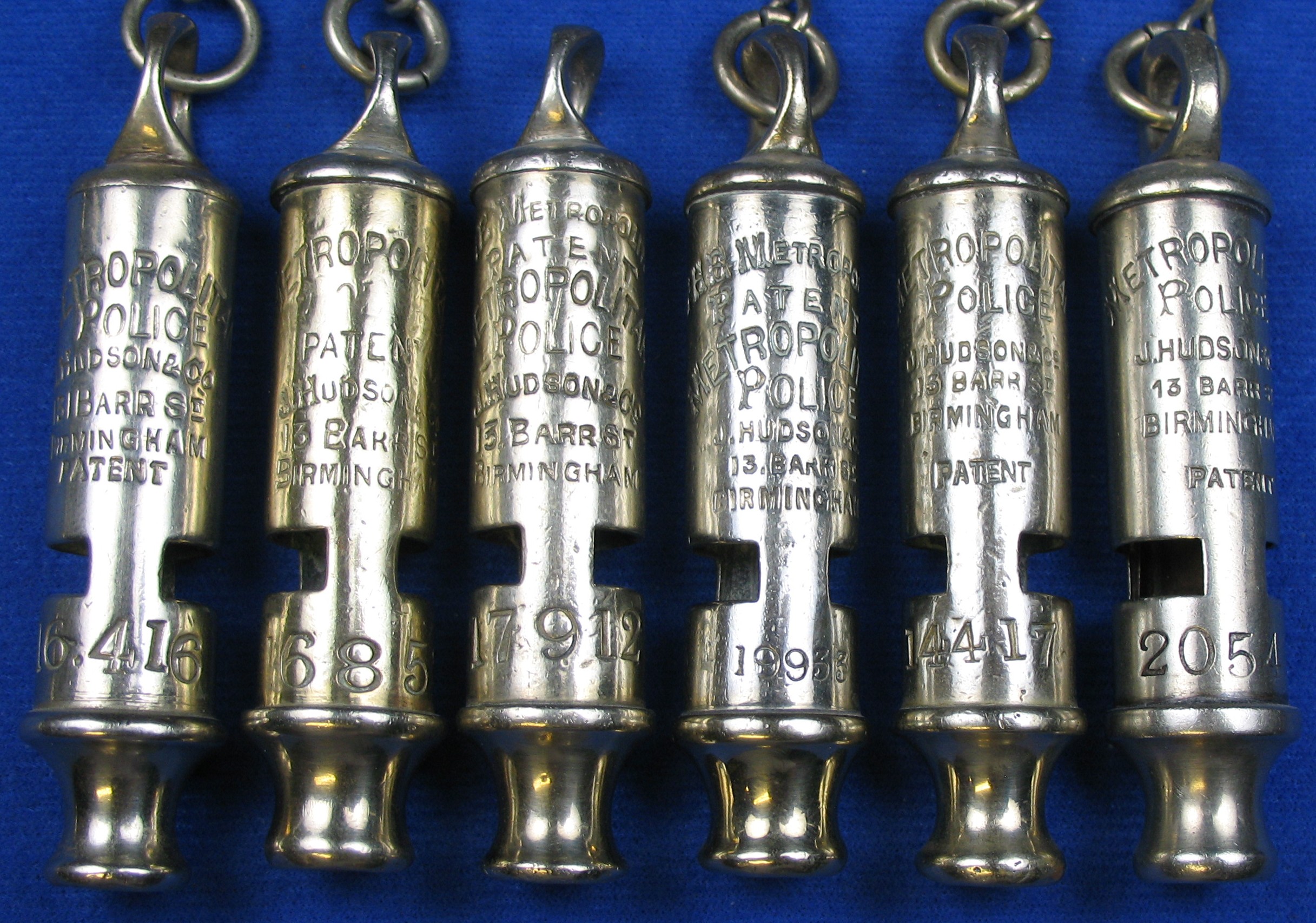
So now that the entire group is pictured let’s look closer at MP1…
To do this we will size the picture larger so you can see well and jump to the next page. Also, a close-up of the stamp will help. Although Joseph Hudson first resided and perhaps made whistles at earlier addresses, it was 84 Buckingham that bore the stamp of his first mass produced Metropolitan Whistle.
The mouthpiece was cast as well as the top piece. The diaphragm was weak because of the poor attachment to the separating wall even though soldered. When small wings (tines) were added to the sides it gave much better soldering attachment and made it inside quite a bit more likely to stay put. It is not unusual to find loose or missing discs on older Metropolitan whistles.
It may help to look at TWG’s first SPOTLIGHT on ‘whistle parts’ to see what is meant here.
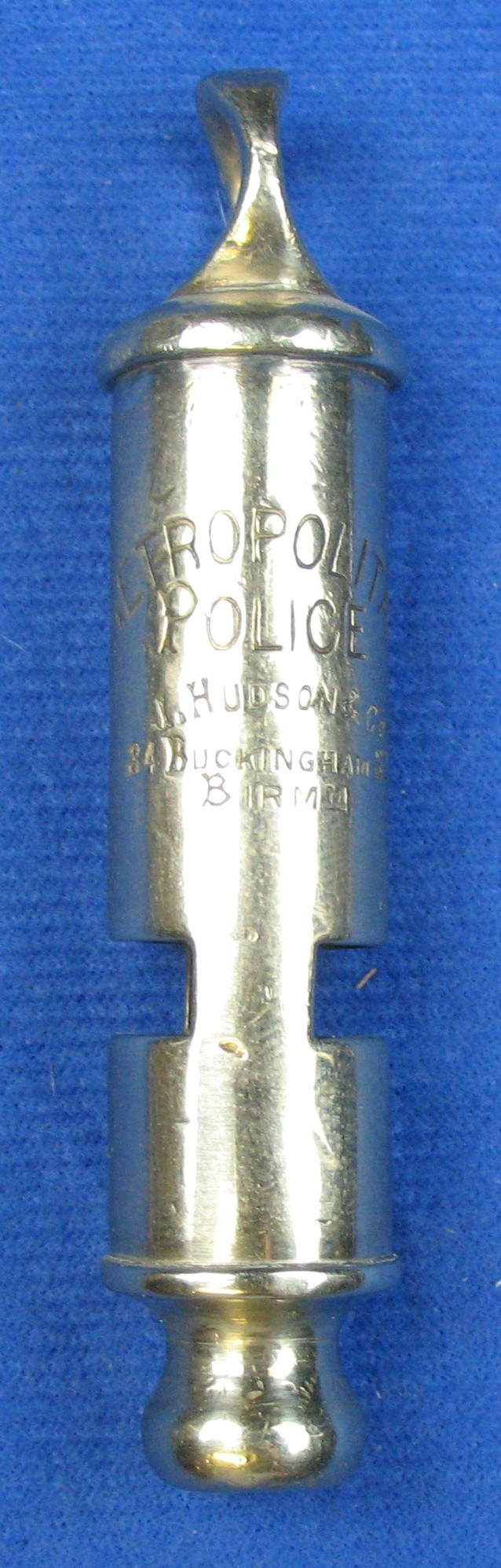
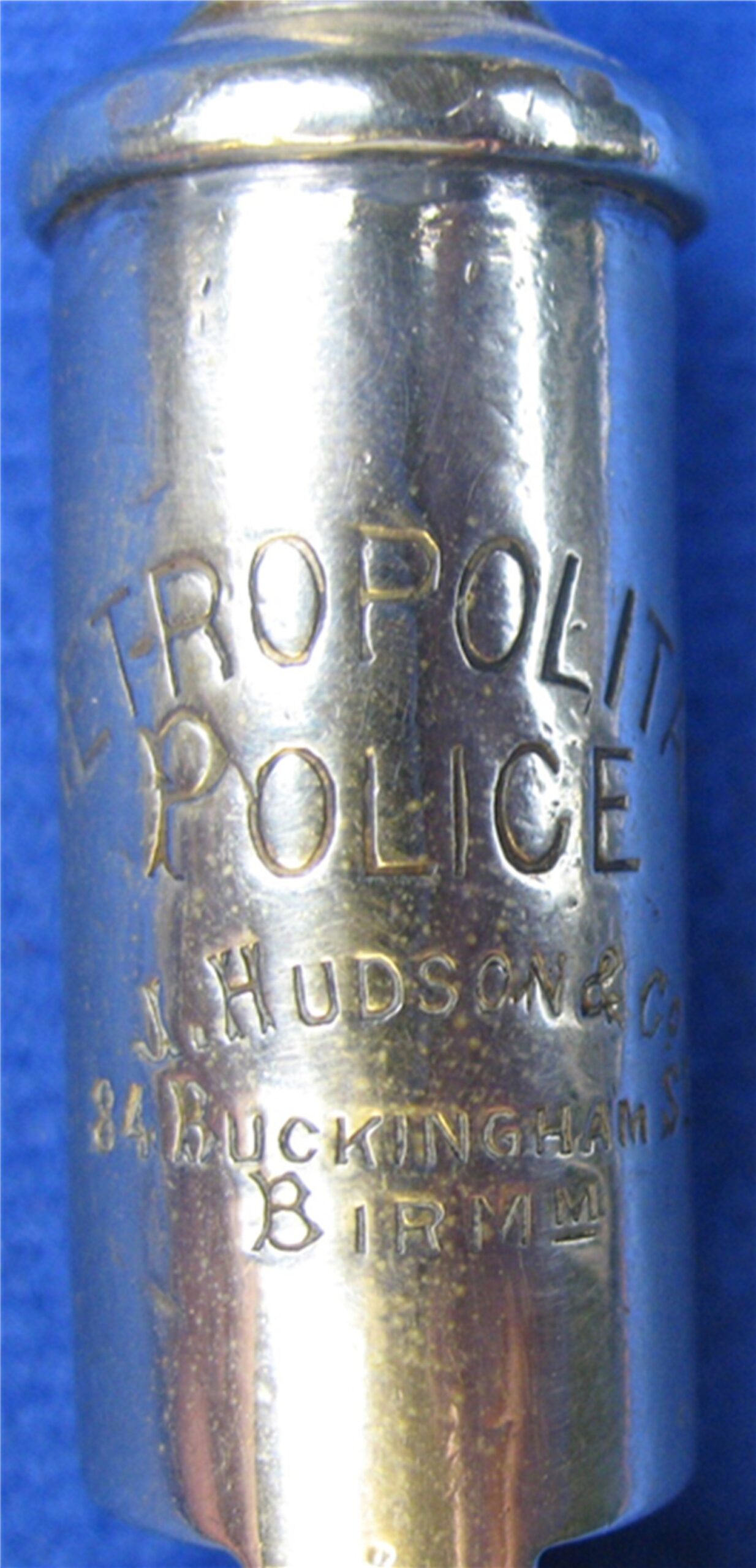
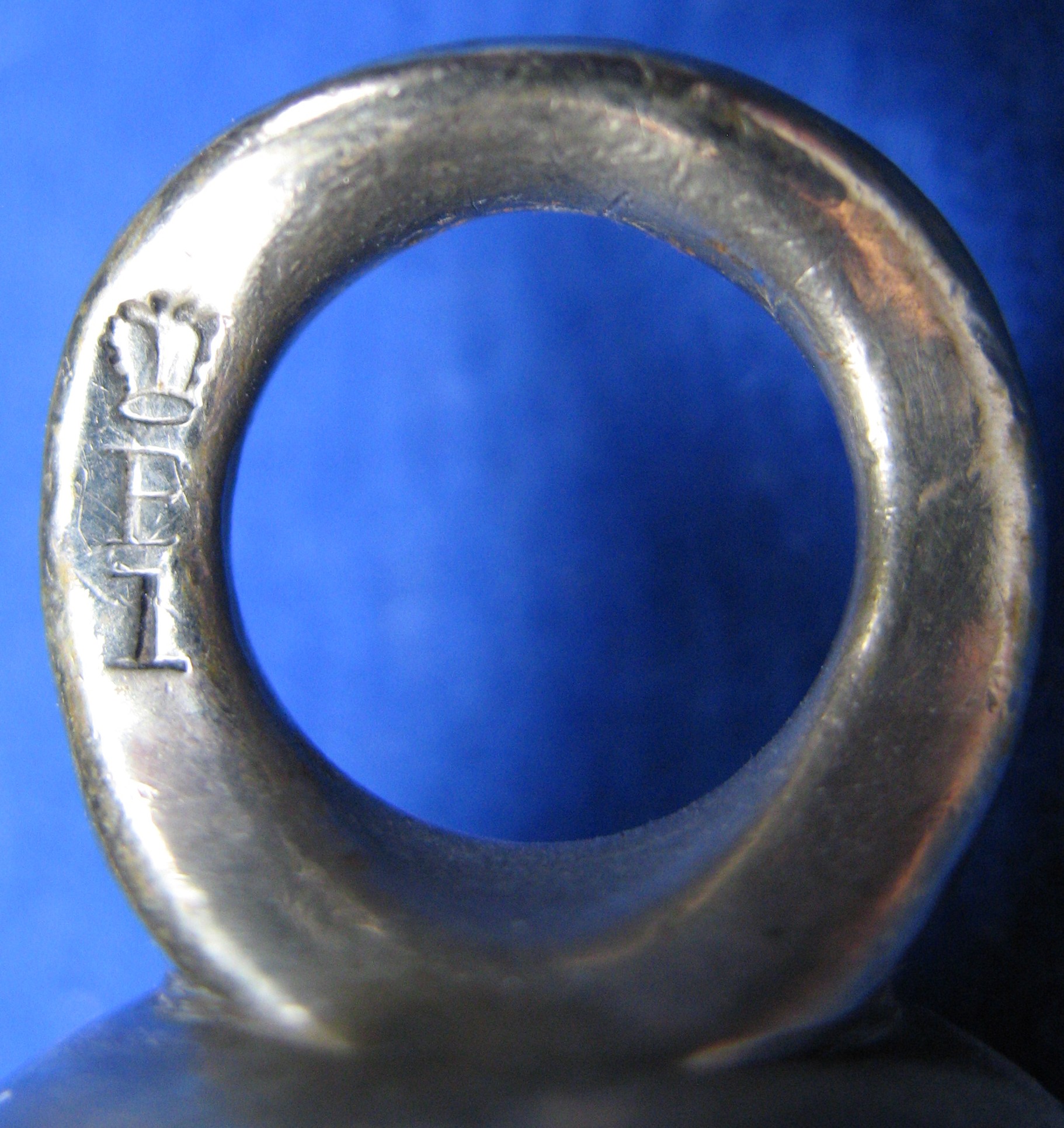
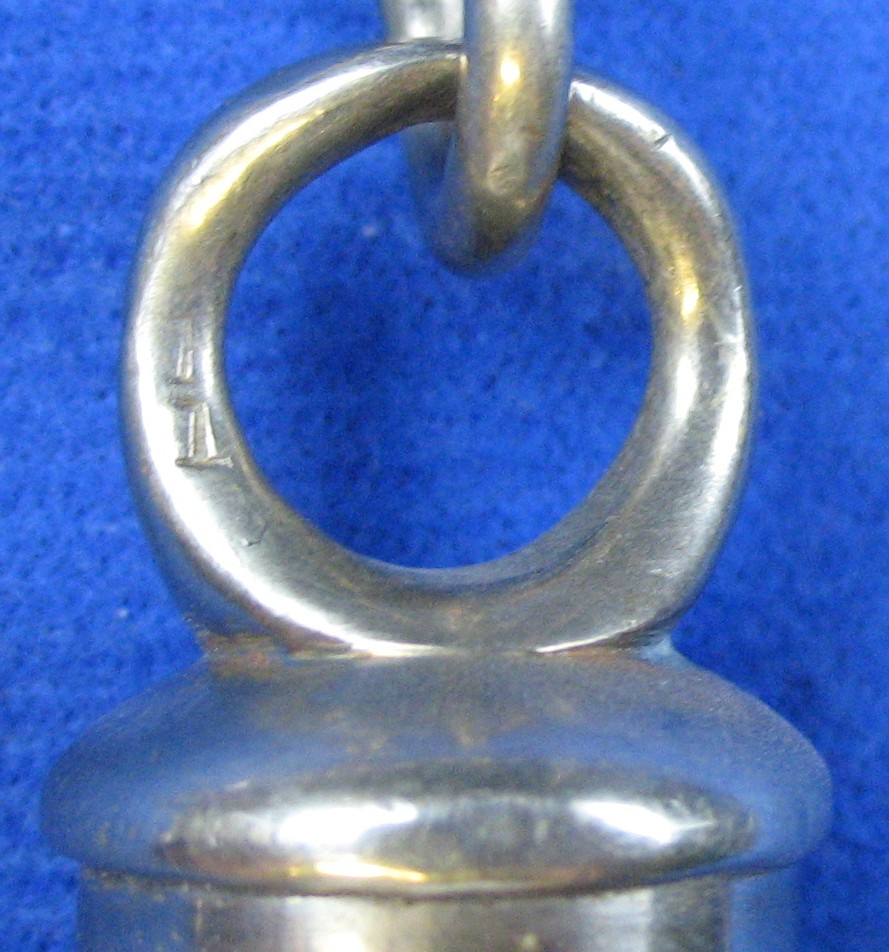
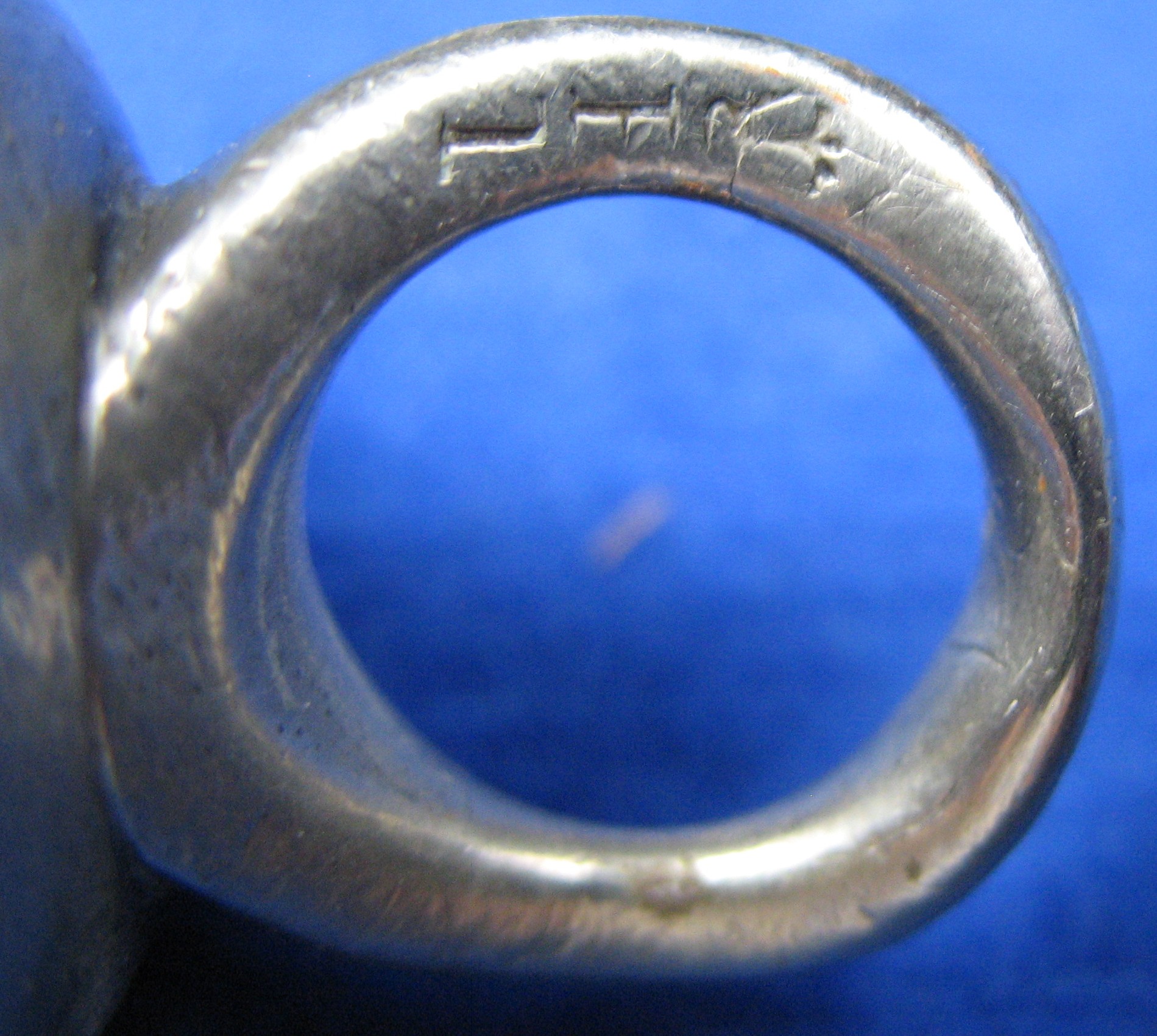
At first the numbers were engraved down the side as seen in the next picture and originally, they had to be inspected and stamped as such on the ring. Both can be seen next…
Now let’s look at an MP1 not pictured in Collecting Police Whistles and Similar Types. It is an MP1 refurbished with a replaced mouthpiece. You note the shape of the mouthpiece and if you looked inside, you would see a little bit of rolled edge that was done by machine which saved labor. Since the top was kept, it still has the inspection mark.
We would like to show you the MP2 from the book, but there are only two known (maybe one) examples with inspection marks. They are genuine Metropolitan Police whistles. Others were civil, but a quick halt was made to that happening, so ones can be found and clearly identified, as this one found without an inspection mark on the loop.
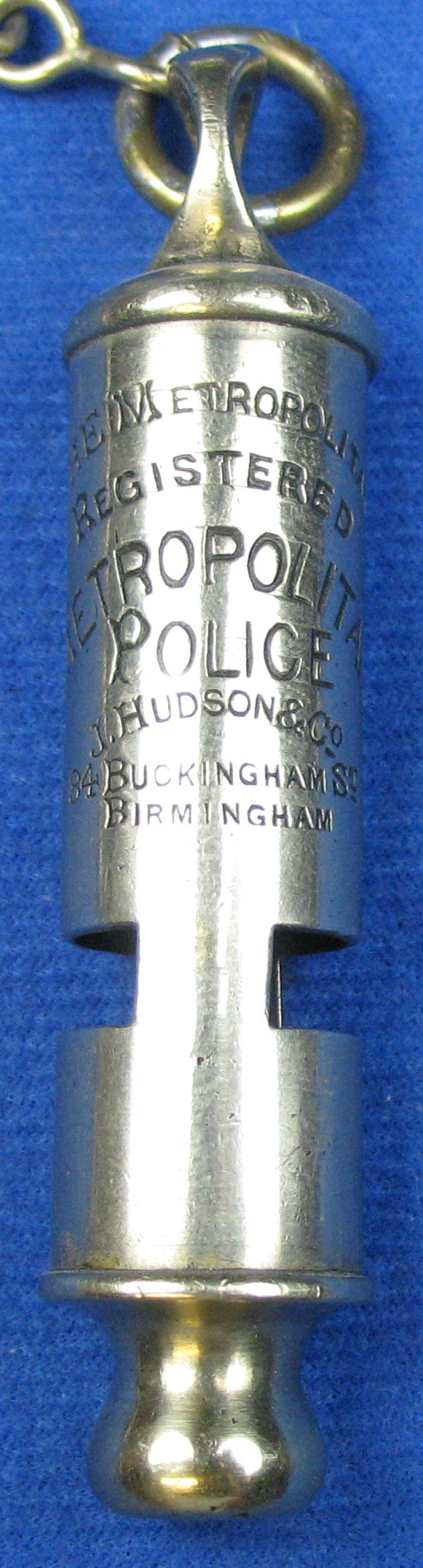
And now compare the MP1 with the ‘would be’ MP2 as follows…
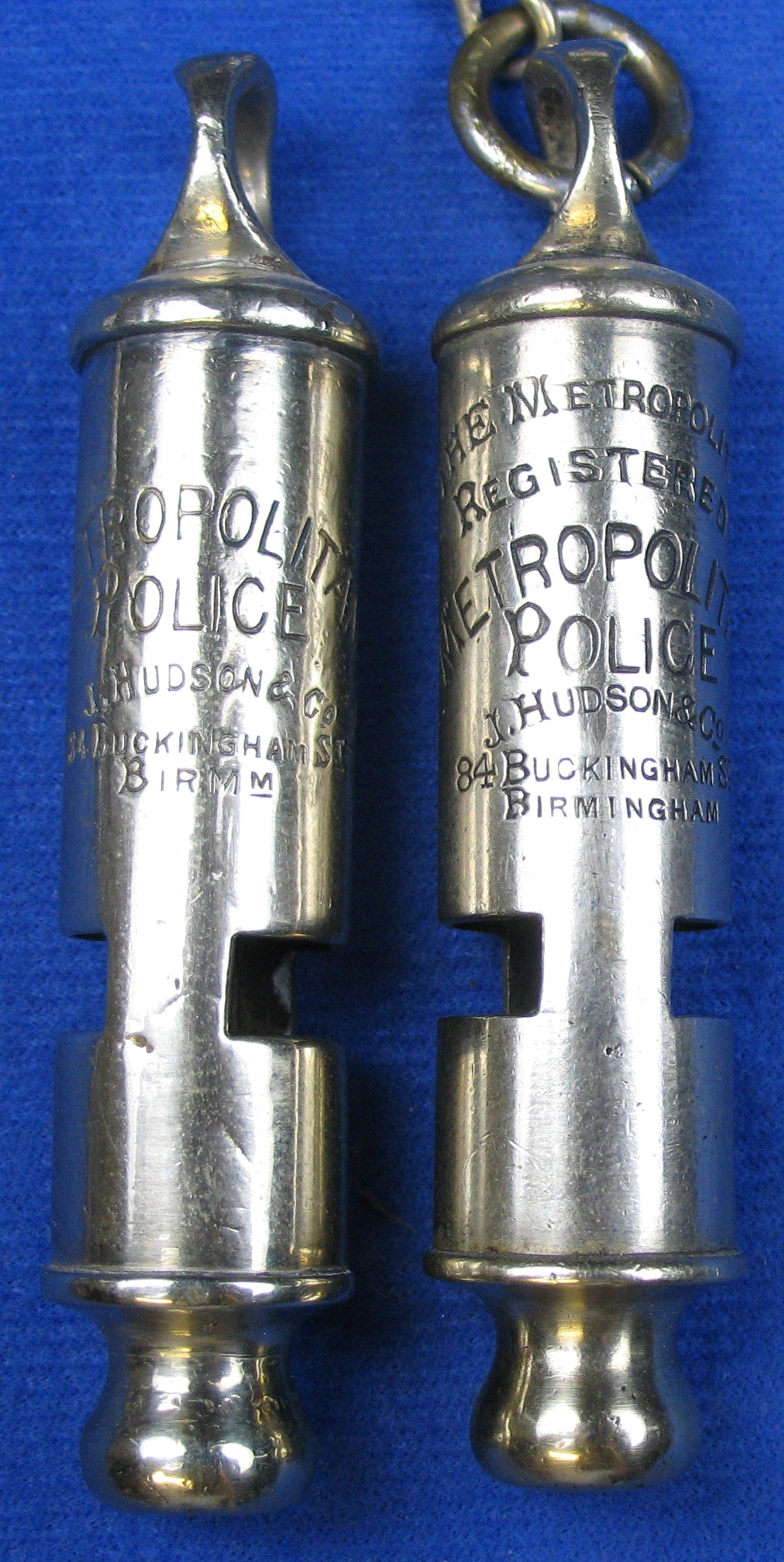
The real MP2 would look just like this but have that inspection mark and be numbered.
After this came the MP3 at the 131 address. Circa 1885 and note the word patent now added. This was for patent number 435 related to the improved diaphragm we described earlier.
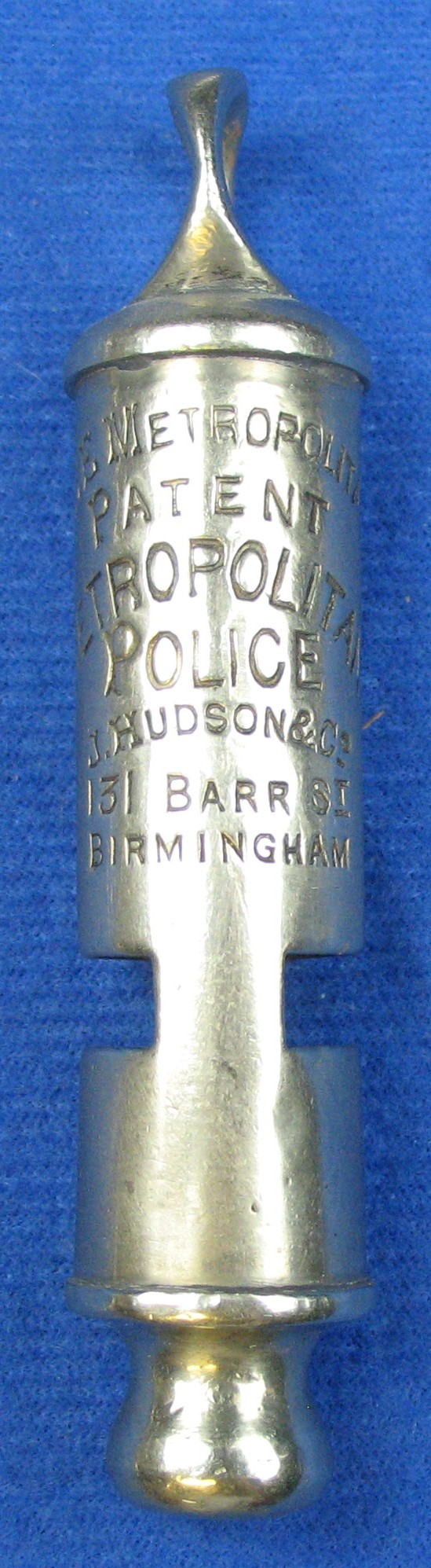
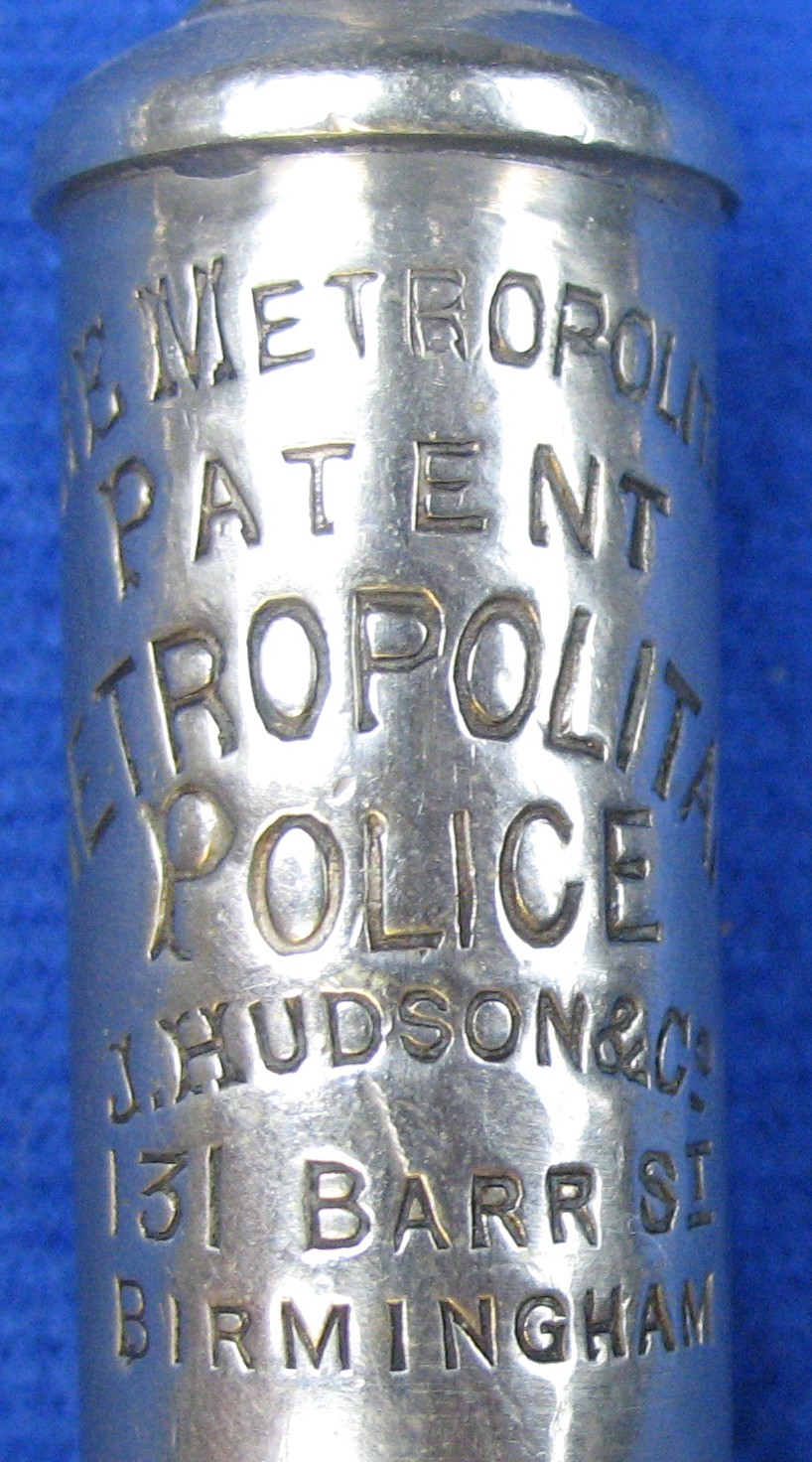
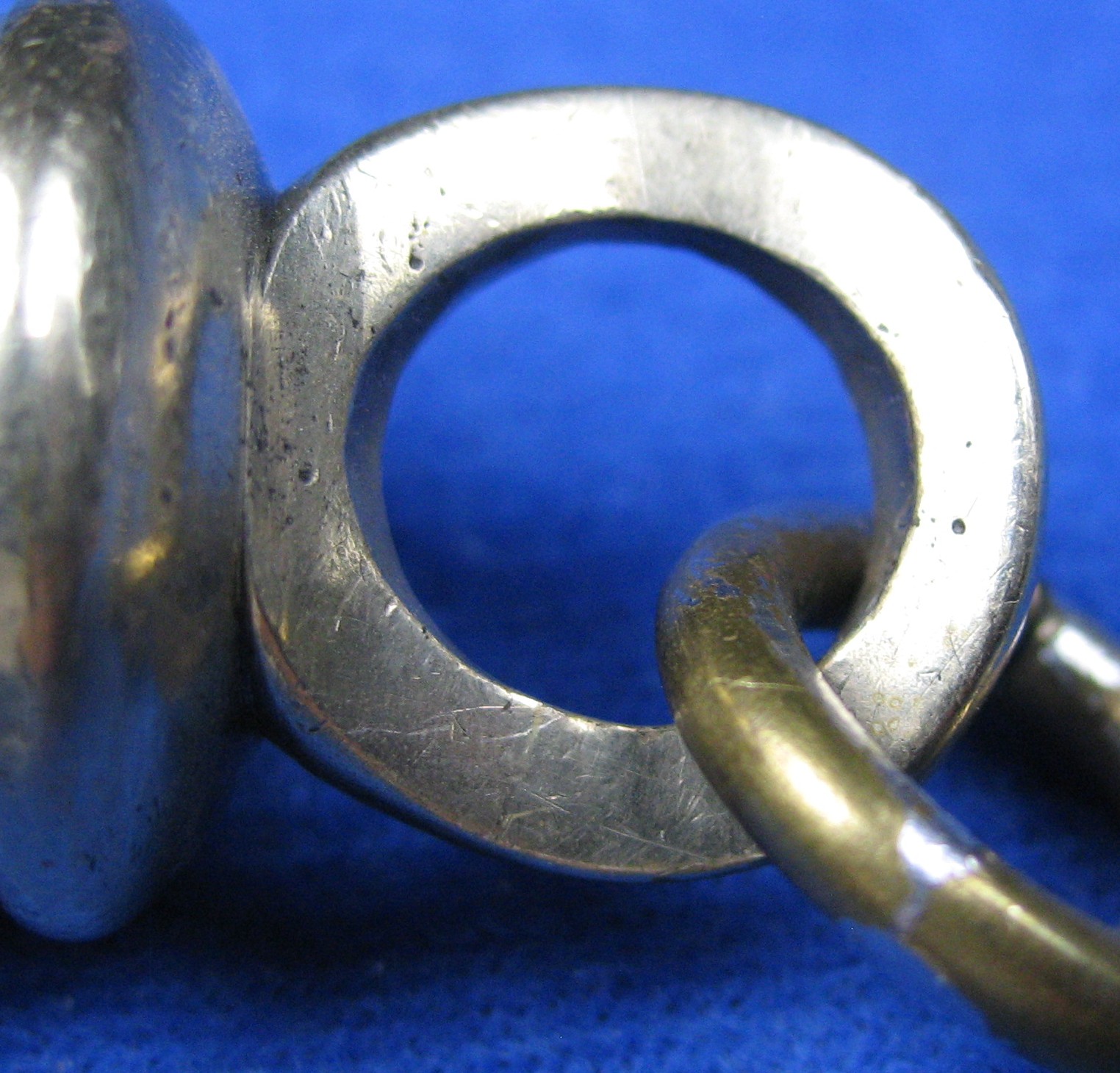
Here is the inspection mark on the original MP3.
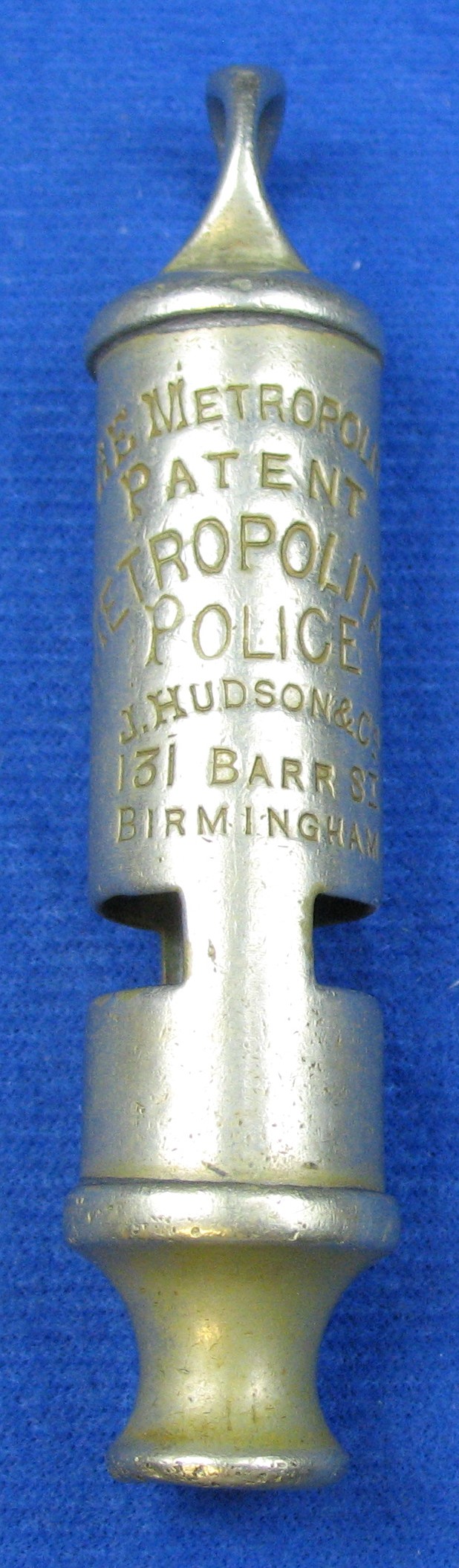
An example of a refurbished one ( not pictured in the book ) to compare to as follows.
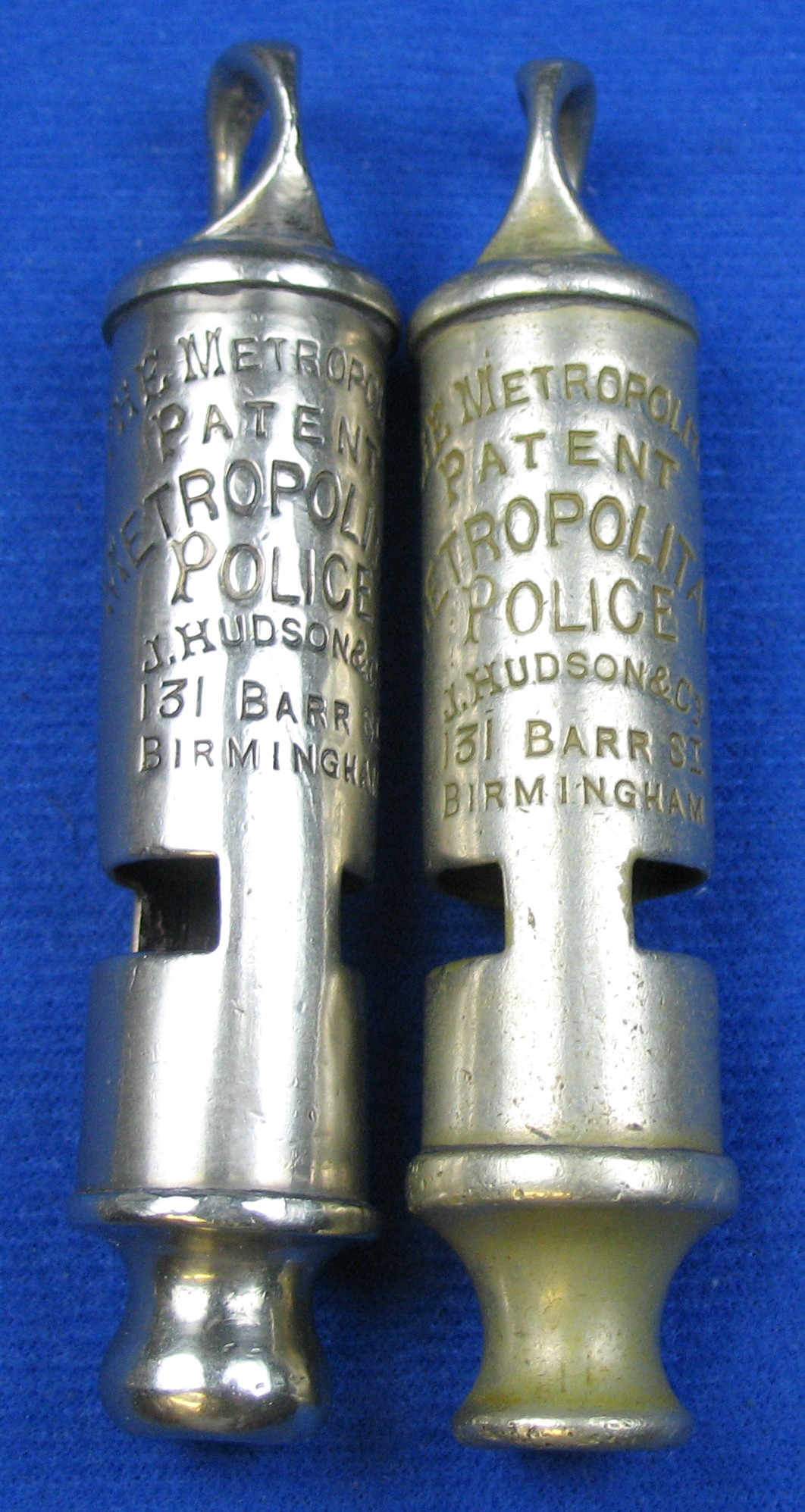
The MP4 was a ‘segue’ of sorts jumping in time to another maker who tried to edge in and ended up pulling out. This was Bent and Parker. Only 2,000 were made.
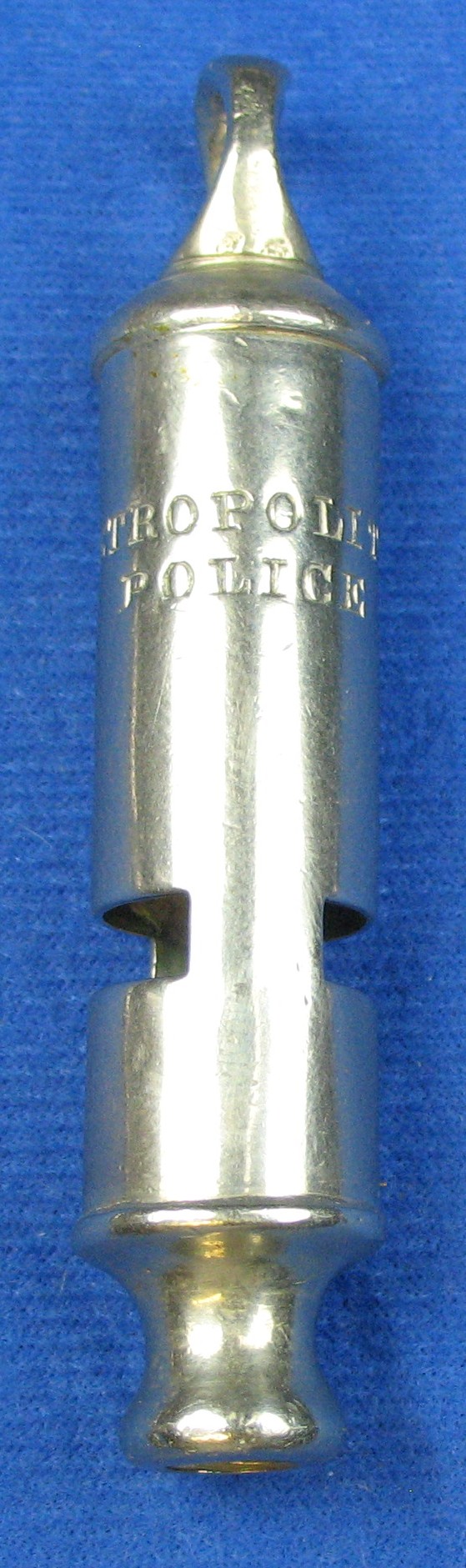
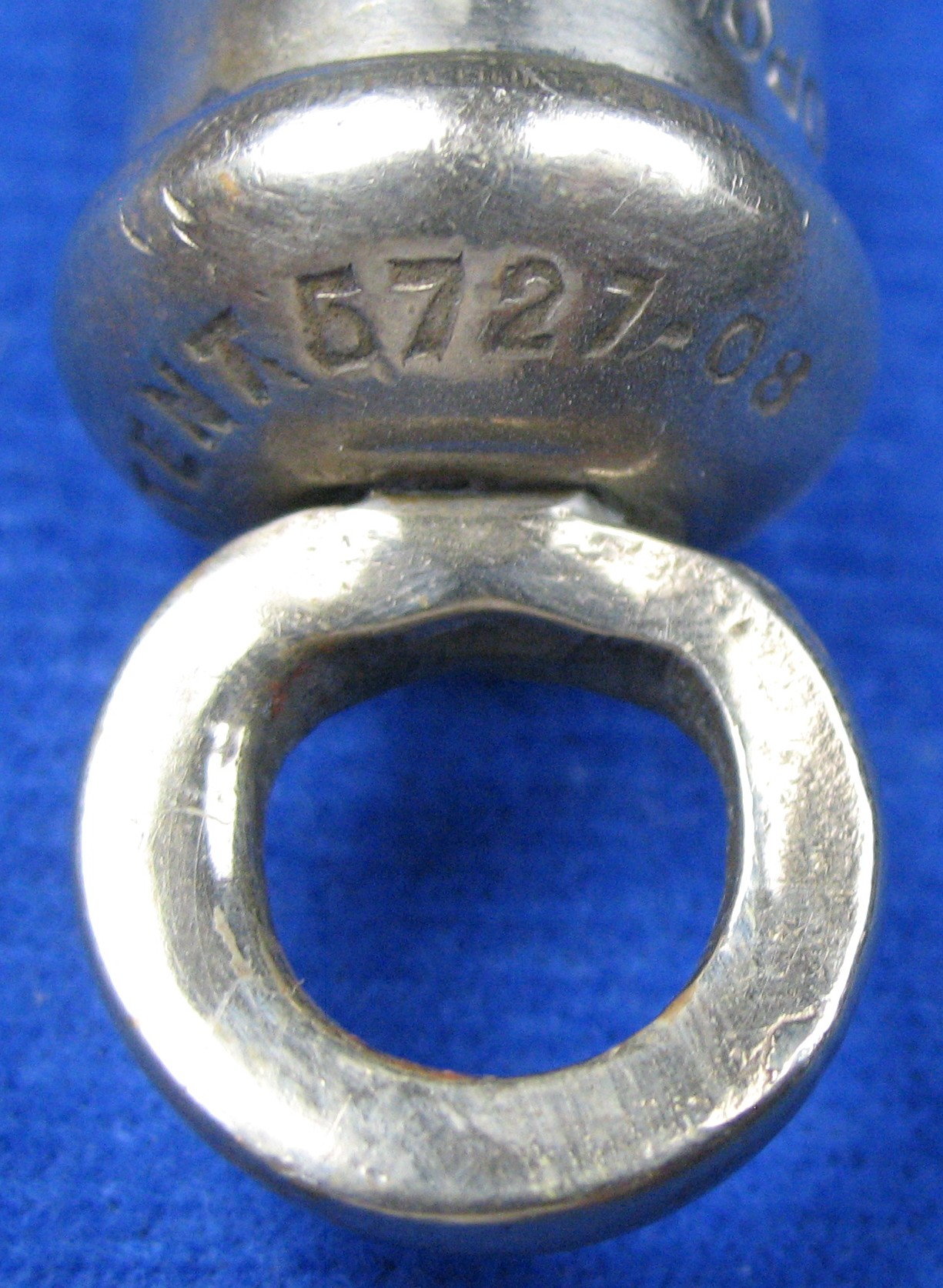
MP5 has a replaced top and mouthpiece. Also, a stamped number was added. There was no engraved number going down the backside as on MP1, MP2 and MP3. Otherwise, it is an MP3 stamped front
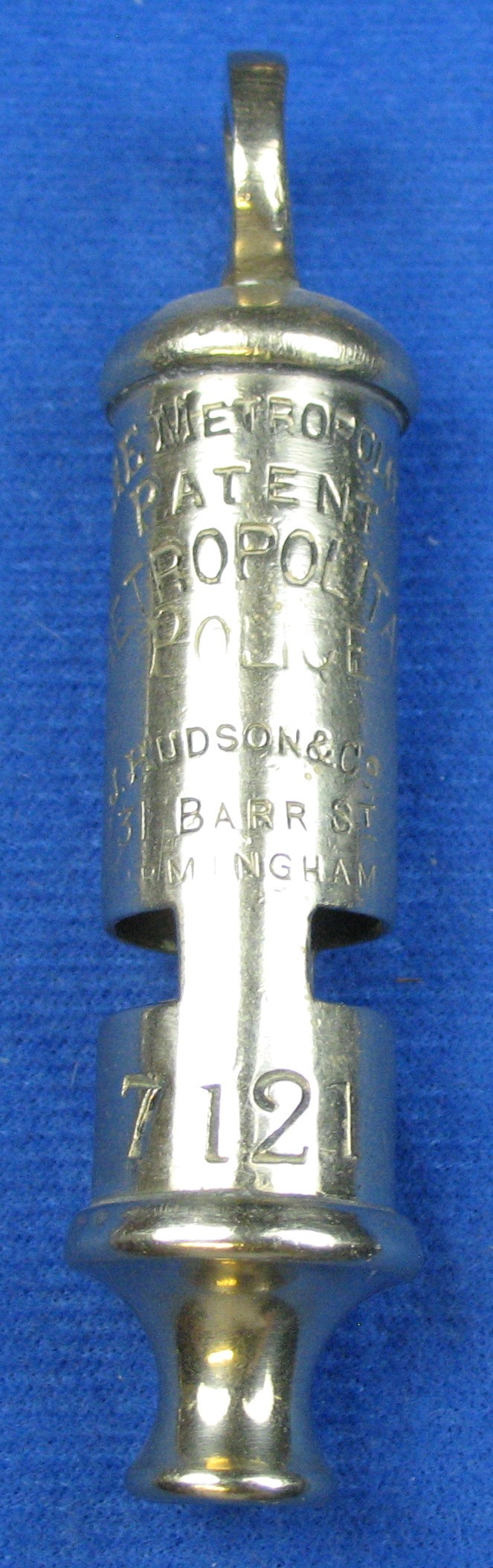
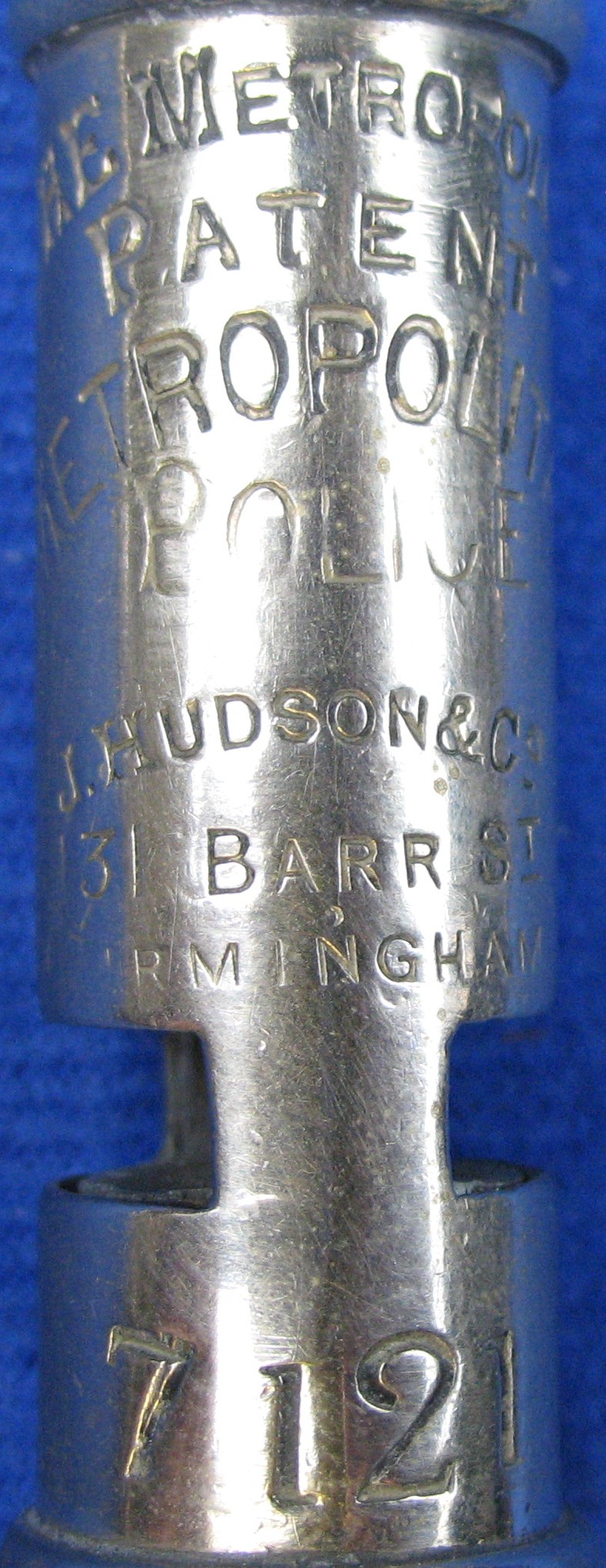
Examine the much later replacement parts that date the refurbishment to circa 1909.
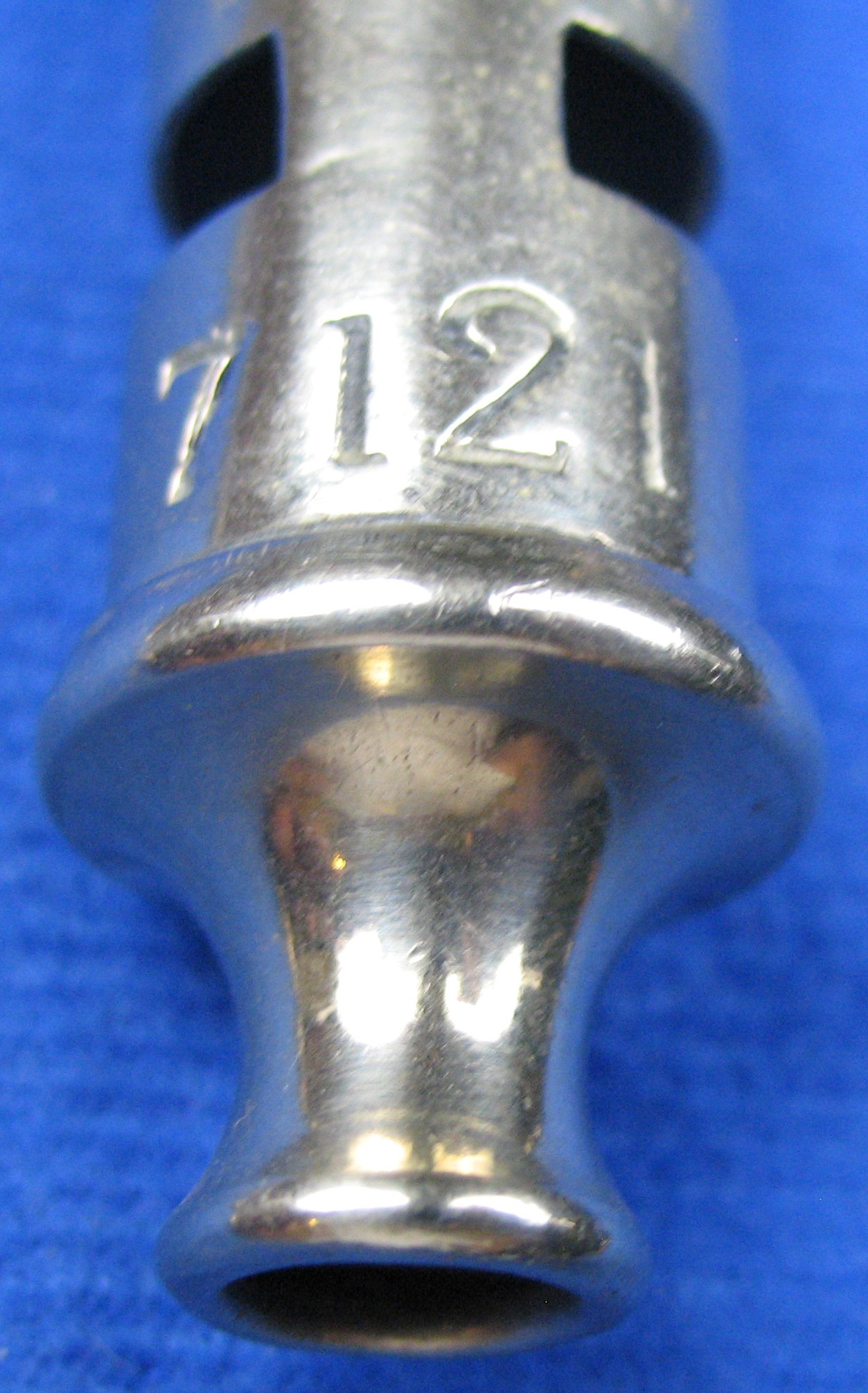
MP6 was produced between MP3 and MP7 which would date to 1888 as the first one produced at the 13-street address. So that would date MP6 as 1885 to 1888 next… last of the 131 addresses.
We note that the word patent has moved lower, and the numbering is different.
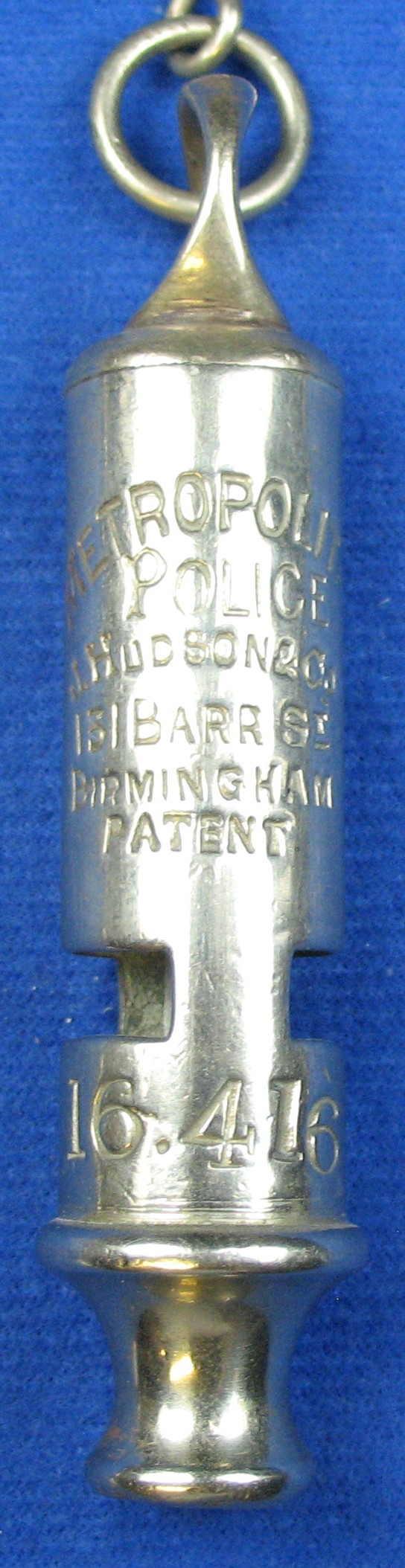
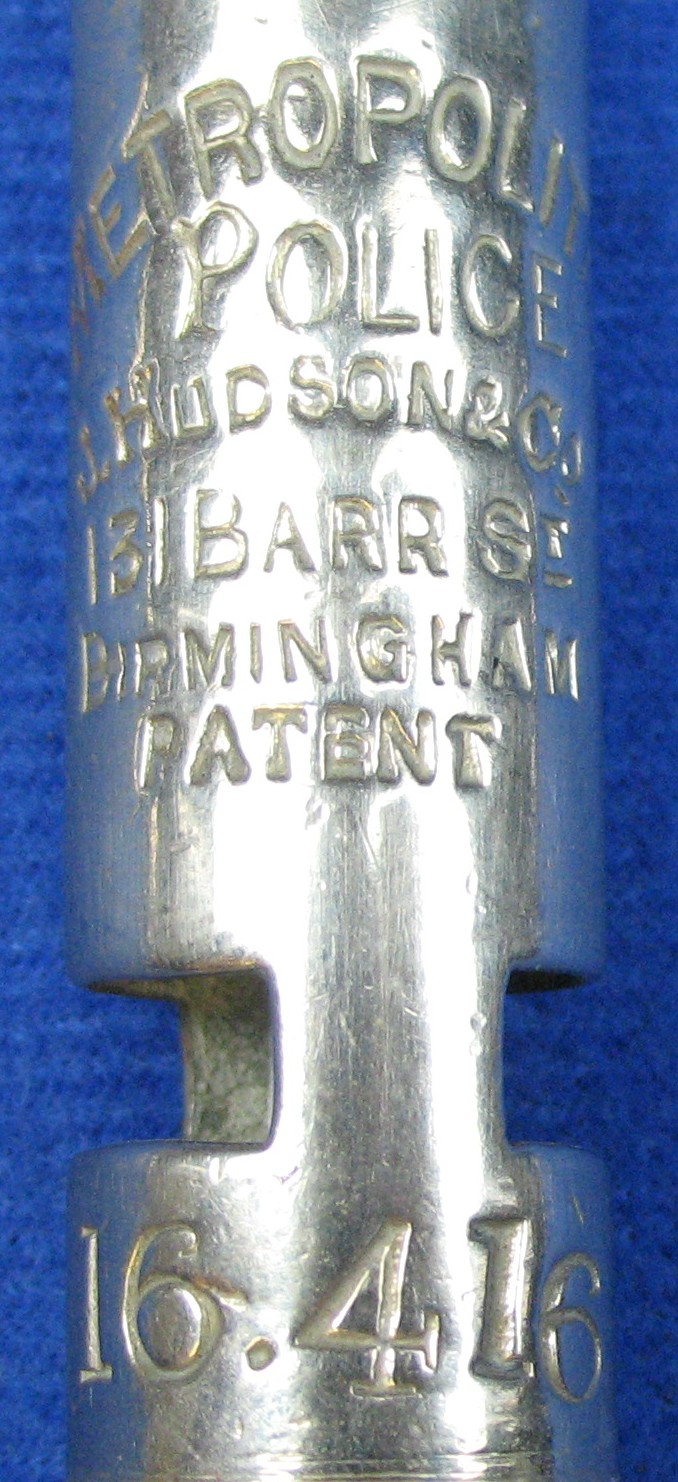
The next change would be the earliest 13 street address production whistle as follows…
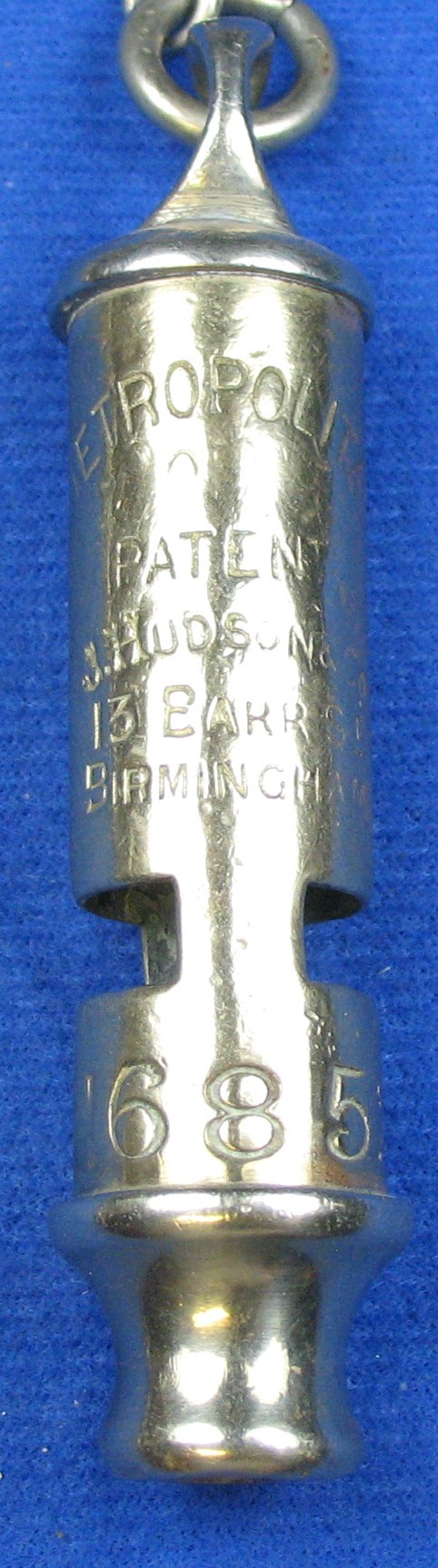
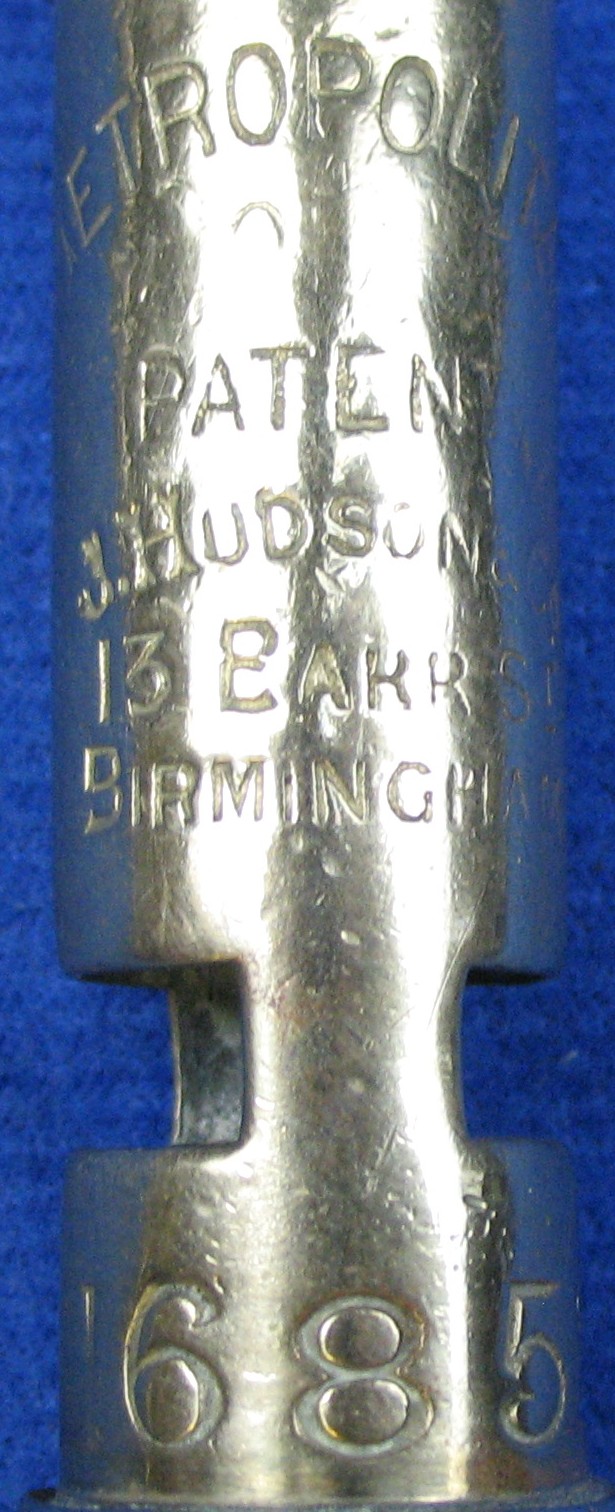
MP8 would look just like MP7, however a significant change would be to the diaphragm and therefore date it to 1898 when that patent would be filed for the internal part and used in the next whistle. It is now changed from the patented 435 to the patented 19700. Note also the change in PATENT location.
Notably, there are MP8 whistles that have the earlier 435 patented diaphragm.
So we would occasionally see MP8 whistles with the later internal component.
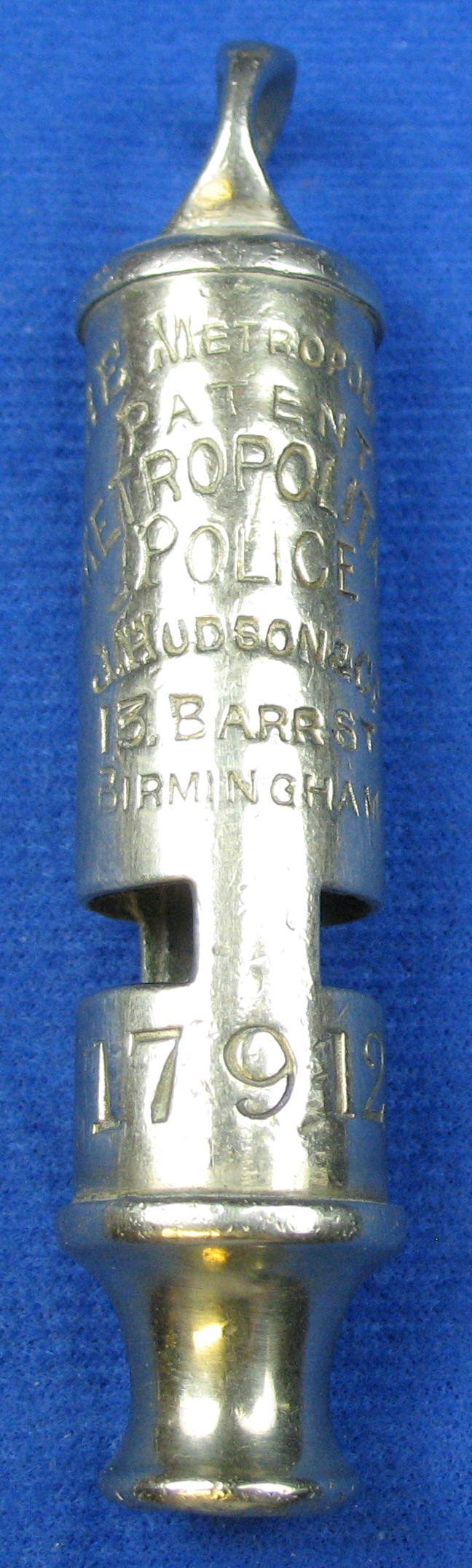
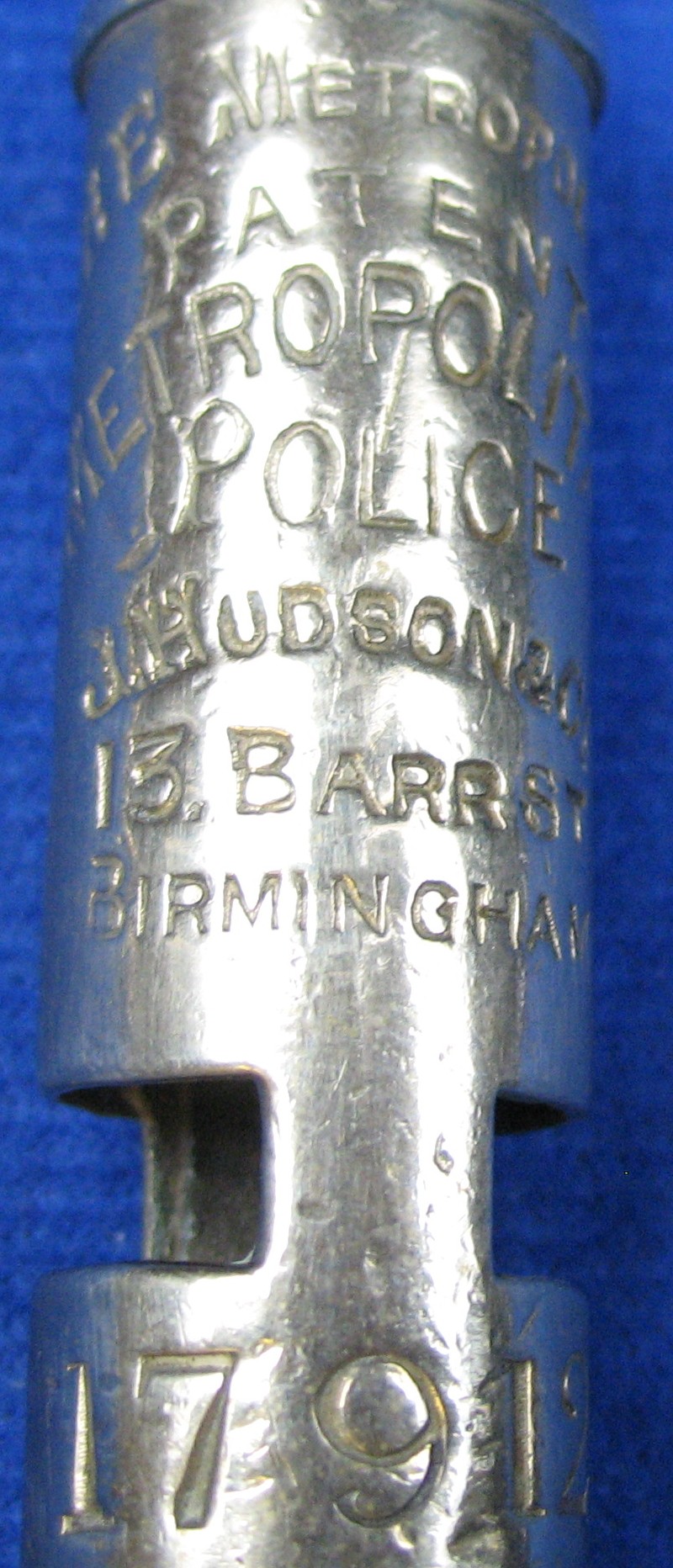
MP9s would come in two stampings. There is a smaller font (pictured) and larger font.
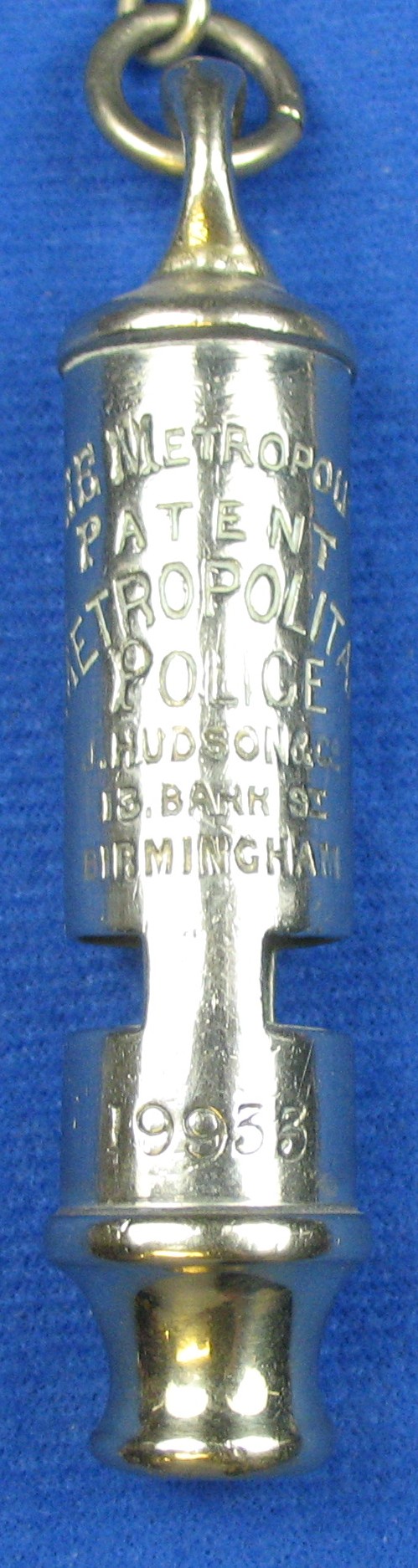
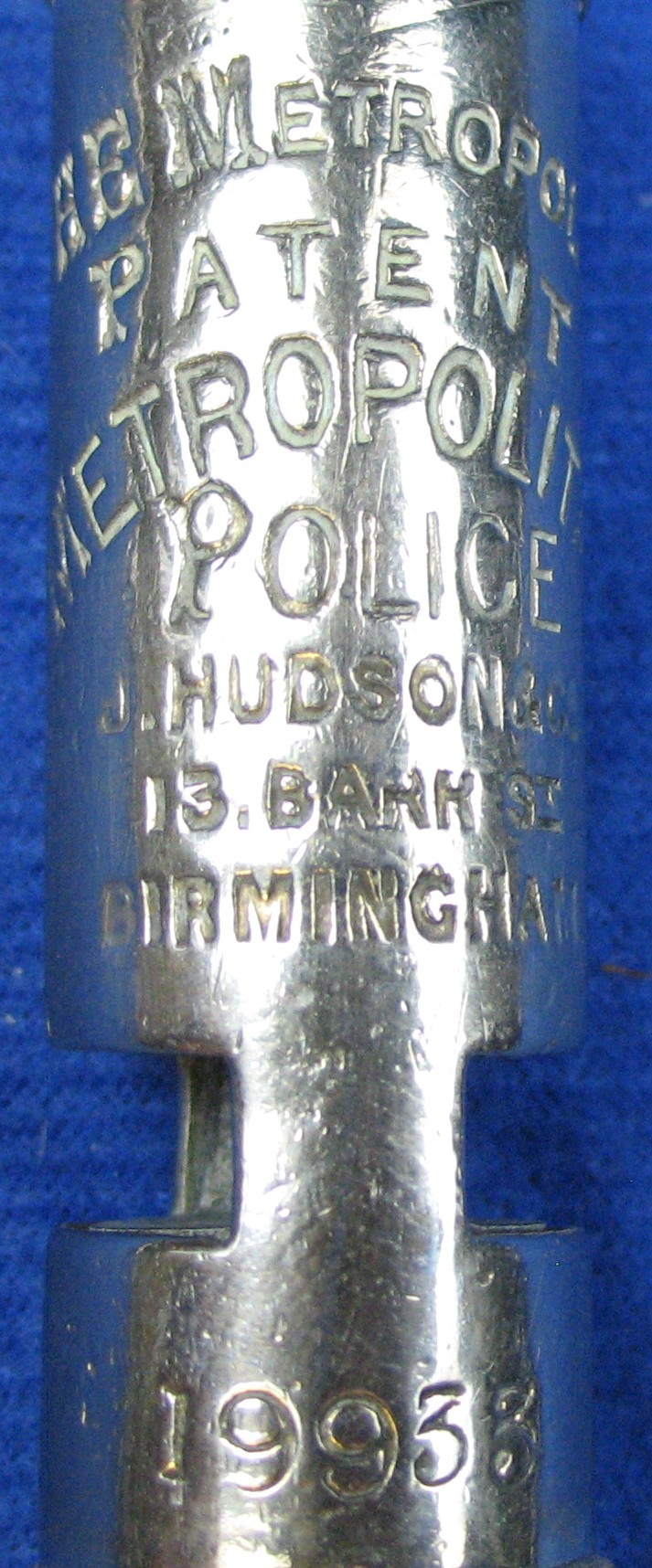
A repair was made to the N in metropolitan, shifting occurred in the facial stamp in MP10. Considerable studies have been recorded of lettering and dating compared to dated military issues.
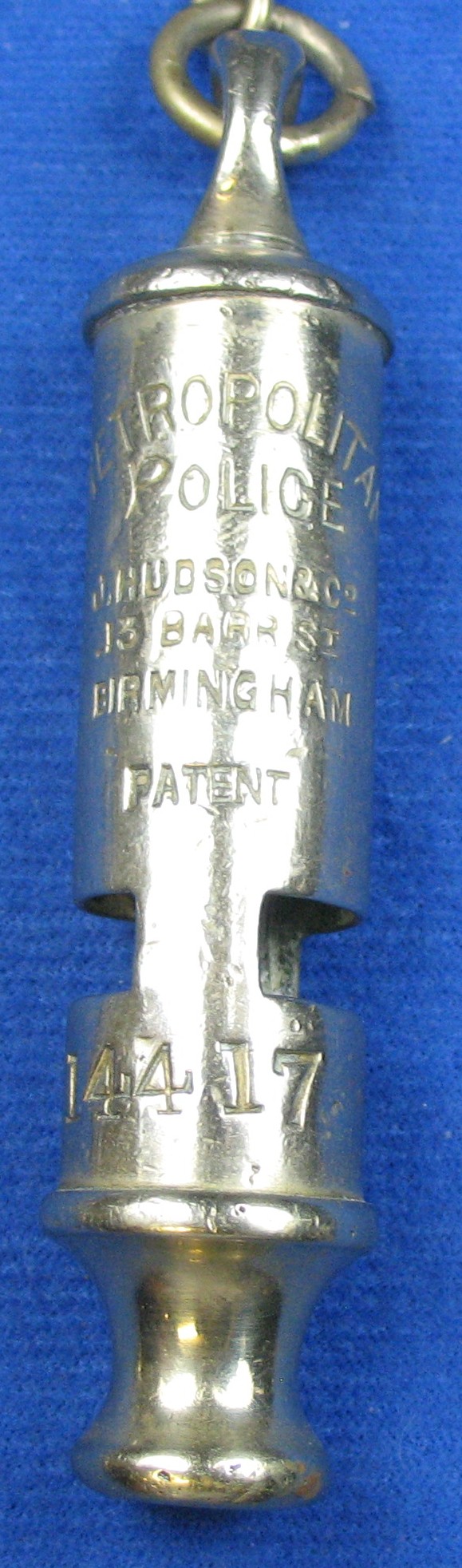
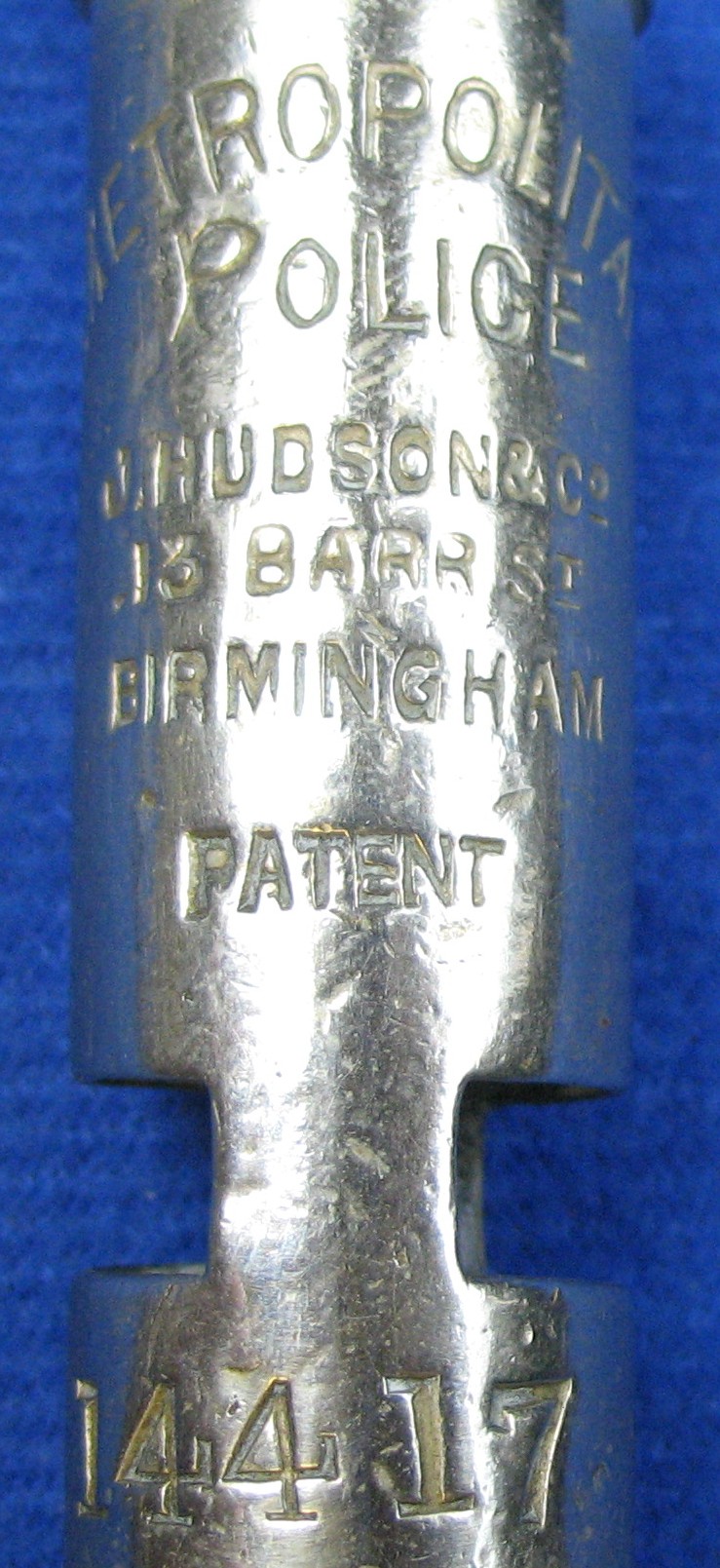
Lastly, of the cast top caps was the MP11 and viewed here as a closing set of full and close-up.
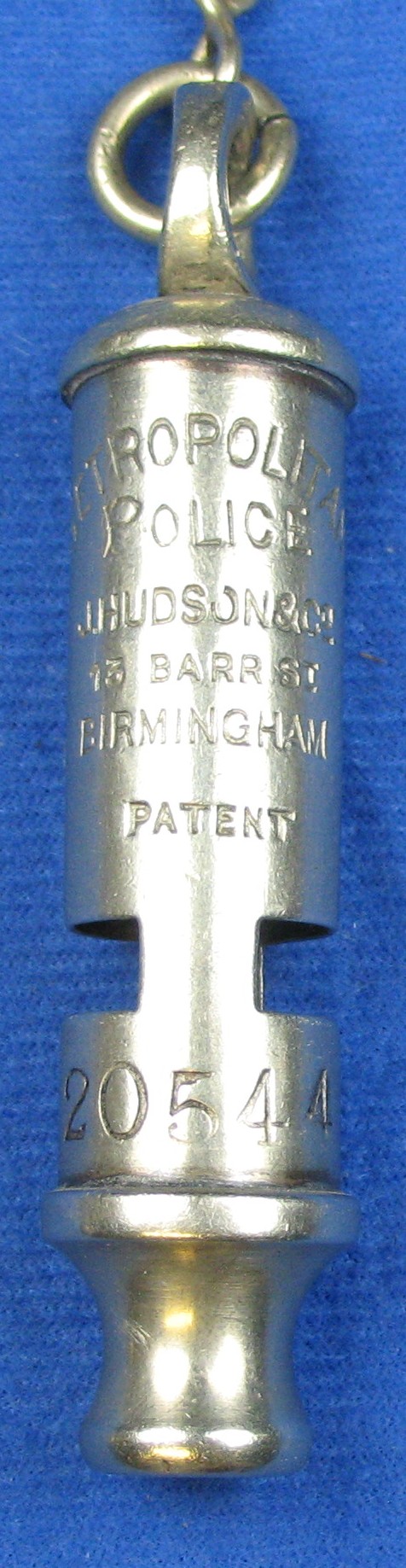
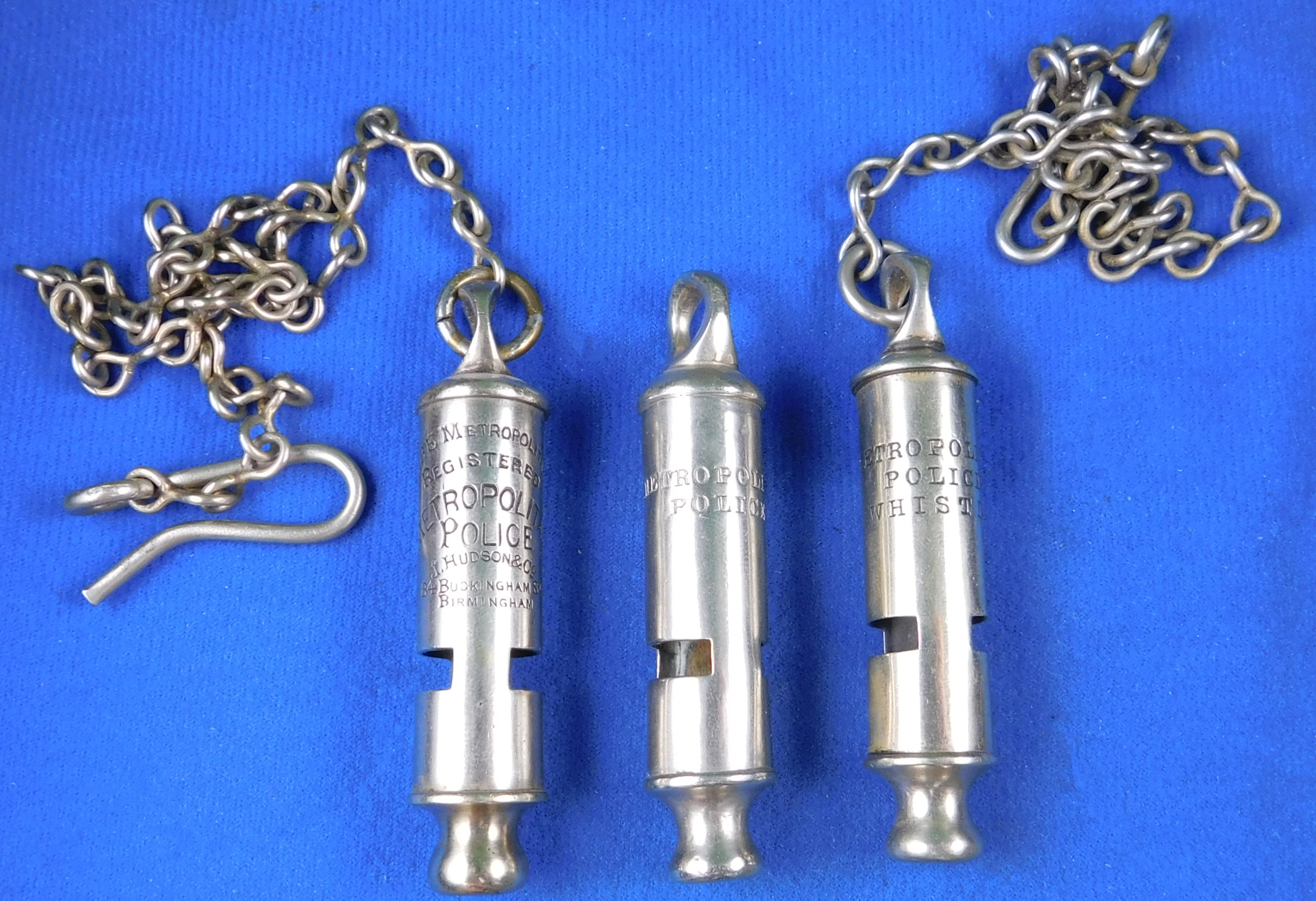
Additionally, examine here the public editions of the Hudson Metropolitan and the Bent and Parker public edition. The middle whistle issued for police work.
Conclusions:
You see that there were graduated improvements and Martin Gilchrist joining forces with Simon Topman, did a wonderful job of recognizing a tremendous opportunity to track and stabilize a run of whistles that were made for decades, thereby creating a ladder to climb throughout time. Doing so provided more opportunities to fill in gaps and spin off whistles, feathering into a wide array of whistle variations — all from the iconic Metropolitan series.
When one then considers Police Whistles more closely, we see that the many that came before are now of much more interest. Next comes the study of the manufacturers and ultimately collecting those makes for more of a challenge. That in turn perhaps grows into much more of what might have become lost or forgotten history.
The pivotal Metropolitan name has its own spin-offs as mentioned earlier with Prison, Asylum, GPO (general post office) Truancy, prisons and others. Beyond that comes even further spin offs that would be based on Constabularies, Burghs, Boroughs, Counties, Shires, wonderful variety. The impact of this category has far reached effects in the world of whistle collecting and study beyond police issues, a tremendous stimulus to branch out into other whistles.
TWG
Posted May 4, 2013
Revised November 22, 2018
Revised August 17, 2020
Revised January 16, 2021
Revised February 12, 2021
Revised February 10, 2022
Revised February 21, 2025
Revised March 27, 2025
Revised December 2, 2025
Revised June 10, 2026
Bibliography:
- TWG Reference Collection
- Collecting Police Whistles and Similar Types, by Martyn Gilchrist and Simon Topman, 1998.
- More Whistles, Martyn Gilchrist, 2005.
© – All photos with blue background property of The Whistle Gallery reference collection. Please contact The Whistle Gallery for permission of use of any website content. Spotlight articles are copyrighted. Please contact The Whistle Gallery for permission of use of any website or Spotlight article material written or otherwise. Use of photos without authorization is prohibited.


 Users This Month : 314
 Total views : 176223