Whistory
In the many years we have been researching, collecting, and trading in whistles, we have found that the least understood whistles seem to be the lowly escargot or snail shaped whistles. The usual feeling promulgated is that it is too common and plain. Some might think that it is even generic looking and that they all look the same with little variation.
How do escargot whistles compare?
To be sure all escargots need to be examined together. This would include button and coin whistles. The 4,5- and 6-piece whistles of the 1880s-90s with cast parts parallel in timing with light weight handmade escargots of the 1880s – 90s and then machine made from 1890s onwards and all other variations. In fact, it is our contention that the real action in whistle collecting is in the escargot arena, perhaps superseding round whistles.
What will we examine about escargot whistles?
Presented in this SPOTLIGHT is an array of escargots from around the world and the many styles, variations, sizes and workmanship that took years to find. Perhaps appreciation comes with study. However, we think that you will find that there are quite a few variables much more discernible than subtle.
Whistle Classification
| Type | escargot |
| Order | All makers |
| Category | railway military police fire brigade civil livery various |
| Materials | brass plated brass nickel silver |
| Features | various |
Whistle Archeology
Whistle escargot designs have been registered, patented, modified and made as monotypical designs. As early as the earliest crude button whistles, escargot (or snail shaped) date from the early 1800s to date with countless modifications.
From country to country there are idiosyncratic models which may be limited, whereas some countries have mass produced them, simplifying their production each year and thereby simplifying their design characteristics, becoming more generic.
Whistology
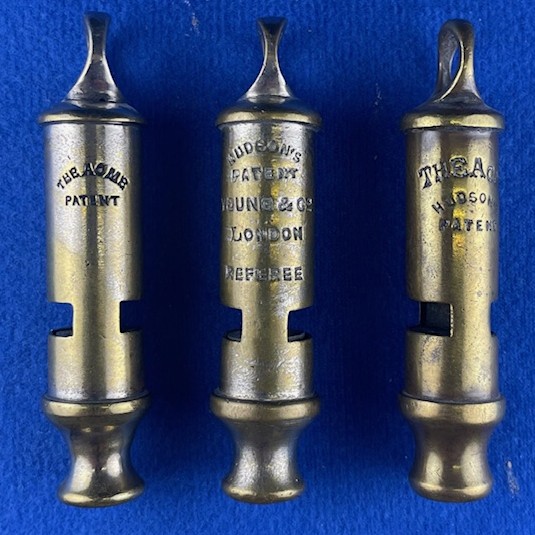
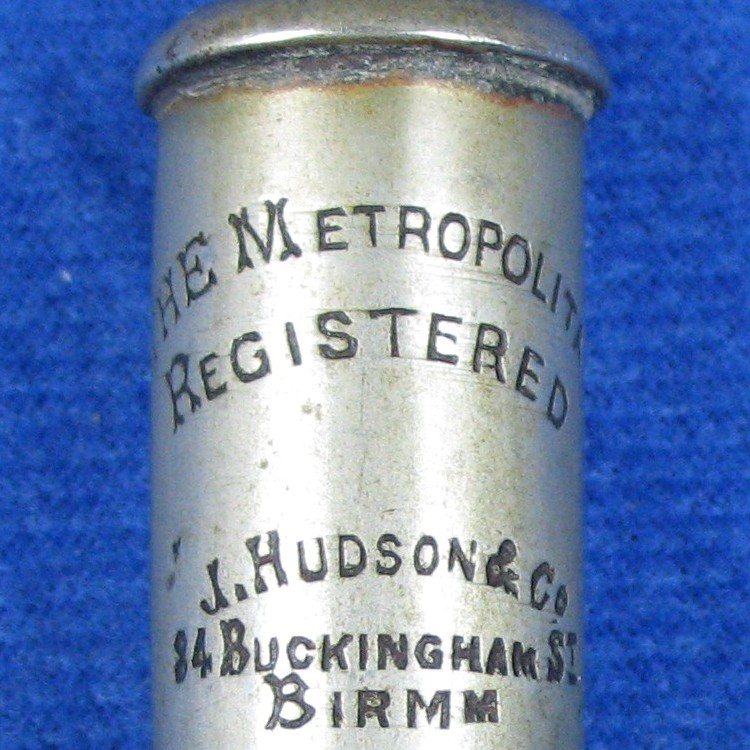
Here is a comparison of a button whistle circa 1950 (made for years prior) with a couple of Hudson light weight 1880s. The 4th from the left is stamped McPherson, unverified maker, which lead to a very heavy 6-piece construction typified by Auld.
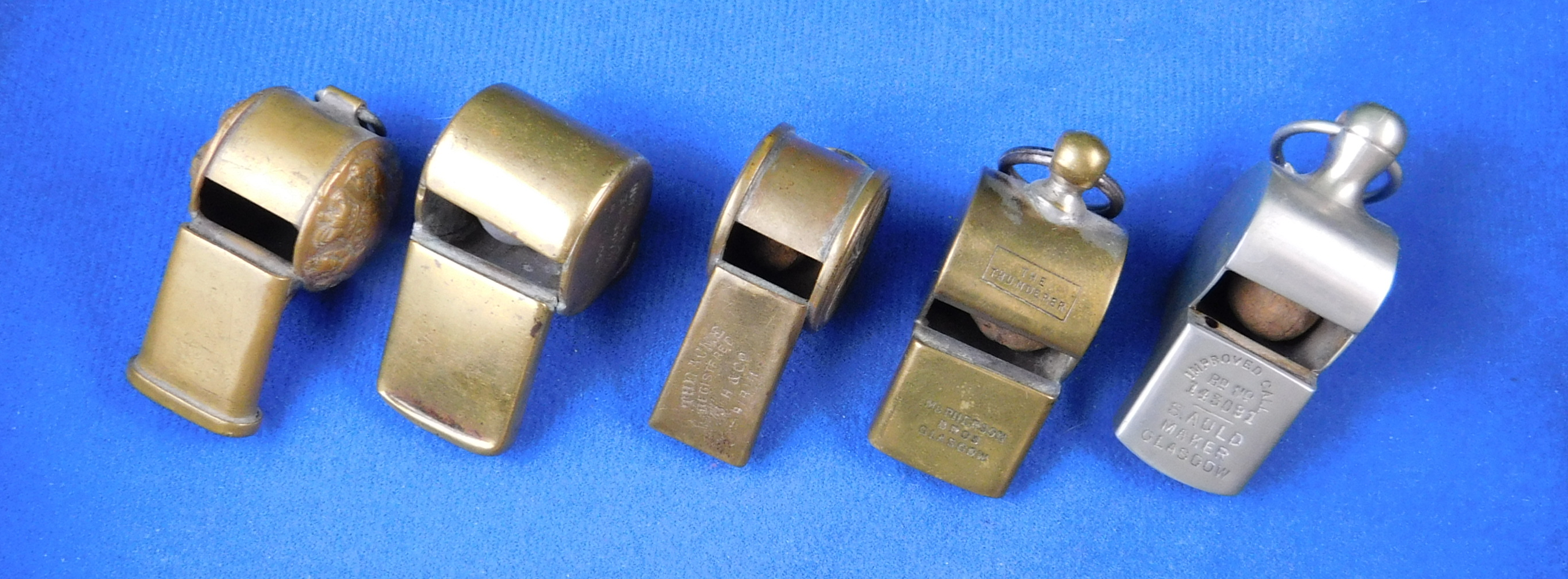
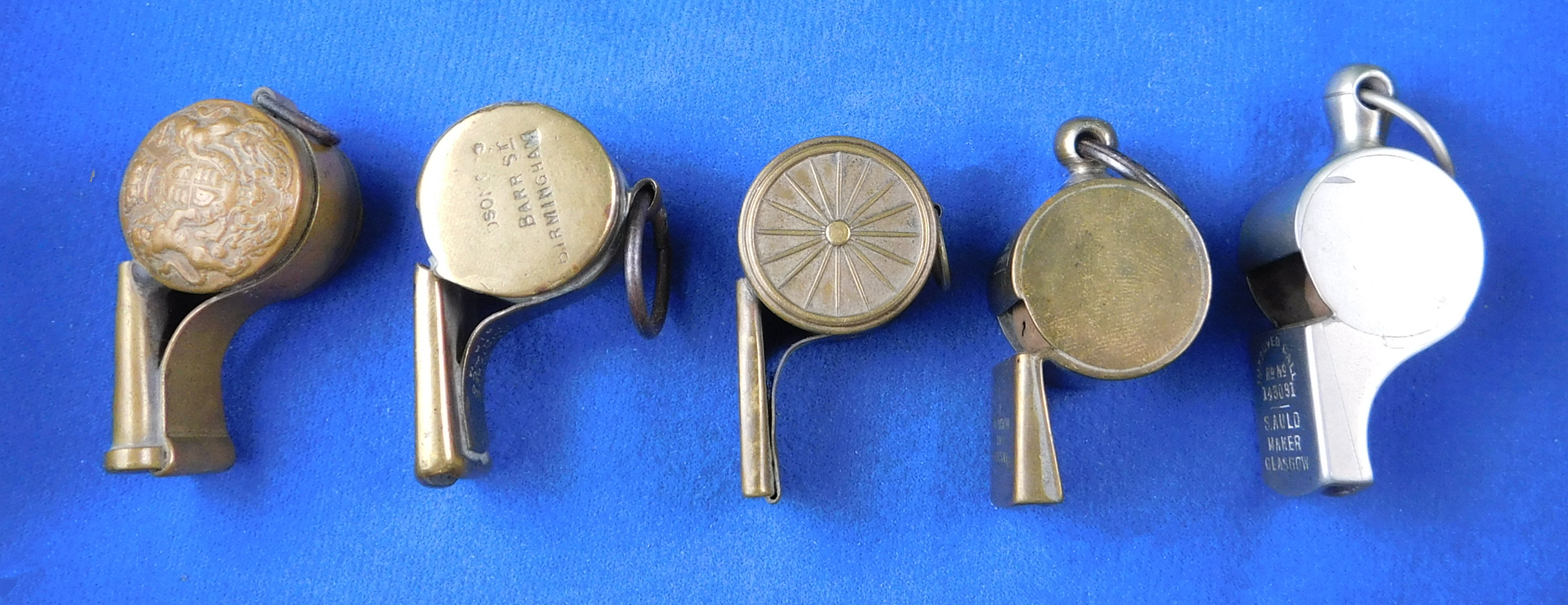
Let’s jump to Asia … we will be racing around the world — to keep you awake because they are soooo boring and generic.
Korea makes the first mark here with all brass and handmade quality. Then Australia and a 3-piece cast model that was sold for Slazenger made in Australia.
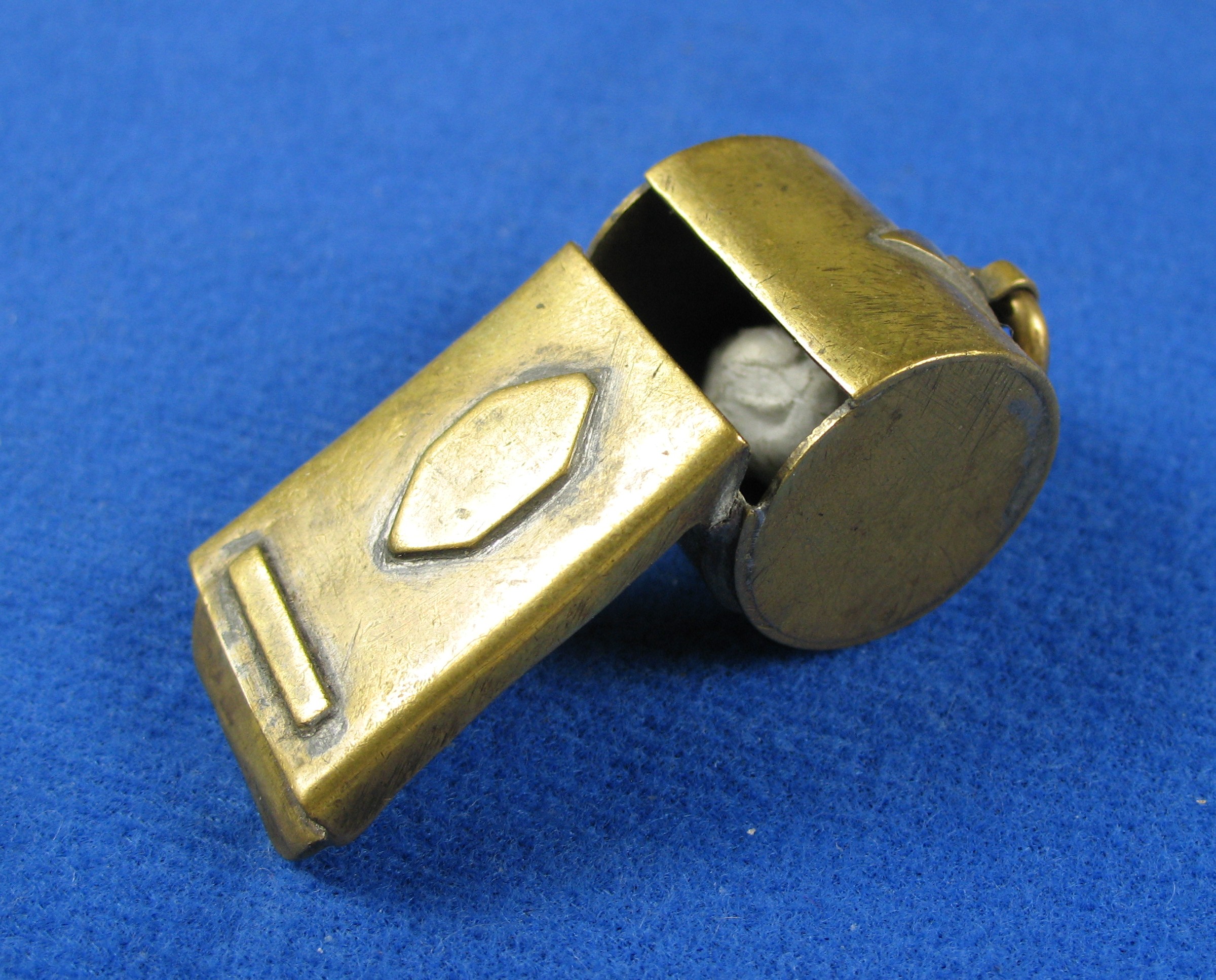
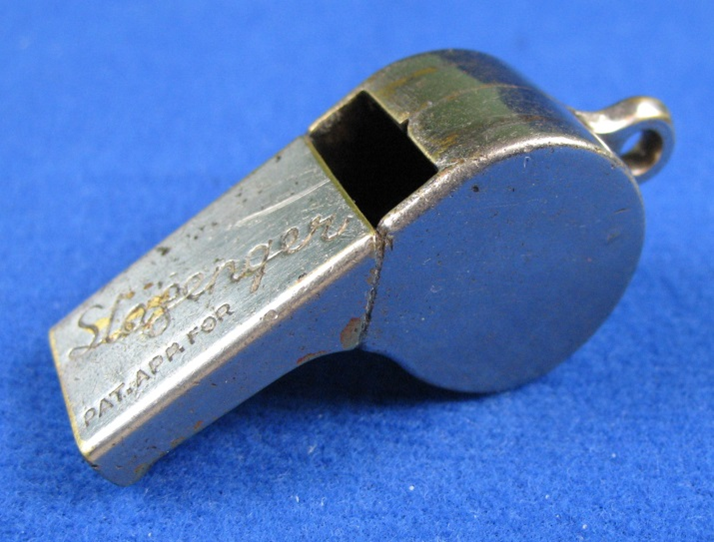
Quickly we move on to Uruguay and a large handmade beautiful brass escargot. It features extended sidewalls from the barrel caps on the sides.
Next after it, from Poland is a post WW11 Police issue with the remarkable dual chambers from the 1950s.
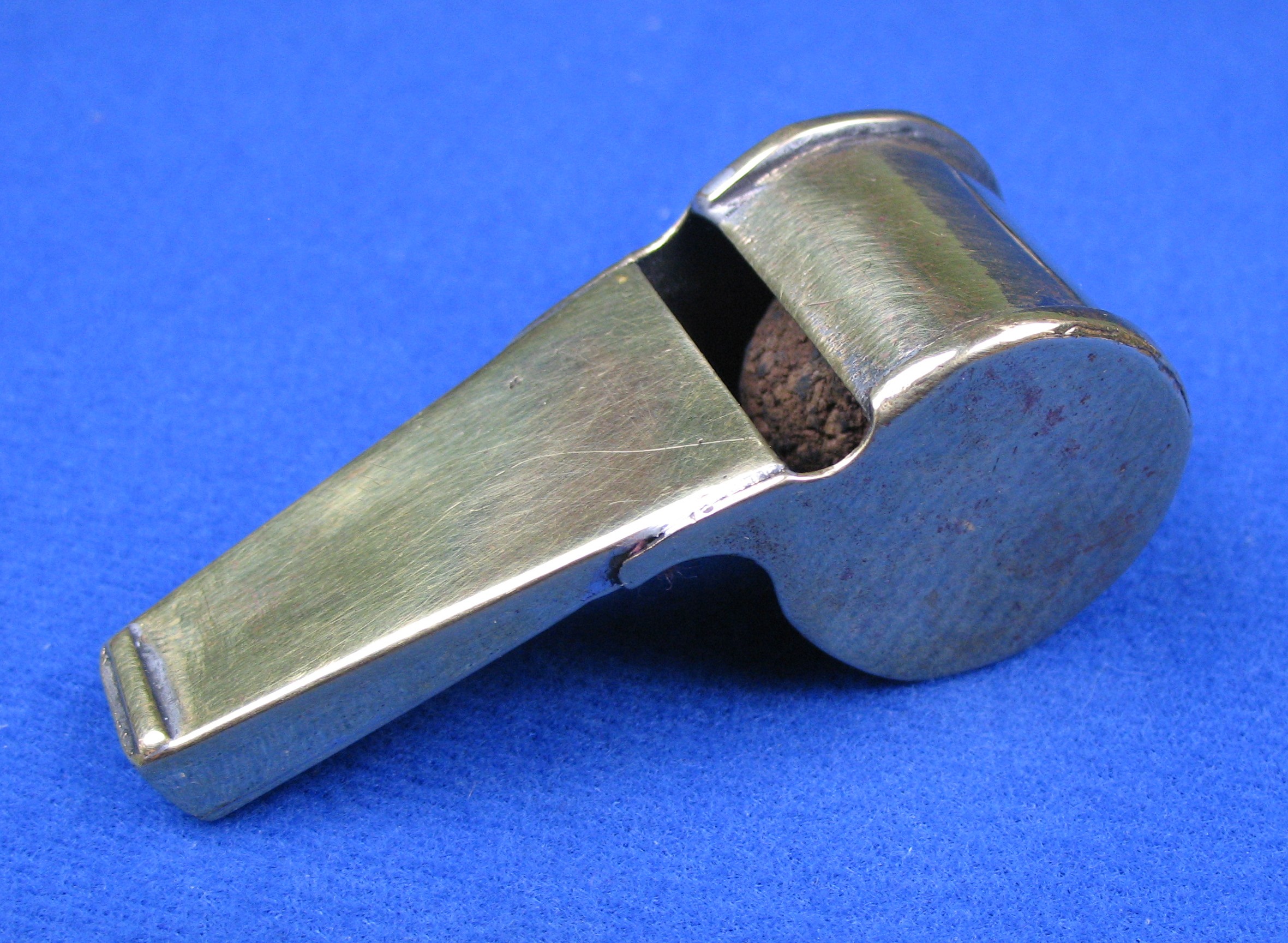
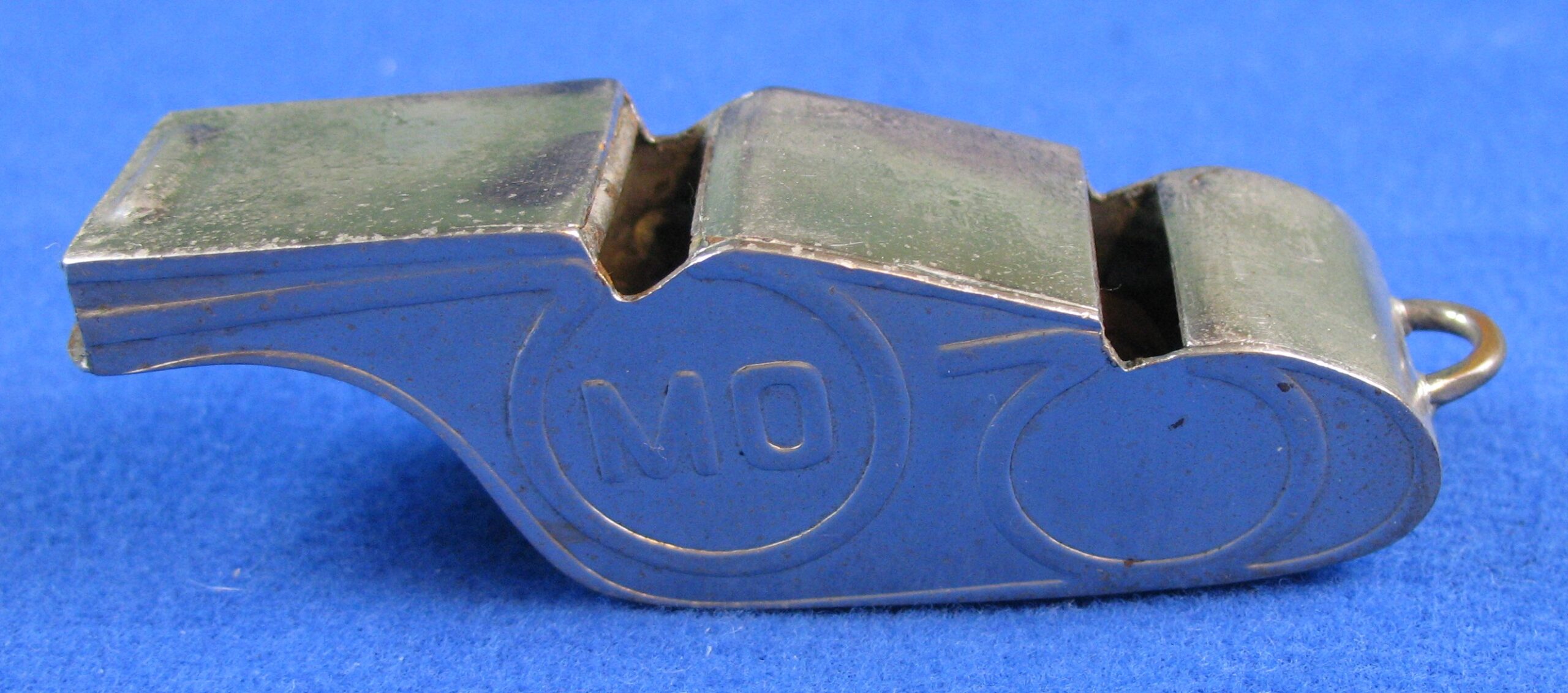
Now we press on to the USA. First a genuine generic escargot made for the military in the 1940s-50s and then a very rare and early escargot made by North Brothers.
Note the dramatic differences.
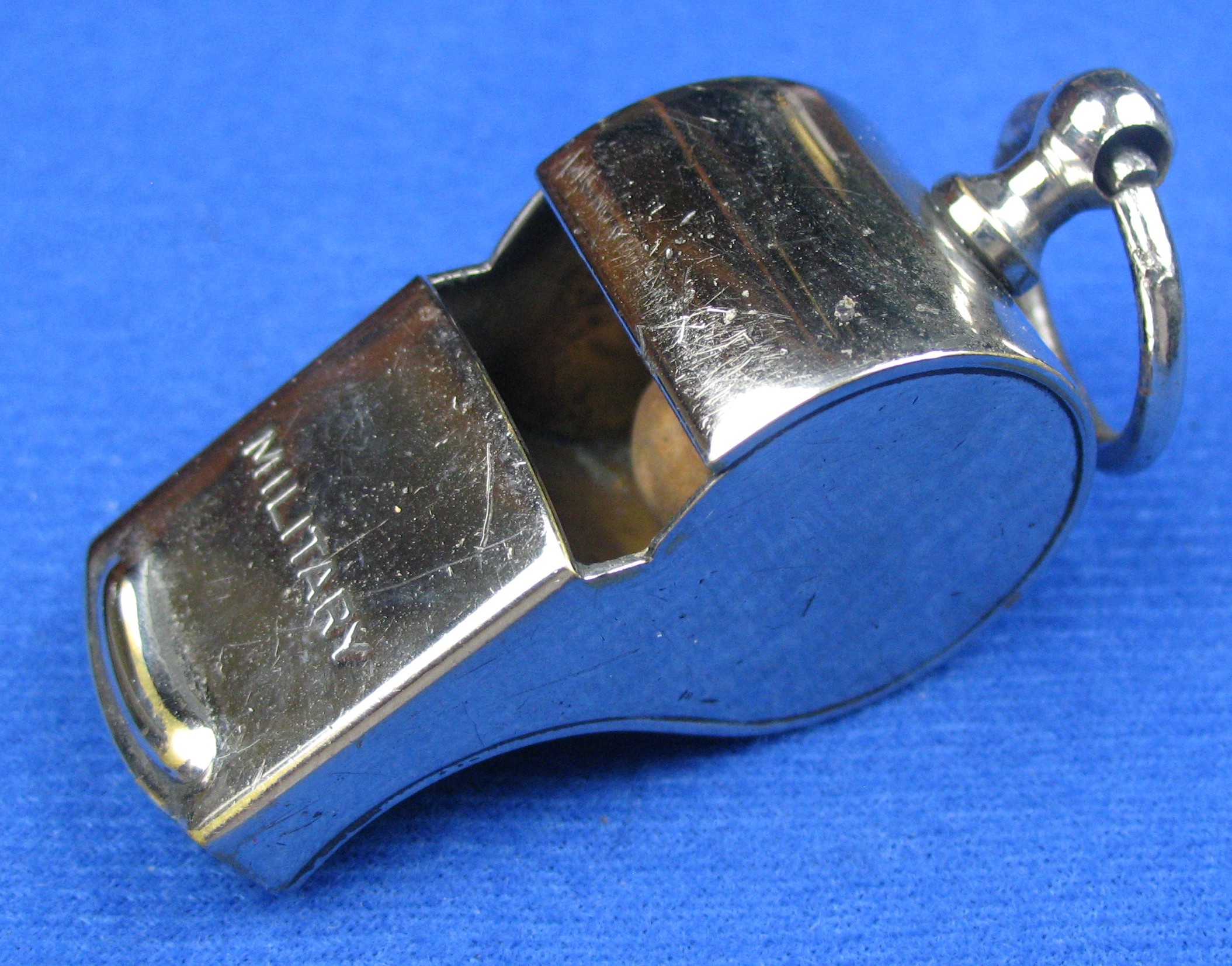
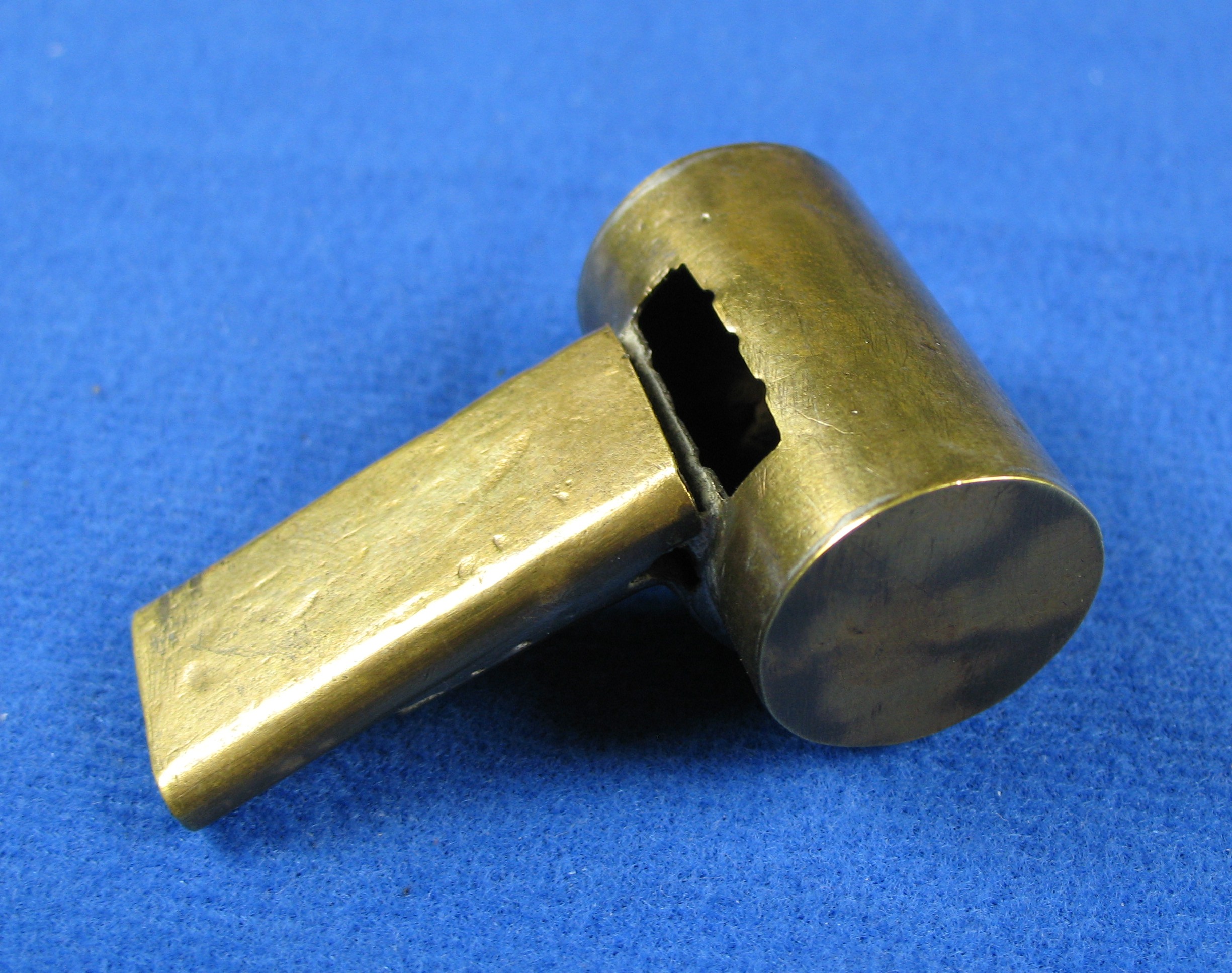
Canada brings in a terrific railway escargot that is very heavy and built like a train engine.
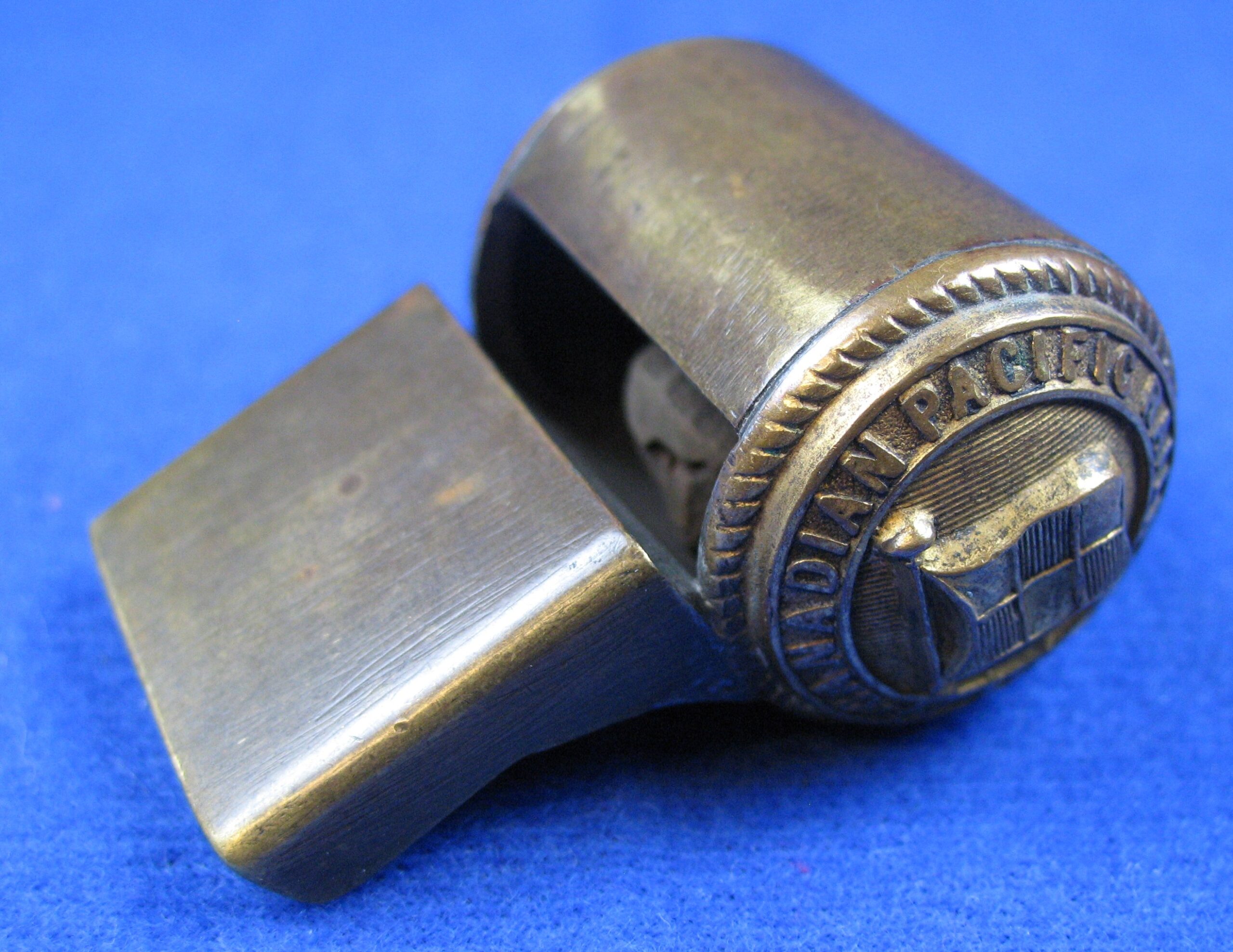
Now back to the UK for a hunting escargot unusually large by Hawksley. And a cycling escargot by Ward.
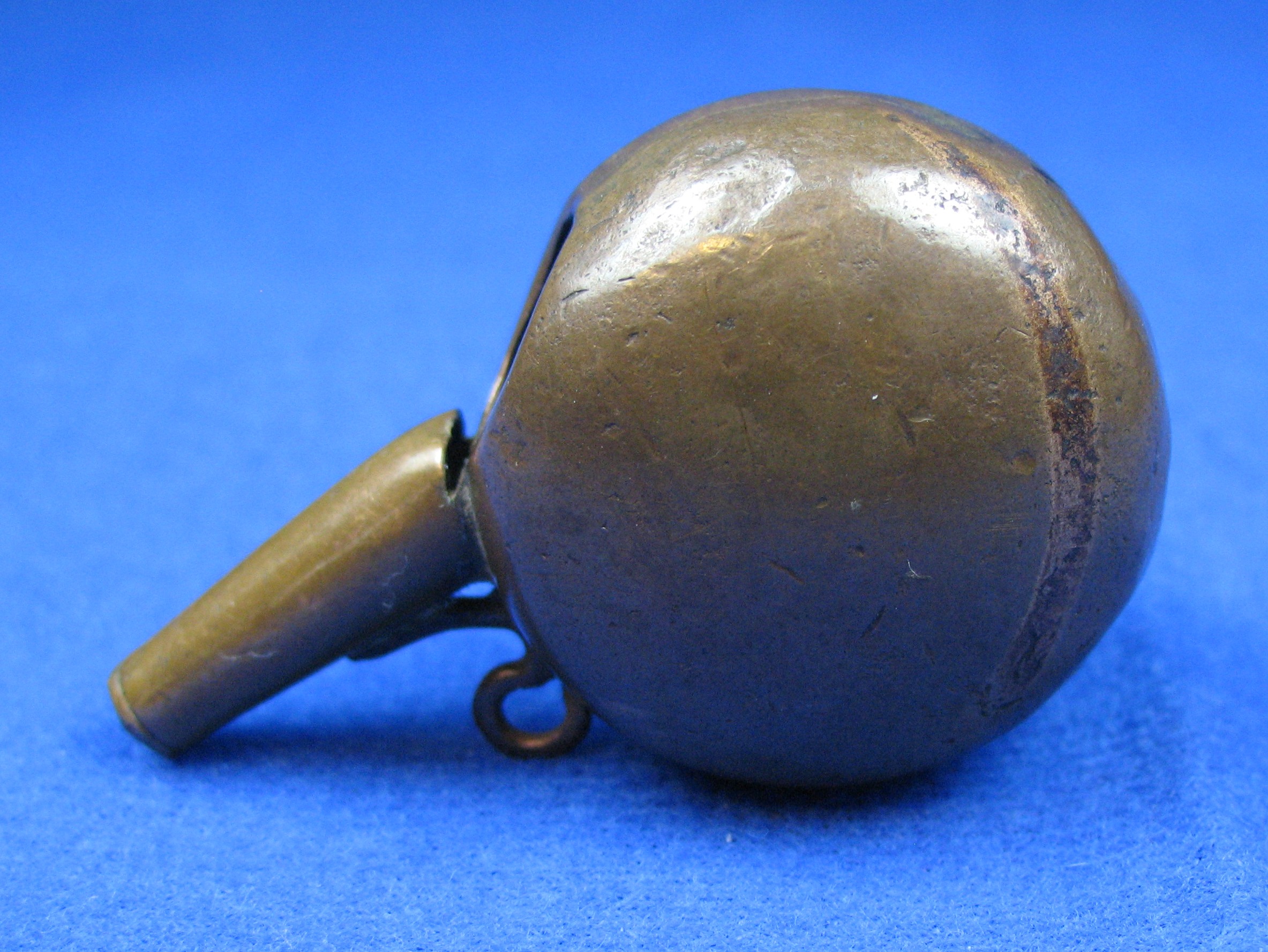
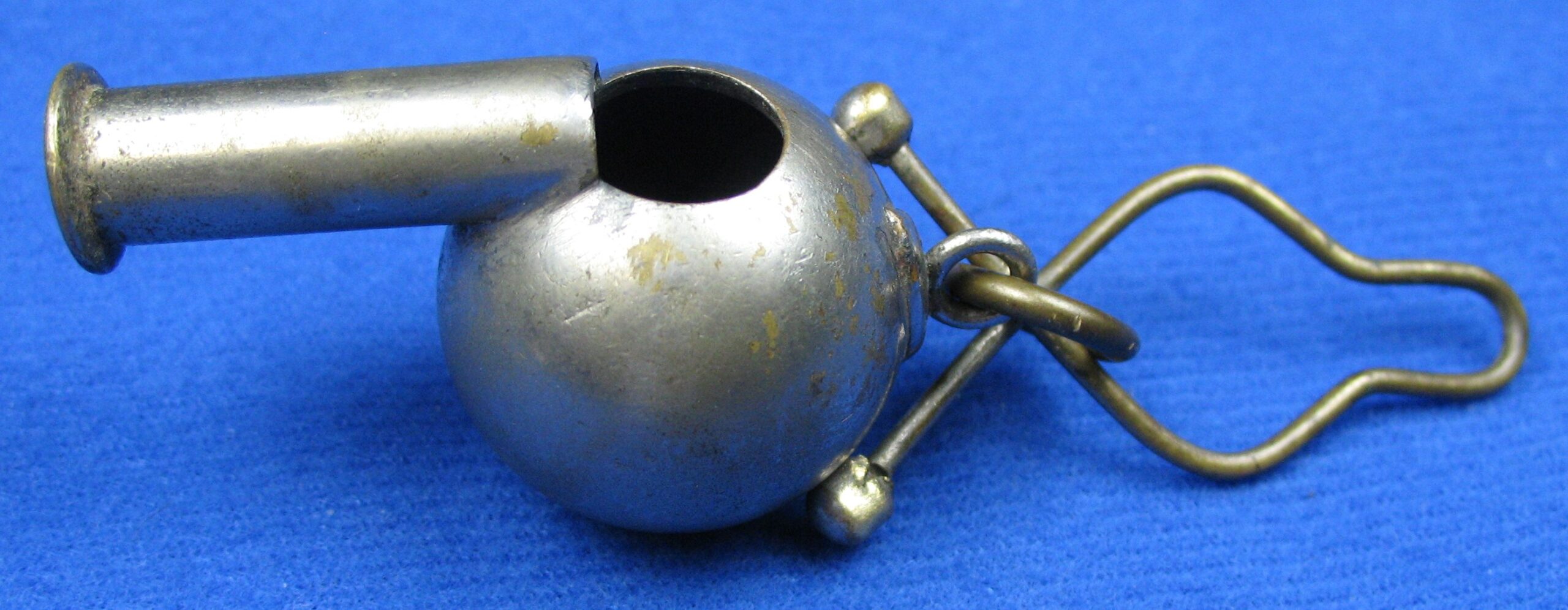
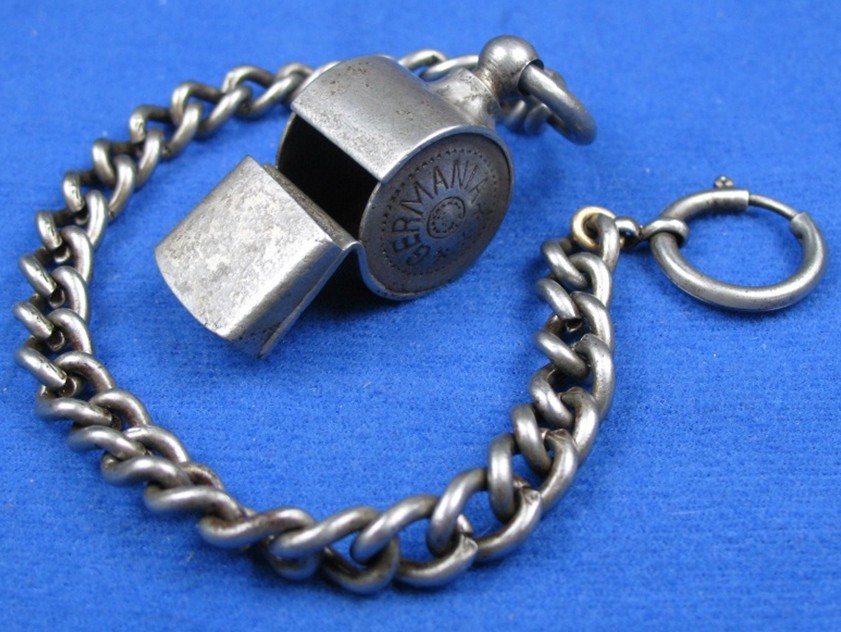
Stepping in is also Scotland with the Sharples… and then a terrific all steel from Germany. The German whistle has a matching chain.
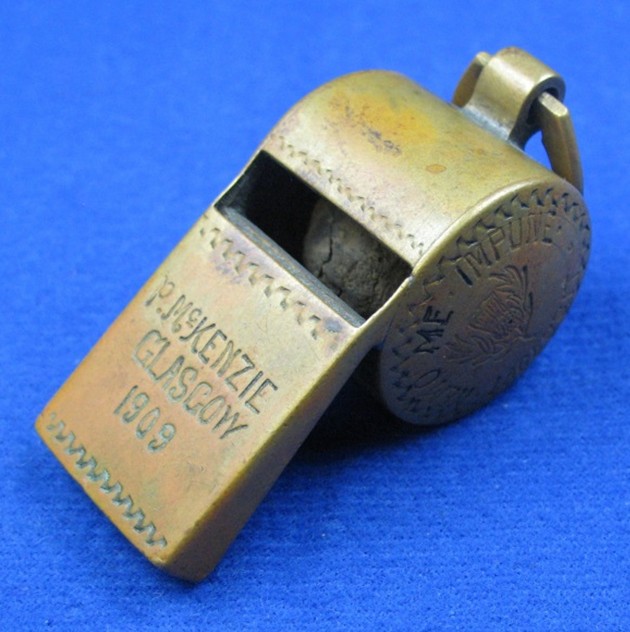
And of course, Estonia has a light retro model that came in several sizes…
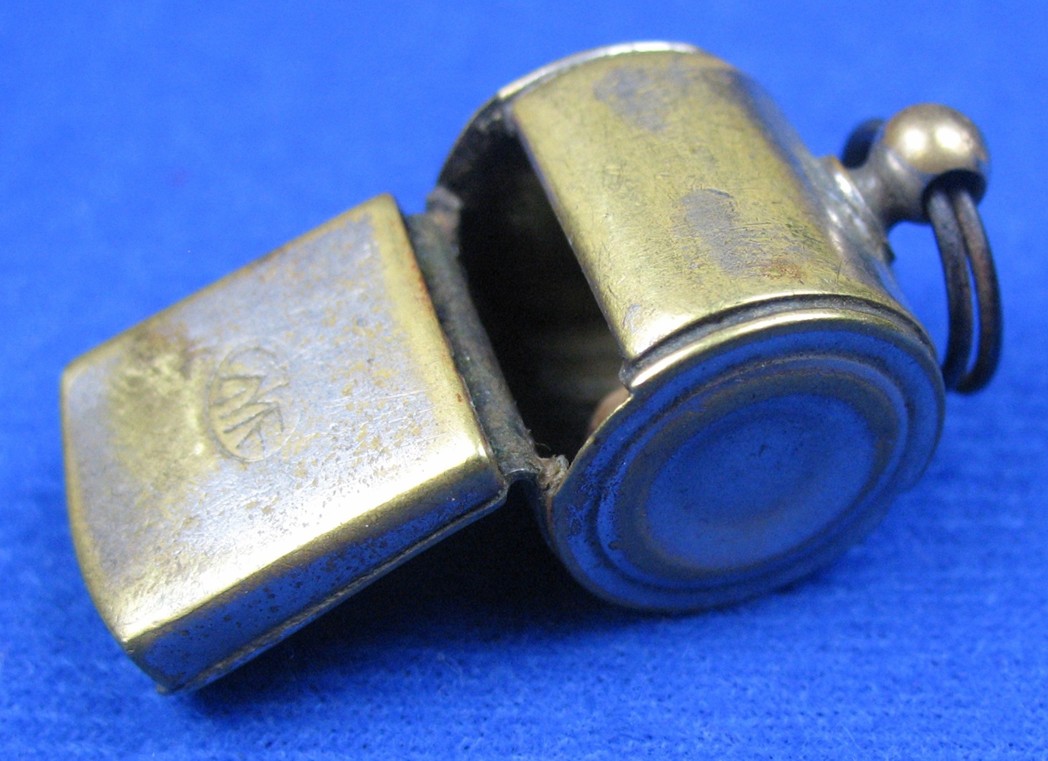
Formerly unknown examples, unique designs, different sizes, models and innovations continue to surface like this long mouthpiece and this VERY heavy built one by an unknown manufacturer…
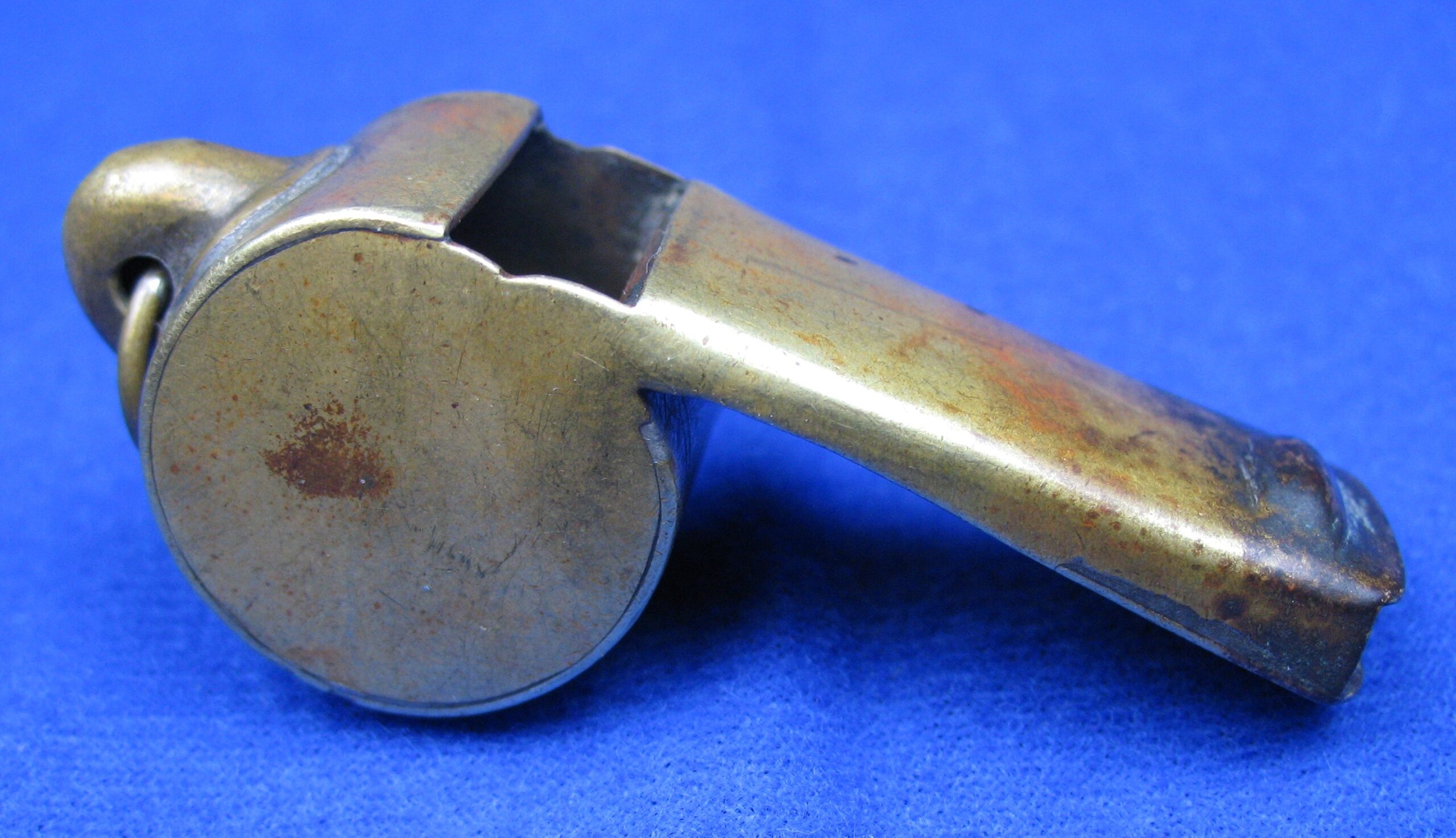
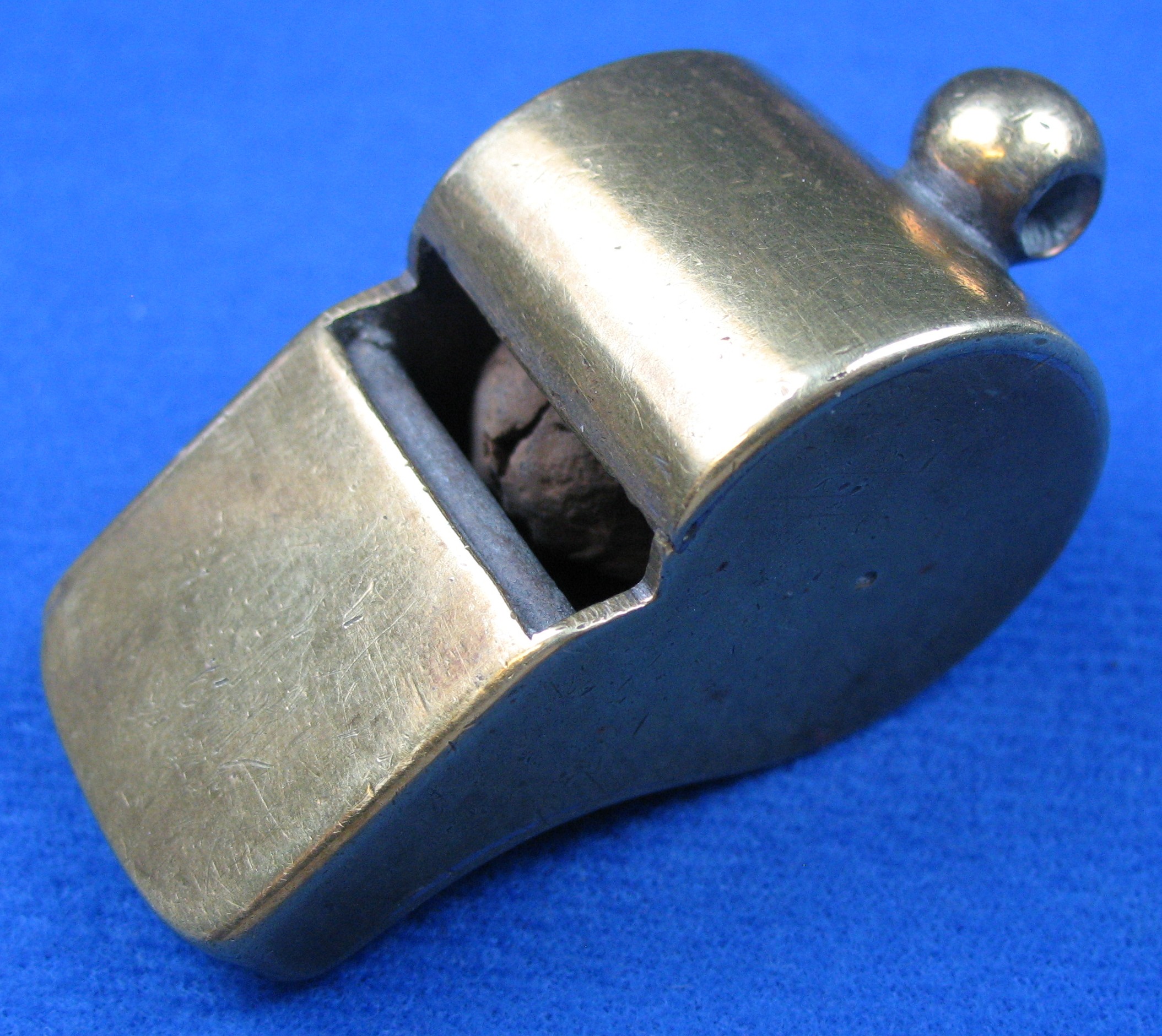
Here’s a couple out of Mexico. One has a very unusual, curved window, the other a rare knop of steel.
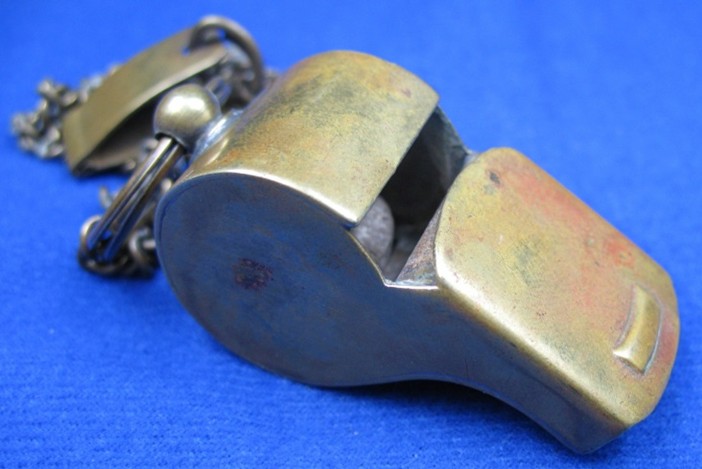
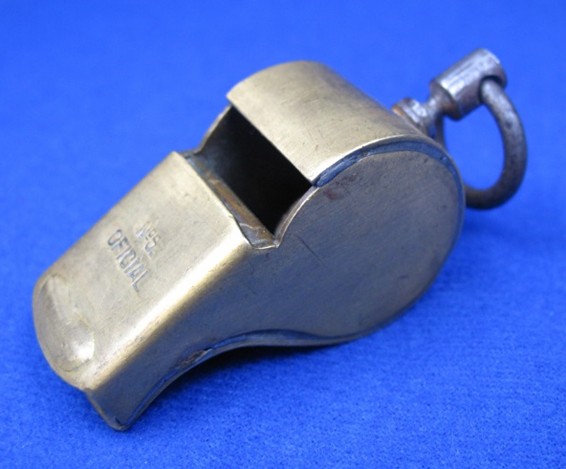
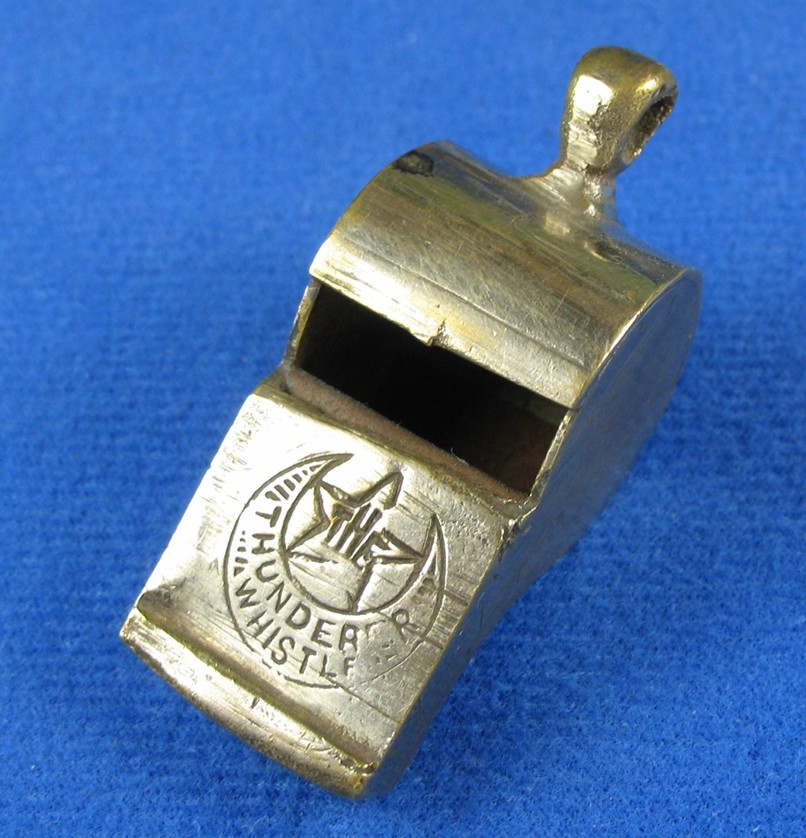
And a favorite of ours from India completely handmade down to the filed tooth grip and knop. These were made during the 1940s, when labor was inexpensive. Most have rough stamps, knops and tooth grips.
Conclusions
In the study of vintage metal whistles, escargots may hold the largest category by sheer volume. At the same time, they compete with rounds for variability.
Their span of time was from the early 1800s made of military, police, fire, livery and tunic buttons changing to cast and through light weight handmade ones of the 1880s.
Next heavy cast 6-piece handmade ones along with 4-piece machine and cast parts which came circa 1890.
Eventually, completely machine-made 3-piece variations. And still many variations are found.
TWG
Posted October 2, 2013
Revised September 14, 2020
Revised October 11, 2020
Revised February 13, 2021
Revised December 21, 2021
Revised June 19, 2022
Revised December 3, 2025
Revised July 16, 2026
Bibliography:
- TWG Reference Collection
- The Whistle Gallery Archives
- More Whistles, Martyn Gilchrist, 2005.
© – All photos with blue background property of The Whistle Gallery reference collection. Please contact The Whistle Gallery for permission of use of any website content. Spotlight articles are copyrighted. Please contact The Whistle Gallery for permission of use of any website or Spotlight article material written or otherwise. Use of photos without authorization is prohibited.


 Users This Month : 2207
 Total views : 184494