Whistory
Plant and animal whistles have, for the most part, gone without notice in research and documentation. Yes, hunters have given attention to plant and animal whistles, but whistle collectors have for the most part opted for metal whistles instead. This article aims to spotlight plant and animal whistles and their many subclasses. (See below: Whistle Archeology.)
Here is presented a wider view with the intent to bring plant and animal whistles into the spotlight as a category and the many subclasses of whistles. At the forefront are horn and antler and ivory/bone, with other animal and plant products following. Dating plant and animal whistles traces back into the early 1800s, but conceivably much further back, considering the hand-crafted nature. No effort is being made to trace whistles made of synthetics such as celluloid, Bakelite etc. Production whistles have gone relatively unrecorded.
What was the main use of plant and animal whistles?
The main uses of plant and animal whistles appear to be for decorative, hunting, and railway purposes, moving into general use and military use. The material lends itself to beautiful carved creations accompanied by grain and colors, yet retaining a solid nature.
The range of plant and animal whistles is further than might be suspected at first glance, especially of the many products, but also the models or creations within a subclass such as ivory. Whereas we would like to present examples of each use accurately, it is beyond our scope to analyze the materials in some of the following examples and reach each subclass as it deserves.
How pervasive were plant and animal whistles compared with metal ones?
Major companies in the 1800s advertised as much as 50% of their whistles made of materials described in this article. Dixon, Hudson, BGI, F.L. Johnson, Martin Signal. Significantly, the Yates catalog of 1870, Henry Arthur Ward, Stevens and Sons, Auld and others did not offer any plant and animal whistles.
However, we will visit as many plant and animal whistles as we can, hoping to grasp the concepts well enough for further study. Whistle archeology is attempting to define the known major classes of materials, accompanied with identification techniques.
NOTE: Identification techniques when described will be in RED COLORED font with the heading, “Identification Method”.
We find that this category of whistles falls into two groups, one of plants and one of animals. Plant and animal whistles are a diverse and fascinating field for further research.
Whistle Classification
| Category | horn, antler, similar types horn antler hoof bone ivory teeth baleen tortoise shell claws |
| Order | Hudson Dixon Hawksley BGI Signal **unknowns |
| Type | hunting military railway |
| Class | plant animal |
| Sub class | wood jet bog oak vulcanite gutta percha Bois Durci Tegua (vegetable ivory) |
| Sub class | horn pressed horn antler hoof bone ivory teeth baleen tortoise shell claws & talons |
Whistle Archeology
Plant Sourced Whistles
Wood
Hard fibrous material that forms the main substance of the trunk or branches of a tree or shrub.
Jet
Monkey Puzzle Tree, is the black fossilized wood of a particular tree, that grew millions of years ago (it still exists today). It is particularly associated with the English town of Whitby where much of it was fashioned into jewelry and accessories. While jet was made into jewelry throughout the 1800’s it was especially fashionable between 1860 and 1890. Like amber, it will pick up paper when static is created by rubbing it on wool or silk. Although jet is found across the globe, including countries such as Spain, Germany, Turkey and China, much of this is low-quality soft jet which cracks over time and possesses a rather a low luster. It is only in North Yorkshire that the highest quality, most sought-after jet in the world is found, across the moors and along the coast surrounding the town of Whitby. Its use dates to the bronze age, almost a coal.
— Identification Method: Genuine Whitby Jet produces static electricity, when rubbed briskly.
Bog Oak
Wood or peat derived from wood in an early stage of fossilization, bog oak is Scot’s pine, oak or yew that has been preserved in a peat bog and stained very dark brown by the peat’s tannic acids. The extremely low oxygen conditions of the bog protect the wood from normal decay, while the underlying peat provides acidic conditions where salts and other minerals react with the tannins in the wood, giving it a distinct dark brown to almost black color.
— Identification Method: Bog oak may be differentiated from jet in the following ways: a very deep brown rather than black color, an inability to be polished to a high shine, and a defined wood-grain structure.
Vulcanite
Euphorbia or Ficus trees (also called ebonite) was made by combining and heating sap of the tree from Malaysia with sulfur, under high heat. Invented in 1843 by Thomas Hamcock, pieces made of vulcanite were almost always molded, not carved, and it was used mainly in making jewelry. Discolors and oxidizes.
— Identification Method: Rub the piece and if it is vulcanite, it will smell like rubber. If all else fails, you can do a taste test. Yes, actually lick the piece. If the item tastes salty, it’s Gutta Percha. If not, it’s vulcanite.
Gutta Percha
Dichopsis tree (Palaquium Gutta) the sap, is found in Malaysia. Invented by William Montgomerie in 1843, it was used mainly in technical articles, e.g. driving belts, stoppers, tubs, pails, cups, washing drums and cables. It was also used for household purposes such as mouthpieces for whistles, sticks and riding whips. It was very rarely used for jewelry. Today it is used in dental applications. Most commonly molded, sometimes carved.
Bois Durci (French, Hardened Wood)
Sawdust/blood, invented by Francois Charles Lepaq in 1856. It is a composition of fine hardwood (ebony or rose wood) sawdust and blood which is pressed then highly polished. Mixed, hardened and then ground to a powder, then placed into a mold and steam heated and pressed. Lastly plunged into cold water.
— Identification Method: You can detect mold lines, with the eye or a loupe, it will give off an acrid, rubber smell when rubbed briskly.
Tegua (nut) Phytelephas Genus
A palm tree nut from South America resembling elephant ivory (also called, “vegetable ivory”). It can be dried, till hardened and then carved from nuts less than 3 inches long.
Animal Sourced Whistles
Horn
Found on water buffalo, north American buffalo, pronghorn, bighorn sheep, is a two-part structure. An interior portion of bone (an extension of the skull) is covered by an exterior sheath grown by specialized hair follicles, keratin, like human fingernails). Horns are usually found on both males and (in a diminutive form) females. All in the bovine family.
— Identification Method: Horns grow from the base.
Look for a seam on the item indicating that it’s plastic.
Check for visible irregularities on the surface to confirm it is real horn.
Pick up the item to feel if it’s lightweight like plastic.
See if the item has a matte finish to confirm it’s real horn.
Place the item in water to see if it sinks or floats (horn sinks).
Use a hot needle to see if the needle goes through (horn does not burn well).
Static friction with the item by rubbing it against something (no static with horn).
Pressed Horn
Soaked in a solution for weeks. Then can be carved like wood and clamped in a mold/form to reshape it. Thereafter it dries and the solution (ammonia?) evaporates.
Antler
Found on members of the deer family, elk, caribou, moose, deer—grow as an extension of the animal’s skull. They are true bone, are a single structure, and, generally, are found only on males. Antlers are shed and regrown yearly while horns are never shed and continue to grow throughout an animal’s life. One exception is the pronghorn, which sheds and regrows its horn sheath each year.
— Identification Method: Antlers grow from the tip.
The outer surfaces can be distinguished from bone by the fact that the larger sections of antlers generally have raised bumps and protrusions, whereas skeletal bones are smooth except in attachment areas.
Hoof
The hard exterior of horse hooves is made of keratin, which is the same substance that our fingernails are made of.
Bone
Material that makes up the skeleton of vertebrate animals. Magnification helps to distinguish bone from similar materials, as it has a thin solid layer surrounding a porous interior structure with a hollow core where the marrow is contained.
Ivory
The hard, smooth, yellowish white dentine that forms the main part of the tusks of sea mammals and of living and extinct elephants. Ivory has a dense outer layer and a mottled inner core.
Teeth
A bonelike structure rooted in sockets in the jaws of most vertebrates; teeth are generally composed of a core of soft pulp surrounded by a layer of hard dentine that is coated with enamel at the crown.
The root area is usually a yellowish tan color with a matte surface, and the enamel is shiny and can be white or yellowish white.
Baleen
The fiber-fringed horny sheets from the mouths of filter-feeding whales. Baleen is an unusual but documented material in plant and animal whistles.
Tortoise Shell
Beta-keratins, which have a pleated sheet structure and are only produced by birds and reptiles.
Leather
Some whistles, especially in France, are made entirely of leather. Leather is also commonly used for lanyards, straps, or as a covering over other materials like metal, horn, or wood.
Claws & Talons
Keratin extensions found on birds, mammals and reptiles. These are rarely used in whistles but do exist.
A Clarification of Synthetic Materials Not Derived From Plant and Animal Products
Plastics
Bakelite, lucite, celluloid, catalin, etc. While synthetic, these materials are derived from plant or animal byproducts and are sometimes referenced in contrast to traditional plant and animal whistles.
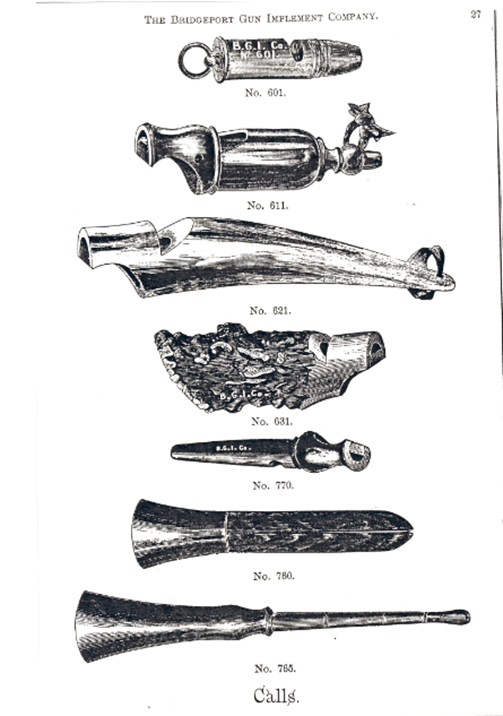
Page from a USA Bridgeport Gun Implements catalog pre 1900.
German catalogs as follows:
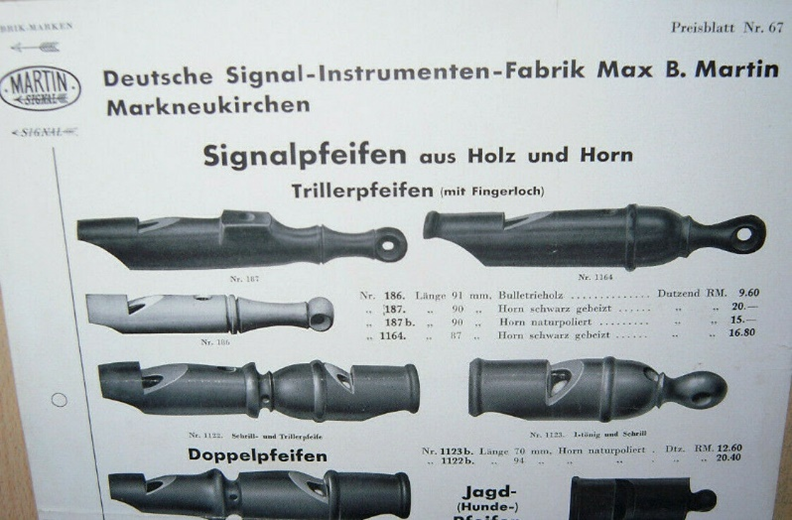
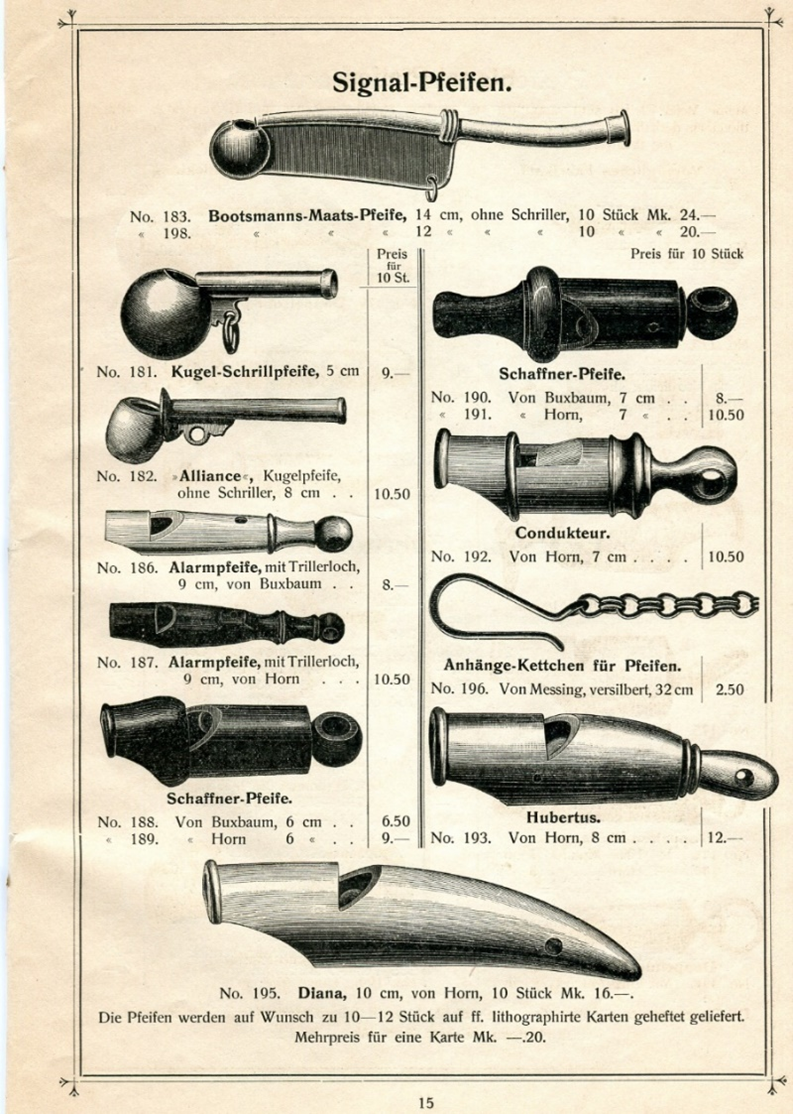
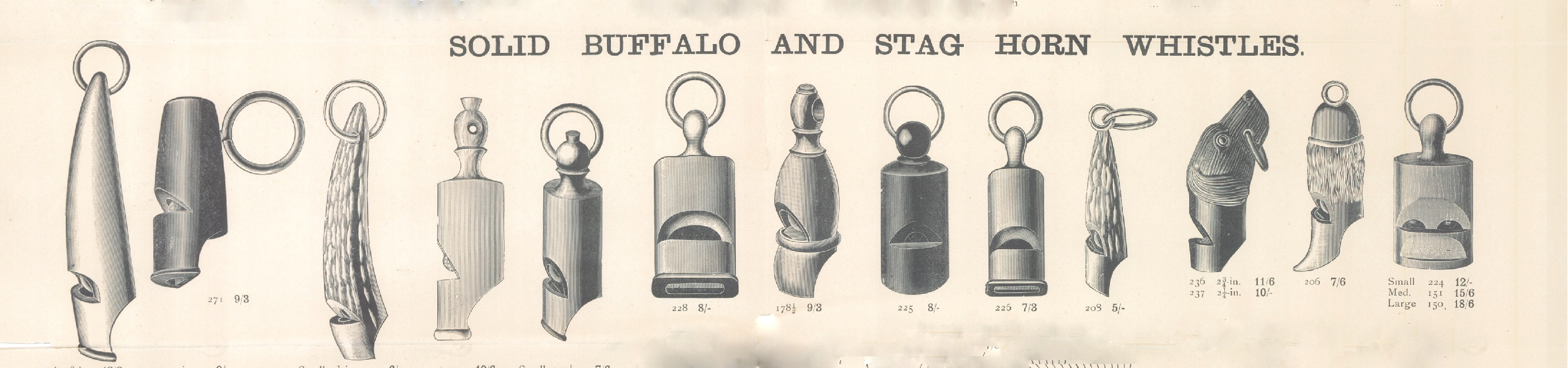
Circa 1900 clipping from a Hudson catalog.
Whistology
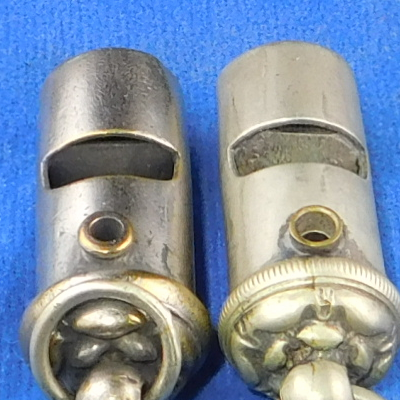
Only a limited number of photo examples are provided below for representation, as the diversity and variation among plant and animal whistles is too great to capture comprehensively.
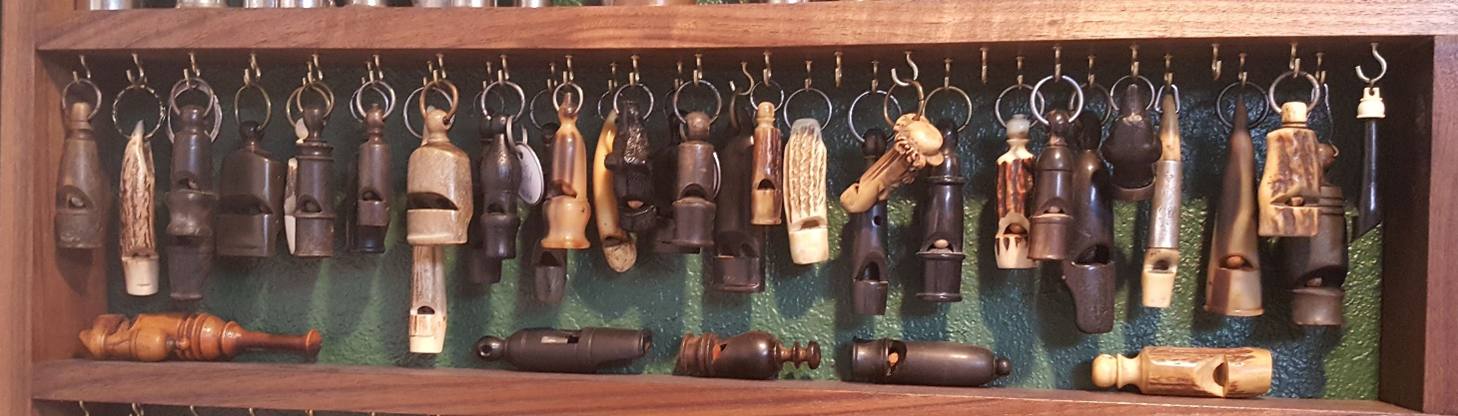
A group picture of a cross sectional display of antler, horn, and similar type animal sourced whistles.
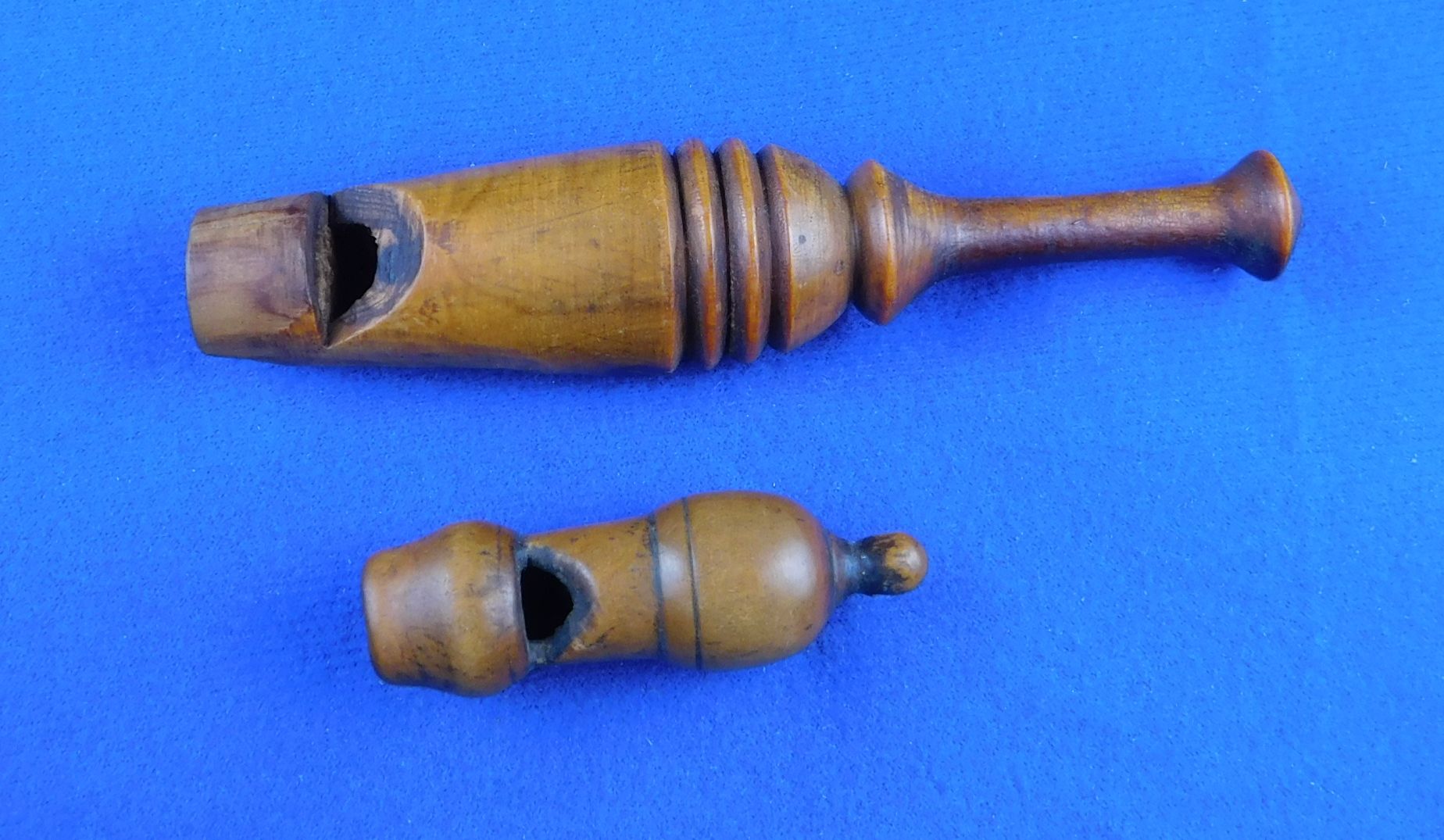
Examples of Wood Round Whistles
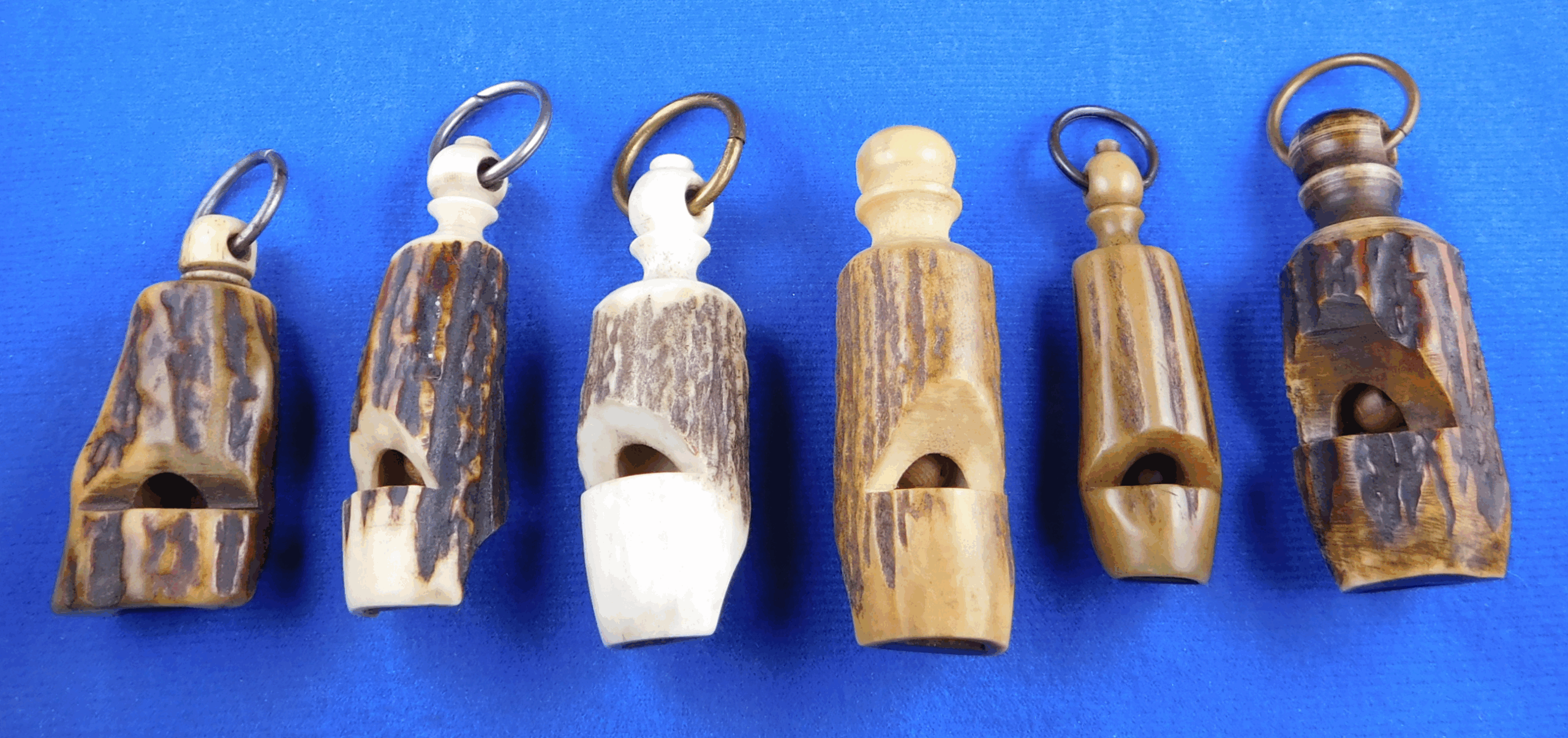
Examples of Antler Round Whistles
Additional examples of plant whistles as described above:
BOG OAK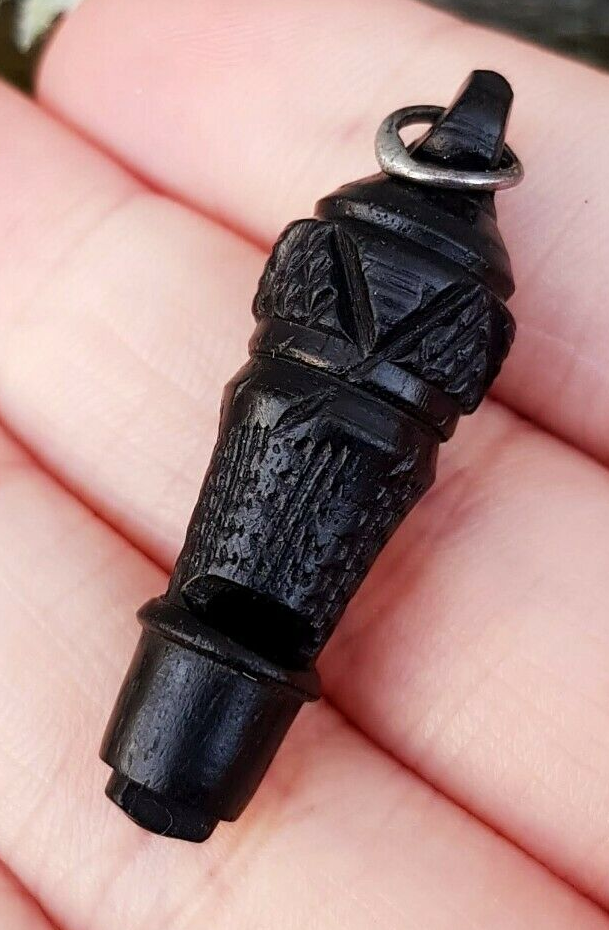
VEGETABLE IVORY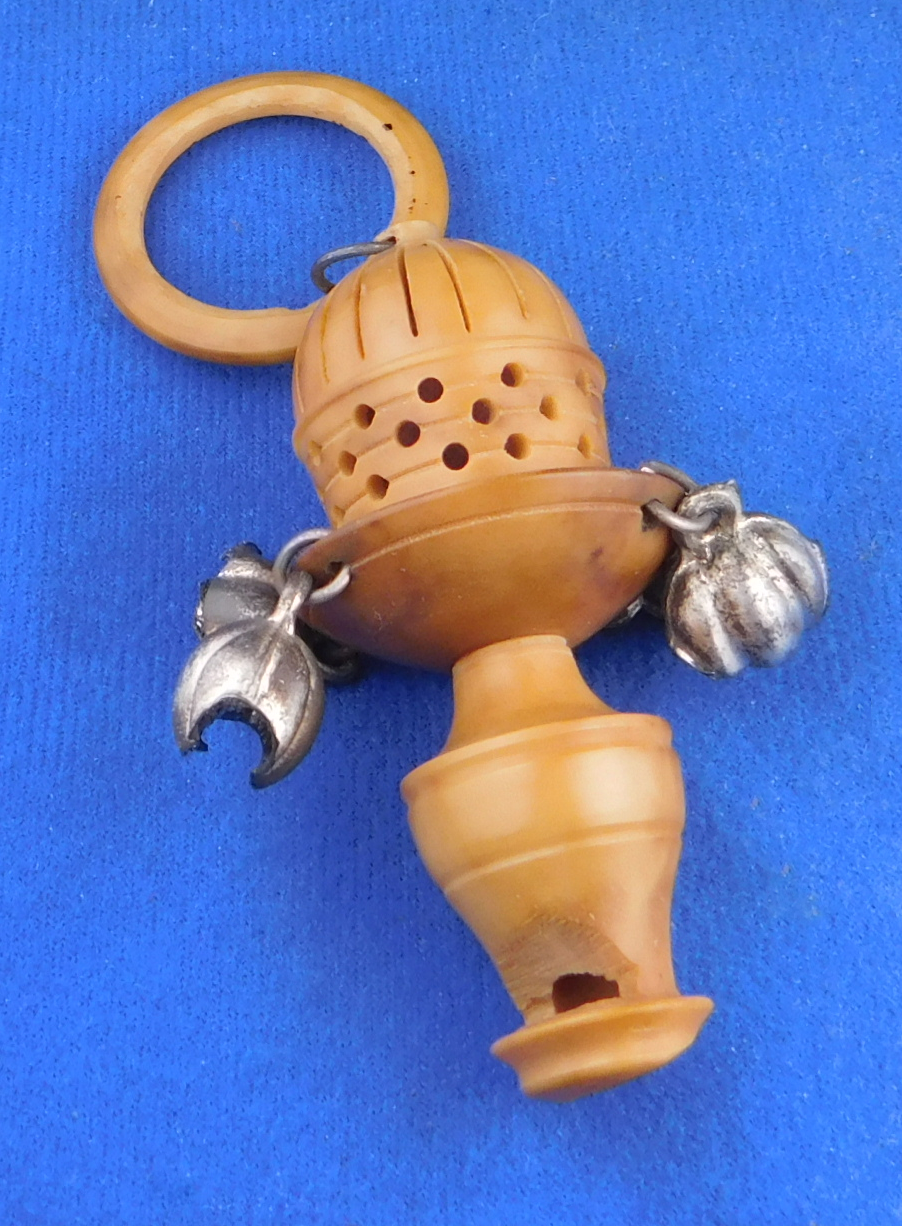
TEGUA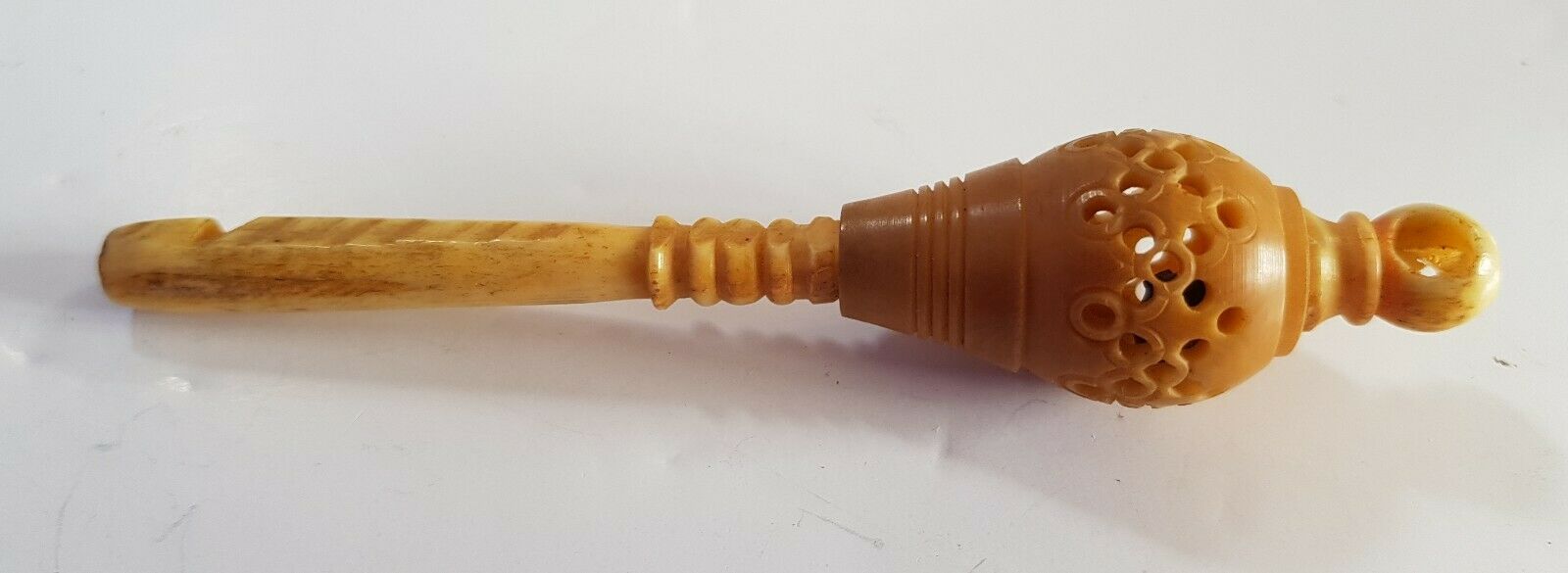
Additional examples of animal whistles as described above:
ANTLER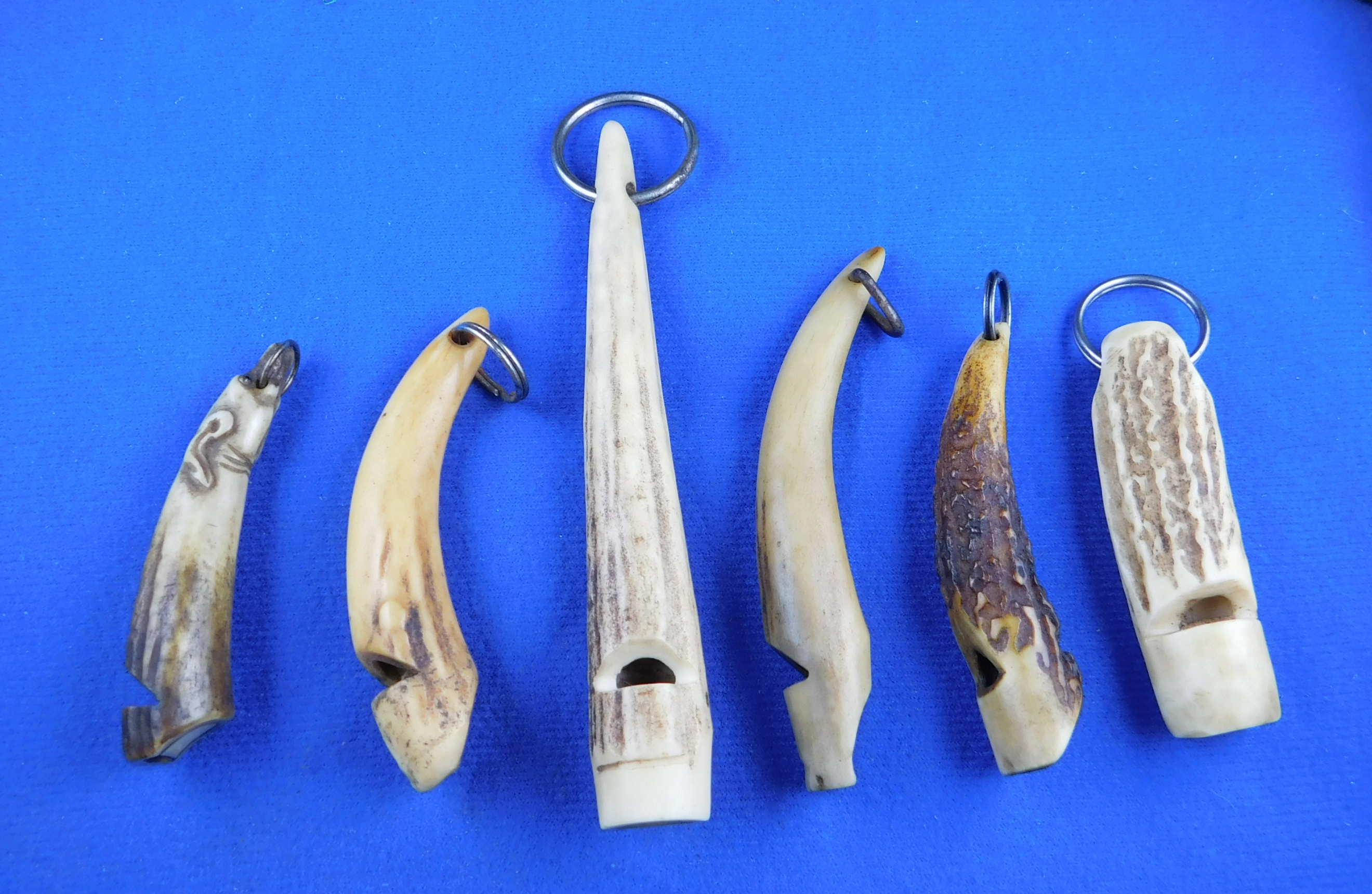
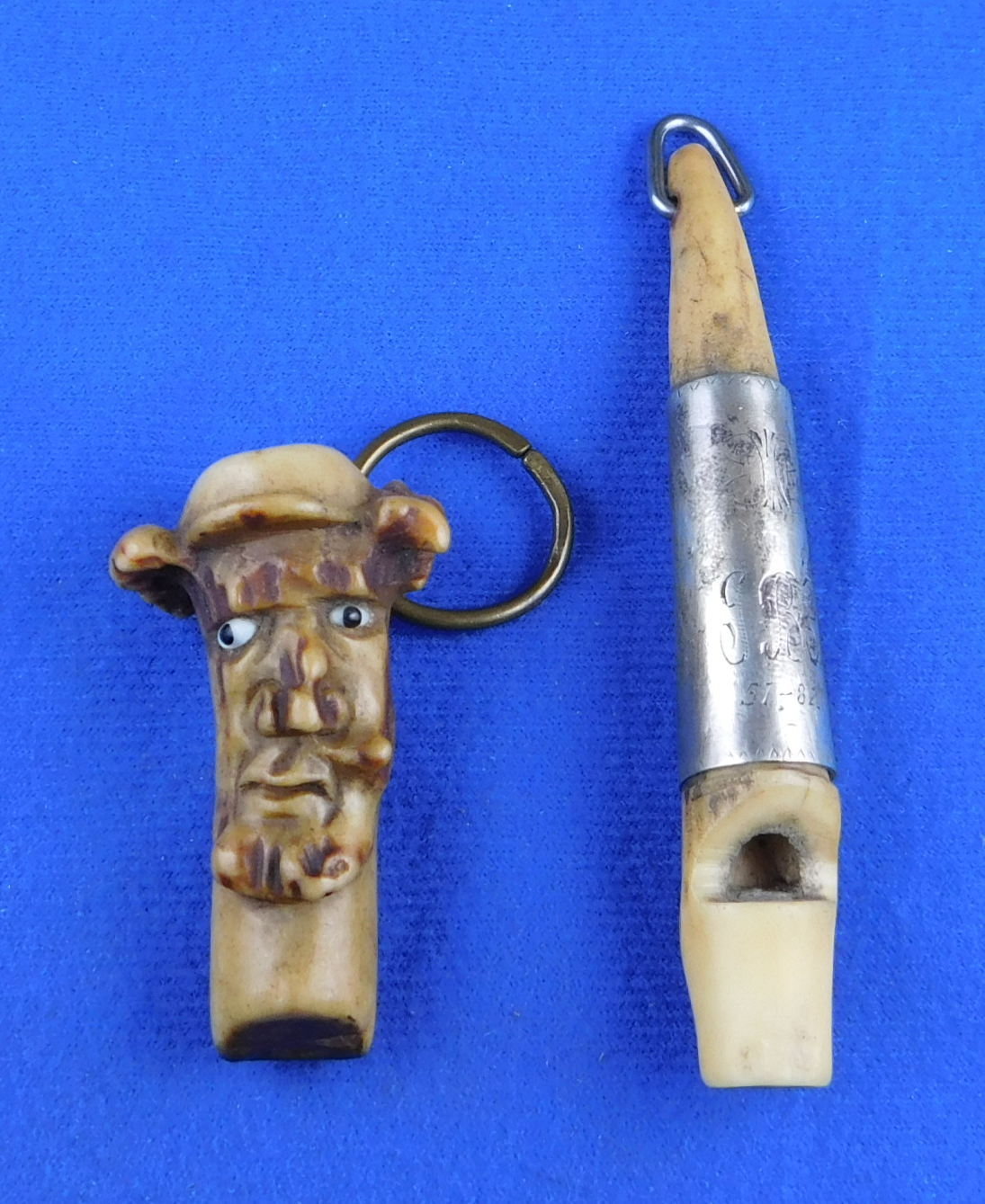
HORN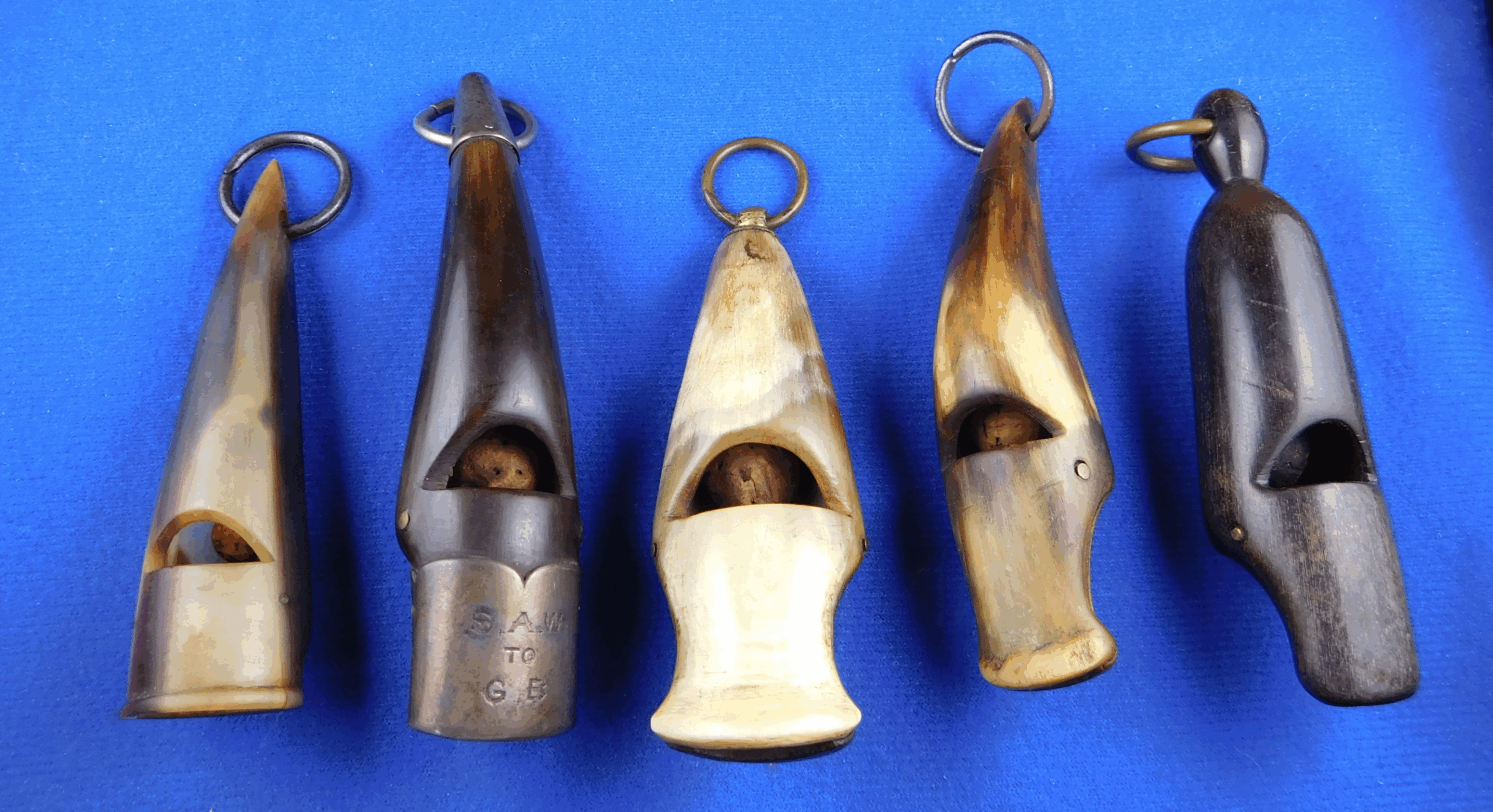
GOAT HORN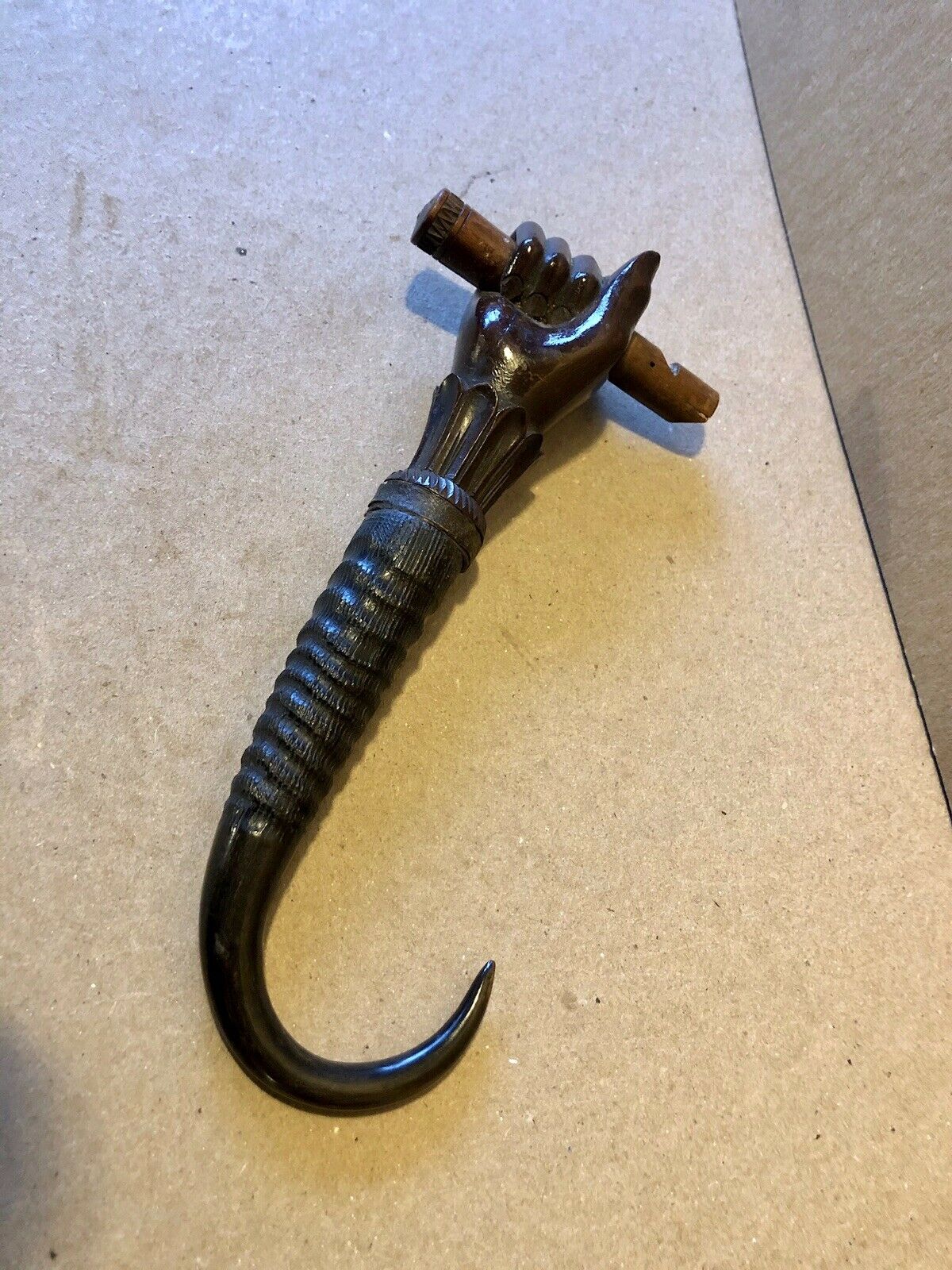
IVORY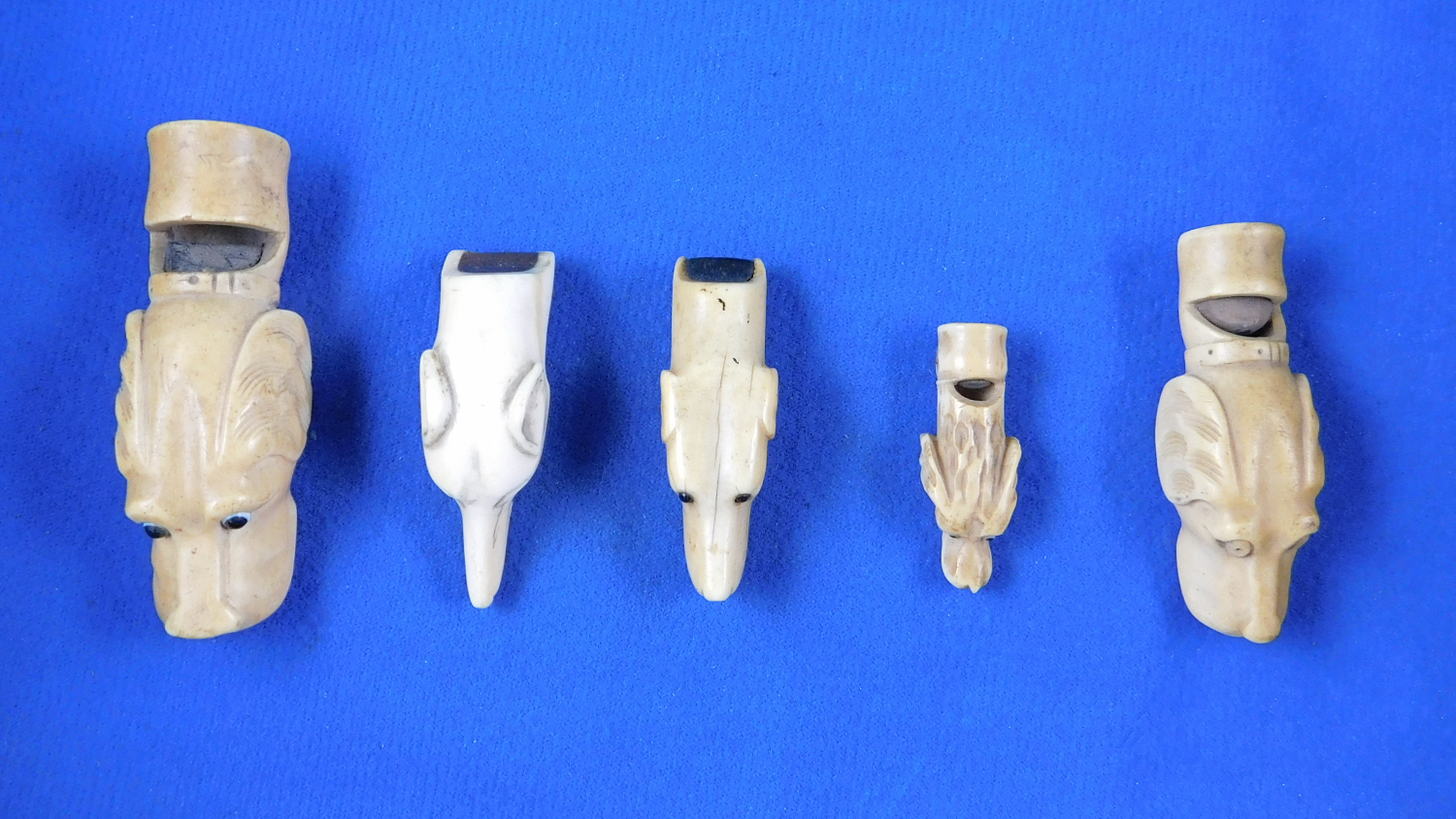
TALON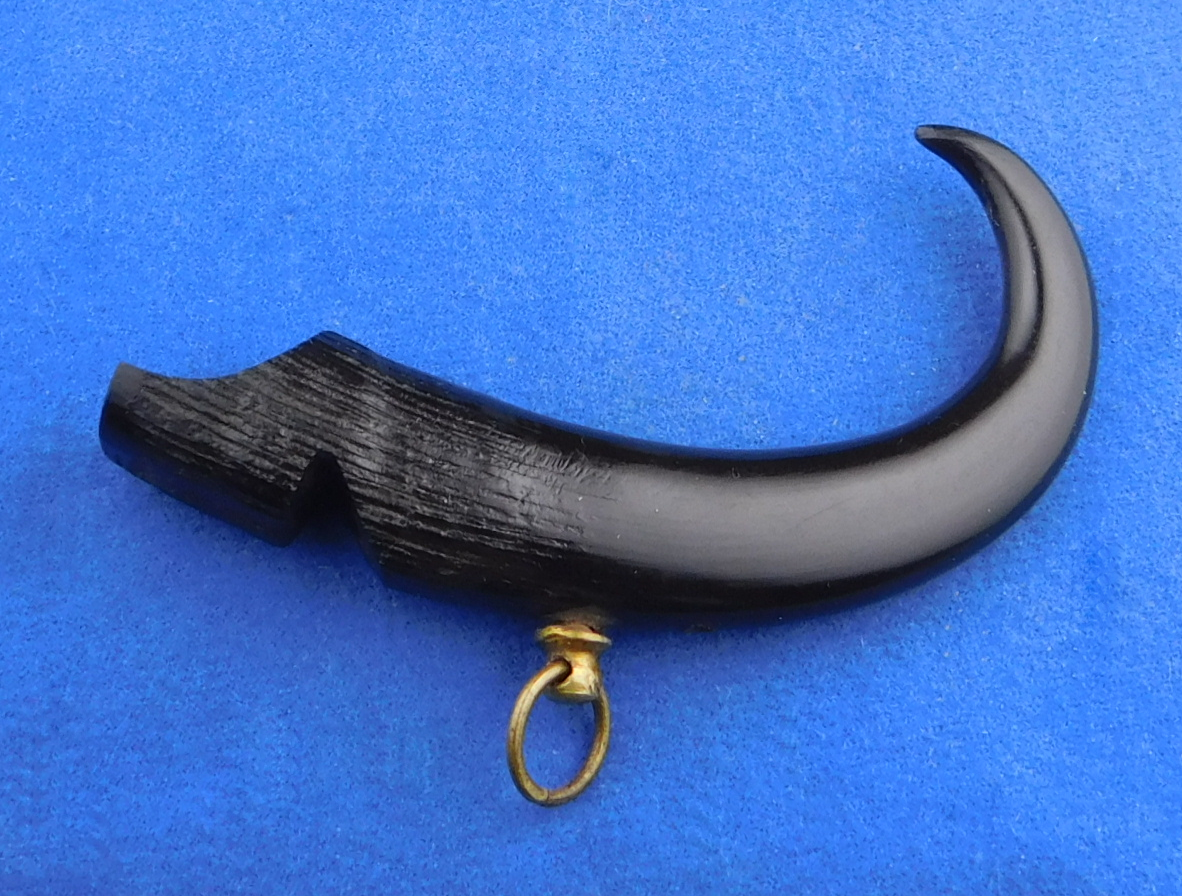
LEATHER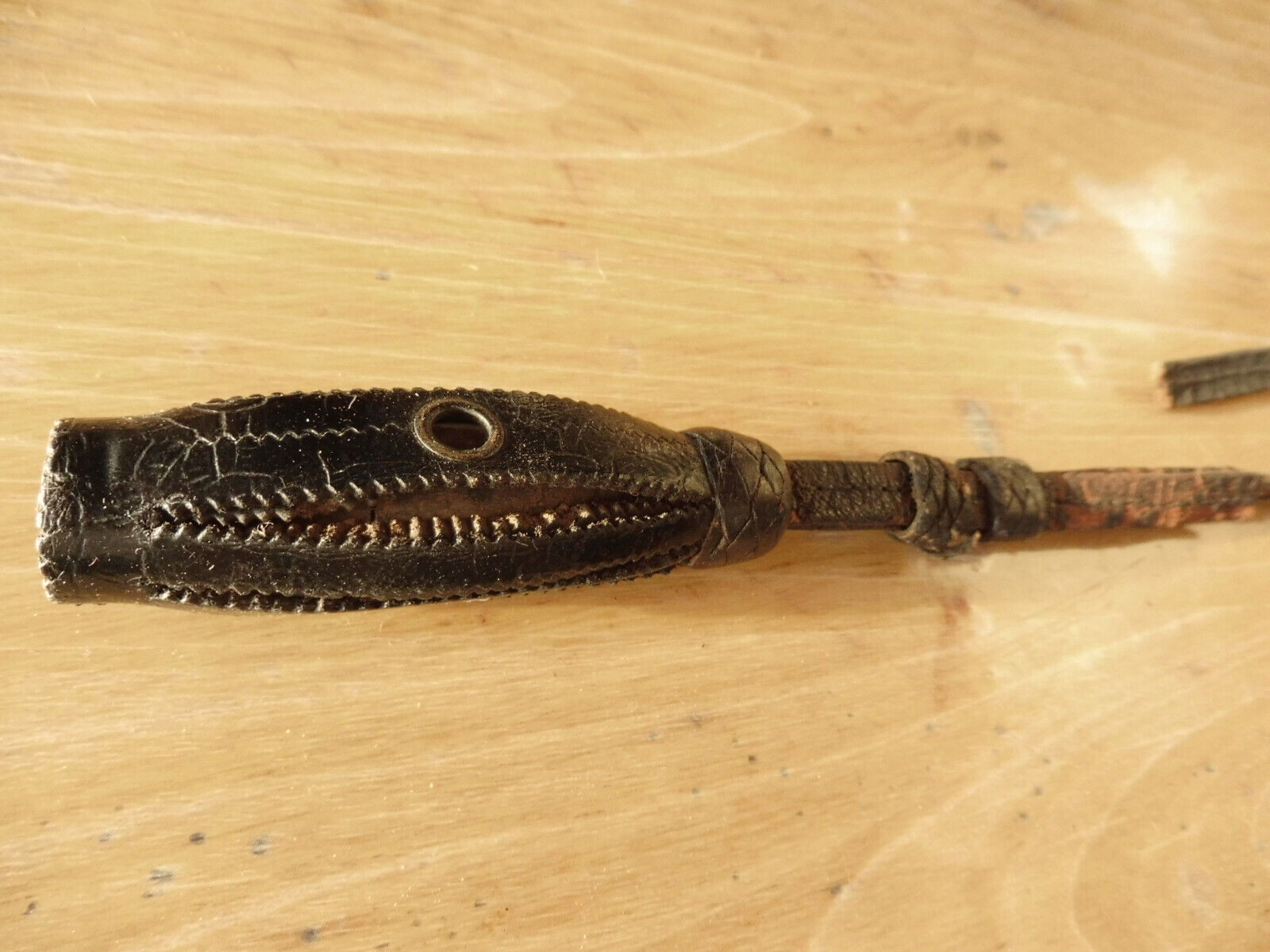
BALEEN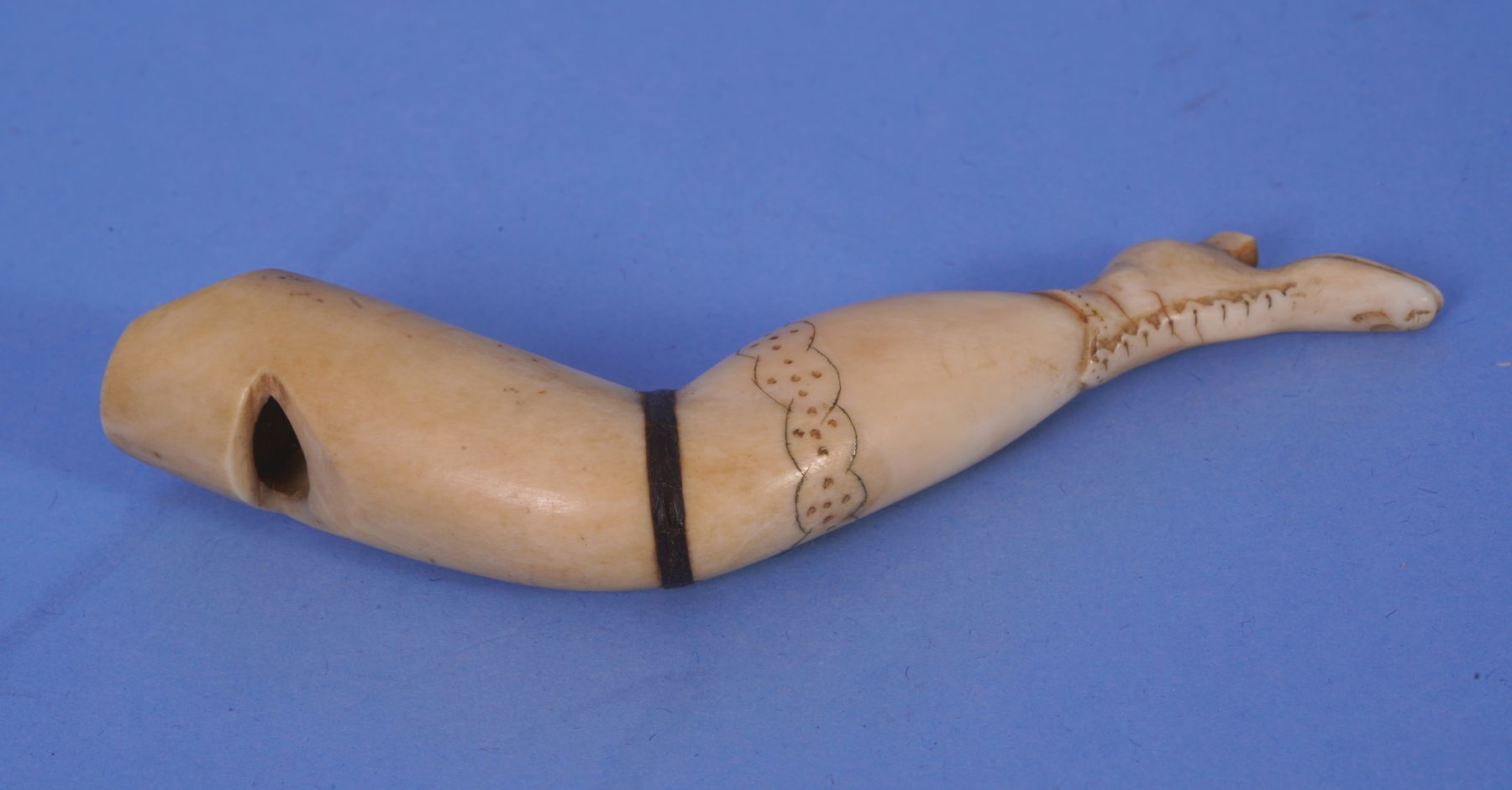
TOOTH (Animal Type Unknown)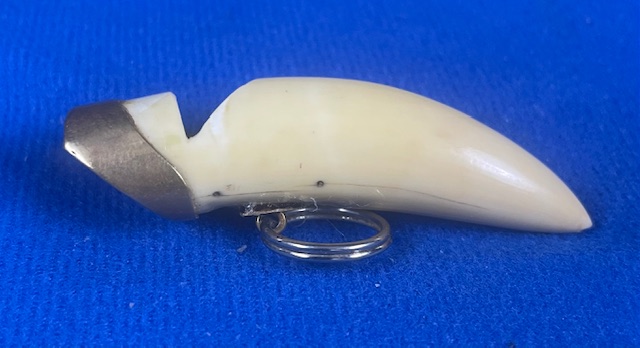
Conclusions
Plant and animal whistles are a Herculean subject that deserves much more attention. Here we see that the materials to be used for whistles may be more of a scope than we had ever considered.
Whistle makers have not missed this and used animal products for perhaps hundreds if not thousands of years.
TWG
Initial Research December 28, 2024
First Printing December 28, 2024
Edited December 2, 2025
Posted December 6, 2025
Bibliography:
- https://www.wood-database.com/bog-oak/
- Le Sifflet – histoire d’une collection – Jacques M Bokobsa
- https://eborjetworks.co.uk/pressed-horn/ – pressed horn
- https://www.morninggloryjewelry.com/articles/gallery/victorian-bog-oak-pressed-horn-jewelry/ – definitions
- A brief history of horn
- https://medium.com/usfws/11-facts-about-antlers-18e689fe9e60
- https://gemsetlove.com/
- https://www.thesprucecrafts.com/identify-black-materials-victorian-jewelry-149534
- https://mnhs.gitlab.io/archive/conservation/www.mnhs.org/preserve/conservation/connectingmn/index.html – teeth, antler, bone, ivory
- https://www.tandfonline.com/doi/pdf/10.1179/2047058414Y.0000000134 – Keratins
- https://www.dictum.com/en/horn-and-horn-products
- https://www.traffic.org/site/assets/files/17352/eng_identification_sea_e.pdf – An Identification Guide to Commonly Traded Wildlife Products in Southeast Asia
- https://en.wikipedia.org/wiki/Gutta-percha
- https://www.wood-database.com/bog-oak/


 Users This Month : 2429
 Total views : 150290